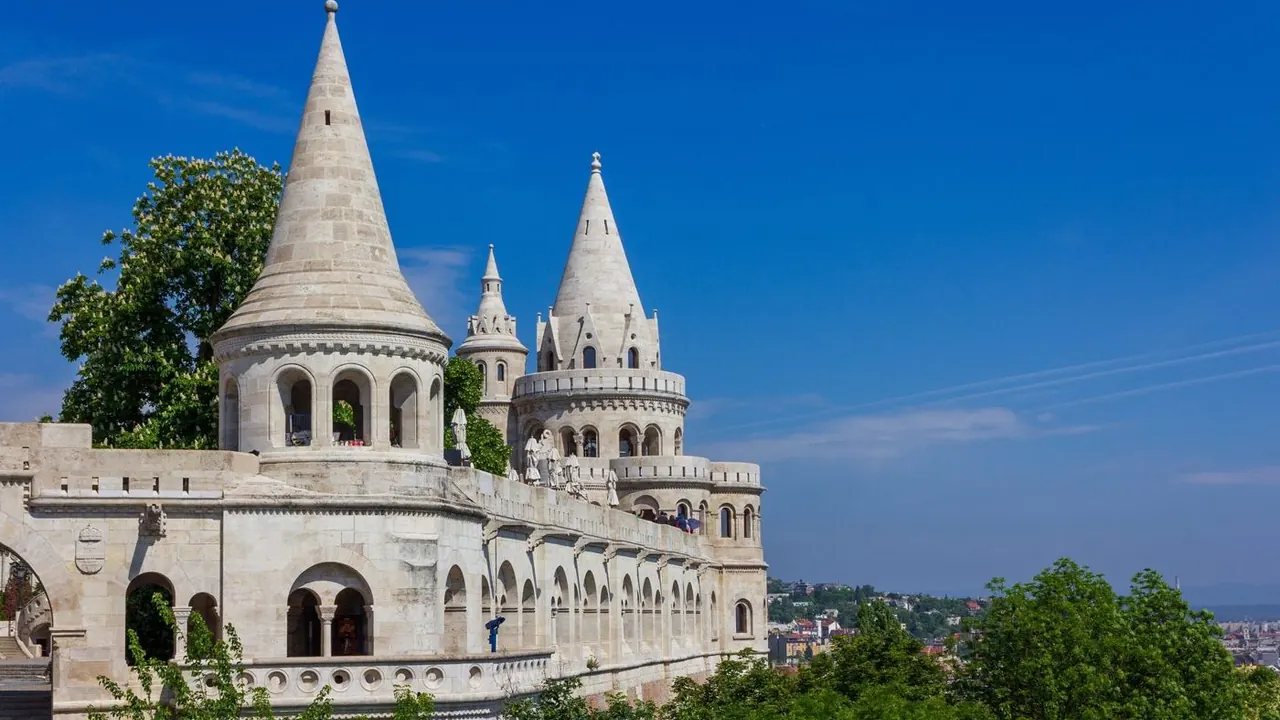
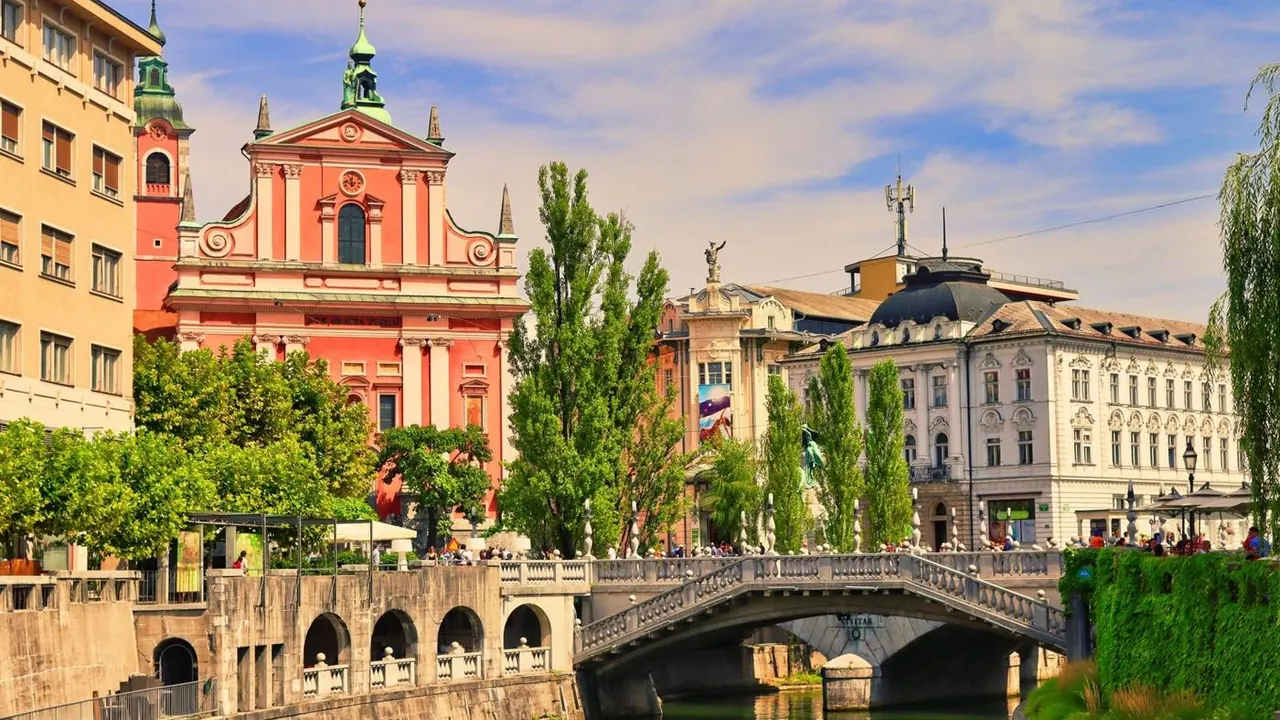
Photos: Budapest by Perituss, CC0; Ljubljana by detait, Pexels License.
Budapest or Ljubljana?
Our verdict in twelve categories, each scored against the same fixed benchmark cities, and the climate month by month, so you can choose for your trip.
Choose Budapest for
- wellness
- nightlife
- live music and the arts
Budapest is the bigger trip. It suits travellers who want a capital with real weight: a river front lined with Parliament and the Castle District, old-master paintings, an opera house and concert halls with music most nights, and late evenings in the ruin bars of District VII. Above all, its thermal baths give a stay a rhythm no other city in Europe can match, and it comes out a little cheaper day to day.
Choose Ljubljana for
- nature and the outdoors
- day trips
Ljubljana works best as a calm, compact base for exploring a small country. The old town is quickly seen, and the nightlife and shopping are modest. The prize is what lies beyond it: the Julian Alps, Bled, the Soča valley, the karst caves and the coast at Piran are all within easy reach. Walkers, hikers and anyone who would rather spend the evening over a glass of wine by the river than out clubbing will be happier here.
Scoreboard
Twelve categories on one fixed scale from 0 to 100. The shaded stretch is the gap between the two.
Your match
Pick a travel style or drag the sliders, and both match scores follow your weighting.
Wins on wellness and nightlife with your weighting.
Wins on nature and the outdoors and day trips with your weighting.
What matters to you?
Category by category
What the scores mean for a trip.
Beaches & swimming
Neither city is a beach destination, and they offer different kinds of swim. In Budapest, summer bathing means the big open-air lidos such as Palatinus on Margaret Island, with lawns, several pools and crowds all day, or the shallow, warm water of Lake Velence under an hour away.
In Ljubljana, you swim in Alpine lakes: Bled about an hour out, or the colder, clearer Bohinj. The Adriatic at Piran is also reachable, though its shore is concrete and pebble rather than sand. Budapest has the better swimming in town, and Ljubljana has the more scenic water further out.
Food & drink
Budapest eats more richly and more widely. There is paprika-red goulash and chicken paprikash, lángos and chimney cake from street stalls, the Great Market Hall, the layered cakes of the grand coffee houses, and a serious modern restaurant scene alongside them.
Ljubljana's cooking is plainer and more rural, built on Carniolan sausage, štruklji and jota served in gostilna inns, with Alpine produce at the Central Market. Both cities shine for wine. Tokaji and Eger reds set the tone in Budapest, while Ljubljana is good for trying the orange wines of the Vipava valley and Brda. Its range runs out sooner.
Culture & sights
Budapest is in a different league for sightseeing. Its UNESCO-listed Danube panorama, Parliament, the Royal Palace and Andrássy Avenue are big sights, and the Museum of Fine Arts, the Dohány Street Synagogue and Memento Park add history and art that take several days to cover.
Ljubljana's appeal is the cityscape as a whole. Plečnik's bridges, colonnades and library give the compact baroque centre a single architect's stamp, and the castle sits above it. The museums are good but not major, and two or three days is enough.
Nightlife
For a big night out, Budapest is far ahead. The ruin bars in the courtyards of District VII, the clubs on Kazinczy and Király streets and the summer party boats keep going well past 2am, though weekends can get rowdy with stag groups.
Ljubljana's evenings are mostly spent on terraces along the Ljubljanica, livelier in term time thanks to the students. Metelkova's scruffy clubs are the one late option of note. It is better for a drink by the water than for dancing until dawn.
Nature & outdoors
Ljubljana has the stronger outdoors by some way. Šmarna Gora and Tivoli Park are on its doorstep, the Kamnik-Savinja Alps are about 40 minutes away, and Triglav National Park, the Vintgar gorge and the Soča's rafting are roughly an hour out. There is small-resort skiing in winter.
Budapest's countryside is gentler. The oak and beech forests of the Buda Hills, reached by cogwheel railway and chairlift, and the ridges of the Danube Bend are good for walking and cycling. But there are no mountains, so it is a matter of pleasant rambles rather than real hiking.
Day trips
Ljubljana's central position in a small country makes it the better base. Bled, Škofja Loka, Predjama Castle, Lipica, the UNESCO mining town of Idrija and the coast at Piran all make easy outings, and Trieste and Zagreb are about two hours away. A car helps for the smaller places.
Budapest has a strong classic circuit of its own. Along the Danube Bend you can visit Szentendre, Visegrád and Esztergom, with Gödöllő's palace closer still. At around two hours, the choice widens to Eger and Hollókő, but there is less landscape variety close in.
Good for families
Budapest gives children more to do. There is the historic zoo in City Park, the Children's Railway run by schoolchildren, a hands-on science centre, bike carts on Margaret Island, and lidos with wave pools and slides in summer. The metro stairs and the loud weekend nights in District VII take some planning.
Ljubljana is easier than it is exciting. A small, car-free centre suits pushchairs, and the castle funicular, the Dragon Bridge and the puppet theatre please young children. Most families will have seen its sights for children within a few days.
Getting around
Both cities are easy to get around without a car, but in different ways. Budapest relies on public transport: trams along the river and round the Grand Boulevard, a short, simple metro including continental Europe's oldest line, river ferries, and cheap taxis, with steeper Buda reached by funicular and bus.
Ljubljana has no metro or tram, and needs none. Almost everything lies within about 20 minutes' walk across a largely pedestrianised centre, with bike-share and electric shuttles as back-up. Intercity buses or a hired car handle trips into the country.
Shopping & style
Budapest is the better place to shop, even if few people go for it. It has Herend and Zsolnay porcelain, a short luxury run on Andrássy Avenue, Hungarian design boutiques in Districts V and VII, and the communist-era finds of the Ecseri flea market.
Ljubljana's shopping is small and local. Expect honey, pumpkin-seed oil, coastal salt, Idrija lace and gingerbread hearts, a Sunday antiques market on the embankment, and a few boutiques on Trubarjeva. There is no luxury quarter to speak of.
Affordability
Budapest is somewhat easier on the wallet. Transport, wine and coffee are cheap, and good mid-range rooms near the centre are easy to find. Costs only climb on Váci utca and around the Basilica.
In Ljubljana, walking everywhere and set lunch menus keep daily spending modest. The small stock of central hotels, though, means old-town rooms in July and August are priced like those in Western Europe. Staying further out or avoiding high summer helps.
Live music & performing arts
Budapest is a real music city. There is the State Opera House on Andrássy Avenue, the Art Nouveau hall of the Liszt Academy, the national concert hall at Müpa, the Budapest Festival Orchestra and its own operetta tradition, so a good concert is available most nights.
Ljubljana does well for its size. The Philharmonic's roots go back to 1701, there is a national opera and ballet, and the summer Ljubljana Festival fills Plečnik's Križanke courtyard. It is enough for an evening out but not for a trip built around music. In both cities spoken theatre is mostly not in English.
Wellness & relaxation
This is where Budapest stands furthest apart. Its thermal baths are part of daily life: the steaming outdoor pools of the Széchenyi, the mosaics of the Gellért, the Ottoman octagonal pools of Rudas and Király, and the Lukács for a local soak.
Ljubljana has no bathing tradition of its own, just an indoor water park with saunas and a few hotel spas. Its restfulness comes from a quiet, green, car-free centre and long riverside afternoons, with Slovenia's thermal spa towns about an hour's drive away.
When should you go?
Pick your month. The climate figures are measured averages, not a forecast.
Budapest in July
Ljubljana in July
Daytime high, °C
Rainfall in the month, mm
Temperature and rainfall are climate normals, averaged over the years shown. Budapest: 1991-2020 normals, Budapest Met Center (2.1 km from centre). Ljubljana: 1991-2020 normals, Ljubljana / Bezigrad (1.9 km from centre).
The two cities have almost the same temperatures through the year. Summer days reach about 28°C in both, May, June and September are pleasantly warm for walking, and winters are cold, with highs around 4°C from December to January. The real difference is rain. Budapest is fairly dry all year, and its summer is the sunniest stretch, which suits the open-air lidos and Lake Velence from June to August. Ljubljana is far wetter, with rain building through late spring and peaking in autumn, when September brings around 159mm against roughly 48mm in Budapest.
So Budapest is reliable for a city break from late spring to early autumn, and in winter the hot outdoor baths make the cold part of the fun. Ljubljana is at its best from May to early September for the mountains and lakes. Autumn walking there is lovely, but pack for showers.
Which traveller are you?
For a relaxing and wellness trip, Budapest is the clear choice. More than a hundred hot springs feed the Széchenyi, the Gellért and the Ottoman domes of Rudas and Király, and Ljubljana's water park and hotel spas cannot compete with that.
On a food and nightlife trip, Budapest gives more. There are the ruin bars and late clubs of the Jewish Quarter, wine bars pouring Tokaji, and a wider range of restaurants. Ljubljana's evenings are gentler riverside drinks, and Metelkova is its only real late-night scene.
For an outdoors trip, Ljubljana wins easily. Triglav National Park, the Kamnik-Savinja Alps, rafting on the Soča and the karst caves are all about an hour away, while Budapest offers pleasant forest walks in the Buda Hills but nothing mountainous.
Before you go
| Measure | Budapest | Ljubljana |
|---|---|---|
| Official language | Hungarian | Slovene |
| Currency | Forint (HUF) | Euro (EUR) |
| Sockets | CF230 V, 50 Hz | CF230 V, 50 Hz |
| Driving side | Right | Right |
| Time zone | UTC+1, UTC+2 in summer | UTC+1, UTC+2 in summer |
| Emergency number | 112 | 112 |
| Elevation | 117 m | 309 m |
| Main airport | Budapest Liszt Ferenc International Airport (BUD)18 km from centre157 non-stop destinations | Ljubljana Jože Pučnik Airport (LJU)20 km from centre32 non-stop destinations |
| Public holidays this year | 13 days | 21 days |
By the numbers
| Measure | Budapest | Ljubljana |
|---|---|---|
| City population | 1,675,777 | 284,293 |
| People per km² | 3,191 | 1,736 |
| Museums within 10 km | 81 | 14 |
| UNESCO World Heritage sites within 50 km | 1 | 3 |
Where else could you go?
Every comparison below shares a destination with this one, so you can follow Budapest or Ljubljana somewhere new.