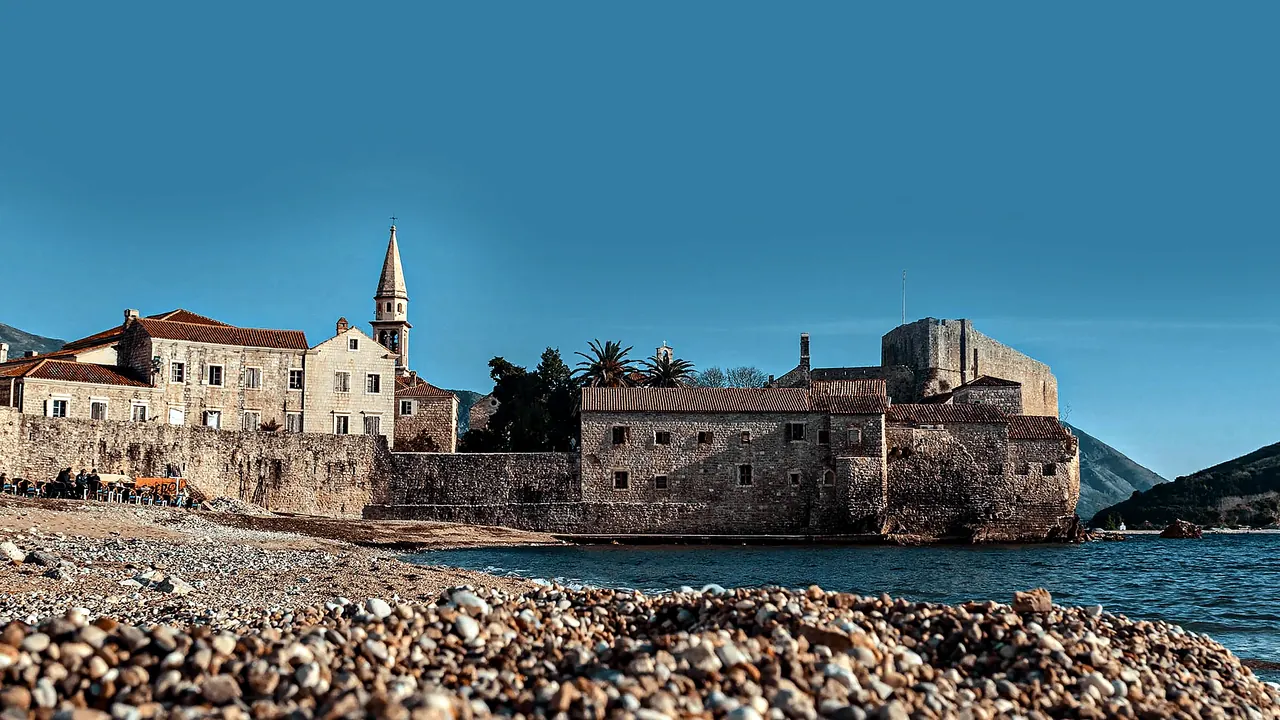
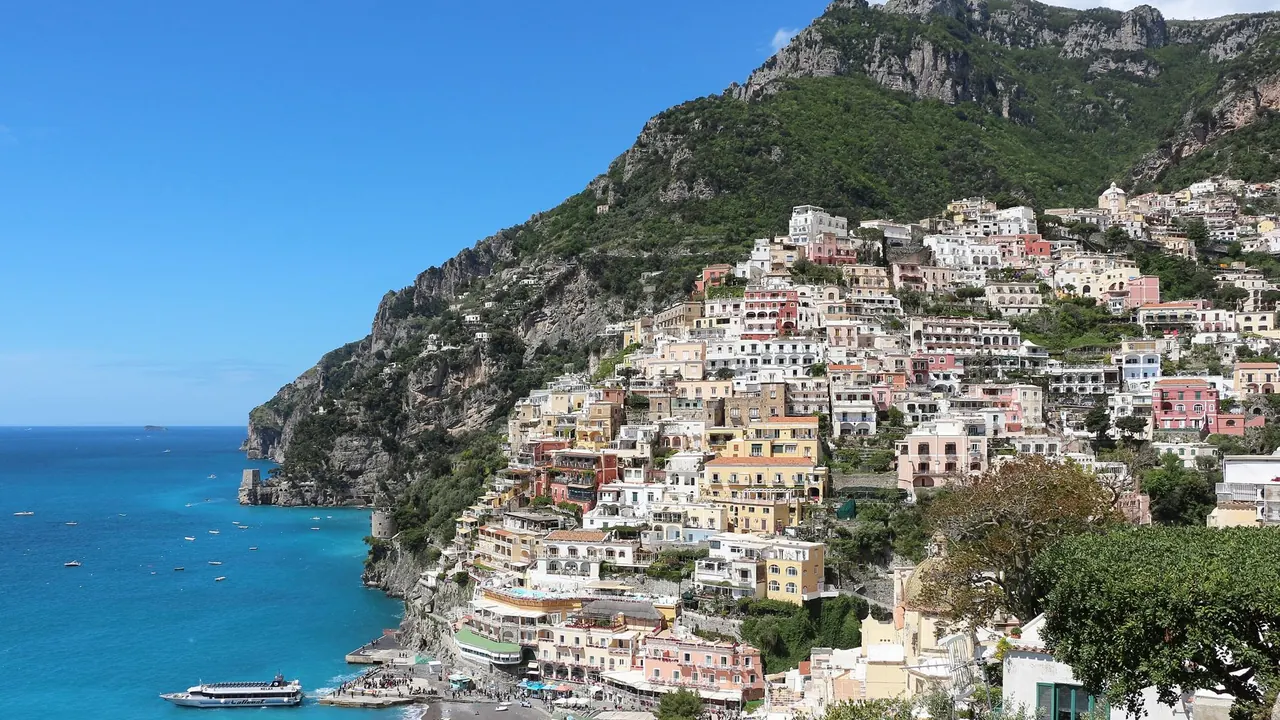
Photos: Budva by Ender Vatan, Pexels License; Positano by Bernard Gagnon, CC BY 4.0, cropped.
Budva or Positano?
Our verdict in twelve categories, each scored against the same fixed benchmark cities, and the climate month by month, so you can choose for your trip.
Choose Budva for
- prices
- nightlife
- families
Budva suits travellers who want a lively beach resort that doesn't drain the budget. The town beaches are close at hand, summer nights run late in seafront bars and clubs, and families get gently shelving bays and a water park. Kotor, Cetinje and Lake Skadar are all easy outings, and food, rooms and buses cost far less than on the Italian coast.
Choose Positano for
- shopping
- wellness
- day trips
Positano is the choice for a slower, more scenic trip where cost matters less than setting. The mountains drop straight into the sea, the Path of the Gods runs above the town and ferries reach Capri, Amalfi and Ravello. Evenings mean aperitivo and dinner rather than clubbing, the hotels lean towards spas and terraces, and the boutiques sell a look found nowhere else. Expect stairs everywhere and some of the highest prices in Italy.
Scoreboard
Twelve categories on one fixed scale from 0 to 100. The shaded stretch is the gap between the two.
Your match
Pick a travel style or drag the sliders, and both match scores follow your weighting.
Wins on prices and nightlife with your weighting.
Wins on shopping and wellness with your weighting.
What matters to you?
Category by category
What the scores mean for a trip.
Beaches & swimming
These are two equally strong beach towns, and the difference is in the shore itself. Budva has more and wider beaches, from Slovenska Plaza and the Mogren coves to the long curve of Becici and the pink-tinged sand at Sveti Stefan. Most of it is fine pebble or coarse sand, with loud music and dense sunbeds in town.
Positano's Spiaggia Grande and Fornillo are dark grey sand and pebble that drops off steeply, so water shoes help. Its quieter coves, such as Arienzo and Laurito, are reached by long stairways or boat. The sea is clear and deep blue, and in high summer both towns' beaches fill early.
Food & drink
Neither town is a destination for eating, though Positano does its narrow range a little better. Its long terrace lunches of spaghetti with clams, scialatielli and lemon desserts come with a sea view, and a few hotel dining rooms aim higher.
Budva's best food comes from the hinterland and the family konobas: Njegusi ham, mountain cheese, grilled squid and Vranac wine from around Lake Skadar. It also has more everyday eating, such as burek from bakeries and grill houses, which Positano largely lacks.
Culture & sights
Neither offers much sightseeing, and each has an hour or two of it. In Budva that means the walled Stari Grad on its peninsula, with its marble lanes, the Citadel, small churches and an archaeological museum of Greek and Roman finds.
Positano's sight is the town itself, a stack of pastel houses under the majolica dome of Santa Maria Assunta, plus a Roman villa buried by Vesuvius and excavated beneath the church. For serious heritage, Budva points you to Kotor and Cetinje, Positano to Pompeii and Naples.
Nightlife
Budva is the clear choice for going out. In summer the seafront along Slovenska Plaza turns into a strip of beach bars and terrace clubs, the open-air club on the hill runs until dawn, and the old town's small bars stay busy late. It is aimed at groups who want loud pop and house.
Positano's evenings are aperitivo, a long dinner and perhaps one dressed-up night in the cave club at the end of Spiaggia Grande. Couples will like the calm, but there is not much more to it. Both towns go quiet once the season ends.
Nature & outdoors
Positano's landscape is the more spectacular. The Lattari mountains fall sheer into the sea, and the Path of the Gods and the steeper trails up to Montepertuso and the ridges start right from town. Kayaks follow the cliffs to grottoes and the Li Galli islets.
Budva has a dramatic limestone backdrop too, but its big outdoor sights sit about an hour inland. Lovcen's beech forests and Lake Skadar's reed beds and birdlife need a drive. Closer in there are coastal paths, sea kayaking and paragliding above Becici.
Day trips
Positano is the stronger base for day trips, though Budva is easier to use out of season. From Budva, Kotor and its bay are about half an hour away, with baroque Perast beyond, and Cetinje and the wine villages around Virpazar on Lake Skadar are less than an hour inland. Sveti Stefan, Stari Bar and Ulcinj's Ottoman old town lie down the coast, and all of them can be reached by road at any time of year.
Positano has more places within reach, and bigger ones. Capri, Amalfi's cathedral, Ravello's gardens and Sorrento are a short boat or bus ride away. Pompeii and Herculaneum, two of the best-preserved Roman sites in Europe, make a full day, and so do the Greek temples at Paestum. The catch is that most ferries run only from spring to autumn, so in winter you are left with slow buses along the coast road.
Good for families
Budva is much the better bet with children. Its beaches shelve gently, Becici and the bays down the coast are calmer, a water park sits above town and children are welcome on the promenade late into summer evenings. Staying outside the noisy centre in July and August helps.
Positano is built of stairs, so pushchairs are useless, and its pebbly beaches drop off quickly. Older children who like boats and swimming will enjoy it, but toddlers are hard work there.
Getting around
Budva is the easier of the two to move around, if not by much. Its old town, marina and promenade lie on flat ground close together, and buses run along the coast to Kotor. A car or driver helps for Lovcen and Cetinje, though the coast road jams in summer.
In Positano, almost every walk means hundreds of steps. The local bus loops through the upper town, and regional buses crawl along a narrow road where parking is scarce. Boats are the practical way to reach other towns, mainly in season.
Shopping & style
Positano gives shopping a real place in the trip. Moda Positano linen and printed resort wear, sandals made to measure and hand-painted ceramics fill the lanes down to the beach, though it is all one style.
Budva has souvenirs, silver filigree, local olive oil, honey and rakija in the old town lanes. There is also a modest centre near the marina for basics, but nothing worth planning a day around.
Affordability
Budva costs far less. It is Montenegro's priciest resort and the seafront charges more in high summer, but bakeries, grill houses, local buses and back-street apartments are cheaper than on most Western European coasts.
Positano is among the most expensive places to stay in Italy. Sea-view rooms, loungers, terrace meals, boat trips and transfers all cost a lot. Staying in Praiano or Sorrento cuts the cost considerably, and in both towns the shoulder months are kinder.
Live music & performing arts
Budva's one summer event is in town. The Grad Teatar festival puts on theatre, concerts and readings on open-air stages in the old town squares. The rest of the time, live music means cover bands in the seafront bars.
To see Positano's best performances you go out for the evening to Ravello, whose classical music festival holds concerts on a terrace above the sea. Naples is the place for opera, and outside the summer neither town has a season to speak of.
Wellness & relaxation
Positano is the more restful of the two. Several upscale hotels have spas and pools cut into the cliff, and the slow lunches and terrace afternoons suit an unhurried stay, even if the stairs and summer crowds take some of the ease away.
Budva's spas are in the big resort hotels at Becici and around Sveti Stefan. In high summer the seafront music carries late into the night, so a quiet stay means coming in May, June or late September, or staying further down the coast.
When should you go?
Pick your month. The climate figures are measured averages, not a forecast.
Budva in July
Positano in July
Daytime high, °C
Rainfall in the month, mm
Where the figures come from
Budva has no rain gauge within 25 km of the centre, so its rainfall comes from a gridded climate dataset read at the city rather than from a gauge further away.
Budva's sunshine is measured 40 km from the centre, at Podgorica-Grad.
Positano's temperatures are measured 25 km from the centre, at Capri.
Positano has no rain gauge within 25 km of the centre, so its rainfall comes from a gridded climate dataset read at the city rather than from a gauge further away.
Positano's sunshine is measured 59 km from the centre, at Grazzanise.
Temperature and rainfall are climate normals, averaged over the years shown. Budva: 1991-2020 normals, Tivat (15.8 km from centre). Positano: 2005-2025 (sunshine 1991-2020, rainfall 1991-2020) normals, Capri (25.3 km from centre).
Both towns have the same beach season. The sea is pleasant from June to early October and reaches about 26°C in August at both. Budva runs hotter in high summer, with afternoons around 32°C, which is uncomfortable for walking in the sun, while Positano peaks a little lower. Its endless stairs make that heat tiring all the same. July and August are the sunniest and driest months in both places.
The real difference comes after summer. From September Budva turns wet and stays that way through winter, with November its rainiest month at over 200mm. Positano gets rain then too, but far less. For walking and sightseeing, May, June and late September suit both, while a winter trip is milder and drier on the Amalfi side.
Which traveller are you?
On a family trip with young children, Budva asks much less of parents. Days at the beach run easily and nothing needs carrying far. The price is noise on summer nights in the centre. Positano suits confident older swimmers but wears out anyone carrying a toddler.
For a trip on a tight budget, Budva lets the money stretch to a longer stay, as long as you eat and sleep away from the seafront. In Positano you pay for the setting itself, and saving money means staying in another town and travelling in.
On a shopping trip, Budva fills an idle hour between the beach and dinner and not much more. Positano is worth planning a day around, but only if you want its single resort look rather than a choice of styles.
Before you go
| Measure | Budva | Positano |
|---|---|---|
| Official language | Montenegrin | Italian |
| Currency | Euro (EUR) | Euro (EUR) |
| Sockets | CF230 V, 50 Hz | CFL230 V, 50 Hz |
| Driving side | Right | Right |
| Time zone | UTC+1, UTC+2 in summer | UTC+1, UTC+2 in summer |
| Emergency number | 112 | 112 |
| Elevation | 3 m | 142 m |
| Main airport | Tivat Airport (TIV)17 km from centre42 non-stop destinations | Naples International Airport (NAP)33 km from centre131 non-stop destinations |
| Public holidays this year | - | 13 days |
By the numbers
| Measure | Budva | Positano |
|---|---|---|
| City population | 13,338 | 3,729 |
| People per km² | 109 | 429 |
| Museums within 10 km | 0 | 10 |
| UNESCO World Heritage sites within 50 km | 3 | 5 |
| Swim season, months above 21 °C | 5 months | 5 months |
Where else could you go?
Every comparison below shares a destination with this one, so you can follow Budva or Positano somewhere new.
- Sorrentovs Positano
- Amalfivs Positano
- Kotorvs Budva
- Salernovs Positano
- Naplesvs Positano
- Dubrovnikvs Budva