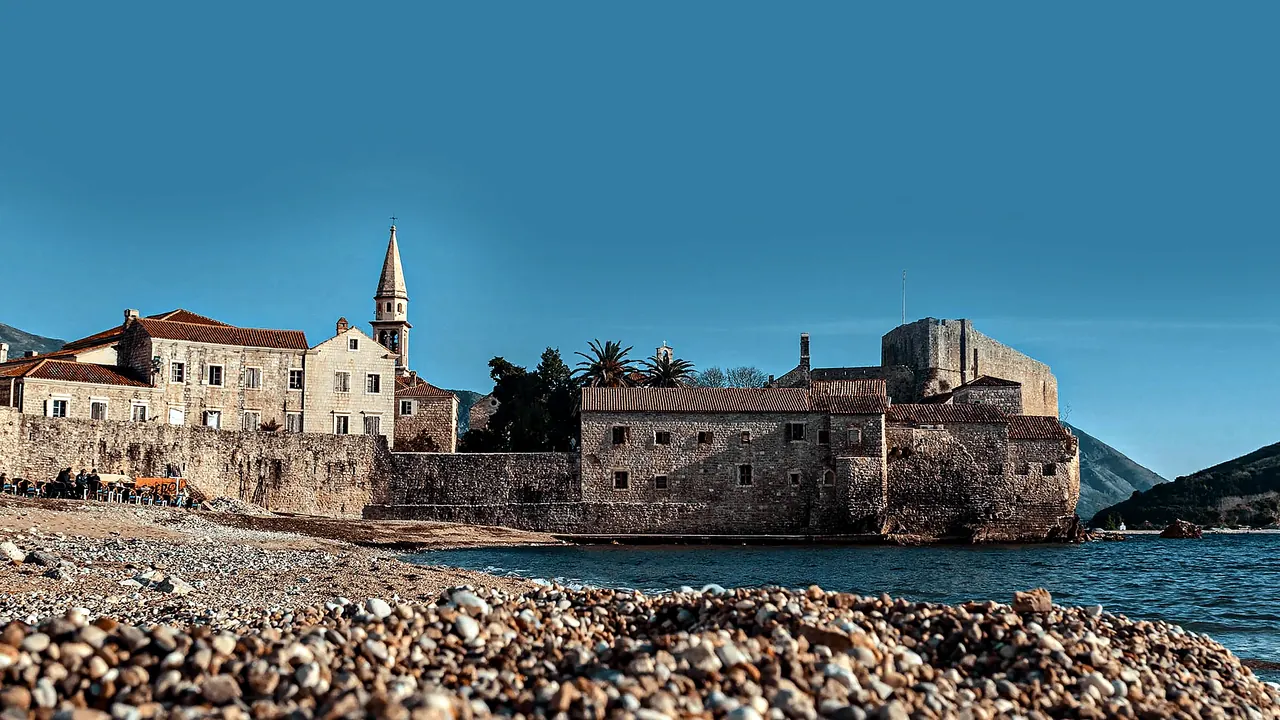
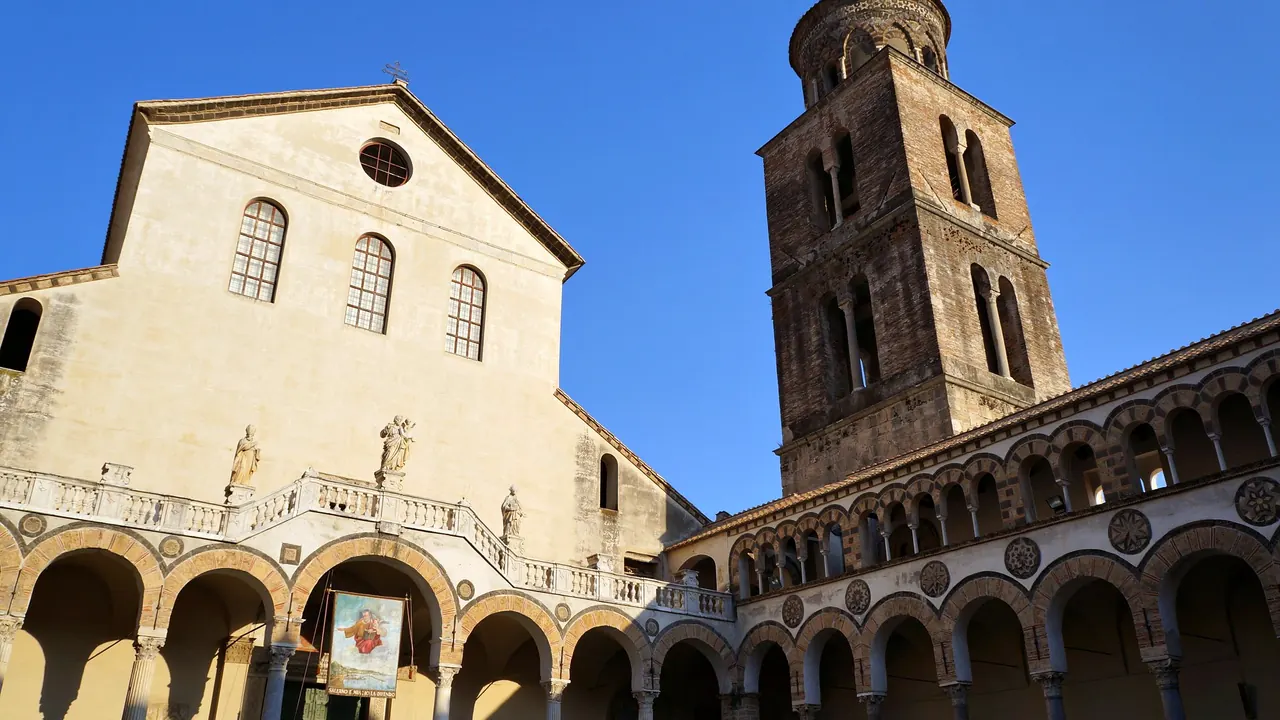
Photos: Budva by Ender Vatan, Pexels License; Salerno by Leandro Neumann Ciuffo, CC BY 2.0, cropped.
Budva or Salerno?
Our verdict in twelve categories, each scored against the same fixed benchmark cities, and the climate month by month, so you can choose for your trip.
Choose Budva for
- nightlife
- beaches
Budva is the pick for a sea-first summer trip. The beaches start at the old town walls and carry on bay after bay down the coast, the nights along the seafront run loud and late, and the mountains behind make a dramatic backdrop for boat trips and paragliding. It suits groups of friends and sun-seekers who are happy to let the beach shape the days and don't need much from museums, menus or shops.
Choose Salerno for
- food and drink
- live music and the arts
- shopping
Salerno rewards travellers who want more than a sunbed. It is a working Italian city with honest Campanian cooking, a Norman cathedral and an opera house, and above all it puts Paestum, Pompeii, Naples and the Amalfi Coast within easy reach by train or ferry. Choose it if you'd rather fill a week with sights, good meals and coastal walks, and treat swimming as one pleasure among several.
Scoreboard
Twelve categories on one fixed scale from 0 to 100. The shaded stretch is the gap between the two.
Your match
Pick a travel style or drag the sliders, and both match scores follow your weighting.
Wins on nightlife and beaches with your weighting.
Wins on food and drink and live music and the arts with your weighting.
What matters to you?
Category by category
What the scores mean for a trip.
Beaches & swimming
Budva has the better beaches and many more of them. Slovenska Plaza runs along the town front, and a string of bays follows down the coast: Mogren, Becici, Jaz and the sand facing Sveti Stefan. The shore is fine pebble or coarse sand, and in high summer it is packed with sunbeds and music.
Salerno's grey-sand city beaches are fine for a dip, but the water near the port is cloudy. A proper beach day means taking the long sandy lidos towards Paestum or a ferry to the clear, pebbly coves of the Amalfi Coast.
Food & drink
Salerno is far stronger for eating. Buffalo mozzarella comes fresh from the plain towards Paestum, colatura comes from Cetara next door, and the old town is full of friggitorie, wood-fired pizza and lemon pastries, all priced for locals.
Budva's best food is regional, such as Njegusi ham, mountain cheese, grilled squid at family konobas and Vranac red wine. Around them, though, the promenade restaurants are uneven and the range is narrow for anyone who travels to eat.
Culture & sights
Salerno has more to see. There is the Norman cathedral with Saint Matthew's crypt, the Giardino della Minerva linked to Europe's earliest medical school, and the Arechi Castle above the gulf, which together fill a day or two of stepped lanes and churches.
Budva's walled Stari Grad, with its small churches, Citadel and archaeological museum, takes an hour or two. Much of it was rebuilt after the 1979 earthquake.
Nightlife
Budva has the bigger night out. In summer, beach bars and terrace clubs line Slovenska Plaza and a big open-air club on the hill runs until dawn, which is why groups come from across the Balkans. It all shuts down from October.
Salerno is more about drinking outside wine bars and pubs around Largo Campo and the evening passeggiata. It is sociable and easy-going, but for clubbing you have to head out along the coast or to Naples.
Nature & outdoors
Both sit where limestone mountains meet the sea, but Salerno's surroundings go further. The Amalfi Coast's cliffs and lemon terraces, the Path of the Gods and Valle delle Ferriere trails, and the gorges and headlands of the Cilento give real variety for walkers.
Budva has a dramatic backdrop and good options on the water, including sea kayaking, cliff boat trips and paragliding above Becici. Its bigger landscapes, Lovcen's beech forests and the reeds of Lake Skadar, are each about an hour's drive away.
Day trips
Day trips are the main reason to choose Salerno. Paestum's temples, Pompeii, Naples, Herculaneum and Caserta are all easy by train, and ferries run to Amalfi and Positano, with Ravello just above.
Budva is a sound base for the Montenegrin coast. Kotor and Perast are close, and you can also reach Cetinje, Lake Skadar's wine villages and Ulcinj. Most of these need the busy coast road, and Dubrovnik means a long day with a border crossing.
Good for families
Both are reasonable with children and neither has a zoo or aquarium, so the difference is in kind. Budva offers gently shelving beaches, calmer bays at Becici and a water park. Salerno has a long, flat, car-free promenade with playgrounds, shallow sandy beaches to the south and Pompeii for older children, though its old town is all steps and the summer heat at the ruins can be hard going.
Getting around
Salerno is easier to get around. The centre is walkable end to end, and regional trains run straight to Naples, Pompeii and Paestum, while ferries handle the Amalfi Coast in summer, so most visitors never need a car.
Budva's compact centre is just as walkable, but there is no railway. One coast road carries the buses and jams badly in summer, and Lovcen or Cetinje are far easier to reach with a car or driver.
Shopping & style
Salerno offers more, without being a shopping destination. Corso Vittorio Emanuele has Italian chains and clothing, and nearby Vietri sul Mare sells hand-painted majolica, plus there is limoncello and colatura to take home. Budva's shopping stops at souvenirs, beachwear, silver filigree, rakija and a modest mall by the marina.
Affordability
Overall costs are much the same, and both get pricier in July and August. Budva's premium falls on the seafront and its sunbeds, and apartments a few streets back are good value. Salerno is a cheap base next to the expensive Amalfi villages, but ferries, lidos and entry to the big archaeological sites add up over a stay.
Live music & performing arts
Budva's stage life comes down to one summer. Grad Teatar, a festival that has run for decades, turns the squares of the walled old town into open-air venues for plays, readings and concerts in the warm months. Outside that window you get cover bands on the seafront, and from autumn to spring there is no programme at all.
Salerno gives you a reason to dress up at any time of year. The Teatro Verdi, an ornate opera house built in the image of the San Carlo in Naples, runs a proper season of opera, ballet and orchestral music, so a spring or autumn visit can include a night at the theatre. In summer the music moves outside, and a concert on Ravello's terraces high above the sea is an easy outing from the city.
Wellness & relaxation
Neither has its own bathing tradition, but Salerno is slightly more restful. It has sunset walks along the palm-lined promenade, quiet morning lanes and the open-air sulphur pools of Contursi Terme an hour inland.
Budva's wellness means the spas of the big Becici and Sveti Stefan resorts. In high summer, music from the seafront carries late into the night, so a slow stay works best in May, June or late September.
When should you go?
Pick your month. The climate figures are measured averages, not a forecast.
Budva in July
Salerno in July
Daytime high, °C
Rainfall in the month, mm
Where the figures come from
Budva has no rain gauge within 25 km of the centre, so its rainfall comes from a gridded climate dataset read at the city rather than from a gauge further away.
Budva's sunshine is measured 40 km from the centre, at Podgorica-Grad.
Salerno's temperatures are measured 71 km from the centre, at Grazzanise.
Salerno has no rain gauge within 25 km of the centre, so its rainfall comes from a gridded climate dataset read at the city rather than from a gauge further away.
Temperature and rainfall are climate normals, averaged over the years shown. Budva: 1991-2020 normals, Tivat (15.8 km from centre). Salerno: 1991-2020 normals, Grazzanise (71.3 km from centre).
The two climates are close through the summer and part ways in autumn. July and August are hot in both, with Budva reaching 32°C, so walking the streets is best kept to mornings and evenings. In both, the sea is warm enough for swimming from June into early October and peaks at about 26°C in August. Budva gets a little more sunshine at the height of summer, and Salerno a little more in winter.
The real difference is rain. Both turn wet from September, but Budva's autumn and winter are much heavier, peaking at around 212mm in November. Salerno stays drier in every month, which makes it the safer choice for a spring or late-autumn city trip. In both, June and September are the sweet spot for combining swimming with sightseeing. May, at around 24°C with the sea still cool, is better for walking and sightseeing than for the beach.
Which traveller are you?
On a beach and sun trip, Budva is the better choice. Slovenska Plaza and the Mogren coves are right in town, and Becici, Jaz and Sveti Stefan are only minutes away. Salerno's own beaches are only fair, so most good swimming there means travelling out.
For a culture and arts trip, Salerno clearly wins. It has a Norman cathedral and an opera house with a real season, and Pompeii, Paestum and Naples are each about half an hour away. Budva's walled old town takes an afternoon.
For a short city break, Salerno is the more rewarding few days. You can walk the centre from station to old town, the trattorias and pastry shops fill the evenings, and fast trains make a day in Naples easy. Out of summer, Budva becomes a quiet beach resort.
Before you go
| Measure | Budva | Salerno |
|---|---|---|
| Official language | Montenegrin | Italian |
| Currency | Euro (EUR) | Euro (EUR) |
| Sockets | CF230 V, 50 Hz | CFL230 V, 50 Hz |
| Driving side | Right | Right |
| Time zone | UTC+1, UTC+2 in summer | UTC+1, UTC+2 in summer |
| Emergency number | 112 | 112 |
| Elevation | 3 m | 4 m |
| Main airport | Tivat Airport (TIV)17 km from centre42 non-stop destinations | Naples International Airport (NAP)46 km from centre131 non-stop destinations |
| Public holidays this year | - | 13 days |
By the numbers
| Measure | Budva | Salerno |
|---|---|---|
| City population | 13,338 | 127,186 |
| People per km² | 109 | 2,123 |
| Museums within 10 km | 0 | 9 |
| UNESCO World Heritage sites within 50 km | 3 | 5 |
| Swim season, months above 21 °C | 5 months | 5 months |
Where else could you go?
Every comparison below shares a destination with this one, so you can follow Budva or Salerno somewhere new.