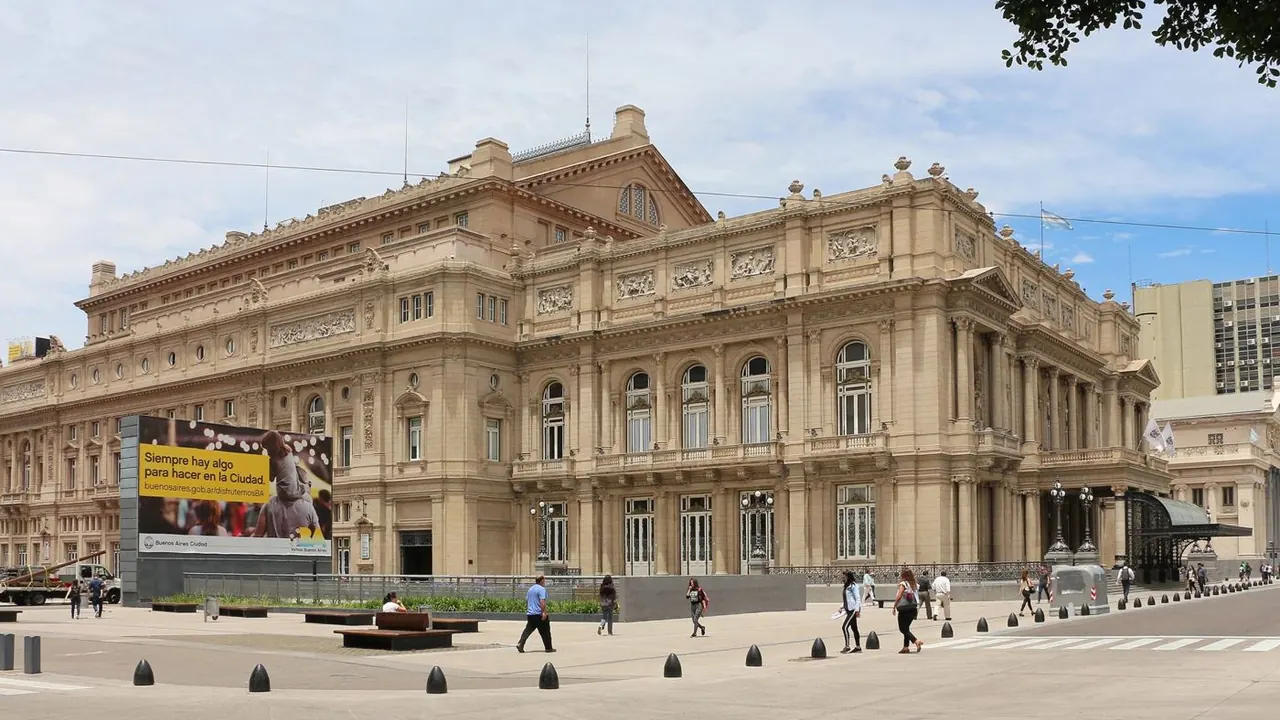
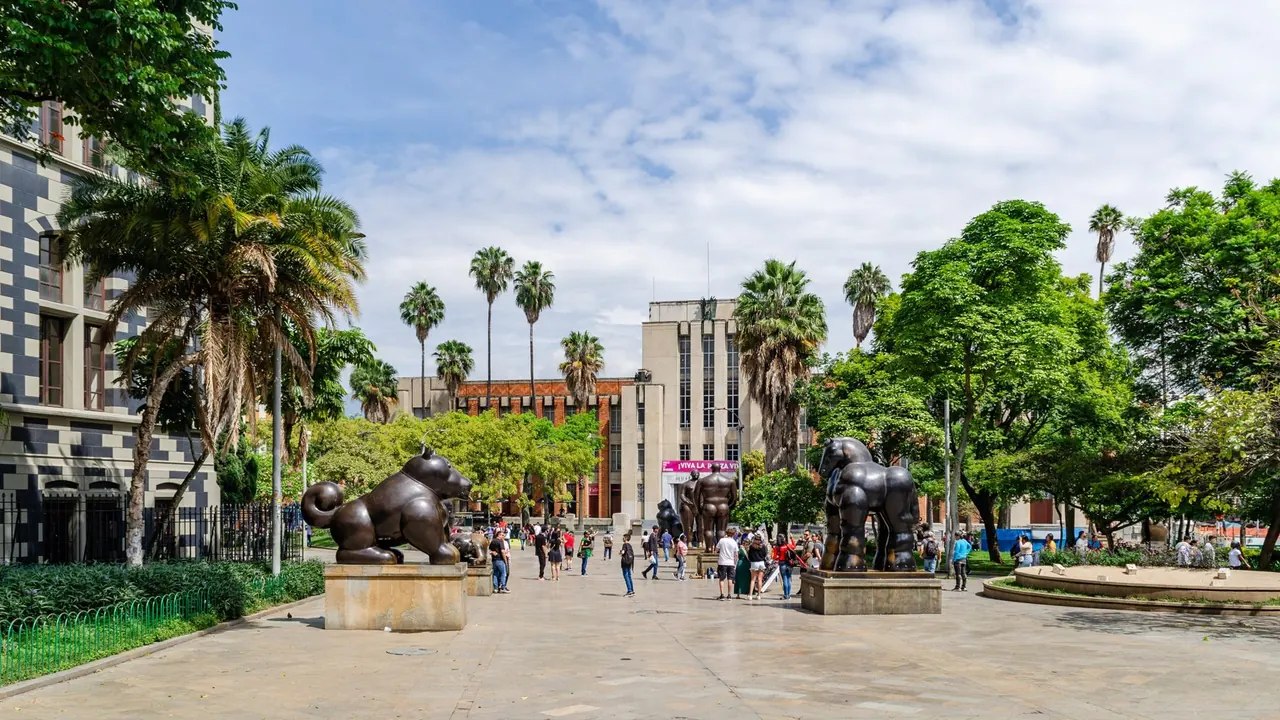
Photos: Buenos Aires by Bernard Gagnon, CC BY-SA 4.0, cropped; Medellin by Steffen Schmitz, CC BY-SA 4.0, cropped.
Buenos Aires or Medellin?
Our verdict in twelve categories, each scored against the same fixed benchmark cities, and the climate month by month, so you can choose for your trip.
Choose Buenos Aires for
- live music and the arts
- culture and sights
- nightlife
Buenos Aires suits travellers who want a big, grand city to walk and to stay up late in. Its Parisian boulevards, the marble lanes of Recoleta Cemetery, the Teatro Colón, the milongas of San Telmo and the long parrilla dinners give it far more depth in culture, food, performing arts and nightlife. It costs more and offers little real landscape, but for a trip built around the city itself it is the stronger choice.
Choose Medellin for
- nature and the outdoors
- prices
- wellness
Pick Medellín if mountains, mild air and a lighter budget matter more than great museums and opera. Cable cars carry you from the metro into the cloud forest of Parque Arví, paragliders launch above the valley and the lakes of Guatapé are an easy day out. Day-to-day costs are much lower. The city's culture is about its recent history rather than monuments, and its nights run on reggaeton and salsa rather than tango and cocktails.
Scoreboard
Twelve categories on one fixed scale from 0 to 100. The shaded stretch is the gap between the two.
Your match
Pick a travel style or drag the sliders, and both match scores follow your weighting.
Wins on live music and the arts and culture and sights with your weighting.
Wins on nature and the outdoors and prices with your weighting.
What matters to you?
Category by category
What the scores mean for a trip.
Beaches & swimming
Neither city is a place to swim, and both send beach lovers off on a separate leg of the trip. Buenos Aires at least has a waterfront: the lawns of the Costanera along the brown Rio de la Plata are good for sunbathing, and the Atlantic resorts such as Mar del Plata are a long trip south.
Medellín is land-locked in its Andean valley, so the water is a pool at a hillside finca or the reservoir at Guatapé, and the Caribbean coast means a flight.
Food & drink
Buenos Aires eats better. A parrilla dinner of wood-grilled cuts with chimichurri and Malbec is a reason to come in itself. The Italian heritage adds thick pizza, fresh pasta and excellent ice cream, and old coffee houses such as Café Tortoni make an outing of a cup of coffee.
Medellín's paisa cooking is hearty rather than refined, with bandeja paisa and arepas at the centre. Its real pleasures are the tropical fruit, the juices and the Antioquian coffee. Neither city has much range, but in Buenos Aires the dishes it does well are the more memorable.
Culture & sights
Buenos Aires has much more to see. Its sights are the Belle Époque streets from Casa Rosada along Avenida de Mayo to the Congress, the Recoleta Cemetery where Eva Perón lies, the colonial lanes of San Telmo, and serious art at the Bellas Artes and MALBA. There is enough for a week of walking.
Medellín has little colonial fabric left, and its interest is its recent story. Botero's sculptures fill the plaza by the Museo de Antioquia, the Casa de la Memoria faces the years of violence, and the escalators and murals of Comuna 13 show how the hillside barrios were tied back into the city. Two or three days cover it.
Nightlife
Both cities go out late, but Buenos Aires takes it further. Bars fill around midnight, clubs open around two and run past sunrise, and even weeknights stay busy. Palermo's hidden cocktail bars and warehouse clubs serious about electronic music lead the way, and the crowds rarely get messy.
Medellín's nights run on reggaeton in the clubs around Parque Lleras and Provenza, and on salsa in the cheaper, more local bars along La 70. It is great fun, but the tourist strips have a rougher edge, so ride-hailing after dark is the norm.
Nature & outdoors
Medellín wins clearly here. Steep green mountains rise on both sides of the city, and a cable car from the metro reaches the pine and cloud forest trails of Parque Arví. Paragliders launch above the valley from San Félix, birdwatchers head to Santa Elena, and El Peñol's granite rock stands over a lake landscape two hours away.
Buenos Aires is flat pampas with no hills in sight. Its green space is the lakes and cycling loops of the Bosques de Palermo and the Costanera Sur wetland. Its best escape is kayaking or taking a launch through the channels of the Paraná Delta.
Day trips
The two are level for day trips but very different in feel. From Buenos Aires the highlight is a ferry across the river to Colonia del Sacramento in Uruguay, with its cobbled Portuguese old town. Gaucho culture in San Antonio de Areco and the delta town of Tigre are easy rail or road trips across flat country.
Medellín's outings climb through the mountains instead. Guatapé has its painted zócalo houses and the rock beside it, and Santa Fe de Antioquia is a whitewashed colonial town in a hot lowland valley. The coffee villages of Jardín and Jericó are better kept for an overnight stay.
Good for families
Children are welcome everywhere in both cities, and both take some effort. Buenos Aires spreads its family days out: the pedal boats and planetarium in the Palermo parks, the Museo de los Niños, then Temaikèn and Tigre outside town. The very late dinners can be hard on small children.
Medellín keeps its best stops close together, with Parque Explora's aquarium, the planetarium and the botanical garden side by side, plus cable cars children love and no heat to fight. Its steep streets and the need to stick to well-known districts are the drawbacks.
Getting around
Buenos Aires is a little easier to get around. Its flat grid makes walking pleasant, and the Subte and the colectivo buses, which run day and night, reach almost everywhere on one card. The catch is sheer size, because each central neighbourhood is a long way from the next.
Medellín's metro is spotless and links to the Metrocable gondolas and a tram line, which covers the main sights well. Off that line, steep slopes mean most trips between neighbourhoods are by taxi, and the airport is about forty-five minutes away up on the plateau.
Shopping & style
Buenos Aires is the better place to shop. Argentine leather jackets, bags and shoes are the classic buy, Palermo Soho is good for browsing independent designers, and the Sunday antiques fair along Calle Defensa in San Telmo can fill a morning. Galerías Pacífico adds some grandeur.
Medellín is Colombia's textile centre, so local clothing labels and swimwear are worth a look. Most browsing happens in air-conditioned malls, though. Ceramics from Carmen de Viboral, carriel bags and coffee make better souvenirs than the crowded wholesale maze of El Hueco.
Affordability
Medellín is far cheaper. Set lunches, taxis, metro rides and good mid-range hotels all cost little, and staying in Laureles keeps even nights out modest. Only El Poblado and Provenza charge visitor prices.
Buenos Aires is middling. Transport, parrilla meals and wine are good value, but Palermo, Recoleta and Puerto Madero cost about as much as Europe. The country's long history of currency swings makes it worth checking how to pay before you travel.
Live music & performing arts
Buenos Aires is in a different league. The Teatro Colón is one of the world's great opera houses, with full seasons of opera, ballet and symphony. Avenida Corrientes and a huge independent scene keep the theatres busy, and tango is danced to live orchestras in neighbourhood halls.
Medellín's music is more local and informal: live salsa bands, and a loyalty to tango that dates from Carlos Gardel's death here in 1935. The philharmonic plays at the Teatro Metropolitano, and outdoor concerts and the Feria de las Flores fill the streets each August, but there are no opera or musical seasons.
Wellness & relaxation
Neither city is restful, and neither has a bathing tradition beyond hotel spas. In Buenos Aires you slow down by lingering, over a long café coffee or a sobremesa that stretches through the afternoon, or on a quiet Sunday morning.
Medellín makes it easier to get away. Massage and yoga are inexpensive, and a few nights at a finca or eco-lodge in the cool hills of Santa Elena are close at hand, while Argentina's thermal springs are provinces away.
When should you go?
Pick your month. The climate figures are measured averages, not a forecast.
Buenos Aires in July
Medellin in July
Daytime high, °C
Rainfall in the month, mm
Where the figures come from
Medellin has no rain gauge within 25 km of the centre, so its rainfall comes from a gridded climate dataset read at the city rather than from a gauge further away.
Temperature and rainfall are climate normals, averaged over the years shown. Buenos Aires: 1991-2020 normals, Aeroparque Bs. As. Aerodrome (4.9 km from centre). Medellin: 1958-2025 (rainfall 1991-2020) normals, Medellin / Olaya Herrera (5.2 km from centre).
Buenos Aires has proper seasons, and they run opposite to the northern hemisphere's. December to February is hot and sunny, with highs near 29°C in January, but also quite rainy, and the river is never for swimming however warm it gets. June to August is cool, with highs around 15°C and the driest weather of the year. That suits museums and cafés better than lingering outdoors. The most comfortable months for long walks across the city are March to May and October to November.
In Medellín the temperature hardly moves, with afternoons around 28°C every month, so the choice comes down to rain. The two wet seasons, April to May and October to November, are heavy, with October reaching 356mm. December to February and July to August are much drier, with January at about 96mm. Those months are the best time for Parque Arví and the trip out to Guatapé, and December to February is also when Buenos Aires is in high summer.
Which traveller are you?
On a culture and arts trip, Buenos Aires fills both days and evenings: modern art at MALBA in the morning, a long walk down Avenida de Mayo, then ballet at the Teatro Colón or a play on Corrientes. Medellín's story is moving but takes only two or three days.
For a trip on a tight budget, Buenos Aires works if you eat at neighbourhood pizzerias and keep out of Palermo's cocktail bars. In Medellín the same money goes much further, with fresh juice from street stalls, salsa nights along La 70 and a hired driver for Guatapé.
On an outdoors trip, Buenos Aires gives you a morning run round the Palermo lakes and a day paddling the delta. From Medellín, a metro ride brings real hiking on pre-Hispanic paths through cloud forest, with birdwatching at dawn and a tandem paraglide over the valley.
Before you go
| Measure | Buenos Aires | Medellin |
|---|---|---|
| Official language | Spanish | Spanish |
| Currency | Argentine Peso (ARS) | Colombian Peso (COP) |
| Sockets | CI220 V, 50 Hz | AB110 V, 60 Hz |
| Driving side | Left | Right |
| Time zone | UTC-3 | UTC-5 |
| Emergency number | 117 or 911 | 123 |
| Elevation | 25 m | 1,405 m |
| Main airport | Ezeiza International Airport - Ministro Pistarini (EZE)28 km from centre48 non-stop destinations | Jose Maria Córdova International Airport (MDE)19 km from centre41 non-stop destinations |
| Public holidays this year | 16 days | 19 days |
By the numbers
| Measure | Buenos Aires | Medellin |
|---|---|---|
| City population | 3,121,707 | 2,529,403 |
| People per km² | 15,355 | 6,644 |
| Museums within 10 km | 76 | 14 |
| UNESCO World Heritage sites within 50 km | 1 | 0 |
| Swim season, months above 21 °C | 4 months | - |
Where else could you go?
Every comparison below shares a destination with this one, so you can follow Buenos Aires or Medellin somewhere new.