Bulgaria
Varna
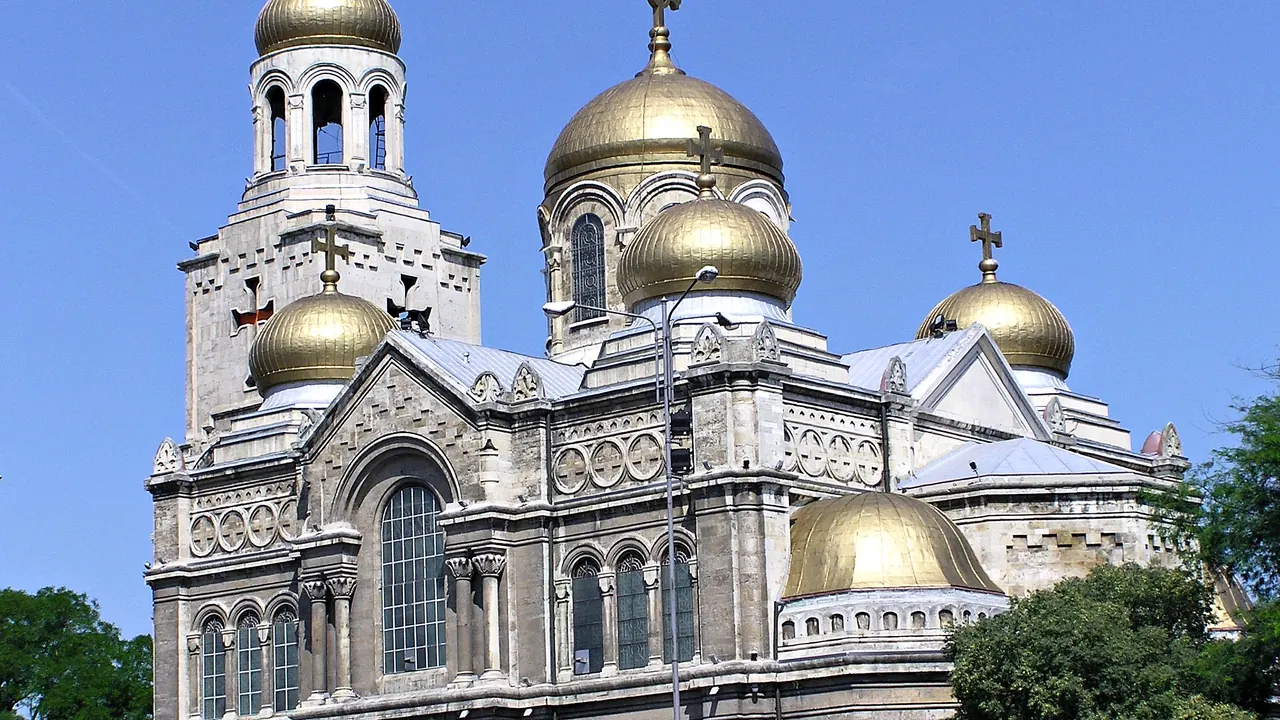
The cathedral and its golden domes
- Affordable cities76
- Beaches70
- Families62
Photo: Raphaël Toussaint, CC BY-SA 3.0, cropped
Match
54
Every category weighted equally
- Beach & sun57
- Culture & arts51
- Food & nightlife51
- Family trip58
- Outdoors56
- Relax & unwind55
- Shopping & style49
- On a budget56
Varna in twelve categories
Our verdict on each, scored 0 to 100 against the same fixed benchmark cities, so a score means the same thing on every page.
Beaches & swimming. Scores 70 out of 100.
Food & drink. Scores 45 out of 100.
Culture & sights. Scores 45 out of 100.
Nightlife. Scores 55 out of 100.
Nature & outdoors. Scores 52 out of 100.
Day trips. Scores 60 out of 100.
Good for families. Scores 62 out of 100.
Getting around. Scores 55 out of 100.
Shopping & style. Scores 32 out of 100.
Affordability. Scores 76 out of 100.
Live music & performing arts. Scores 42 out of 100.
Wellness & relaxation. Scores 52 out of 100.
Varna category by category
Beaches & swimming
70In summer the beach is the reason most people come to Varna. A strip of sand runs below the Sea Garden right along the city front, with beach clubs, piers and lifeguarded sections. North of town the coast becomes a chain of resorts, St Konstantin and Elena and Golden Sands among them, with wide sandy beaches 10km to 20km out. In July and August the Black Sea warms to about 24°C to 26°C, the slope is gentle and the waves are usually small.
The season is short, though. Swimming is comfortable from late June to mid September, and the water is greener and less clear than in the Mediterranean. The city beaches fill up on summer weekends, and you will find quieter sand further north towards Balchik or south past Kamchia.
Food & drink
45Eating in Varna means Bulgarian tavern cooking with a seaside slant. Expect shopska salad, grilled meats, banitsa pastries in the morning and plenty of Black Sea fish. The local specialities are fried sprats eaten by the handful, mussels from the farms off the coast, and turbot in season. Wine from the Black Sea region is reliable, especially the whites, and rakia opens most meals.
The best meals are at simple fish places near the port and the beach, and in the mehana taverns away from the main promenade. The food is honest and filling but not very varied. Outside summer, the seafront kitchens and resort restaurants mostly shut.
Culture & sights
45Varna's headline sight is the gold from the Varna Necropolis in the Archaeological Museum. It is about six thousand years old and among the oldest worked gold ever found. Its other big sight is the Roman Thermae, the ruins of a large public bath complex in the old Odessos quarter. The Dormition Cathedral, with its gilded domes, marks the centre.
The rest is a pleasant afternoon's worth. There are smaller museums of ethnography and the navy, the Aladzha cave monastery carved into a cliff on the northern edge of the city, and the royal Euxinograd palace on the coast. The streets mix late nineteenth century houses with socialist-era blocks. You can see the essentials in a day or two.
Nightlife
55Varna's night out happens on the sand. Below the Sea Garden, a row of beach clubs and open-air bars lines the shore. They run on big terraces with DJs and keep going until dawn, and the crowd is young and mostly Bulgarian and Romanian, with people moving between the clubs along the promenade. Golden Sands, a short taxi ride north, is louder and more package-style, with a strip built for parties.
The beach clubs work only from June to September. Once they close, going out moves to the cocktail bars and pubs around the pedestrian centre, and students keep these busy at weekends. In the off season it is a pleasant town for a drink, but not somewhere you would come for the nightlife.
Nature & outdoors
52The Sea Garden is a long park of shaded paths above the shore, good for running, cycling and evening walks. Just west of the city, Pobiti Kamani, the Stone Forest, is a strange field of stone columns standing in sand. To the south the Kamchia river runs through a flooded riverside forest, a reserve for birds and quiet walks.
The best scenery is about an hour north at Cape Kaliakra, where red cliffs drop into the sea and dolphins are often seen offshore. There is gentle walking in the wooded hills of the Golden Sands nature park, plus sailing and stand-up paddling in summer. There are no mountains within easy reach, so this suits gentle outdoor days rather than serious hiking.
Day trips
60The best day out is Nessebar, about an hour and a half south. This ancient town on a rocky peninsula is full of medieval brick and stone churches. Closer, about 40 minutes north, Balchik has the seaside summer palace of a Romanian queen with terraced botanical gardens around it.
Inland, roughly an hour away, is the heart of the First Bulgarian Empire: the Madara Rider, a horseman carved high on a cliff face, the ruins of the early capitals at Pliska and Preslav, and the hilltop fortress above Shumen. Further down the coast lie small Sozopol and the resort towns. Many visitors combine Kaliakra and Balchik in one drive.
Good for families
62Most of what children enjoy in Varna is in the Sea Garden. A small zoo, the old Varna Aquarium, a planetarium, the Natural History Museum and several playgrounds sit within a short stroll of each other under the trees. Steps lead straight down to lifeguarded city beaches. Water parks and calmer resort sand at St Konstantin and Elena and Golden Sands are a short ride north.
Everything is modest and small in scale, and you can see it in a couple of days. Bulgarians are relaxed and welcoming with children, and the flat seafront promenade is easy with a pushchair, though pavements in the older streets are uneven. The best time for families is June or early September, when the beaches are less crowded.
Getting around
55Central Varna is compact and mostly flat. You can walk from the cathedral along the pedestrian streets to the Sea Garden and the city beach in a quarter of an hour, and the Thermae and port are close by. Most of a city stay happens on foot.
To go further you take buses, which run to the northern resorts and suburbs but are hard to read for a newcomer, with Cyrillic signs and crowded summer services. Taxis are cheap and widely used. For the day trips inland and along the coast, a hire car or an organised tour makes things much easier.
Shopping & style
32Shopping in Varna is everyday rather than special. The pedestrian Knyaz Boris I street and the streets around it have high-street fashion, shoe shops and cafés, and large malls on the edge of the centre cover the rest. Local finds are limited to rose oil cosmetics, embroidered linens, painted ceramics and Bulgarian wine and rakia. Seafront stalls in summer sell mostly beachwear and souvenirs.
Affordability
76Varna is one of the cheaper seaside cities in the EU. Tavern meals, local wine and beer, taxis and buses cost well below Western European levels, and museum tickets are modest. City hotels and apartments are reasonable for most of the year.
In July and August room rates rise sharply, and the beach clubs and resorts at Golden Sands charge noticeably more than the city centre. Book early for high summer, or come in June or September, when the sea is still warm and prices are lower.
Live music & performing arts
42Varna takes its stage seriously for a city of its size. The Varna Opera presents opera, ballet and operetta in a grand early twentieth century theatre on the main square, and the State Puppet Theatre and the drama theatre run seasons alongside it. In summer, performances move outdoors to the Summer Theatre in the Sea Garden.
The summer calendar is the highlight. The Varna Summer festival, with roots going back to the 1920s, brings classical concerts, theatre and jazz. In some years the city hosts the International Ballet Competition, one of the oldest in the world. Outside these festivals, the programme is modest and mostly in Bulgarian.
Wellness & relaxation
52Varna sits on warm mineral springs. The Romans built their great baths on them, and the resorts just north of the city still use them. St Konstantin and Elena, a quiet wooded resort about 10km from the centre, is the traditional place for mineral pools, mud treatments and spa hotels, and Golden Sands has similar facilities. Taps of warm mineral water by the shore are a local habit too.
There is little public bathhouse culture, so most of the spa experience is in hotels. The pace changes with the season. High summer is busy and loud by the beach clubs, while May, June and September bring long, slow walks in the Sea Garden and empty terraces looking out over the bay.
When should you go?
Pick a month to see what it is like. The climate figures are measured averages, not a forecast.
Varna in July
Daytime high, °C
Rainfall in the month, mm
The whole year
Shaded against this city’s own year: the deepest cell is its best month for that figure and the palest its weakest.
Temperature and rainfall are climate normals, averaged over the years shown. Varna: 1991-2020 normals, Varna (1.3 km from centre).
Before you go
| Measure | Varna |
|---|---|
| Official language | Bulgarian |
| Currency | Euro (EUR) |
| Sockets | CF230 V, 50 Hz |
| Driving side | Right |
| Time zone | UTC+2, UTC+3 in summer |
| Emergency number | 112 |
| Elevation | 38 m |
| Main airport | Varna Airport (VAR)7 km from centre51 non-stop destinations |
| Public holidays this year | 15 days |
By the numbers
| Measure | Varna |
|---|---|
| City population | 322,683 |
| People per km² | 2,093 |
| Museums within 10 km | 14 |
| UNESCO World Heritage sites within 50 km | 0 |
| Swim season, months above 21 °C | 4 months |
Compare Varna with
Every comparison with a written verdict behind it.