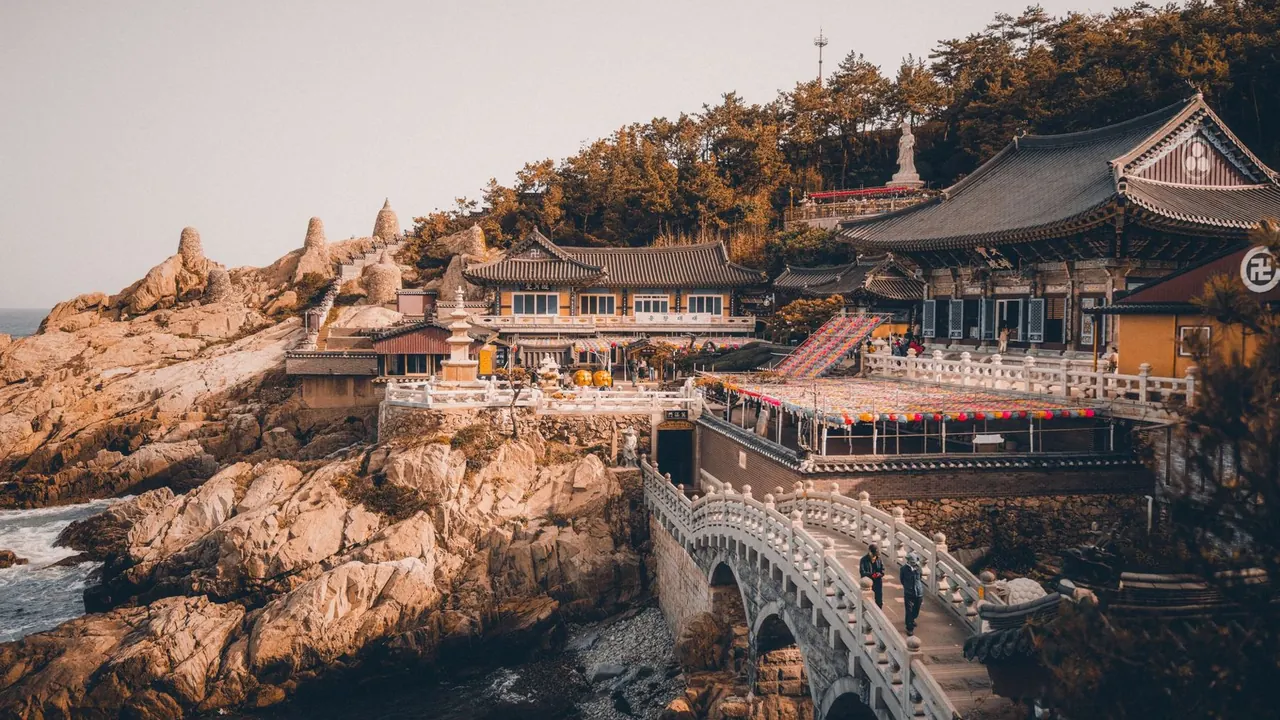
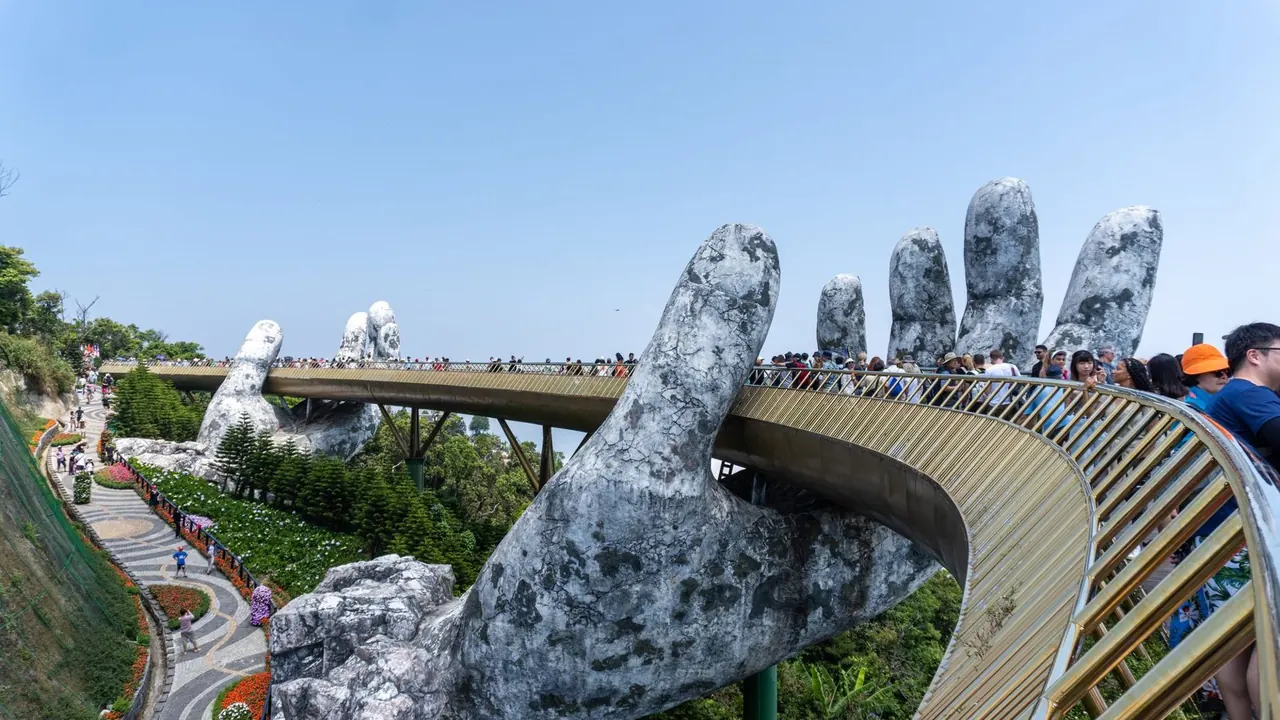
Photos: Busan by Andrea De Santis, Pexels License; Da Nang by Nghia Tran, Pexels License.
Busan or Da Nang?
Our verdict in twelve categories, each scored against the same fixed benchmark cities, and the climate month by month, so you can choose for your trip.
Choose Busan for
- getting around
- live music and the arts
- shopping
Busan suits a traveller who wants a full city as well as a coast. A metro links the old port to the beaches, Dongnae's spring-fed bathhouses and the hill temples are close at hand, and nights in Seomyeon and Gwangalli run late. It also works outside summer, when the coastal paths and mountains are at their best, and it is the easier choice for families who value order and simple logistics.
Choose Da Nang for
- prices
- beaches
- day trips
Choose Da Nang for a beach vacation that costs little. It has a long stretch of pale sand, a sea that stays warm for much of the year, and Hoi An, My Son and Hue within a day's reach. The city itself has few sights, little in the way of arts and no metro, so it rewards people who are happy to spend their days on the sand and take app taxis out to the region's heritage.
Scoreboard
Twelve categories on one fixed scale from 0 to 100. The shaded stretch is the gap between the two.
Your match
Pick a travel style or drag the sliders, and both match scores follow your weighting.
Wins on getting around and live music and the arts with your weighting.
Wins on prices and beaches with your weighting.
What matters to you?
Category by category
What the scores mean for a trip.
Beaches & swimming
Da Nang has the stronger beach by some way. My Khe and Non Nuoc form one long, roomy sweep of pale sand running south towards Hoi An, and the sea is warm enough to swim in through the months before the autumn monsoon.
Busan's beaches sit closer to city life: Haeundae under its towers, Gwangalli facing the lit-up bridge and Songjeong for beginner surfers. But the swimming season only runs from July to early September, and in those weeks Haeundae is packed with umbrellas. For the rest of the year the beaches are for walking rather than swimming.
Food & drink
Both cities eat from the sea, and neither offers much beyond its own country's cooking. In Busan, the meal to have is the one where you pick live fish at Jagalchi and eat it raw upstairs. Add milky pork-bone soup late at night, fishcake skewers from steaming broth and grilled clams at the tent bars by the shore.
Da Nang's cooking is spicier and full of fresh herbs: turmeric Mi Quang noodles, banh xeo rolled in rice paper with greens, pork wrapped at the table, and shellfish grilled from the tanks along the beach road. Its coffee, strong and iced with condensed milk or salted cream, has no real equal in Busan.
Culture & sights
Neither is a city to choose for its sights, but Busan has more to fill a few days. Beomeosa on Geumjeongsan and Haedong Yonggungsa on its rocks above the sea are temples worth the trip. Gamcheon's painted hillside, the UN Memorial Cemetery and the Museum of Modern History tell the story of the war years.
Da Nang's own list is shorter: the outstanding Museum of Cham Sculpture, the cave shrines of the Marble Mountains, the pink French-era cathedral and the Lady Buddha on Son Tra. Two days cover it, because the region's great heritage lies outside the city.
Nightlife
Busan offers the longer and livelier night out. Dinner turns into rounds of soju, beer and karaoke, and Seomyeon's blocks of pubs and bars stay busy into the early hours. The beachfront bars at Gwangalli and the cheap student streets around Kyungsung add variety.
Da Nang's evenings are gentler: rooftop bars over the Han River, open-air beer halls serving grilled shellfish, and a few blocks of craft beer and cocktail bars in An Thuong. It is good fun, but much of the city is quiet by midnight.
Nature & outdoors
Both sit between mountains and sea and are strong for the outdoors, but the landscapes are different. Busan's can be reached on foot from the metro: the Igidae cliff path, the Taejongdae headland and the Galmaetgil coastal trail. There are hill hikes on Geumjeongsan, and the silver-grass ridges of the Yeongnam Alps are best in autumn.
Da Nang's outdoors are wilder and hotter. The Son Tra peninsula is home to endangered douc langurs, the Hai Van Pass is a famous ride by motorbike or bicycle, and Bach Ma has rainforest trails and waterfalls. The Cham Islands also offer snorkelling and diving, which Busan lacks. Heat and autumn rain limit hiking here, while Busan is at its best for walking in spring and autumn.
Day trips
Both are excellent bases, and Da Nang is slightly ahead. Hoi An's lantern-lit old town is so close that many visitors go back more than once, and the Cham ruins at My Son and imperial Hue are both manageable in a day.
Busan answers with Gyeongju, the old Silla capital, a short fast-train ride away, along with Tongdosa, Haeinsa and its wooden printing blocks, and the cherry blossom at Jinhae in spring. It even has a ferry to Japan's Tsushima. The choice is wide, but nothing quite matches the way Hoi An fits into a beach stay.
Good for families
Busan is the easier city with children. It is safe and orderly, and the metro makes moving around simple. The Haeundae aquarium, the sky-capsule rail along the coast and the Gijang theme park give children plenty to do beyond the beach. The main effort comes from hills, steps and long distances.
Da Nang suits a beach stay based at a resort, with pools, children's clubs and the Ba Na Hills cable car and amusement park, and local people make a fuss of children everywhere. Motorbike traffic, pavements that are hard going with a pushchair and the autumn months when the beach is off limits make it harder work.
Getting around
Busan has a real metro, signed in English, running from Nampo-dong through Seomyeon to Haeundae, and nobody needs a car. The catch is the city's length: crossing it takes the best part of an hour, and many sights end with a bus ride and a climb.
Da Nang has no metro or rail at all, so visitors rely on app-booked cars and motorbike taxis, which are cheap and easy to find. Distances are short and the ground is flat. Walking is pleasant along the river and the beach, but elsewhere pavements are blocked by parked motorbikes and stalls, and crossing the road takes nerve.
Shopping & style
Busan has far more to buy. Centum City's vast department stores, Seomyeon's underground arcades of cheap fashion and the Korean skincare shops on every main street sit alongside the old market lanes of Gukje and Bupyeong.
Da Nang offers mostly Han and Con markets, a few chain malls and the stone carvers of Non Nuoc. For tailoring, lanterns or leather, visitors head to Hoi An.
Affordability
Da Nang is much the cheaper of the two. Street noodles, coffee, app taxis and massages cost little, and a comfortable hotel a block from the beach is good value. Only the big resorts, Ba Na Hills and the bars aimed at foreigners charge international prices.
Busan is mid-range by Western European standards. Soup restaurants, markets and the metro are cheap, and the temples and coastal walks are mostly free. Live seafood sold by weight, imported drinks and beachfront hotels in summer push the costs up.
Live music & performing arts
Neither city is a destination for the arts, but Busan gives a concert-goer something to book. Busan Concert Hall has orchestral and chamber evenings, the Cultural Center stages traditional Korean music, and the Cinema Center hosts the film festival every autumn.
Da Nang has tuong classical theatre, though performances are irregular, cover bands in the beach bars and the summer fireworks festival over the Han River. Staged river shows and bai choi singing games are found nearer Hoi An.
Wellness & relaxation
Busan has a true bathing tradition. Dongnae's spring-fed bathhouses date back to the Silla era, and the jjimjilbang halls of Centum City and Haeundae make a scrub, a soak and even an overnight stay easy. Temple stays in the hills add a quieter way to rest.
Da Nang's strength is massage, cheap and on almost every street near the beach, with resort spas on Son Tra. Its hot springs park, 30km out of town, is a leisure resort rather than part of a bathing tradition.
When should you go?
Pick your month. The climate figures are measured averages, not a forecast.
Busan in July
Da Nang in July
Daytime high, °C
Rainfall in the month, mm
Temperature and rainfall are climate normals, averaged over the years shown. Busan: 1991-2020 normals, Pusan (9.7 km from centre). Da Nang: 1991-2020 normals, Da Nang (4.9 km from centre).
The two cities have almost opposite seasons. Busan has proper winters, cold but often sunny, and its best walking weather comes in spring and again from late September to November. The beach season is short: the sea only reaches about 26°C in August, and July brings the heaviest rain of the year, around 352mm, with humid heat to match.
Da Nang is warm all year. Its dry, sunny stretch runs from February to August and is the time for swimming. From May to August highs of 35°C make walking the streets in the middle of the day hard going. From September to December the monsoon takes over, peaking at about 726mm in October, with rough seas and few swimming days. In short, Da Nang's wet autumn is Busan's best season, and Busan's rainy summer falls in Da Nang's beach months.
Which traveller are you?
On a beach and sun trip, Busan only offers swimming from July to early September, when Haeundae is packed. Da Nang is the clear pick, with the roomy sand of My Khe and Non Nuoc and a warm sea through spring and summer.
For a trip on a tight budget, Busan can be kept reasonable with care, but Da Nang makes the same money last far longer. Daily spending barely adds up, the long beach is free, and Hoi An makes an easy, cheap outing.
For a short city break, Busan packs far more in. The metro links Nampo-dong, Seomyeon and Haeundae, putting mountain temples, war history, Seomyeon's bars, Centum City's department stores and a hot spring soak within easy reach. Da Nang's own sights run out sooner.
Before you go
| Measure | Busan | Da Nang |
|---|---|---|
| Official language | Korean, Korean Sign Language | Vietnamese |
| Currency | Won (KRW) | Dong (VND) |
| Sockets | CF220 V, 60 Hz | ACFG220 V, 50 Hz |
| Driving side | Right | Right |
| Time zone | UTC+9 | UTC+7 |
| Emergency number | Police 112, ambulance 119, fire 119 | Police 113, ambulance 115, fire 114 |
| Elevation | 30 m | 19 m |
| Main airport | Gimhae International Airport (PUS)12 km from centre49 non-stop destinations | Da Nang International Airport (DAD)3 km from centre47 non-stop destinations |
| Public holidays this year | 18 days | - |
By the numbers
| Measure | Busan | Da Nang |
|---|---|---|
| City population | 3,453,198 | 2,819,900 |
| People per km² | 4,486 | 238 |
| Museums within 10 km | 7 | 2 |
| UNESCO World Heritage sites within 50 km | 3 | 2 |
| Swim season, months above 21 °C | 4 months | 12 months |
Where else could you go?
Every comparison below shares a destination with this one, so you can follow Busan or Da Nang somewhere new.