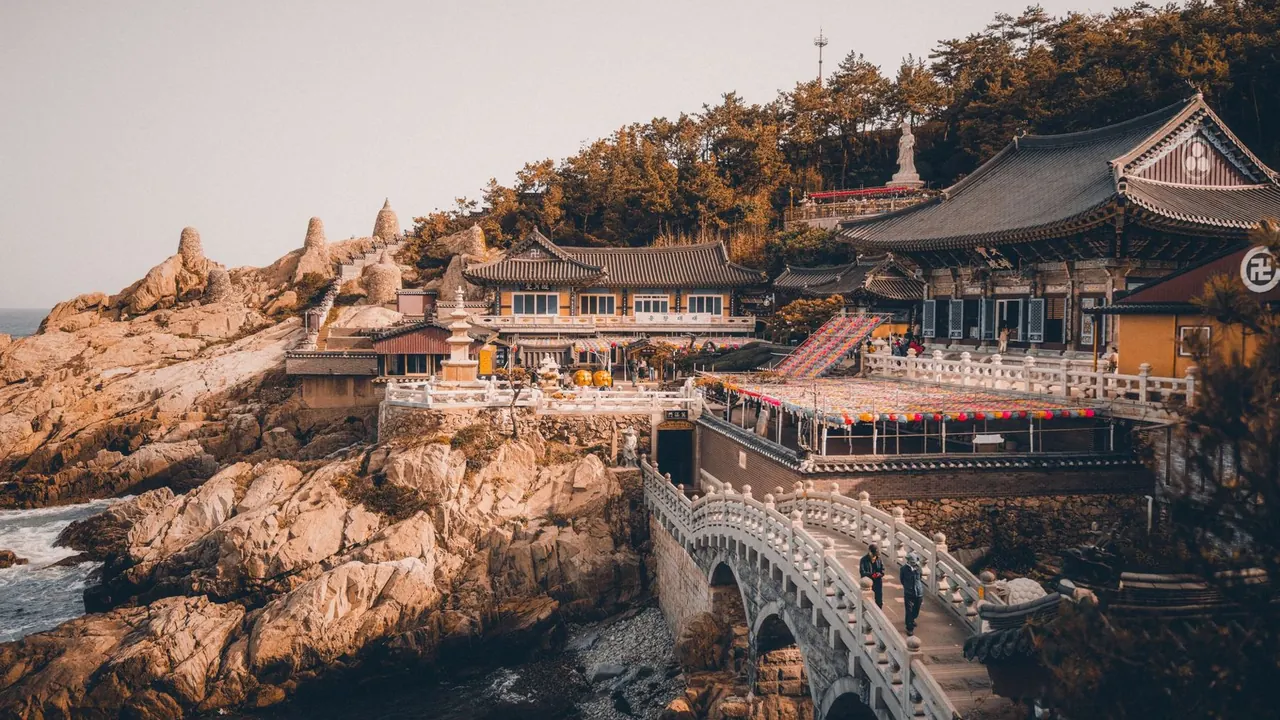
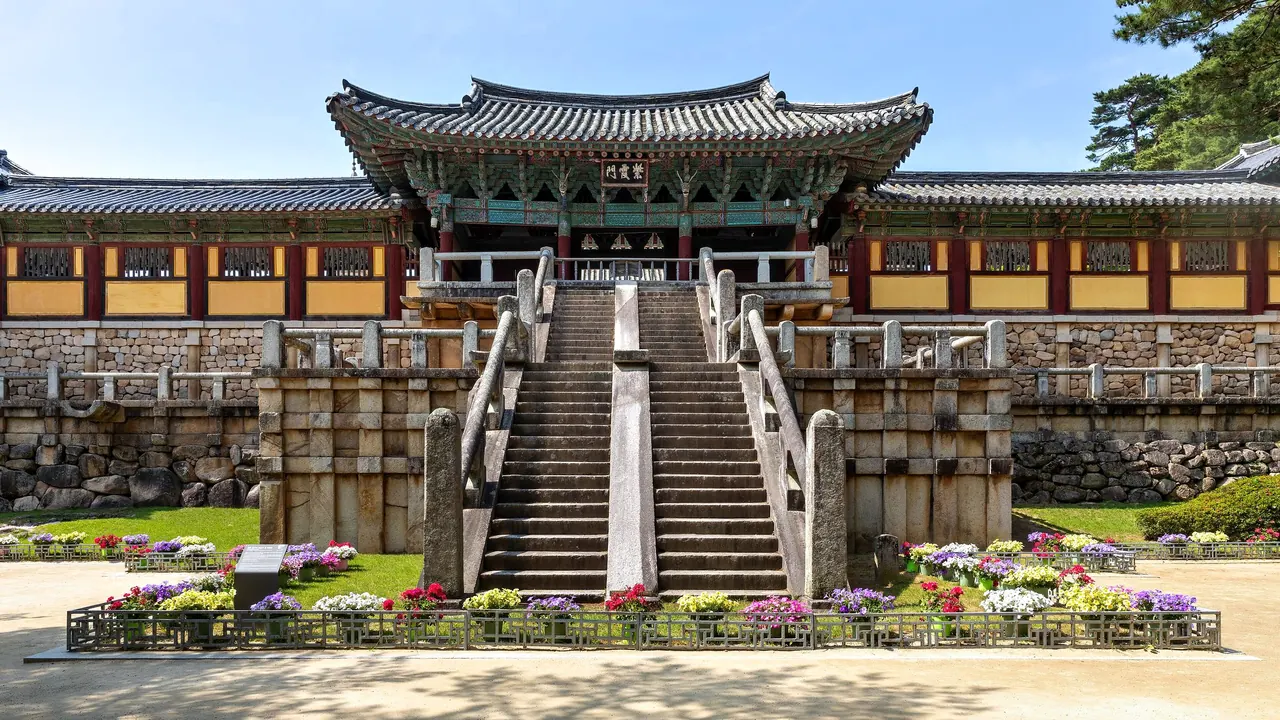
Photos: Busan by Andrea De Santis, Pexels License; Gyeongju by Basile Morin, CC BY-SA 4.0, cropped.
Busan or Gyeongju?
Our verdict in twelve categories, each scored against the same fixed benchmark cities, and the climate month by month, so you can choose for your trip.
Choose Busan for
- nightlife
- beaches
- shopping
Busan suits a fuller, more varied trip that mixes city and sea. The beaches are inside the city, the seafood markets and pork-bone soup halls run late, Dongnae's hot-spring bathhouses are a metro ride away, and evenings drift from dinner into soju and karaoke in Seomyeon or Gwangalli. Choose it if you want one base with range, from cliff walks to department stores, and are happy to treat Korea's ancient history as a day out.
Choose Gyeongju for
- culture and sights
- prices
If the past is the reason for your trip, stay in Gyeongju. The Silla royal tombs, Bulguksa, Seokguram and the National Museum are all close by, the centre is flat enough to cycle, and the town goes quiet after dark. It rewards a slow stay of a few days built around heritage, and Busan's beaches and bars are only half an hour away by fast train when you want them.
Scoreboard
Twelve categories on one fixed scale from 0 to 100. The shaded stretch is the gap between the two.
Your match
Pick a travel style or drag the sliders, and both match scores follow your weighting.
Wins on nightlife and beaches with your weighting.
Wins on culture and sights and prices with your weighting.
What matters to you?
Category by category
What the scores mean for a trip.
Beaches & swimming
Busan's beaches are part of daily city life. Haeundae's long arc of sand, Gwangalli facing the lit-up bridge and Songjeong with its beginner surfers are all within easy reach of the metro, and the quieter local beaches lie in the west and south.
Gyeongju's shore is about forty minutes from town, with small sand and pebble beaches at Bonggil, Jeonchon and Gampo. Its real interest is Daewangam, King Munmu's underwater tomb off Bonggil, which you go to see rather than swim beside. In both places the bathing season is short, roughly July and August.
Food & drink
Busan eats from the sea, and that gives it far more to explore. You can pick live fish downstairs at Jagalchi and eat it upstairs, try grilled eel in Gijang, and eat milky dwaeji gukbap late at night, cold milmyeon noodles and the fishcake skewers the city is known for. Kkangtong night market and the tent bars by the shore keep it going after dark.
Gyeongju's table is smaller but has its own pleasures. There is ssambap with a dozen side dishes near the royal tombs, boxes of red-bean Hwangnam bread, and mellow beopju rice wine from Gyochon village. Neither city has much beyond Korean cooking.
Culture & sights
Here Gyeongju is clearly ahead. Almost a thousand years as the Silla capital left burial mounds among the streets of the centre, a tomb chamber you can walk into at Tumuli Park, the Cheomseongdae observatory and Wolji Pond. The National Museum holds gold crowns and the Emille Bell, and Bulguksa and the Seokguram grotto, both UNESCO-listed, stand on Tohamsan.
Busan grew up quickly around the Korean War, and its story is mostly modern. It has the mountain temple of Beomeosa, the seaside Haedong Yonggungsa, Gamcheon's painted hillside and the UN Memorial Cemetery. That is a good two or three days, but it is no match for Gyeongju's depth.
Nightlife
Busan gives you a proper night out. Seomyeon's blocks of pubs and bars stay busy until the early hours, Gwangalli has beachfront bars and craft beer under the illuminated bridge, and the university streets are young and cheap. Clubs are few, but bar-hopping into karaoke comes easily.
Gyeongju's evenings centre on the floodlit Donggung Palace and Wolji Pond, followed by a glass in one of the few bars in Hwangnidan-gil. Most of the town is asleep early.
Nature & outdoors
Busan has the more dramatic setting. You can climb Geumjeongsan's fortress walls straight from a metro station, walk the Igidae cliff path, or follow the Galmaetgil trail round the Taejongdae headland. The high ridges of the Yeongnam Alps are about an hour inland, and in summer there is surfing and sailing.
Gyeongju's landscape is gentler and tied to its history. Trails on Namsan pass Buddhas carved into the rock, Tohamsan's ridges are known for sunrise, and the flat valley round Bomun Lake is ideal for cycling under cherry trees.
Day trips
These two are broadly level, partly because each is the other's best day trip, half an hour apart by fast train. Both also reach Tongdosa and Haeinsa, home of the Tripitaka Koreana.
What differs is the direction. From Busan the extras are coastal: the harbour at Tongyeong, the island of Geoje, Jinhae's cherry blossom and even a ferry to Tsushima in Japan. From Gyeongju they are heritage villages, with the lived-in clan houses of Yangdong close by and Andong's Hahoe further out.
Good for families
Busan offers children more. Summer beaches, a large aquarium on the Haeundae seafront, the theme park and luge at Gijang and the slow sky-capsule rail along the coast fill several days. The catch is the hills and the long distances between districts.
Gyeongju's family appeal sits mostly at Bomun Lake, with its amusement and water park, swan pedal boats and bird park. In the centre, the flat paths round the tombs suit a buggy, and a family bike ride is a classic outing. Several days of heritage can wear thin for younger children, though.
Getting around
Busan is the easier city to get around. Its metro is signed in English and takes a single tap card. It links the old port at Nampo-dong, Seomyeon and Haeundae, and buses fill most of the gaps, so nobody needs a car. The catch is length: crossing the city or reaching Taejongdae takes the best part of an hour.
Gyeongju's historic core is compact and flat, so the tombs, Wolji Pond and the National Museum are an easy walk or bike ride apart. Beyond the centre it gets harder. The high-speed station is outside town, and Seokguram, Yangdong and the coast are on infrequent bus routes, so many visitors end up relying on taxis or hiring a car for a day.
Shopping & style
For shopping, Busan is in a different league. Centum City has some of the largest department stores anywhere, Seomyeon's underground arcades sell cheap fashion, Korean skincare shops line the main streets, and Gukje Market's lanes sell almost everything.
In Gyeongju, shopping means browsing the hanok lanes of Hwangnidan-gil for stationery, ceramics and souvenirs with Silla motifs, plus a box of Hwangnam bread for the journey home.
Affordability
Day to day, the two cost about the same, with Gyeongju slightly gentler than Korea's big cities. In both, market meals and buses are cheap and many of the best sights are free, from Busan's temples and coastal walks to Gyeongju's tomb parks.
Where costs climb differs. In Busan it is beachfront hotels in high summer and live seafood priced by weight. In Gyeongju it is weekends, the blossom and foliage seasons, the Bomun resort hotels and taxis between outlying sites.
Live music & performing arts
Neither city is a reason to travel for performance, but Busan has more to book. Busan Concert Hall hosts orchestral and chamber concerts, the Cultural Center stages traditional music, and the autumn film festival and summer rock and K-pop events draw big crowds.
Gyeongju offers open-air traditional music and dance at Bomun Lake in the warmer months, and the Silla Cultural Festival. Each autumn it fills the streets round the tombs with court music and drumming.
Wellness & relaxation
Busan has the deeper bathing culture. Dongnae has been a hot-spring district since the Silla era, with one of the country's largest bathhouses, and the big spa complex in Centum City lets you soak, scrub and sleep over in true jjimjilbang style.
Gyeongju's calm comes more from its pace than its pools. Bomun's hotels have hot-spring floors, but the real draw is a temple stay at Bulguksa or at Golgulsa, known for sunmudo and meditation, or an early walk among the tombs before the tour buses arrive.
When should you go?
Pick your month. The climate figures are measured averages, not a forecast.
Busan in July
Gyeongju in July
Daytime high, °C
Rainfall in the month, mm
Where the figures come from
Gyeongju's temperatures are measured 25 km from the centre, at Pohang.
Gyeongju has no rain gauge within 25 km of the centre, so its rainfall comes from a gridded climate dataset read at the city rather than from a gauge further away.
Temperature and rainfall are climate normals, averaged over the years shown. Busan: 1991-2020 normals, Pusan (9.7 km from centre). Gyeongju: 1991-2020 normals, Pohang (25.3 km from centre).
Busan and Gyeongju share the climate of Korea's south-east, so the year follows much the same pattern in both. Spring is mild, but in Busan it is already fairly wet, with about 159mm of rain in May. Inland Gyeongju stays noticeably drier through April and May, which makes it the better spring choice for long walks among the tombs and on Namsan. October is the pick in both cities, with warm days, little rain and plenty of sun for Busan's coastal paths or Gyeongju's temples. Winter is cold but bright and dry, with daytime highs in single figures. That is fine for sightseeing if you wear warm layers.
Summer is hot and humid in both, reaching about 30°C in August, which makes long days on foot heavy going. It is also the rainy season. Busan's rain peaks in July at about 352mm, while Gyeongju's is lighter and spread across July and August, and it carries on into September. Swimming is good from July to early September, when Busan's sea warms to about 26°C. Gyeongju's coast is a degree or so cooler and a bus ride from town.
Which traveller are you?
On a beach and sun trip, Busan wins easily. Haeundae, Gwangalli and Songjeong are inside the city and reached by metro or bus. Gyeongju's small beaches are forty minutes away and make a half-day outing, not the centre of a stay.
For a culture and arts trip built around history, Gyeongju is the place to stay. A thousand years of Silla capital lies in its tombs, temples and museum. Busan has better concert halls and its film festival, but much thinner sights.
On a food and nightlife trip, Busan is far ahead. Jagalchi's live seafood, all-night pork soup, shoreline tent bars and late rounds in Seomyeon fill every evening, while Gyeongju offers good ssambap and rice wine, then an early night.
Before you go
| Measure | Busan | Gyeongju |
|---|---|---|
| Official language | Korean, Korean Sign Language | Korean, Korean Sign Language |
| Currency | Won (KRW) | Won (KRW) |
| Sockets | CF220 V, 60 Hz | CF220 V, 60 Hz |
| Driving side | Right | Right |
| Time zone | UTC+9 | UTC+9 |
| Emergency number | Police 112, ambulance 119, fire 119 | Police 112, ambulance 119, fire 119 |
| Elevation | 30 m | 46 m |
| Main airport | Gimhae International Airport (PUS)12 km from centre49 non-stop destinations | Gimhae International Airport (PUS)79 km from centre49 non-stop destinations |
| Public holidays this year | 18 days | 18 days |
By the numbers
| Measure | Busan | Gyeongju |
|---|---|---|
| City population | 3,453,198 | 245,365 |
| People per km² | 4,486 | 185 |
| Museums within 10 km | 7 | 3 |
| UNESCO World Heritage sites within 50 km | 3 | 6 |
| Swim season, months above 21 °C | 4 months | 4 months |
Where else could you go?
Every comparison below shares a destination with this one, so you can follow Busan or Gyeongju somewhere new.