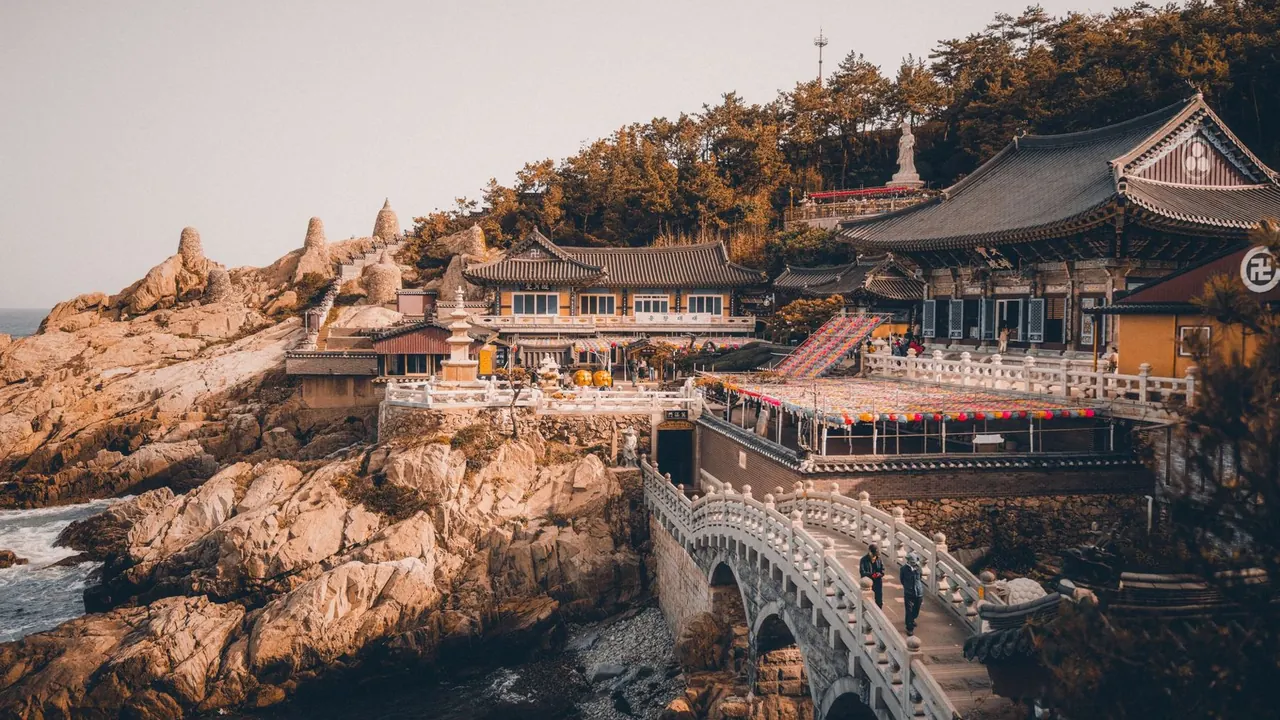
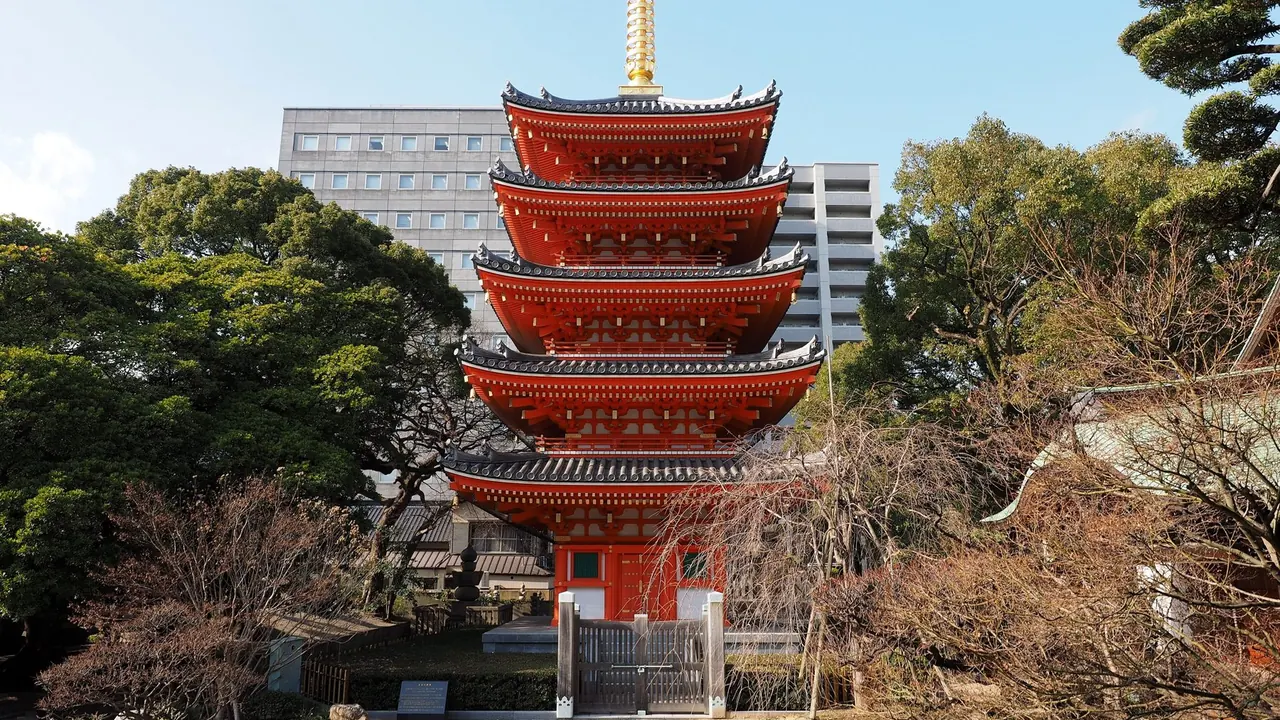
Photos: Busan by Andrea De Santis, Pexels License; Fukuoka by Nick-D, CC BY-SA 4.0, cropped.
Busan or Fukuoka?
Our verdict in twelve categories, each scored against the same fixed benchmark cities, and the climate month by month, so you can choose for your trip.
Choose Busan for
- beaches
- wellness
- nature and the outdoors
Busan suits travellers who want the sea and the hills inside the city itself: swimming beaches on the metro, cliff paths at Igidae and Taejongdae, and hot-spring bathhouses in Dongnae for the evening. It suits a slower trip with long soaks and coastal walks, and travellers who don't mind crossing a long, hilly city by metro and bus.
Choose Fukuoka for
- getting around
- food and drink
- day trips
Pick Fukuoka for eating well and getting about easily. Its yatai stalls and tonkotsu ramen counters are worth the journey on their own, the flat centre lets you walk from Hakata to Tenjin, and the shinkansen brings Nagasaki, Kumamoto and Hiroshima within a day. It is the better base for exploring a whole region and the easier city with small children.
Scoreboard
Twelve categories on one fixed scale from 0 to 100. The shaded stretch is the gap between the two.
Your match
Pick a travel style or drag the sliders, and both match scores follow your weighting.
Too close to call, level with your weighting
Wins on beaches and wellness with your weighting.
Wins on getting around and food and drink with your weighting.
What matters to you?
Category by category
What the scores mean for a trip.
Beaches & swimming
Beaches are a real reason to choose Busan. Haeundae's wide arc of sand, the bars and bridge views at Gwangalli and the beginner surf at Songjeong are all reachable by metro, and in high summer you can swim at one and have dinner at another.
Fukuoka has warm water in the same months, but its town beach at Momochi is a man-made strip below apartment blocks. Good sand means a trip out to Itoshima or one of the islands. Both swimming seasons are short, so in both cities the beaches are mainly for walking outside summer.
Food & drink
Both cities live off fish from the same strait, but Fukuoka has more to eat. Its tonkotsu ramen, mentaiko, motsunabe hotpot and riverside yatai stalls in Nakasu make every meal worth planning, and the range runs from cheap noodle counters to serious sushi.
Busan's cooking is plainer and more robust. You can choose live seafood at Jagalchi and eat it upstairs, have pork-bone gukbap at any hour, or eat fishcake skewers from a pot of broth. It is satisfying food, but it has fewer layers than Fukuoka's.
Culture & sights
Neither is a city to visit for its sights, and both cover their best in two or three days. The difference is in where the sights are. Busan's main ones are spread out: Beomeosa on a mountainside, Haedong Yonggungsa on the rocks above the sea, and the painted refugee-era houses of Gamcheon. Its war history, including the UN Memorial Cemetery, has no parallel in Fukuoka.
Fukuoka's sights are closer together. Shofukuji, Tochoji and the Kushida Shrine stand a few minutes apart in old Hakata, and the castle walls and the art museum sit around Ohori Park. Its strength is in museums, such as the ancient gold seal at the City Museum, rather than dramatic settings.
Nightlife
Evenings are sociable and run late in both cities, and neither has much of a club scene. A night in Busan follows the Korean pattern of rounds of soju, beer and karaoke, centred on the dense blocks of Seomyeon. It also has something Fukuoka can't match: beachfront bars at Gwangalli facing the lit bridge.
In Fukuoka, the evening often starts on a stool at a yatai by the river. It then moves to the standing bars, craft beer and whisky bars in Daimyo's backstreets. Nakasu looks like the obvious place to go, but much of it is hostess bars meant for locals.
Nature & outdoors
Busan is the more dramatic place to be outdoors. You can climb to Geumjeongsan's fortress walls from a metro station, the coast is lined with cliffs, from the Igidae path to the Taejongdae lighthouse, and the Galmaetgil trail links much of the shoreline. The ridges of the Yeongnam Alps are about an hour inland.
Fukuoka's green spaces are gentler: the walking loop around Ohori Park, the flower fields of Uminonakamichi and short ferries to Nokonoshima. Its rugged scenery, such as Itoshima's capes and the Sefuri hills, needs a trip out of town, and the volcanic country around Aso is a long day away.
Day trips
Fukuoka is the better base for day trips, because the shinkansen opens up a whole island and more. Dazaifu is half an hour away, Kumamoto's castle takes under an hour, and Hiroshima and Miyajima are about an hour. Nagasaki, the porcelain villages of Arita and the castle town of Karatsu are also within reach.
Busan has one outstanding day trip. Gyeongju, the old Silla capital with its royal tombs and Bulguksa temple, is about half an hour by fast train. Tongdosa, Haeinsa and the cherry blossom of Jinhae fill out the list, and the ferry to Tsushima even lets you add a day in Japan.
Good for families
Both cities are safe and clean, but Fukuoka is less work with small children. The centre is compact, the airport is minutes away, stations have nursing rooms, and Marine World, the zoo and the Anpanman museum are all easy half-days.
Busan has the summer beaches and something Fukuoka doesn't: a big theme park and luge track at Gijang. On the other hand, its sights are spread along a long, hilly city, and the temples and Gamcheon mean a lot of steps for small legs.
Getting around
In Fukuoka, the airport sits on the subway, and Hakata, Nakasu, Tenjin and Daimyo are a short, flat walk from one another. You barely need transport at all once you have checked in.
Busan's metro is clean and has signs in English, but the city stretches along the coast between hills. Getting from Haeundae to Nampo-dong takes the best part of an hour, and the temples and Gamcheon usually mean a bus ride and a climb on top of that.
Shopping & style
There isn't much between them overall, but the two cities are good for different things. Busan is about size and practicality. Centum City has one of the world's largest department stores, Seomyeon has long underground arcades of cheap fashion, and every main street has shops selling Korean skincare.
Fukuoka has more character in its shops. The independent and vintage shops of Daimyo and Imaizumi stand behind the Tenjin department stores, and local crafts such as Hakata-ori silk, Hakata dolls and Arita porcelain make better souvenirs than anything Busan's markets offer.
Affordability
The two cost much the same, mid-range by Western European standards, but the savings and the extra costs come in different places. In Busan, market meals and soup restaurants are cheap, but live seafood sold by weight and beachfront hotels in midsummer push the bill up.
In Fukuoka, the compact business hotels near Hakata and Tenjin are the main bargain, along with ramen and set lunches. Sushi, kaiseki dinners and nights in Nakasu are what cost more.
Live music & performing arts
Neither city is worth choosing for its stage, though both have good evenings out. Busan's highlights are classical concerts at Busan Concert Hall and its well-known film festival each autumn, centred on the Busan Cinema Center.
Fukuoka has more that is distinctly local. Hakataza puts on touring kabuki, and two street festivals are worth timing a trip around: the dawn float races of the Hakata Gion Yamakasa in July and the Dontaku parade in May.
Wellness & relaxation
Busan is the better place to unwind. Dongnae has had a hot-spring bathing district since the Silla era, Haeundae has springs of its own, and the large jjimjilbang complexes let you scrub, soak and even sleep over. Temple stays in the hills add a quieter option.
Fukuoka has neighbourhood sento and bath complexes on its edges. Futsukaichi Onsen is half an hour south, but the great spa towns of Beppu and Yufuin are a long day away. The city's calm comes more from Ohori Park and old Hakata's temple gardens than from its baths.
When should you go?
Pick your month. The climate figures are measured averages, not a forecast.
Busan in July
Fukuoka in July
Daytime high, °C
Rainfall in the month, mm
Temperature and rainfall are climate normals, averaged over the years shown. Busan: 1991-2020 normals, Pusan (9.7 km from centre). Fukuoka: 1991-2020 normals, Fukuoka (1.9 km from centre).
The two cities share a calendar. Each has a hot, very wet midsummer and its best walking weather in spring and autumn, with April, May, October and early November the easiest months in both. Swimming is good in both from July to early September, when the sea reaches about 26°C. Busan's rain peaks in July at around 352mm, and Fukuoka's wet season starts earlier, in June.
The bigger differences come at the ends of the year. Fukuoka's summer is the harder of the two, with August highs near 32°C, so street walking there is tiring from July to September. Busan's winter is cold but dry and much sunnier, with roughly twice Fukuoka's sunshine in January. That makes Busan the better choice for a bright, crisp winter trip, while Fukuoka's winter months are milder but greyer and wetter.
Which traveller are you?
For a beach and sun trip, Busan is the clear pick. Haeundae, Gwangalli and Songjeong sit inside the city and are reached by metro. Fukuoka's town beach is man-made, and its best sand lies out on the Itoshima peninsula.
On a relaxing and wellness trip, Busan comes out ahead. Dongnae has been a hot-spring district for well over a thousand years, and its bathhouses and the large jjimjilbang halls are part of everyday life. In Fukuoka, the serious onsen towns are a long day away.
For a short city break, Fukuoka is the easier city. The subway takes you from the airport to the centre in minutes, and the flat core is walkable from end to end. It also has the better food in a few evenings, from yatai stalls to ramen counters.
Before you go
| Measure | Busan | Fukuoka |
|---|---|---|
| Official language | Korean, Korean Sign Language | Japanese |
| Currency | Won (KRW) | Yen (JPY) |
| Sockets | CF220 V, 60 Hz | AB100 V, 50 and 60 Hz depending on the region |
| Driving side | Right | Left |
| Time zone | UTC+9 | UTC+9 |
| Emergency number | Police 112, ambulance 119, fire 119 | Police 110, fire 119 |
| Elevation | 30 m | 8 m |
| Main airport | Gimhae International Airport (PUS)12 km from centre49 non-stop destinations | Fukuoka Airport (FUK)5 km from centre46 non-stop destinations |
| Public holidays this year | 18 days | 16 days |
By the numbers
| Measure | Busan | Fukuoka |
|---|---|---|
| City population | 3,453,198 | 1,603,043 |
| People per km² | 4,486 | 4,715 |
| Museums within 10 km | 7 | 23 |
| UNESCO World Heritage sites within 50 km | 3 | 2 |
| Swim season, months above 21 °C | 4 months | 4 months |
Where else could you go?
Every comparison below shares a destination with this one, so you can follow Busan or Fukuoka somewhere new.