Photos: Busan by Andrea De Santis, Pexels License; Jeju by Nuhyil Ahammed, Pexels License.
Busan or Jeju?
Our verdict in twelve categories, each scored against the same fixed benchmark cities, and the climate month by month, so you can choose for your trip.
Choose Busan for
- day trips
- nightlife
- live music and the arts
Busan is the better pick if you want a trip built around a city. You can take the metro to the beaches, eat at the raw fish halls of Jagalchi, soak in the old hot-spring bathhouses of Dongnae and spend long evenings over soju in Seomyeon. Gyeongju is half an hour away by fast train. It suits travellers without a car who want good food, nights out and plenty of variety from one base.
Choose Jeju for
- nature and the outdoors
Jeju is for people who come for the landscape. You can climb Hallasan, walk up the grassy volcanic cones, go down into the lava tubes and follow the Olle trails along the black basalt coast, and its stone-walled villages suit a slow trip by car. The price is quiet evenings, thin shopping and few outings beyond the small islands just offshore.
Scoreboard
Twelve categories on one fixed scale from 0 to 100. The shaded stretch is the gap between the two.
Your match
Pick a travel style or drag the sliders, and both match scores follow your weighting.
Wins on day trips and nightlife with your weighting.
Wins on nature and the outdoors with your weighting.
What matters to you?
Category by category
What the scores mean for a trip.
Beaches & swimming
The beaches are equally good but very different. Busan's are city beaches you reach by metro: Haeundae's wide sand under the towers, Gwangalli facing the lit-up bridge at night, Songjeong for beginner surfers.
Jeju's are prettier and more spread out. Hyeopjae and Geumneung have white sand and turquoise water, the coves at Hamdeok sit between black basalt, and you need a car to move between them. Both have the same short July-to-September season and crowded August weeks.
Food & drink
Busan has the richer table. Jagalchi lets you choose seafood downstairs and eat it upstairs. Dwaeji gukbap pork soup is served through the night, eomuk fishcake simmers on skewers, and tent bars by the shore grill clams to go with soju.
Jeju has fewer dishes, but they are its own: charcoal-grilled black pork, abalone porridge and sea urchin from the haenyeo divers, and tangerines in everything. Good meals there are often a drive apart, while in Busan the next market is a few metro stops away.
Culture & sights
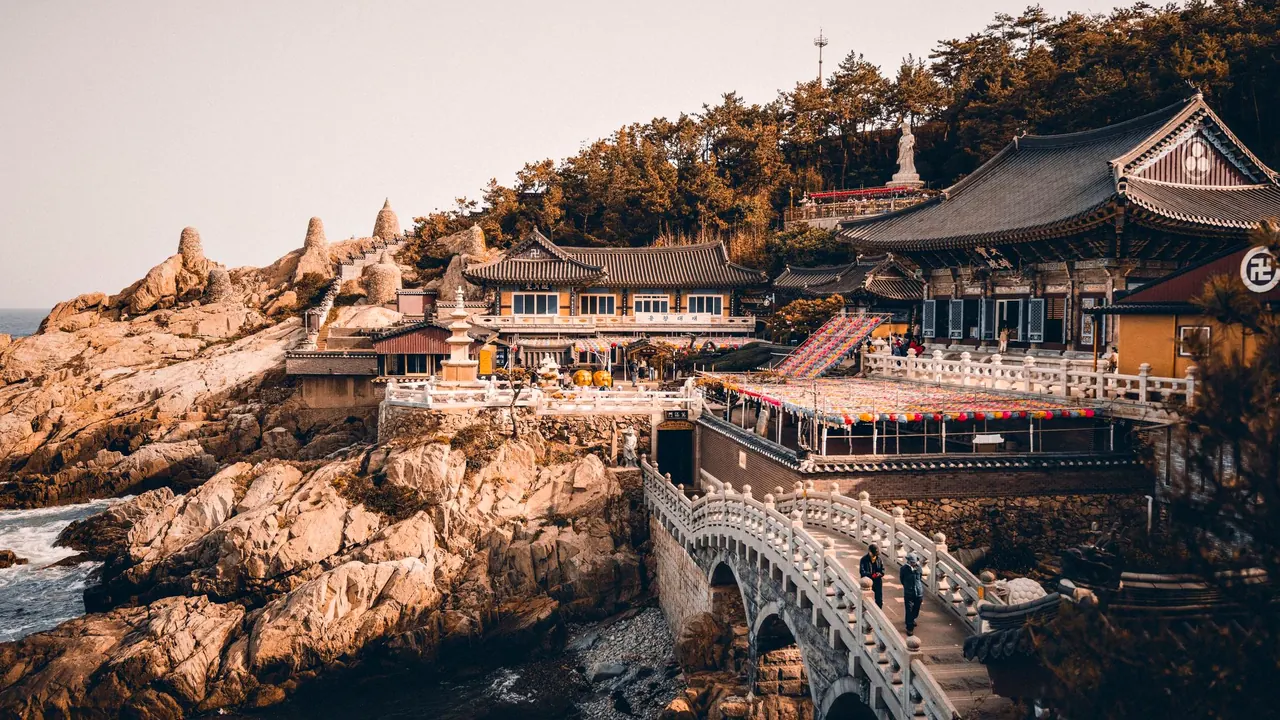
Neither is a place you choose for sightseeing, but Busan gives you more to fill the days. You get Beomeosa on its mountain, Haedong Yonggungsa on the sea rocks, the painted houses of Gamcheon, and the UN Memorial Cemetery for the Korean War years.
Jeju's culture is about island identity. Seongeup's thatched basalt houses, the Haenyeo Museum and the 4.3 Peace Park are worth stopping for, but many novelty theme museums water down the list, so most visitors fit them in between outdoor days.
Nightlife
For an evening out, Busan has much more to offer. A night there usually starts at a seafood table and moves on to a second round of soju, another bar and finally a karaoke room. In Seomyeon all of that is within a few blocks, and a handful of clubs stay open into the small hours. Gwangalli has craft beer with a view of the lit-up bridge, and the student streets around Kyungsung are young and cheap. Serious clubbers will still find more in Seoul.
Jeju's evenings finish far earlier. Only Jeju City has a real choice of places, with the pubs and barbecue places of Nohyeong and Sinjeju and the Tapdong seafront on summer nights. Seogwipo has a few bars around its harbour. Elsewhere on the island, dinner is usually the whole evening, and the villages are dark and silent by ten.
Nature & outdoors
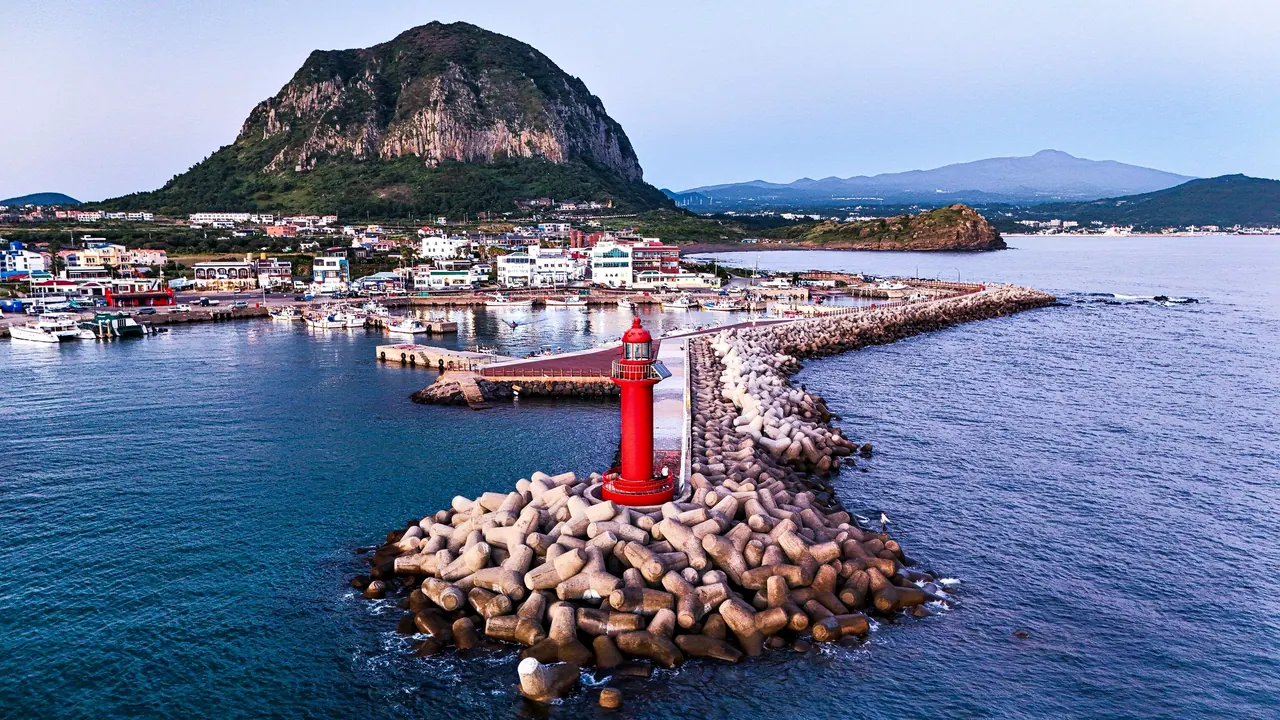
Jeju is a whole volcanic island, and its outdoors is the main reason to go. Hallasan, at 1,947m, takes a full day to climb to its crater lake. You can watch the sunrise from Seongsan Ilchulbong, see the stone columns at Jusangjeolli and see waterfalls dropping straight into the sea near Seogwipo.
Busan's strength is how close its nature is to the city. You can walk to Geumjeongsan's fortress walls from a metro station, take the cliff path at Igidae or go out to the lighthouse at Taejongdae, and the Yeongnam Alps are about an hour inland.
Day trips
Busan is a far better base for excursions. Gyeongju's royal tombs, Bulguksa and Seokguram are a short fast-train ride away. Tongdosa, the harbour at Tongyeong and Haeinsa's wooden printing blocks are also within reach, and ferries cross to Tsushima in Japan.
Jeju's outings are its own small islands. You can cycle round Udo, cross Gapado's barley fields or go out to Marado, the southern tip of Korea. Beyond these, the mainland is a flight away.
Good for families
Both are safe, clean and welcoming to children, but the days feel different. In Busan the treats are in the city: the aquarium on Haeundae's seafront, the theme park and luge at Gijang, and the sky capsules along the coast. The cost is hills, steps and long rides across town.
Jeju's family days are outdoors and by car. Small children can paddle in the shallow water at Hamdeok or Gimnyeong, and families can ride horses, pick tangerines in winter and walk into the lava tube. Skip the novelty museums.
Getting around
You can manage Busan without a car. The metro, with English signs and a single tap card, runs from Nampo-dong through Seomyeon to Haeundae, though the long, narrow city means the best part of an hour from one end to the other.
On Jeju most visitors hire a car, and foreign drivers need an international permit. The express buses between Jeju City and Seogwipo work well, but the local buses out to beaches and trailheads are slow and infrequent.
Shopping & style
Busan is much the better place to shop. Centum City has department stores among the biggest anywhere, Seomyeon's underground arcades sell cheap fashion, and Gukje Market's lanes sell everything from kitchenware to second-hand clothes.
Jeju has far less to offer, mostly duty-free cosmetics in Jeju City and at the airport, with little fashion. Its strength is island produce and crafts: omija tea and dried fish at Dongmun Market, and basalt pieces and natural-dye textiles from the coastal studios. Tangerine sweets are the classic thing to take home.
Affordability
Busan is the cheaper trip. It has a cheap metro, soup and market meals, and free temples and coastal walks, and a room in Seomyeon rather than on the beachfront keeps costs down.
On Jeju the car hire comes on top of everything else. The island's best dishes, black pork and haenyeo abalone, are priced as delicacies. Prices also climb in summer and in the Lunar New Year and Chuseok weeks, though pensions and noodle lunches help.
Live music & performing arts
Busan has a modest arts calendar, which is still far more than Jeju. You can hear an orchestra at Busan Concert Hall or traditional music at the Busan Cultural Center, and the autumn film festival is based at the Busan Cinema Center.
Jeju's performances are mostly folk events, where you may hear haenyeo work songs and see shaman rituals, plus occasional touring shows at the arts centres. If an evening at a concert matters to you, Busan wins.
Wellness & relaxation
Busan wins for bathing. Dongnae's spring-fed bathhouses go back to the Silla era, Haeundae has springs of its own, and the big jjimjilbang in Centum City make a scrub and a long soak part of any day.
Jeju relaxes you through its pace rather than its water. You can spend days in the cedar forests and stone-walled villages, use the hotel spas at Jungmun or visit the rare carbonated spring near Sanbangsan, but the busy summer coast is less restful than the calm interior.
When should you go?
Pick your month. The climate figures are measured averages, not a forecast.
Busan in July
Jeju in July
Daytime high, °C
Rainfall in the month, mm
Temperature and rainfall are climate normals, averaged over the years shown. Busan: 1991-2020 normals, Pusan (9.7 km from centre). Jeju: 1991-2020 normals, Cheju (1.9 km from centre).
The two share much the same Korean year. Summer is hot and humid, with daytime highs near 30°C in August, and it is the only time for swimming. The sea warms through July and peaks in August at about 26°C off both. The rain falls differently. Busan's comes in one heavy burst, about 352mm in July. Where most visitors stay on Jeju, the wet season builds more slowly and stays heavy into September, so a late-summer beach trip there can be damp.
Late April, May and October are the most comfortable months for walking the streets and the trails in both places. Winter is where they really part. Busan's winters are dry and bright, with more sun in January than in July. Jeju is a touch milder but greyer and damper, with roughly half of Busan's winter sunshine. For a trip in the cold months, Busan is the better choice.
Which traveller are you?
On a food and nightlife trip, choose Busan. Pick a live fish at Jagalchi and eat it upstairs, then carry on to the bars of Seomyeon or the beachfront at Gwangalli. Jeju mostly goes quiet once the black-pork dinners end.
For an outdoors trip, Jeju is the better destination. Busan's hill and cliff walks fill a morning, but Jeju gives you a different landscape every day: Hallasan, hundreds of oreum cones, the Manjanggul lava tube, the Olle trails and soft corals off Seogwipo.
On a relaxing and wellness trip, Busan suits travellers who want to unwind without a car. Spend a night at a temple in the hills, an afternoon in the baths and the evening on the seafront promenade. Jeju's calm needs a hire car, and its summer coast gets busy.
Before you go
| Measure | Busan | Jeju |
|---|---|---|
| Official language | Korean, Korean Sign Language | Korean, Korean Sign Language |
| Currency | Won (KRW) | Won (KRW) |
| Sockets | CF220 V, 60 Hz | CF220 V, 60 Hz |
| Driving side | Right | Right |
| Time zone | UTC+9 | UTC+9 |
| Emergency number | Police 112, ambulance 119, fire 119 | Police 112, ambulance 119, fire 119 |
| Elevation | 30 m | - |
| Main airport | Gimhae International Airport (PUS)12 km from centre49 non-stop destinations | Jeju International Airport (CJU)38 non-stop destinations |
| Public holidays this year | 18 days | 18 days |
By the numbers
| Measure | Busan | Jeju |
|---|---|---|
| Population | 3,453,198 | 583,284 |
| People per km² | 4,486 | 316 |
| Museums within 10 km | 7 | - |
| UNESCO World Heritage sites within 50 km | 3 | - |
| Swim season, months above 21 °C | 4 months | 4 months |
Where else could you go?
Every comparison below shares a destination with this one, so you can follow Busan or Jeju somewhere new.