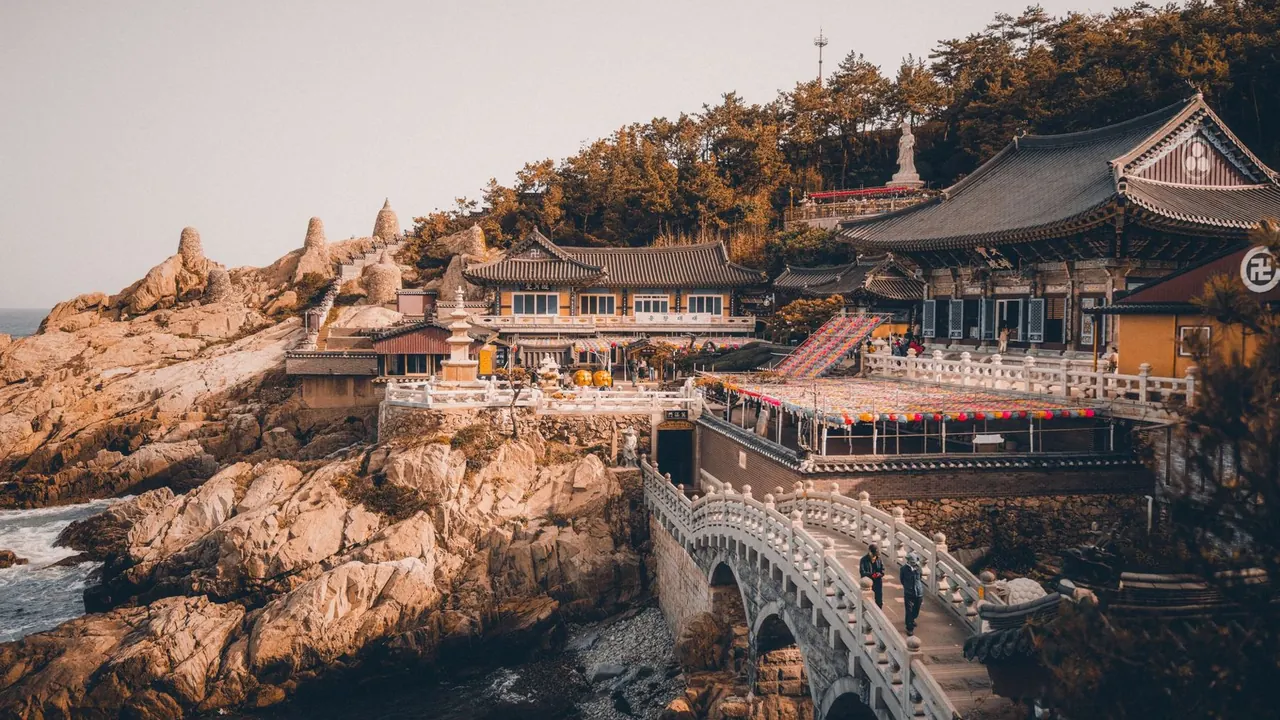
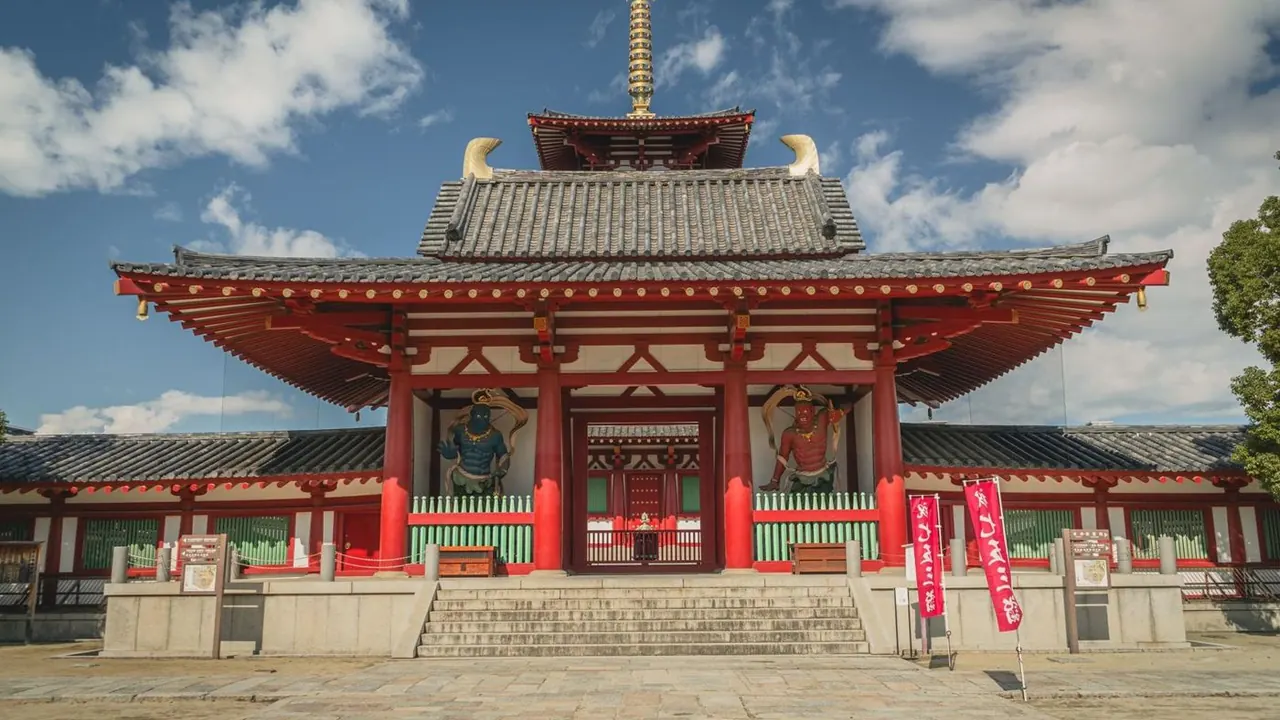
Photos: Busan by Andrea De Santis, Pexels License; Osaka by Sarmat Batagov, Pexels License.
Busan or Osaka?
Our verdict in twelve categories, each scored against the same fixed benchmark cities, and the climate month by month, so you can choose for your trip.
Choose Busan for
- beaches
- nature and the outdoors
- wellness
Busan suits travellers who want the sea to be part of the city. You can swim at Haeundae or Gwangalli in summer, walk the cliff paths at Igidae and Taejongdae, hike up from a metro station, and finish the day soaking in the Dongnae hot springs. It is slower and more seaside than Osaka, the seafood is excellent, and it rewards a trip built around the outdoors and unwinding rather than packed sightseeing.
Choose Osaka for
- live music and the arts
- day trips
- getting around
Osaka is the better choice for eating, going out and seeing the wider region. Its counters, izakaya alleys and late bars are among the best in Japan. Kyoto, Nara, Himeji and Kobe are all a short, simple train ride away, and Universal Studios and Kaiyukan make it easy with children. Pick it for a busy trip full of food, nights out and days away, not for the beach.
Scoreboard
Twelve categories on one fixed scale from 0 to 100. The shaded stretch is the gap between the two.
Your match
Pick a travel style or drag the sliders, and both match scores follow your weighting.
Wins on beaches and nature and the outdoors with your weighting.
Wins on live music and the arts and day trips with your weighting.
What matters to you?
Category by category
What the scores mean for a trip.
Beaches & swimming
Busan is the only one of the two where a beach trip makes sense. Haeundae's long arc of sand, Gwangalli facing the lit bridge and the calmer surf beach at Songjeong are all reachable on city transport, so a swim fits around everything else you do.
Osaka sits on an enclosed industrial bay. Its bathing beaches at Suma or down towards Wakayama are each about an hour by train, with coarse sand and suburban surroundings. The sea is just as warm in August, and both cities have only a short swimming season, but in Osaka the beach is a side trip rather than a reason to come.
Food & drink
Busan's cooking is built on the sea. You pick live fish at Jagalchi and eat it upstairs, have grilled eel in Gijang, and fill up on pork-bone gukbap, icy milmyeon and fishcake skewers. It is honest and very regional, but there is little beyond Korean food.
Osaka goes much further. Its street dishes, takoyaki, okonomiyaki and kushikatsu, are just the start. There are also the crowded izakaya of Tenma, the basement food halls of Umeda and the top-level kaiseki and sushi counters of Kitashinchi. Eating is the main reason many people visit Osaka, and you can eat well at every price.
Culture & sights
Neither city has an old quarter to wander, but for different reasons. Busan grew rapidly during and after the Korean War, as refugees settled its hillsides, so most of the city dates from those years. Its best sights are religious: Beomeosa, more than a thousand years old, on the slopes of Geumjeongsan, and Haedong Yonggungsa on the rocks above the sea. The war years are its other theme, at the UN Memorial Cemetery and in the painted refugee-era houses of Gamcheon.
Osaka lost its old merchant townscape to wartime bombing, but it has more to see, even if it comes in separate pieces. The castle stands on its original stone walls and moats, Sumiyoshi Taisha keeps an ancient shrine style, and Shitennoji is among Japan's oldest temples. Its museums are stronger too, especially the Oriental Ceramics collection and the cluster on Nakanoshima. Either city is covered in two or three days.
Nightlife
Both cities do the long, sociable bar-hop rather than big club nights. Busan's version is the Korean round of soju, beer and karaoke, centred on Seomyeon. Gwangalli has beachfront bars and tent bars serve grilled clams by the shore.
Osaka has more of everything. Minami alone has standing bars, izakaya alleys and the small clubs and DJ bars of Amerikamura, while Umeda and Ohatsutenjin hide dozens of tiny counters. People there are known for talking to strangers at the bar, so a night out is easy to join even on your own.
Nature & outdoors
Busan's outdoors happen on the water as well as on the hills. Beginners learn to surf at Songjeong, sailing boats go out on Suyeong Bay through the summer, and the rocky Oryukdo islets mark the mouth of the harbour. From the top of Hwangnyeongsan you can see the whole port and the towers below. In autumn the high ridges inland turn gold with silver grass, which makes autumn the best time for a walking trip.
In Osaka, the outdoors is more about the seasons than the landscape. Inside the city, Osaka Castle Park and the riverbanks are the main green spaces. Further out, Mount Ikoma and the Kongo range have gentle wooded walks that are at their best under spring blossom or late-autumn maples. The humid summer makes even modest climbs hard work, and the bay offers nothing to do on the water. Walks around Osaka fit in between other plans but are not a reason to go.
Day trips
Busan has one superb day out: Gyeongju, the old Silla capital with its royal tombs, Bulguksa temple and Seokguram grotto, about half an hour away by fast train. Tongdosa, the harbour at Tongyeong and the longer trip to Haeinsa add more, and a ferry even reaches Tsushima in Japan.
Osaka is one of the best bases anywhere for days out. Kyoto is under half an hour away, Nara about forty minutes, and Kobe is closer still. Himeji Castle, the finest original castle in Japan, is about half an hour on the bullet train. Koyasan's monasteries, Uji's tea houses and Lake Biwa extend the list, and frequent trains make every one easy to do on a whim.
Good for families
Busan is safe and easy-going with children. Summer brings the city beaches, and the year round there is the aquarium on the Haeundae seafront, the theme park and luge at Gijang and the slow sky-capsule rail along the coast. The hills, the steps up to the temples and Gamcheon, and the long distances between sights tire small legs, and late spring or early autumn is far easier than hot, crowded July and August.
Osaka gives families more within easy reach. There is Universal Studios Japan on the bay, the whale sharks at Kaiyukan, Kids Plaza, the science museum and the big Expo '70 park. Lifts and baby rooms in stations and department stores make getting around with a pushchair simpler.
Getting around
Busan's metro is clean and simple, but the city stretches along a narrow strip between hills and sea. Getting from Haeundae to Nampo-dong takes most of an hour, and many sights end with a bus ride and a climb.
Osaka is flat and compact by comparison. The Midosuji line runs through every central district, one IC card also covers the trains to Kyoto, Nara and Kobe, and many visitors simply rent a bicycle. The main frustration is changing lines in the vast underground maze at Umeda.
Shopping & style
Both cities shop on a large scale. In Busan that means Centum City's huge department stores, Seomyeon's underground arcades of cheap fashion and Korean skincare on every main street. Gukje Market and the dried-seafood stalls nearby supply the best things to take home.
Osaka offers more variety. Besides the Shinsaibashi arcade and the Umeda department stores, it has the Midosuji flagships, vintage and streetwear in Amerikamura, anime and electronics in Den Den Town, and kitchen knives on Doguyasuji.
Affordability
The two cities cost much the same overall, but the expensive and cheap parts differ. In Busan, soup restaurants, market meals and street snacks are cheap, while seafood priced by weight and beachfront hotels in July and August push the bill up.
In Osaka, food is where you save. Izakaya stay reasonable even in Namba. The big costs there are rooms in cherry-blossom and autumn-leaf season and tickets for Universal Studios.
Live music & performing arts
Busan's stage life suits concert-goers. Busan Concert Hall has orchestral and chamber evenings, the Cinema Center hosts the city's big autumn film festival, and summer brings outdoor rock and K-pop shows. Theatre is mostly touring musicals in Korean.
Osaka has art forms that belong to the city. Bunraku puppet theatre plays full seasons at its national theatre with English guides, and the manzai comedy stages of Namba are part of local identity. Live houses, orchestra halls and the Takarazuka Revue nearby give a much deeper calendar.
Wellness & relaxation
Busan bathes in real hot springs without leaving town. Dongnae has been a spa district since the Silla era, and there are huge thermal halls and jjimjilbang at Haeundae and Centum City. Add temple stays and quiet seafront evenings, and the whole city feels slower.
Osaka's bathing is everyday rather than thermal. Neighbourhood sento and super sento complexes are spread through the city, but for genuine hot springs you need the hour's trip to Arima Onsen. The pace in town is fast and noisy, so calm comes in short moments, not whole days.
When should you go?
Pick your month. The climate figures are measured averages, not a forecast.
Busan in July
Osaka in July
Daytime high, °C
Rainfall in the month, mm
Temperature and rainfall are climate normals, averaged over the years shown. Busan: 1991-2020 normals, Pusan (9.7 km from centre). Osaka: 1991-2020 normals, Osaka (1.8 km from centre).
The two cities run on a similar calendar, with mild springs, hot wet summers and cool, dry winters, but the summer goes wrong in different ways. Busan's monsoon is heavier, with around 352mm of rain in July. The sea only becomes pleasant for swimming in late July, August and early September, when it reaches about 26°C. Osaka's rain is spread more evenly from June to October. Its summer heat is the bigger problem, climbing to about 34°C in August, which makes walking the streets hard work.
For both cities, April to May and October to November are the comfortable months for walking. Busan stays a little cooler in summer. In winter Busan also gets noticeably more sunshine than Osaka, so a cold, bright January walk along its coast is more appealing than a grey day in Osaka.
Which traveller are you?
For a beach and sun trip, Busan is the clear choice. Haeundae, Gwangalli and Songjeong are inside the city and on the metro. Osaka's nearest bathing beaches are an hour away by train and suburban, so they only make sense as a hot-day outing.
On a food and nightlife trip, Osaka wins. Takoyaki stalls, okonomiyaki grills and kushikatsu counters lead straight into the bars of Ura-Namba and Amerikamura, and strangers chat at the counter until the first train. Busan's seafood and soju nights are good, but narrower.
For an outdoors trip, Busan is better placed. Mountain trails start beside metro stations, the Galmaetgil follows the cliffs and headlands, and the Yeongnam Alps are an hour inland. Around Osaka the walks are mostly gentle wooded day hikes like Minoo and Rokko.
Before you go
| Measure | Busan | Osaka |
|---|---|---|
| Official language | Korean, Korean Sign Language | Japanese |
| Currency | Won (KRW) | Yen (JPY) |
| Sockets | CF220 V, 60 Hz | AB100 V, 50 and 60 Hz depending on the region |
| Driving side | Right | Left |
| Time zone | UTC+9 | UTC+9 |
| Emergency number | Police 112, ambulance 119, fire 119 | Police 110, fire 119 |
| Elevation | 30 m | 20 m |
| Main airport | Gimhae International Airport (PUS)12 km from centre49 non-stop destinations | Kansai International Airport (KIX)38 km from centre62 non-stop destinations |
| Public holidays this year | 18 days | 16 days |
By the numbers
| Measure | Busan | Osaka |
|---|---|---|
| City population | 3,453,198 | 2,751,862 |
| People per km² | 4,486 | 12,340 |
| Museums within 10 km | 7 | 44 |
| UNESCO World Heritage sites within 50 km | 3 | 6 |
| Swim season, months above 21 °C | 4 months | 5 months |
Where else could you go?
Every comparison below shares a destination with this one, so you can follow Busan or Osaka somewhere new.