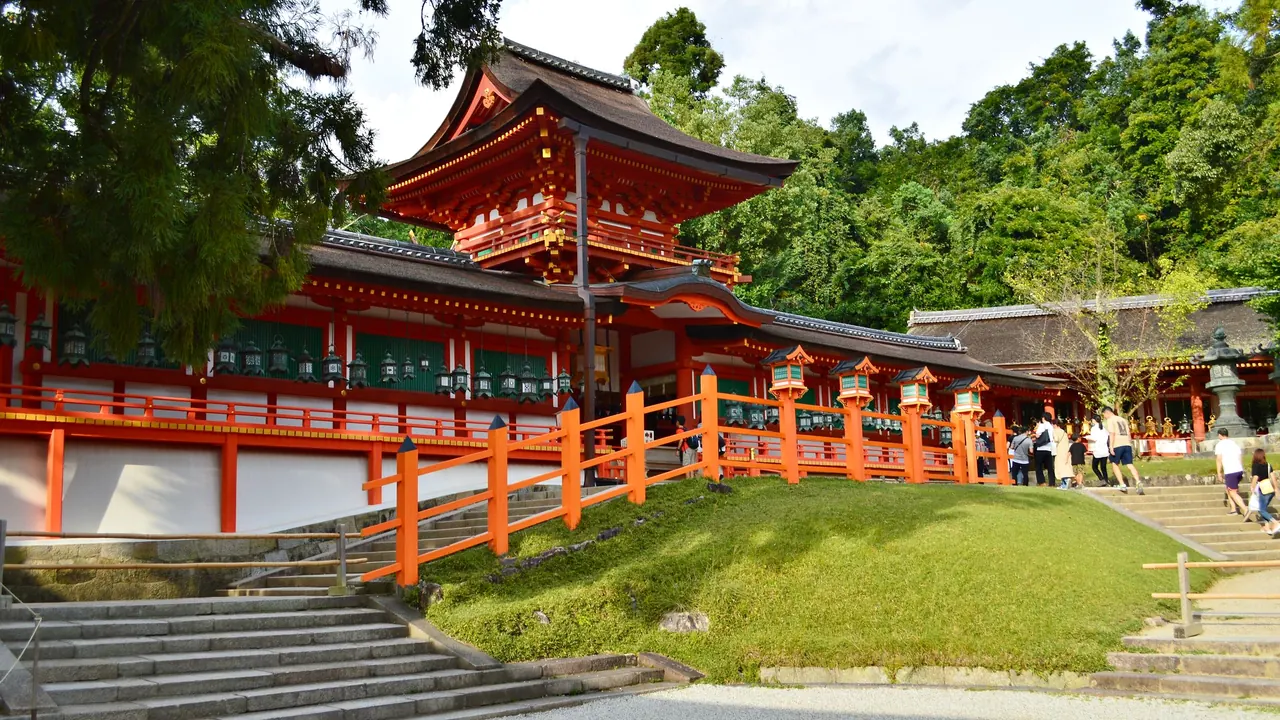
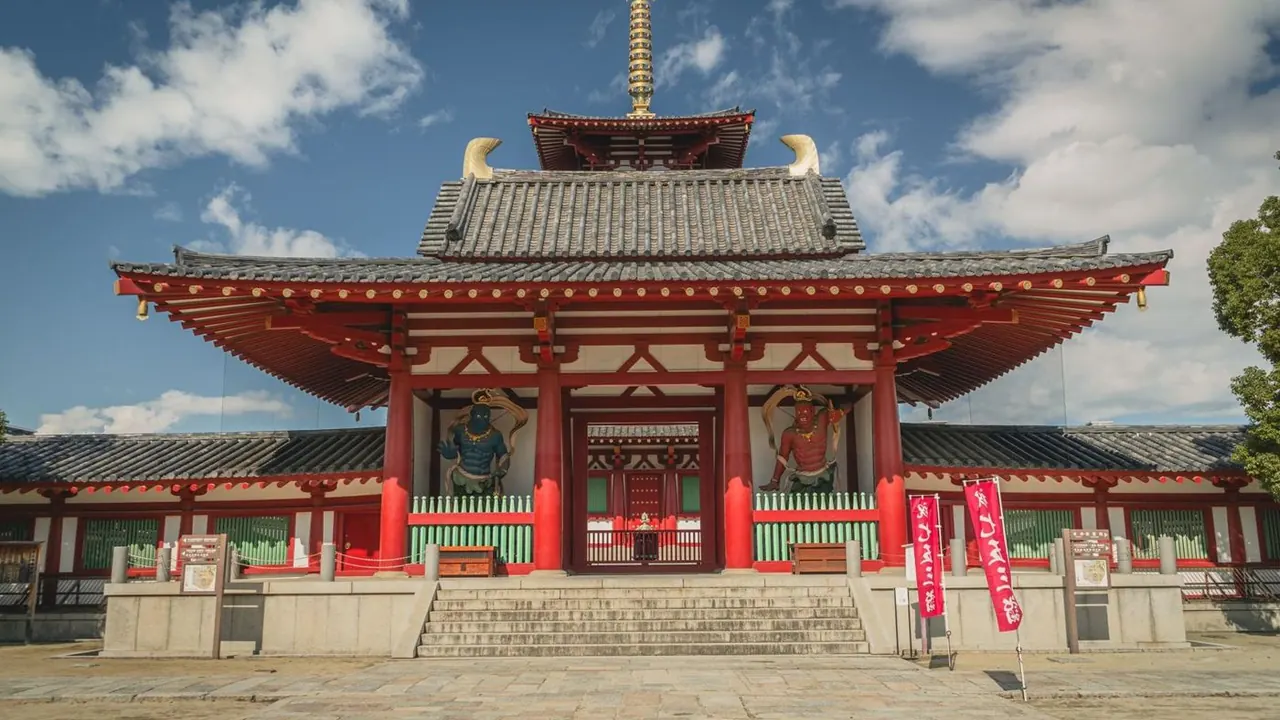
Photos: Nara by Saigen Jiro, CC0; Osaka by Sarmat Batagov, Pexels License.
Nara or Osaka?
Our verdict in twelve categories, each scored against the same fixed benchmark cities, and the climate month by month, so you can choose for your trip.
Choose Nara for
- culture and sights
- nature and the outdoors
Nara suits the traveller who wants the temples themselves to be the trip. The great eighth-century monuments, the deer park and the old merchant lanes of Naramachi all sit within walking distance of one another, and the town falls quiet in the evening, which makes it a calm base for two or three unhurried days of sightseeing.
Choose Osaka for
- nightlife
- food and drink
- shopping
Choose Osaka for appetite, energy and range. It eats and drinks far better, stays up much later, has a theme park and a world-class aquarium for children, and offers serious shopping and theatre. Its own heritage comes in scattered pieces, but Nara and Kyoto are short train rides away, so culture is never far off.
Scoreboard
Twelve categories on one fixed scale from 0 to 100. The shaded stretch is the gap between the two.
Your match
Pick a travel style or drag the sliders, and both match scores follow your weighting.
Wins on culture and sights and nature and the outdoors with your weighting.
Wins on nightlife and food and drink with your weighting.
What matters to you?
Category by category
What the scores mean for a trip.
Beaches & swimming
Neither city is a beach destination, but Osaka at least gives a summer swim. Suma and the coast towards Wakayama open bathing beaches in July and August, about an hour by train, with coarse sand and a suburban setting.
Nara is inland with no shore of its own, so the same Osaka Bay beaches lie well over an hour away, and swimming in practice means a pool. For clear water, travellers from either city head for the Kii Peninsula.
Food & drink
Nara offers a handful of local specialities worth seeking out: kakinoha-zushi wrapped in persimmon leaves, narazuke pickles, Miwa somen noodles and sake tasted in Naramachi. Beyond those, the choice near the park leans towards quick lunches, and kitchens close early.
Osaka is one of Japan's great places to eat, and the difference shows at every meal. Street takoyaki, okonomiyaki and kushikatsu in Dotonbori, grilled scallops at Kuromon Market, the Umeda food halls and top-level kaiseki in Kitashinchi give a range Nara cannot match, which is why Nara's own diners often take the train to Osaka.
Culture & sights
Nara is the stronger choice for heritage, because the old capital itself is still standing. The Great Buddha hall at Todai-ji, the lantern paths of Kasuga Taisha, Kofuku-ji's pagoda and the Tang-era calm of Toshodai-ji and Yakushiji form a set of the first rank, compact enough to walk.
Osaka's history survives in separate pieces, rebuilt after the war: the reconstructed castle on its original walls, Shitennoji and Sumiyoshi Taisha. Its strengths lie elsewhere, in the Museum of Oriental Ceramics, the Nakanoshima museums and the modern city of neon and towers.
Nightlife
After dark the two could hardly be further apart. Nara empties once the day visitors leave, and an evening means an izakaya near Kintetsu Nara station or a drink at a sake counter, with most places shut early.
Osaka is famous across Japan for its sociable nights. Dotonbori, Ura-Namba's standing bars, Amerikamura's small clubs and the tiny bars around Umeda keep going until the first morning train, and strangers chat readily at the counter.
Nature & outdoors
The two are broadly level outdoors, but the green space sits in different places. In Nara it begins in the centre: the deer park, the protected Kasugayama Primeval Forest and the easy climb up Mount Wakakusa, with the Yamanobe-no-michi trail and Yoshino's blossom hills further out.
Osaka is flat concrete apart from the castle park and riverbanks, so its walks lie an hour away by train: the waterfall trail at Minoo, ridge hikes in the Rokko mountains above Kobe and wooded paths on Mount Ikoma.
Day trips
Both are superb bases for exploring the Kansai region, and each is an easy day out from the other. Nara has the early heritage on its doorstep, with Horyu-ji a short ride away and the burial mounds of Asuka and the mountain temples of Hase-dera and Muro-ji to the south.
Osaka sits nearer the rest of the network: Kyoto in under half an hour, Kobe closer still, Himeji quick by bullet train, and Koyasan's monastery stays about two hours away.
Good for families
Nara gives children one unforgettable thing, feeding the bowing deer, plus the giant Buddha and the pillar they squeeze through at Todai-ji. With no zoo, aquarium or theme park, it fills one or two good days rather than a whole week.
Osaka is the place for a longer family stay. Universal Studios Japan, the Kaiyukan aquarium, the Tempozan Ferris wheel, Tennoji Zoo, Kids Plaza and Expo '70 Park give enough for many days, and stations and department stores have lifts and baby rooms.
Getting around
Nara is a town for walking: Todai-ji, Kasuga Taisha, the museum and Naramachi all lie within reach of Kintetsu Nara station, and buses or bicycles cover the western temples. Distances still add up over a day, and the buses fill up in busy seasons.
Osaka does better with a full subway and rail network, led by the Midosuji line through Umeda, Namba and Tennoji, and one IC card covers it all. The trade-off is Umeda station, an underground maze where changing lines can take ten minutes of walking.
Shopping & style
Nara's shopping is small and craft-led: sumi ink and calligraphy brushes, Nara-zarashi linen, Akahada pottery and Ittobori carvings in Naramachi, plus sweets and deer souvenirs in the covered arcades. There are no fashion streets.
Osaka offers far more choice. Shinsaibashi-suji's long arcade, the Umeda department stores, the flagships on Midosuji, vintage shops in Amerikamura, Den Den Town's electronics and anime, and kitchen knives on Doguyasuji make it a real shopping destination.
Affordability
Overall costs are much the same, but the money goes in different places. Nara's free deer park, modest temple fees and reasonable guesthouses keep sightseeing cheap, though rail fares mount up if you use it as a base for trips out.
In Osaka, food is the great saving, with cheap street snacks and fair izakaya, while rooms in peak seasons and tickets for Universal Studios Japan are the larger costs.
Live music & performing arts
Nara's performing arts are tied to its shrines: gagaku court music and bugaku dance at Kasuga Taisha, the winter On-matsuri and the Omizutori fire rites. Away from those dates there is little on stage.
Osaka has a regular programme. The National Bunraku Theatre stages puppet theatre with English guides, Festival Hall and Symphony Hall host orchestras, manzai comedy fills the Namba theatres, and small live houses play rock and jazz.
Wellness & relaxation
For bathing, Osaka has the clear edge. Its neighbourhood sento and large super sento complexes make an evening soak easy, and Arima Onsen, one of Japan's oldest spa towns, is about an hour away.
Nara has no hot springs of note, only old bathhouses and complexes on the outskirts. What it offers instead is a slower pace, with early mornings in the park and quiet evenings in the old town that Osaka's loud streets rarely give.
When should you go?
Pick your month. The climate figures are measured averages, not a forecast.
Nara in July
Osaka in July
Daytime high, °C
Rainfall in the month, mm
Where the figures come from
Nara's sunshine is measured 26 km from the centre, at Osaka.
Temperature and rainfall are climate normals, averaged over the years shown. Nara: 1971-2000 (sunshine 1991-2020, rainfall 1991-2020) normals, Nara (2.6 km from centre). Osaka: 1991-2020 normals, Osaka (1.8 km from centre).
The two cities share almost the same weather, and both are at their best in April and May and again in October and November, when days are mild for long walks between temples or around the shopping districts. Winters are cool and fairly dry in both, with daytime highs around 9°C in Nara and a degree or so warmer in Osaka, fine for sightseeing in a coat.
Summer is the hard season. The rain arrives in June and peaks in Nara in July at about 200mm, and by August Osaka reaches about 34°C, a little hotter than Nara, with heavy humidity that makes temple walks and city streets tiring. Only Osaka offers any swimming: in July and August the bay beaches reach about 27°C, warm enough for a dip, while Nara has no sea at all.
Which traveller are you?
On a culture and arts trip, Nara is the better base. Todai-ji, Kofuku-ji, Kasuga Taisha and the National Museum's Buddhist sculpture sit within walking distance, and Horyu-ji and the western temples are a short ride away, with Osaka's sights thinner by comparison.
For a food and nightlife trip, Osaka wins easily. Takoyaki stalls, okonomiyaki, Kuromon Market and the izakaya alleys of Ura-Namba and Tenma fill the evenings, and the bars of Minami run until the first train, while Nara's kitchens and bars close early.
On a family trip with children, Osaka has far more to fill the days: Universal Studios Japan, the Kaiyukan aquarium with its whale sharks, Tennoji Zoo and Kids Plaza. Nara's deer make a wonderful day, but little else there is built for children.
Before you go
| Measure | Nara | Osaka |
|---|---|---|
| Official language | Japanese | Japanese |
| Currency | Yen (JPY) | Yen (JPY) |
| Sockets | AB100 V, 50 and 60 Hz depending on the region | AB100 V, 50 and 60 Hz depending on the region |
| Driving side | Left | Left |
| Time zone | UTC+9 | UTC+9 |
| Emergency number | Police 110, fire 119 | Police 110, fire 119 |
| Elevation | 70 m | 20 m |
| Main airport | Kansai International Airport (KIX)59 km from centre62 non-stop destinations | Kansai International Airport (KIX)38 km from centre62 non-stop destinations |
| Public holidays this year | 16 days | 16 days |
By the numbers
| Measure | Nara | Osaka |
|---|---|---|
| City population | 352,377 | 2,751,862 |
| People per km² | 1,273 | 12,340 |
| Museums within 10 km | 31 | 44 |
| UNESCO World Heritage sites within 50 km | 6 | 6 |
| Swim season, months above 21 °C | 5 months | 5 months |
Where else could you go?
Every comparison below shares a destination with this one, so you can follow Nara or Osaka somewhere new.