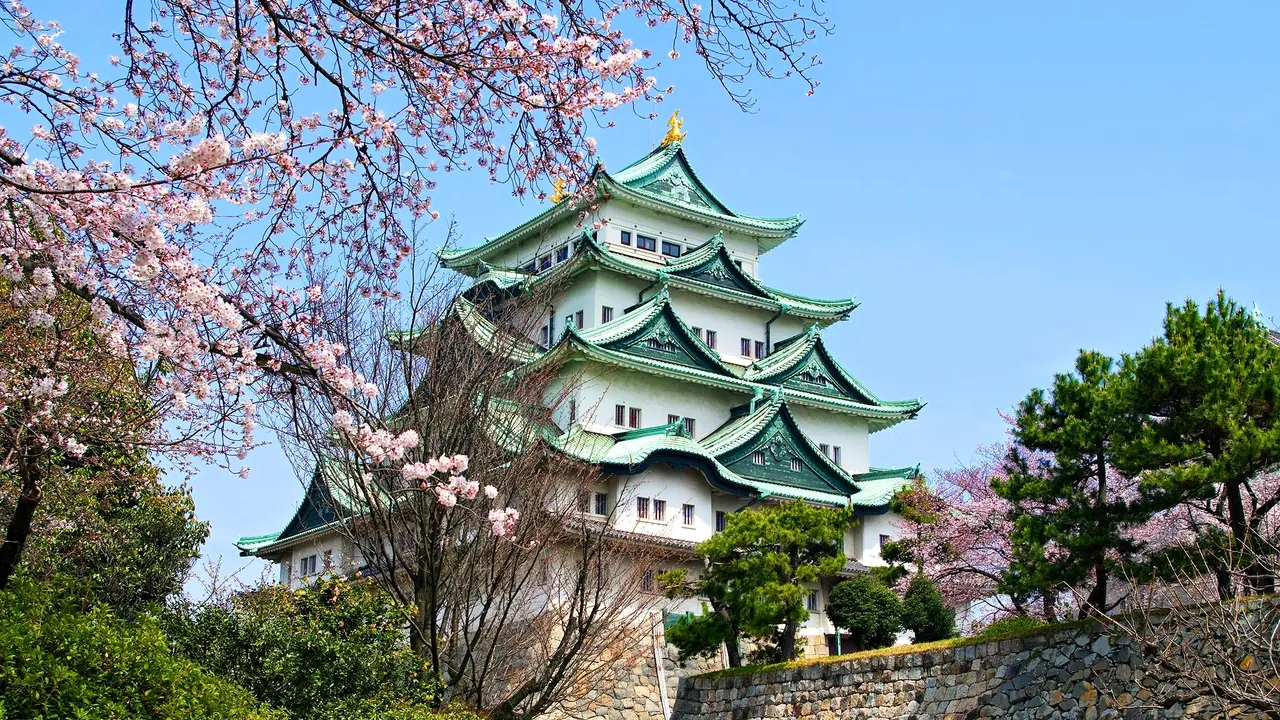
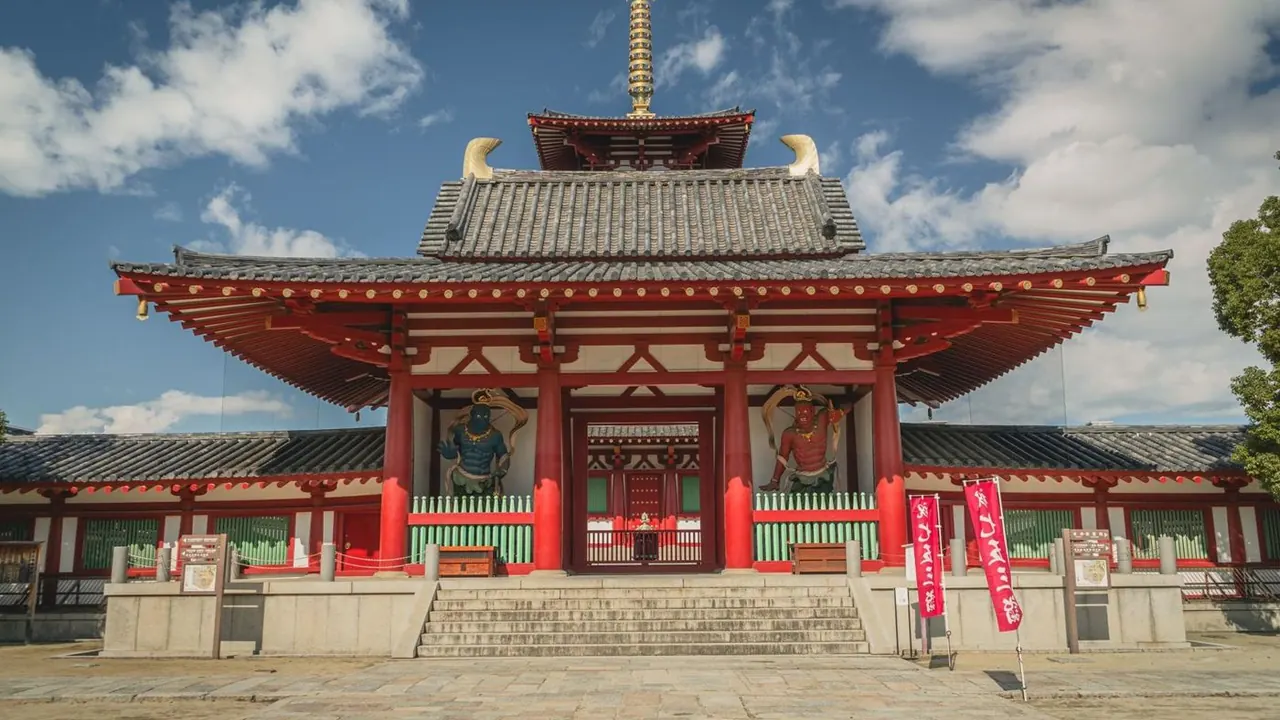
Photos: Nagoya by Hiroaki Kaneko, CC BY-SA 3.0, cropped; Osaka by Sarmat Batagov, Pexels License.
Nagoya or Osaka?
Our verdict in twelve categories, each scored against the same fixed benchmark cities, and the climate month by month, so you can choose for your trip.
Choose Nagoya for
- beaches
Nagoya suits a traveller who would rather have an orderly, quieter base in central Japan than a famous one. It has its own rich cooking, the Tokugawa treasures and the painted halls of the Honmaru Palace, and the Toyota and railway museums. From there it is easy to reach Ise, the castle at Inuyama and the Kiso Valley post towns, and Kyoto is still a short bullet-train ride away. Families with Ghibli fans, and anyone who wants an overnight stay at the mountain onsen of Gero, will find it a natural fit.
Choose Osaka for
- nightlife
- shopping
- food and drink
Choose Osaka if eating and going out are the point of the trip. It is the livelier and easier city, with better street food, far more nightlife, bigger shopping and simpler trains. It also has a position that puts Kyoto, Nara, Himeji and Kobe within about an hour on ordinary trains. Add bunraku and Universal Studios Japan, and a first visit to the Kansai region needs very little planning.
Scoreboard
Twelve categories on one fixed scale from 0 to 100. The shaded stretch is the gap between the two.
Your match
Pick a travel style or drag the sliders, and both match scores follow your weighting.
Wins on beaches with your weighting.
Wins on nightlife and shopping with your weighting.
What matters to you?
Category by category
What the scores mean for a trip.
Beaches & swimming
Neither city is a beach destination. In both, a swim means a train ride of about an hour to beaches that are only busy in summer, so the difference is in the setting. Nagoya's beaches on the Chita Peninsula, such as Utsumi, are wide, and small islands like Shinojima are a short ferry ride beyond, though the sheltered water is not very clear.
Osaka's choices, Suma near Kobe and Nishikinohama or Tannowa towards Wakayama, have coarser sand in suburban surroundings. Anyone in Osaka who wants clear water has to go far south to the Kii Peninsula.
Food & drink
Nagoya's cooking is rich and specialised. Hitsumabushi eel, miso katsu, tebasaki wings and misonikomi udon each have their own dedicated restaurants, and the morning service custom makes breakfast a small pleasure. It rewards a curious eater, but its top tier is smaller.
In Osaka, food is the main reason many people come. Takoyaki, okonomiyaki and kushikatsu are eaten all over Dotonbori, Kuromon Market and the izakaya alleys of Ura-Namba and Tenma, and the counters of Kitashinchi add cooking at the very highest level. Here you can eat well almost anywhere you stop.
Culture & sights
Both cities lost their old centres to wartime bombing and have reconstructed castles, so neither offers a historic townscape. Nagoya's strengths are the Tokugawa Art Museum, the cypress halls of the Honmaru Palace, Atsuta Shrine in its forest, and the Toyota and railway museums, which tell the story of how modern Japan was built.
Osaka has older religious sites in Shitennoji and Sumiyoshi Taisha, the ceramics museum and the art museums on Nakanoshima. Its real draw is the modern city itself, with the neon of Dotonbori and the old Shinsekai district. For serious temple visits, both send you on to Kyoto.
Nightlife
Nagoya's going-out district of Sakae and Nishiki has izakaya, small bars and a few dance clubs that fill at weekends. Midweek, though, it is mostly office workers eating after work, and the city is known for early nights. It is good for a pleasant dinner and a drink, not for a trip built around nights out.
Osaka is where the two cities differ most. Evenings run from Dotonbori's neon through the standing bars of Ura-Namba to the small clubs of Amerikamura and the tiny bars around Ohatsutenjin. Chatting to strangers at the counter is part of the custom, and many people stay out until the first train.
Nature & outdoors
Within the city, both offer little beyond parks, and both need an hour or more on the train for real landscape. In both, spring blossom and autumn maples are the best seasons. Nagoya reaches further: Mount Gozaisho's ropeway in the Suzuka Mountains, the maples of Korankei gorge, the Nakasendo trail through the Kiso Valley and the inlets of the Ise-Shima coast. Those with more than a day can go on into the Japan Alps.
Osaka's escapes are shorter walks: the waterfall trail at Minoo, the ridges of the Rokko mountains above Kobe, and the wooded slopes of Mount Ikoma.
Day trips
Nagoya is a strong base in its own right. Kyoto is about 35 minutes away by shinkansen, and Ise Jingu, the original castle keeps at Inuyama and Hikone, and the post towns of Tsumago and Magome are all within reach. Its outings also lean towards craft towns such as Seto, Tokoname and Arimatsu.
Osaka still has the edge, because the region's greatest sights are closer and reached on ordinary trains. These include Kyoto, Nara with Todaiji, Himeji Castle, Kobe, and the monasteries of Koyasan for an overnight stay. That list could fill two weeks without a single bullet train.
Good for families
Both cities are very good with children: safe, clean, with lifts in the stations, and each with one of Japan's great aquariums. Nagoya's highlights are Ghibli Park, Legoland Japan, the railway museum's full-size bullet trains and the giant planetarium. They are spread around the edges of the city, though, which means long train rides.
Osaka's centrepiece is Universal Studios Japan. Kaiyukan's whale sharks and the Tempozan Ferris wheel are on the same bay, and Expo '70 Park is further north. Weekend crowds and summer heat are the main strain.
Getting around
Nagoya's postwar grid of wide avenues is easy to follow but tiring to walk. Beyond Sakae, the castle and Osu you rely on the subway, and the big family sights are thirty to fifty minutes out.
Osaka is simpler. The Midosuji line runs through the main districts, the loop line fills the gaps, English signs are everywhere, and the flat centre is good for a rented bicycle. Its one weakness is the size of its stations, Umeda above all, where changing lines can mean a long underground walk.
Shopping & style
Nagoya's shopping centres on the department stores around Sakae and the station, with the arcades and temple flea market of Osu as its fun side. Where it does better is craft: Arimatsu shibori, Seto and Tokoname pottery and fine porcelain.
Osaka simply has much more. It has the long Shinsaibashi-suji arcade, international flagships on Midosuji, vintage clothing and streetwear in Amerikamura, and electronics and anime in Den Den Town. Kitchen knives from Sennichimae Doguyasuji are its most memorable buy, but traditional crafts are thin.
Affordability
The two cost about the same. Both are cheap to eat in and kept reasonable by their business hotels. Nagoya's rooms cost less than those in the tourist cities around it, which is why some visitors base themselves there for Kyoto, but shinkansen day trips and eel dinners eat into the saving.
Osaka's rooms get more expensive in blossom and autumn-leaf season and at weekends. In return, local trains to the sights cost little and most temples and shrines are free or inexpensive.
Live music & performing arts
Nagoya's stage life is solid, with opera and ballet at the Aichi Arts Center, the Nagoya Philharmonic's concert season and Noh near the castle. Kabuki is easier to catch here than in Osaka, because the Misono-za is a home stage for it. Very little of this is aimed at visitors without Japanese, though.
Osaka offers more that a visitor can follow, above all bunraku puppet theatre at the National Bunraku Theatre, which has English guides. It adds manzai comedy in Namba, orchestras at Festival Hall and Symphony Hall, and the Takarazuka Revue about forty minutes away by train.
Wellness & relaxation
Both cities share the same bathing culture, with neighbourhood sento and large super sento that are easy for visitors to use. The difference is the onsen trip. From Nagoya, Gero Onsen is a scenic two-hour ride into the mountains and worth an overnight stay, with Nagashima's hot-spring complex closer. From Osaka, Arima, one of Japan's oldest spa towns, is about an hour away in the hills behind Kobe.
In town, Nagoya's calm is found in the pond gardens and teahouses of Tokugawaen and Shirotori. Osaka's is in early mornings at Sumiyoshi Taisha and walks along the Nakanoshima rivers.
When should you go?
Pick your month. The climate figures are measured averages, not a forecast.
Nagoya in July
Osaka in July
Daytime high, °C
Rainfall in the month, mm
Temperature and rainfall are climate normals, averaged over the years shown. Nagoya: 1991-2020 normals, Nagoya (5.7 km from centre). Osaka: 1991-2020 normals, Osaka (1.8 km from centre).
The two cities have almost the same climate, so their best seasons coincide. Spring and autumn, roughly April to May and October to November, are the most comfortable for walking, with mild days and cherry blossom or red leaves. Winters are cold but fairly dry, and Nagoya gets noticeably more sunshine than Osaka from December to February. July and August are hot and humid in both, peaking around 33°C in Nagoya and 34°C in Osaka, which makes long days on foot hard work.
That heat brings the only beach season. The bay waters reach about 27°C in August, warm enough for a swim from either city. June and July are wet in both, but Nagoya stays very wet into September, with about 225mm, while Osaka is much drier at 146mm. This makes early autumn the better time for Osaka.
Which traveller are you?
For a food and nightlife trip, Osaka is the clear choice. Its street food, Kuromon Market and counter culture lead straight into evenings in the izakaya alleys and tiny bars of Minami and Umeda. Nagoya's specialities are excellent, but its streets empty early.
On a shopping trip, Osaka has more ground to cover: Shinsaibashi-suji, the Midosuji flagships, Amerikamura and Den Den Town. Nagoya is the better pick only when traditional crafts matter most, with shibori from Arimatsu and pottery from Seto and Tokoname.
On a family trip with children, both cities work well, so let the children's favourites decide. Nagoya suits Ghibli fans, train lovers and children of Legoland age. Osaka suits older children set on Universal Studios Japan and the whale sharks at Kaiyukan.
Before you go
| Measure | Nagoya | Osaka |
|---|---|---|
| Official language | Japanese | Japanese |
| Currency | Yen (JPY) | Yen (JPY) |
| Sockets | AB100 V, 50 and 60 Hz depending on the region | AB100 V, 50 and 60 Hz depending on the region |
| Driving side | Left | Left |
| Time zone | UTC+9 | UTC+9 |
| Emergency number | Police 110, fire 119 | Police 110, fire 119 |
| Elevation | 25 m | 20 m |
| Main airport | Chubu Centrair International Airport (NGO)37 km from centre43 non-stop destinations | Kansai International Airport (KIX)38 km from centre62 non-stop destinations |
| Public holidays this year | 16 days | 16 days |
By the numbers
| Measure | Nagoya | Osaka |
|---|---|---|
| City population | 2,326,844 | 2,751,862 |
| People per km² | 7,129 | 12,340 |
| Museums within 10 km | 63 | 44 |
| UNESCO World Heritage sites within 50 km | 0 | 6 |
| Swim season, months above 21 °C | 5 months | 5 months |
Where else could you go?
Every comparison below shares a destination with this one, so you can follow Nagoya or Osaka somewhere new.