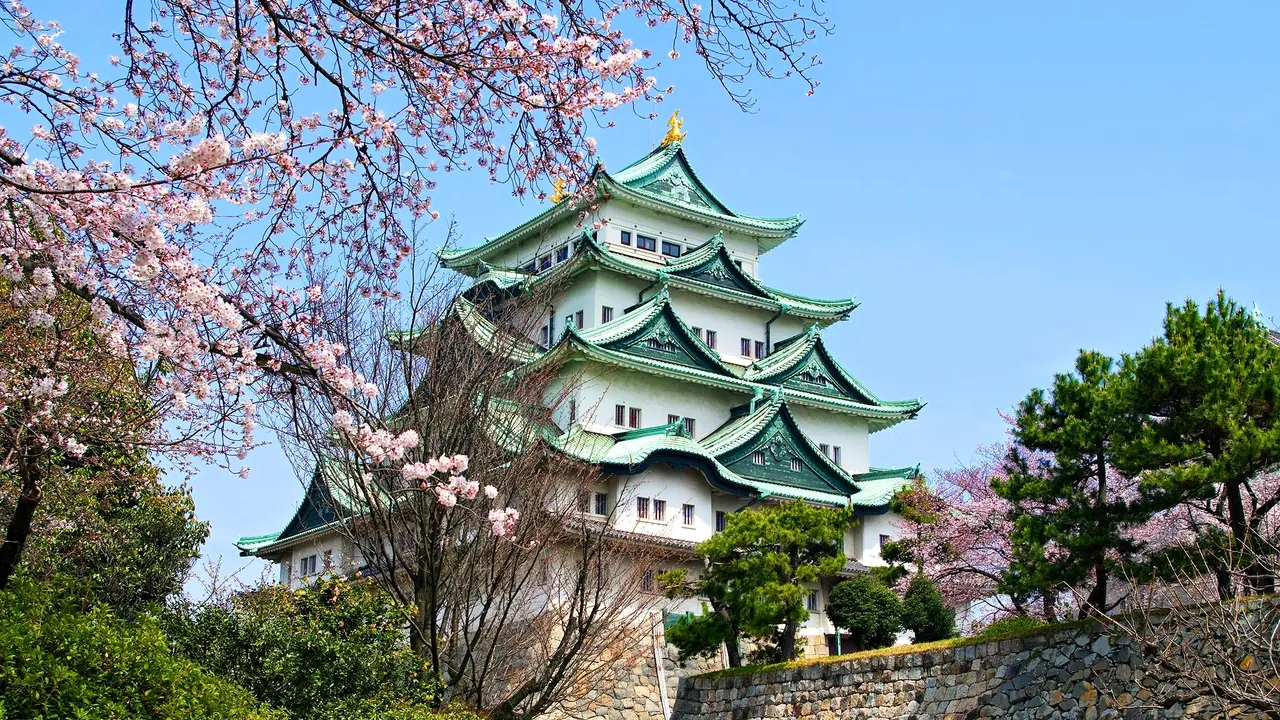
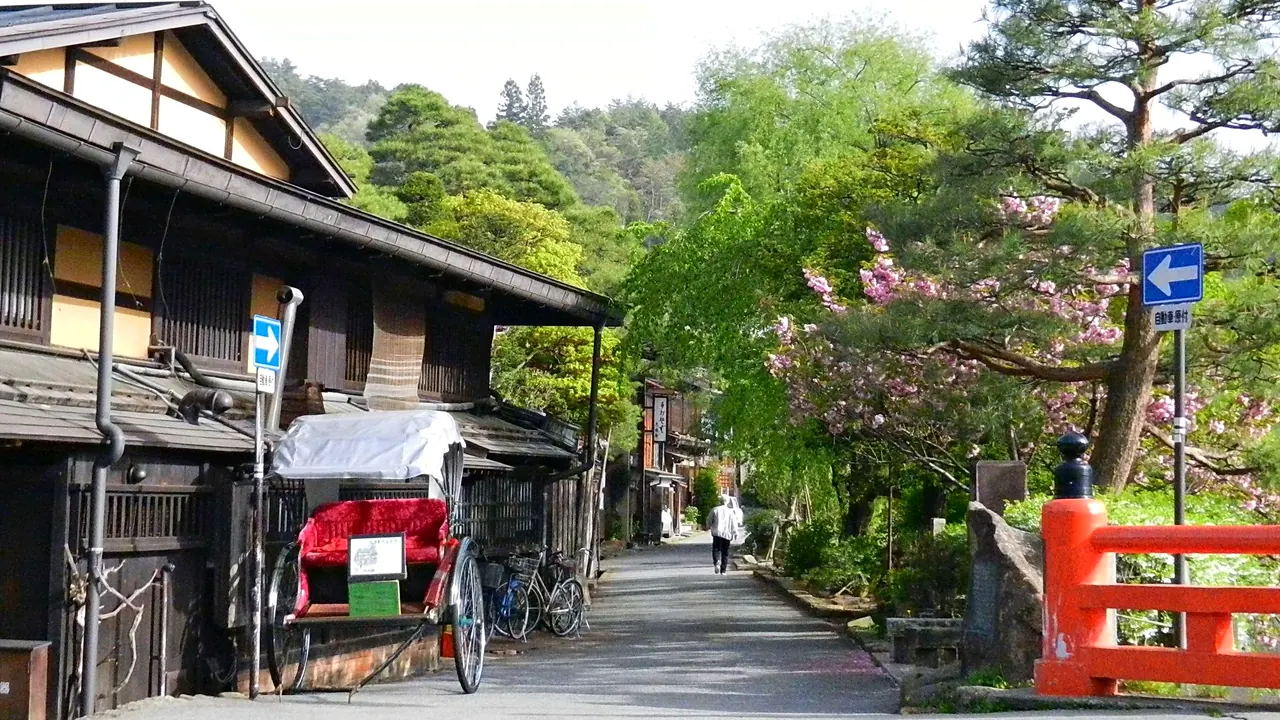
Photos: Nagoya by Hiroaki Kaneko, CC BY-SA 3.0, cropped; Takayama by lienyuan lee, CC BY 3.0, cropped.
Nagoya or Takayama?
Our verdict in twelve categories, each scored against the same fixed benchmark cities, and the climate month by month, so you can choose for your trip.
Choose Nagoya for
- families
- live music and the arts
- food and drink
Nagoya suits a traveller who wants a capable city base. It has a strong regional cooking tradition, department stores and arcades, kabuki or a whisky bar in Sakae for the evening, and Kyoto and Osaka a short shinkansen ride away. Families gain the most, because few Japanese cities have as many places built for children within reach.
Choose Takayama for
- nature and the outdoors
- wellness
Choose Takayama for a slower pace and for the mountains. You get the Edo-period merchant lanes, a ryokan with its own spring-fed bath and the Northern Alps an hour or so away by bus, which makes it the better stay for walkers and for anyone who wants to soak and go to bed early. It works best as two or three days on a wider route through Japan, and its evenings are quiet by design.
Scoreboard
Twelve categories on one fixed scale from 0 to 100. The shaded stretch is the gap between the two.
Your match
Pick a travel style or drag the sliders, and both match scores follow your weighting.
Wins on families and live music and the arts with your weighting.
Wins on nature and the outdoors and wellness with your weighting.
What matters to you?
Category by category
What the scores mean for a trip.
Beaches & swimming
Neither city is a beach destination, but Nagoya at least has the sea within reach. Utsumi on the Chita Peninsula is about an hour away by train, and the ferry to Shinojima makes a small-island day out in midsummer, though the bay water is sheltered rather than clear. Takayama is deep in the Hida mountains, about two hours from the coast, so the nearest thing to a swim there is a hot-spring pool.
Food & drink
Nagoya has the wider range of food. Its own cooking, known as Nagoya meshi, runs from grilled eel over rice to misonikomi udon simmered in an earthenware pot. Around it are good sushi and izakaya, the basement food halls near Sakae and the station, and the morning service custom that turns a coffee into breakfast.
Takayama's food is narrower but very focused. There is Hida beef grilled on a magnolia leaf or sold on skewers from street stalls, soy-glazed dango, pickles from the riverside markets and tastings at the old sake breweries. That makes two or three excellent days of eating, after which Nagoya's variety starts to matter.
Culture & sights
The two are well matched for sights, but they give you very different experiences. What survives of old Nagoya is a set of separate landmarks in a postwar grid: the rebuilt castle with its painted-cypress palace, the forest shrine of Atsuta and the Genji scrolls at the Tokugawa Art Museum. It adds something unusual in its industrial history, told at the Toyota and railway museums.
Takayama is the opposite: one intact old town you walk through rather than a list of stops. The timbered lanes of Sanmachi Suji, the feudal government office at Takayama Jinya and the thatched farmhouses of Hida Folk Village give a sense of Edo-period Japan that bombed Nagoya can no longer offer.
Nightlife
Nagoya is no late-night capital, but it does have a real district for going out. Sakae and Nishiki pack tiny bars, karaoke boxes, whisky and cocktail bars and a few dance clubs into narrow buildings, and Friday and Saturday are the nights to choose. In Takayama you can have a sake or a beer in an izakaya near the station after your ryokan dinner, but there are no clubs and very little is open after eleven.
Nature & outdoors
Takayama is the place for mountain scenery. Within about an hour and a half by bus, the Shin-Hotaka ropeway rises towards peaks near 3,000m and Kamikochi's flat riverside trails run beneath the Hotaka range. In winter there is skiing within reach.
From Nagoya, real landscape means an hour or more of travel out of the flat Nobi Plain, to Mount Gozaisho in the Suzuka range, the maples of Korankei or the old Nakasendo road through the Kiso Valley. In the city itself there are the Tokugawaen and Shirotori gardens and the large Higashiyama park, which are pleasant but cannot match Takayama's mountain views.
Day trips
Nagoya's place on the shinkansen line gives it much the wider reach. Kyoto is about thirty-five minutes away and Osaka under an hour, and Ise Jingu and Nara make longer days out. Closer in are the original castle keeps at Inuyama and Hikone and the old pottery towns of Seto and Tokoname.
Takayama has fewer options but one outstanding one: Shirakawa-go, with its UNESCO-listed thatched farmhouses, about fifty minutes by bus. Hida-Furukawa's canals and Gero Onsen are easy trips as well, while Kanazawa works better as your next stop than as a day out and back.
Good for families
Nagoya can hold children's interest over a longer stay, and not only with its best-known attractions. There is also the Science Museum's giant planetarium, the roller coasters and water park at Nagashima Spa Land, and stations with lifts and family restaurants everywhere. The catch is distance, because the main attractions are in separate corners of the city.
Takayama is safe and compact, and children enjoy the morning markets, the festival floats and the winter snow. It has no zoo, aquarium or theme park, though, so it fits a day or two of a family trip rather than forming the core of it.
Getting around
Neither needs a car, and Nagoya's transport network is the more capable of the two. Away from the Sakae, castle and Osu area, its wide postwar avenues make for long, dull walks. But the subway and three railway companies share one IC card, and Nagoya Station connects you easily to the whole region.
Takayama is the reverse. The old town, the Jinya and the markets are a short, flat walk from the station, which is a pleasure. Anything further away depends on regional buses, whose connections need planning and which can fill up in busy seasons.
Shopping & style
Nagoya has the broader shopping. Department stores around Sakae and in the towers above the station carry the big international brands and have deep food halls. The covered arcades of Osu mix secondhand clothing, anime and electronics, and a flea market runs at the Kannon temple on set days.
Takayama has almost no fashion or department-store shopping. Its strength is traditional craft: amber-toned Shunkei lacquerware, carvings cut from a single block of yew and Hida bentwood furniture, with red sarubobo charms in almost every shop.
Affordability
Nagoya is a little easier on the budget, mainly because its many business hotels keep room prices moderate. Morning service and noodle shops also make cheap eating simple. The costs mount up with eel dinners, shinkansen day trips and the theme parks.
Takayama is fair value if you stay in a simple guesthouse and live on street and market food. Spending rises with the things many people come for, a ryokan night with a multi-course dinner and a proper Hida beef meal, and rooms cost more again in festival weeks.
Live music & performing arts
Nagoya has a proper programme: opera and touring orchestras at the Aichi Arts Center, kabuki at the Misono-za, Noh near the castle and jazz in the small live houses, though most of it is in Japanese. Takayama's stage is its spring and autumn festival, with mechanical karakuri puppets on the floats and lantern-lit processions. It is memorable if your dates match, and there is little else the rest of the year.
Wellness & relaxation
Takayama is the more restful stay. It is in the middle of hot-spring country, the riverside open-air pools of the Okuhida villages are about an hour away, and Gero Onsen is under an hour by train.
Nagoya's bathing is more urban. It has neighbourhood sento and large super sento with saunas, plus the Nagashima complex, and Gero is a two-hour trip best done as an overnight stay. The city's gardens offer some calm, but around them is a working city of offices and wide roads.
When should you go?
Pick your month. The climate figures are measured averages, not a forecast.
Nagoya in July
Takayama in July
Daytime high, °C
Rainfall in the month, mm
Where the figures come from
Takayama's sunshine is measured 65 km from the centre, at Matsumoto.
Temperature and rainfall are climate normals, averaged over the years shown. Nagoya: 1991-2020 normals, Nagoya (5.7 km from centre). Takayama: 1971-2000 (sunshine 1991-2020, rainfall 1981-2010) normals, Takayama (0.5 km from centre).
Nagoya lies in the lowlands, with mild winters of around 9°C by day in January and a long, humid summer that peaks at 33°C in August. In that heat, walking between its scattered sights is hard work. The Chita beaches are only worth the trip from July to September, when the bay is warm, close to 27°C in August. Rain builds in June and again in September, so spring and late autumn are the comfortable seasons, and April and May are also among the sunniest months.
Takayama sits in a mountain basin and stays several degrees cooler all year. Winter is properly cold, with highs of about 3°C in January and February and snow on the ground. That is good for Shirakawa-go and the hot springs, less so for long walks. Summer is warm rather than oppressive, but July and September are very wet here, wetter than in Nagoya. May and October are the most reliable months for both the old town and the mountain trails.
Which traveller are you?
On a family trip with children, Nagoya is the clear choice. Its port aquarium with orcas and belugas, Legoland, Ghibli Park and the full-size bullet trains at the railway museum fill several days. Takayama's craft lanes and old houses keep young children interested only briefly.
For a food and nightlife trip, Nagoya wins again. Eel hitsumabushi, miso katsu and tebasaki wings each have their own specialist restaurants, and Sakae and Nishiki keep bars and karaoke going late at weekends. Takayama's beef and sake are excellent, but the town goes to sleep early.
On a relaxing and wellness trip, Takayama is the better stay. A soak in the ryokan's own spring-fed bath before dinner, a yukata evening and quiet morning walks by the river set the pace. Nagoya's super sento are good, but the city never really slows down.
Before you go
| Measure | Nagoya | Takayama |
|---|---|---|
| Official language | Japanese | Japanese |
| Currency | Yen (JPY) | Yen (JPY) |
| Sockets | AB100 V, 50 and 60 Hz depending on the region | AB100 V, 50 and 60 Hz depending on the region |
| Driving side | Left | Left |
| Time zone | UTC+9 | UTC+9 |
| Emergency number | Police 110, fire 119 | Police 110, fire 119 |
| Elevation | 25 m | 573 m |
| Main airport | Chubu Centrair International Airport (NGO)37 km from centre43 non-stop destinations | Chubu Centrair International Airport (NGO)149 km from centre43 non-stop destinations |
| Public holidays this year | 16 days | 16 days |
By the numbers
| Measure | Nagoya | Takayama |
|---|---|---|
| City population | 2,326,844 | 85,199 |
| People per km² | 7,129 | 39 |
| Museums within 10 km | 63 | 14 |
| UNESCO World Heritage sites within 50 km | 0 | 1 |
| Swim season, months above 21 °C | 5 months | - |
Where else could you go?
Every comparison below shares a destination with this one, so you can follow Nagoya or Takayama somewhere new.