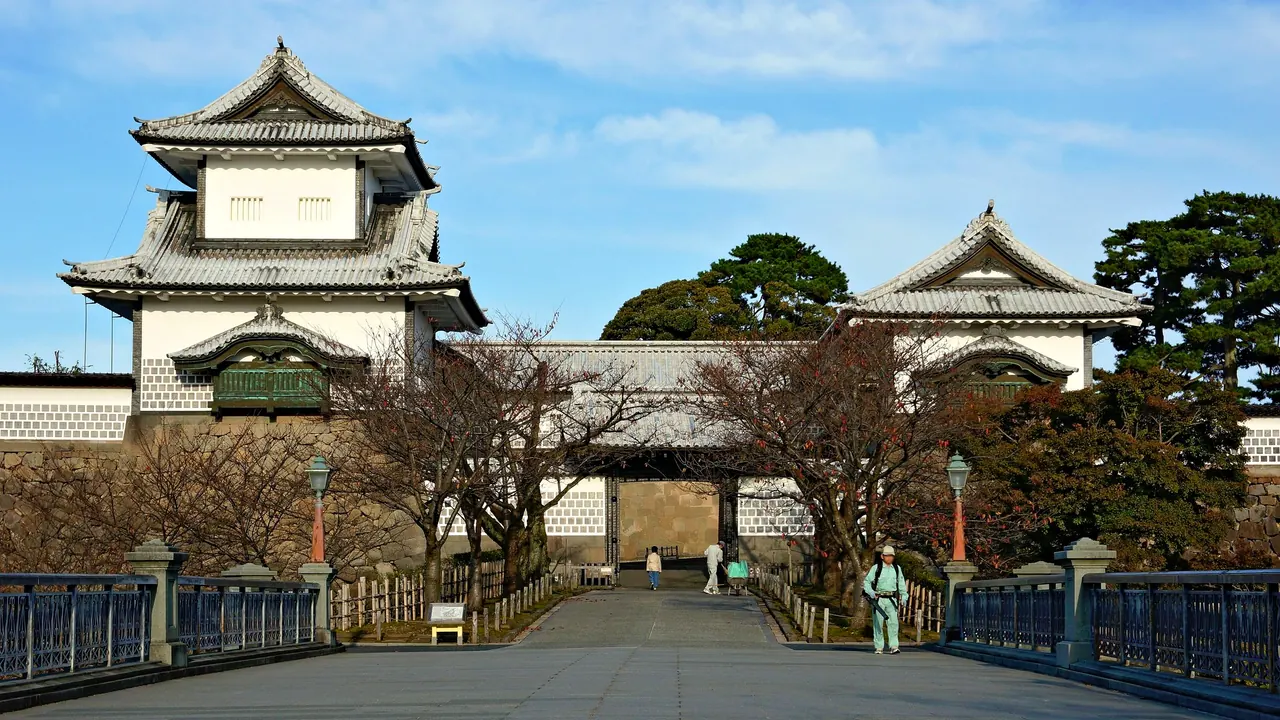
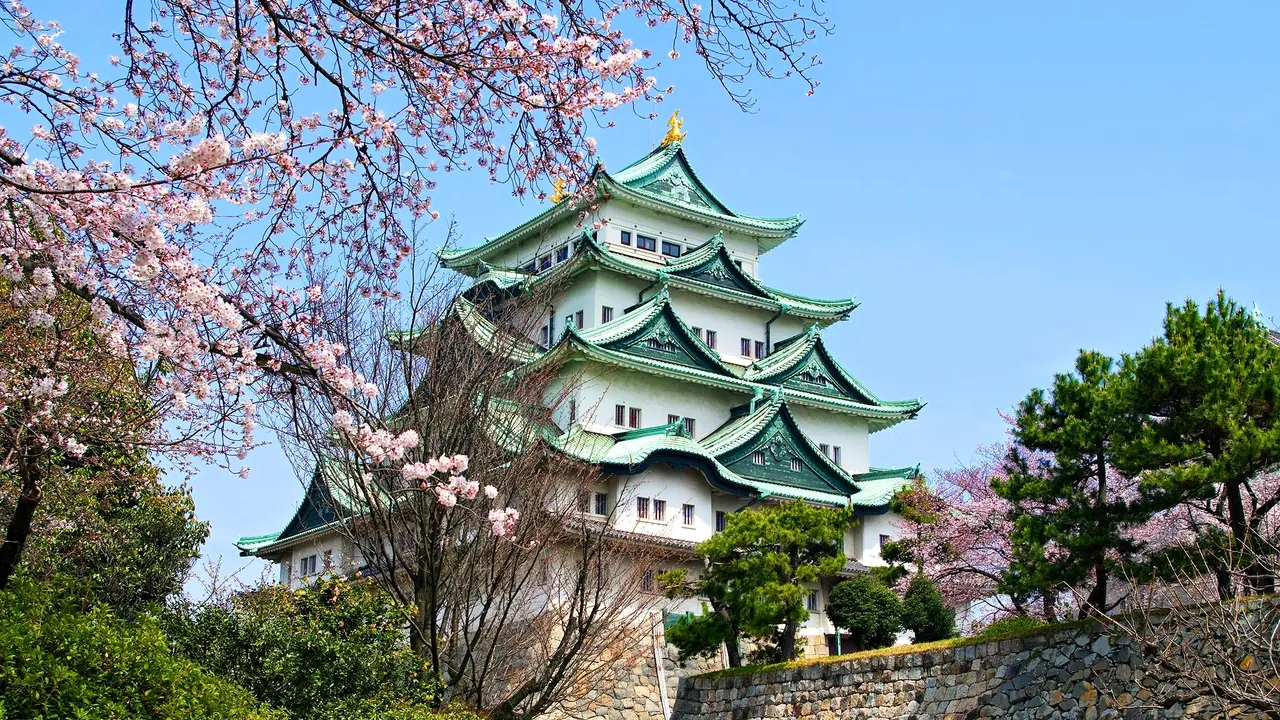
Photos: Kanazawa by 663highland, CC BY 2.5, cropped; Nagoya by Hiroaki Kaneko, CC BY-SA 3.0, cropped.
Kanazawa or Nagoya?
Our verdict in twelve categories, each scored against the same fixed benchmark cities, and the climate month by month, so you can choose for your trip.
Choose Kanazawa for
- culture and sights
- wellness
Kanazawa suits travellers who want an old Japanese city at a slow pace. Its samurai and geisha quarters survived the war, it has one of the country's great gardens, there are serious crafts to buy, and hot-spring villages are within easy reach. It is a place for couples and culture lovers who are happy with quiet evenings and a few unhurried days.
Choose Nagoya for
- families
- getting around
- nightlife
For families, and for anyone planning to range widely, Nagoya is the better base. Its trains reach Kyoto, Osaka and Ise within a day, and children get an aquarium, theme parks and Ghibli Park. The food and the nights out also run deeper, even though the city itself is more modern and plain.
Scoreboard
Twelve categories on one fixed scale from 0 to 100. The shaded stretch is the gap between the two.
Your match
Pick a travel style or drag the sliders, and both match scores follow your weighting.
Wins on culture and sights and wellness with your weighting.
Wins on families and getting around with your weighting.
What matters to you?
Category by category
What the scores mean for a trip.
Beaches & swimming
Neither city is a beach destination, and in both the sea only matters for about two summer months. The real difference is the water. Kanazawa faces the open Sea of Japan, with long, plain sand at Uchinada close by and the drivable sand of Chirihama under an hour away, though the coast is stormy for the rest of the year.
Nagoya's own waterfront is port and industry, so a swim means an hour on the train to the Chita Peninsula or a ferry to Shinojima. The sand there is wide, but the sheltered bay water is less clear.
Food & drink
Both are serious regional food cities, but Nagoya gives a visitor more to work through. You can try hitsumabushi eel, miso katsu, tebasaki wings, kishimen and misonikomi noodles, the café breakfasts of morning service, the department-store food halls and Osu's street snacks, which is enough to fill a longer stay.
Kanazawa's strength is narrower and more seasonal. It has Sea of Japan seafood at Omicho Market, snow crab in winter, Kaga dishes such as jibuni, and wagashi with matcha in the chaya teahouses. It is superb for a few days, but the range is smaller.
Culture & sights
Here Kanazawa is clearly the richer place. It escaped wartime bombing, so the latticed teahouses of Higashi Chaya, the samurai walls of Nagamachi and Kenroku-en together make a real old townscape to wander through, and the 21st Century Museum adds a strong modern counterpoint.
Nagoya lost its old centre in 1945, so its sights stand apart in a modern grid: the rebuilt castle and Honmaru Palace, the forest shrine of Atsuta and the Tokugawa Art Museum. Its own distinct draw is industrial history, at the Toyota and railway museums.
Nightlife
Neither is a big night-out city, but Nagoya has more going on after dark. Sakae and Nishiki pack izakaya, tiny bars, karaoke boxes and a few dance clubs into narrow buildings, and some places stay open until morning at weekends.
Kanazawa's Katamachi is smaller and quieter: a grid of izakaya, sake bars and snack bars with almost no clubs. The best evening there is a long dinner followed by a drink in an old wooden house in the chaya districts.
Nature & outdoors
In both cities you have to travel out for real landscape. Kanazawa has more to enjoy within the city itself: riverside paths along the Sai and Asano and wooded hills at its edge. Further out are the sacred peak of Hakusan, with summer hiking and winter skiing, and the rugged Noto coast, though most of it needs a car.
Nagoya sits on a flat, built-up plain, but trains take you to the Suzuka Mountains, the maples of Korankei and the Nakasendo trail through the Kiso Valley.
Day trips
Both make good bases, but Nagoya's place on the main shinkansen line puts Kyoto, Osaka, Ise Jingu and Nara within a day. It also has original castle keeps nearby at Inuyama and Hikone, and the post towns of Tsumago and Magome make a fuller outing.
Kanazawa's outings are more rural and regional: the thatched farmhouses of Shirakawa-go and Gokayama, Takayama's merchant streets, the monastery of Eihei-ji and the Kaga hot-spring towns. They are memorable, but there are fewer of the country's headline destinations within reach.
Good for families
Nagoya is much the stronger choice with children. The port aquarium with its orcas and belugas, Higashiyama Zoo, the giant planetarium, the full-size bullet trains, Legoland, Ghibli Park and the rides at Nagashima Spa Land could fill a week, though they lie in different corners of the city.
Kanazawa is just as safe and easy, but its everyday sights are gardens, teahouses and crafts. The 21st Century Museum and the ninja temple are the highlights for children. Beyond those you need to drive out, to the zoo or to the dinosaur museum in Fukui.
Getting around
Nagoya has a subway, and a single IC card covers it and the rail lines, so everything from the castle to Ghibli Park is reachable without a car. The drawback is that its wide postwar avenues make walking between districts dull.
Kanazawa has no metro or tram and relies on loop buses, which get crowded at busy times. In return, its main sights lie in a compact, level band about 2km long that is pleasant on foot or by shared bike, at least outside the snowy months.
Shopping & style
There is little between them overall. The difference is in what you bring home. Kanazawa is a craft city, selling gold leaf in every form, Kutani porcelain, Kaga yuzen silk and lacquer in the chaya districts and at the prefectural craft centre.
Nagoya is a department-store city, with the big stores around Sakae and the station and luxury brands on the avenues in between. Osu's arcades add secondhand clothes, anime and electronics, and crafts such as Arimatsu shibori and Seto pottery are there too.
Affordability
Costs are close. Both have plenty of business hotels, and set lunches and noodle shops keep everyday eating cheap. In each city the money goes on the local speciality: snow crab and kaiseki in Kanazawa, eel in Nagoya.
The extras differ. In Kanazawa they come from ryokan nights and the bus to Shirakawa-go, in Nagoya from shinkansen day trips and theme-park tickets. Nagoya's morning service also makes breakfast an easy saving.
Live music & performing arts
Nagoya has the broader programme. There is opera and ballet at the Aichi Arts Center, a season from the Nagoya Philharmonic, kabuki at the Misono-za, Noh near the castle, long-running musicals and big tours in the arenas.
Kanazawa's offering is smaller but distinctive: regular Noh at the prefectural theatre, geisha dance and shamisen in the chaya teahouses, and the Orchestra Ensemble Kanazawa beside the station. In both cities little is aimed at visitors who don't speak Japanese.
Wellness & relaxation
Kanazawa is the more restful stay. Yuwaku Onsen is half an hour away in the hills, and the Kaga spa towns make an easy overnight trip. Mornings in Kenroku-en and quiet hours in a teahouse set an unhurried pace for the whole visit.
Bathing in Nagoya is more urban. It has neighbourhood sento and big super sento with saunas, the Nagashima complex nearby, and Gero Onsen about two hours away by train. Its gardens are calm, but the city around them is a working one.
When should you go?
Pick your month. The climate figures are measured averages, not a forecast.
Kanazawa in July
Nagoya in July
Daytime high, °C
Rainfall in the month, mm
Temperature and rainfall are climate normals, averaged over the years shown. Kanazawa: 1991-2020 normals, Kanazawa (3.2 km from centre). Nagoya: 1991-2020 normals, Nagoya (5.7 km from centre).
Kanazawa, on the Sea of Japan side, is at its best in May. Days reach about 22°C, rainfall is at its lowest of the year and there is plenty of sunshine. October is the other good month for walking. From November to January the city turns grey, snowy and very wet, with about 301mm of rain in December and very little sun, so getting around the streets is hard work. Summer is warm and humid, though August is its sunniest month.
Nagoya's winter is the opposite: cold but dry and bright, with only about 49mm of rain in January, so winter is still a reasonable time to see the city. Its summer is hotter, reaching around 33°C in August, and June, July and September are its wettest months. The best walking weather comes in April and May and again from October into November. For a swim, go in July or August in either city, when the sea warms to around 27°C by late summer.
Which traveller are you?
On a family trip with children, Nagoya is the easy choice. Its aquarium, huge zoo, Legoland, Ghibli Park, railway museum and Nagashima's rides give children whole days of their own, while Kanazawa's gardens and teahouses can feel slow to young children.
For a culture and arts trip, Kanazawa has more to offer. Its Edo-period streets survived the war, so geisha teahouses, samurai lanes and Kenroku-en sit side by side, with contemporary art, regular Noh and a living craft tradition close by.
On a food and nightlife trip, Nagoya gives you more to work through. Its own miso-rich cooking runs from eel to chicken wings and two kinds of noodle, and Sakae's bars, karaoke and late clubs outlast Kanazawa's quiet sake-bar evenings.
Before you go
| Measure | Kanazawa | Nagoya |
|---|---|---|
| Official language | Japanese | Japanese |
| Currency | Yen (JPY) | Yen (JPY) |
| Sockets | AB100 V, 50 and 60 Hz depending on the region | AB100 V, 50 and 60 Hz depending on the region |
| Driving side | Left | Left |
| Time zone | UTC+9 | UTC+9 |
| Emergency number | Police 110, fire 119 | Police 110, fire 119 |
| Elevation | 28 m | 25 m |
| Main airport | Komatsu Airport / JASDF Komatsu Air Base (KMQ)29 km from centre7 non-stop destinations | Chubu Centrair International Airport (NGO)37 km from centre43 non-stop destinations |
| Public holidays this year | 16 days | 16 days |
By the numbers
| Measure | Kanazawa | Nagoya |
|---|---|---|
| City population | 462,479 | 2,326,844 |
| People per km² | 989 | 7,129 |
| Museums within 10 km | 27 | 63 |
| UNESCO World Heritage sites within 50 km | 1 | 0 |
| Swim season, months above 21 °C | 4 months | 5 months |
Where else could you go?
Every comparison below shares a destination with this one, so you can follow Kanazawa or Nagoya somewhere new.