Photos: Kobe by Wei-Te Wong, CC BY-SA 2.0, cropped; Nagoya by Hiroaki Kaneko, CC BY-SA 3.0, cropped.
Kobe or Nagoya?
Our verdict in twelve categories, each scored against the same fixed benchmark cities, and the climate month by month, so you can choose for your trip.
Choose Kobe for
- wellness
- nature and the outdoors
- getting around
Kobe suits travellers who want a compact, walkable base with mountains behind the streets and a famous hot spring town inside the city limits. You can hike the Rokko range in the morning, soak in Arima's rust-coloured water in the afternoon and eat Kobe beef in Sannomiya at night. Himeji, Osaka and Kyoto are all an easy train ride away.
Choose Nagoya for
- families
- culture and sights
- nightlife
Choose Nagoya for a trip with children or for history with more depth. Its aquarium, huge zoo, railway museum and theme parks can fill a family week. The castle, Atsuta Shrine and the Tokugawa Art Museum go further than Kobe's treaty-port houses, and its own miso-rich cooking is a reason to come in itself. Expect longer rides between sights, though.
Scoreboard
Twelve categories on one fixed scale from 0 to 100. The shaded stretch is the gap between the two.
Your match
Pick a travel style or drag the sliders, and both match scores follow your weighting.
Too close to call, 2 points apart
Wins on wellness and nature and the outdoors with your weighting.
Wins on families and culture and sights with your weighting.
What matters to you?
Category by category
What the scores mean for a trip.
Beaches & swimming
Neither city is a beach destination, and both shores are mostly port. The real difference is distance. Kobe's Suma is a long sandy beach about fifteen minutes from the centre by train, with an aquarium beside it, so a swim fits into a summer afternoon.
From Nagoya, the nearest sand is at Utsumi on the Chita Peninsula, an hour away, with ferry islands such as Shinojima beyond it. The water is sheltered and not very clear, and going there takes the whole day.
Food & drink
Both are strong eating cities, in different ways. Kobe's food reflects its port history: Kobe beef grilled on teppanyaki counters, bakeries and cake shops in Motomachi and Kitano, steamed buns in Nankinmachi and sake from the Nada breweries along the shore.
Nagoya has its own regional cuisine, based on dark miso and sweet, rich flavours. Specialist restaurants serve grilled eel hitsumabushi, miso katsu and peppery chicken wings. Its morning service, toast and an egg brought free with your coffee, is a custom you won't find in Kobe.
Culture & sights
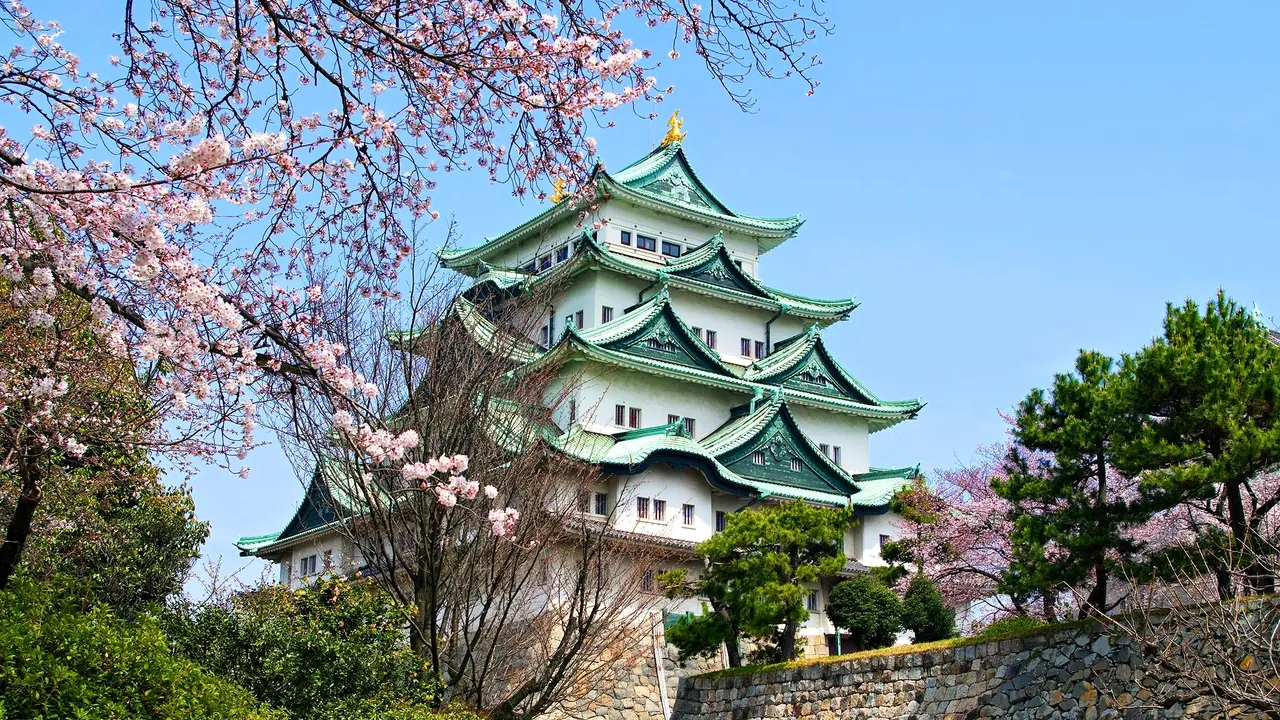
Nagoya has more to see. The rebuilt castle with its painted Honmaru Palace, the forested Atsuta Shrine and the samurai treasures of the Tokugawa Art Museum tell the city's feudal story. The Toyota and railway museums add the story of its industry.
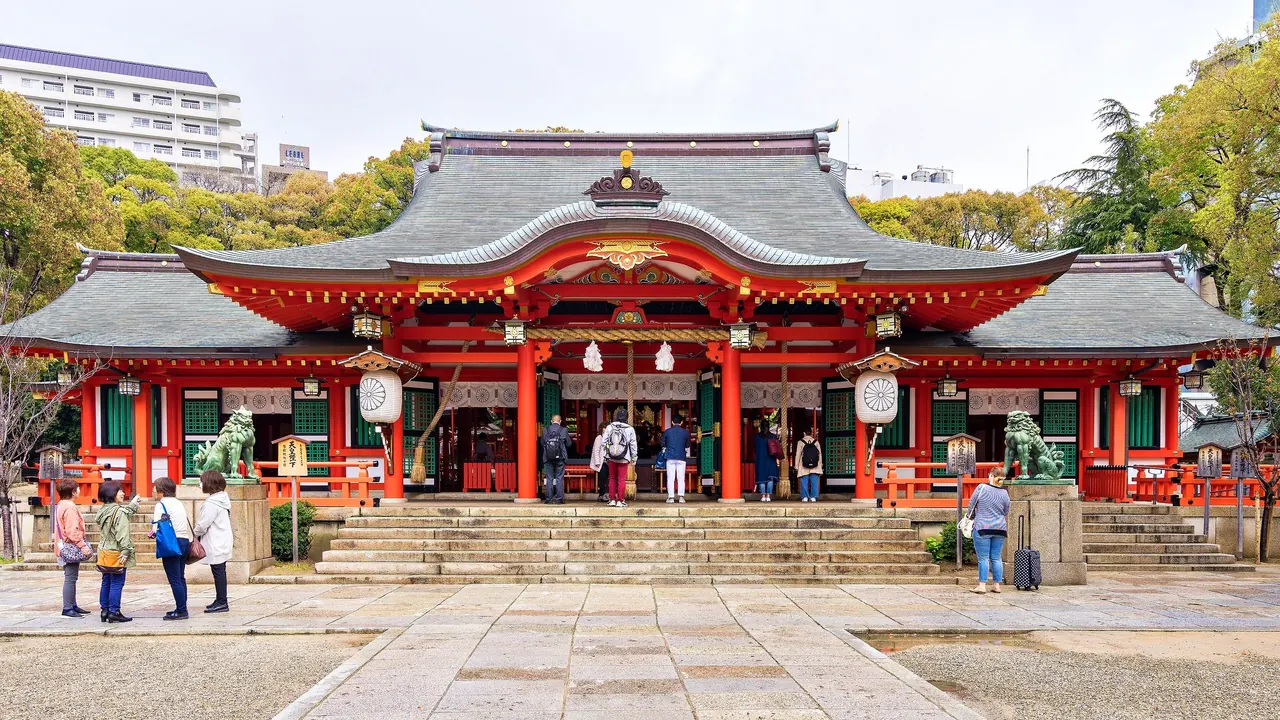
Kobe's sights are fewer and lighter. They tell the story of a treaty port: Western merchants' houses in Kitano, the ancient Ikuta Shrine among the shops and a moving museum of the 1995 earthquake. Two days is enough to see them comfortably.
Nightlife
Neither city is known for big nights out, but Nagoya stays out later. Sakae and Nishiki pack karaoke, tiny bars and a handful of dance clubs into narrow buildings, and on weekends some places stay open until morning. The lanes above Sannomiya in Kobe are better for a long, sociable evening in izakaya and whisky bars, and anyone who wants to dance usually takes the twenty-minute train to Osaka.
Nature & outdoors
Kobe is clearly ahead here because its mountains are part of the city. The Rokko range rises straight behind the streets. Trails lead from Shin-Kobe station past the Nunobiki waterfalls, cable cars climb Maya and Rokko for night views over the bay, and the rugged Suma Alps sit at the western end.
Nagoya lies on a flat, built-up plain, so close by you only have parks and gardens. Real landscape, such as the Suzuka Mountains, Korankei gorge or the Nakasendo trail in the Kiso Valley, starts an hour or more away.
Day trips
Both cities are superb bases with the shinkansen on the doorstep, but they reach different places. From Kobe, Himeji Castle is under an hour west and Osaka twenty minutes east, Kyoto and Nara make easy temple days, and Okayama, Kurashiki and even Hiroshima lie further west along the line.
Nagoya reaches Kyoto in about 35 minutes and adds places Kobe can't reach easily. These include the great shrines of Ise, the original castle keeps at Inuyama and Hikone, the pottery towns of Seto and Tokoname, and the Edo-period post towns of Tsumago and Magome.
Good for families
Nagoya has more for children. Its port aquarium is among the largest in Japan, Higashiyama Zoo is huge, the Science Museum has a giant planetarium, and the roller coasters and water park at Nagashima are under an hour away. The catch is time, since these sit in different corners of the city.
Kobe has fewer big attractions, but they are closer together. There is the aquarium beside Suma beach, Oji Zoo near the centre, the Ferris wheel at Harborland, and cable cars up to a pasture farm on Rokko. Osaka's big theme park is about an hour away.
Getting around
Kobe is the easier city to get around. Its long, narrow shape keeps Chinatown, the harbour, the arcades and Kitano within walking distance of Sannomiya, and parallel rail lines cover the rest.
Nagoya's post-war grid of wide avenues is easy to follow but tiring on foot. Beyond the walkable area around Sakae, the castle and Osu, you rely on the subway, and the aquarium or the Expo park take thirty to fifty minutes. Neither city needs a car.
Shopping & style
The two cities shop in different styles. Kobe is about style and local specialities: covered arcades through Sannomiya and Motomachi, boutiques in the stone buildings of the old foreign settlement, and the city's pearls, cakes and Nagata leather shoes. Nagoya is built around big department stores at Sakae and above the station, with deep food halls. Its Osu arcades add secondhand clothes, anime and a temple flea market, and nearby craft towns supply pottery and shibori tie-dye.
Affordability
There is little to choose between them on cost. Both have plenty of compact business hotels and good, cheap everyday food. In both, the bill climbs with the signature meal: Kobe beef in one, eel in the other.
Nagoya's morning-service breakfasts stretch a budget a little further. In Kobe, the costs to watch are the cable cars into the mountains and a night in an Arima ryokan.
Live music & performing arts
The two are broadly level, but they offer different kinds of evening. Kobe's strength is jazz, with small clubs and bars with resident pianists and trios around Sannomiya and Kitano, and a jazz festival that fills Kitano each autumn. Classical concerts are close by at the Hyogo Performing Arts Center in Nishinomiya, which has its own orchestra, and the all-female Takarazuka Revue plays in its home town about forty minutes away. For opera, kabuki and big stage productions, though, Kobe sends you to Osaka.
Nagoya has those traditional and grand forms in the city itself. There is kabuki at the Misono-za, Noh and kyogen near the castle, and opera and ballet at the Aichi Arts Center, along with the Nagoya Philharmonic's season. Most of it is performed for a Japanese-speaking audience, so check what is on before you plan an evening around it.
Wellness & relaxation
Kobe is the better choice for a hot spring stay. Arima's iron-rich kinsen water and carbonated ginsen water, and its ryokan with private baths and kaiseki dinners, are all within the city boundary. The harbour promenades and Kitano's quiet slopes are good for slow evenings.
In Nagoya, bathing is part of daily life rather than an occasion. There are neighbourhood sento, large super sento with saunas and open-air pools, and the hot spring complex at Nagashima. The gardens at Tokugawaen and Shirotori are the calmest corners of an otherwise busy working city.
When should you go?
Pick your month. The climate figures are measured averages, not a forecast.
Kobe in July
Nagoya in July
Daytime high, °C
Rainfall in the month, mm
Where the figures come from
Kobe's sunshine is measured 29 km from the centre, at Osaka.
Temperature and rainfall are climate normals, averaged over the years shown. Kobe: 1971-2000 (sunshine 1991-2020, rainfall 1991-2020) normals, Kobe (1.3 km from centre). Nagoya: 1991-2020 normals, Nagoya (5.7 km from centre).
Both cities follow the same yearly pattern. Winters are cool and fairly dry, with highs around 9°C in January. Spring is pleasant, the rainy season starts in June and high summer is hot and sticky. July and August are the only real swimming months, when the sea off both cities reaches about 27°C. Those months are also too hot for long afternoons on foot, and Nagoya, on its flat inland plain, runs about a degree warmer, peaking at 33°C in August.
The differences come at either end of the summer. Nagoya stays wet well into autumn, and September is its rainiest month at 225mm, so Kobe is the safer choice in early autumn. October and November bring mild days in both, and with April and May they are the best months for walking. In winter Nagoya gets clearly more sunshine, while Kobe gets a little less rain.
Which traveller are you?
For a relaxing and wellness trip, Kobe is the better choice. Arima Onsen, one of Japan's oldest hot spring towns, is within the city about half an hour away. Nagoya's classic spa town, Gero, takes two hours by train and really needs an overnight stay.
On a family trip with children, Nagoya has more to offer. It has a large aquarium with orcas and belugas, the huge Higashiyama Zoo, full-size bullet trains at the railway museum and theme parks at the port and in the Expo park. Expect train rides between them.
On an outdoors trip, Kobe has the mountains on its doorstep. Trails to the Nunobiki waterfalls start near Shin-Kobe station and the Rokko ridge runs the length of the city. From flat Nagoya, the Suzuka Mountains and the Kiso Valley are an hour or two away.
Before you go
| Measure | Kobe | Nagoya |
|---|---|---|
| Official language | Japanese | Japanese |
| Currency | Yen (JPY) | Yen (JPY) |
| Sockets | AB100 V, 50 and 60 Hz depending on the region | AB100 V, 50 and 60 Hz depending on the region |
| Driving side | Left | Left |
| Time zone | UTC+9 | UTC+9 |
| Emergency number | Police 110, fire 119 | Police 110, fire 119 |
| Elevation | 17 m | 25 m |
| Main airport | Kobe Airport (UKB)7 km from centre15 non-stop destinations | Chubu Centrair International Airport (NGO)37 km from centre43 non-stop destinations |
| Public holidays this year | 16 days | 16 days |
By the numbers
| Measure | Kobe | Nagoya |
|---|---|---|
| City population | 1,521,707 | 2,326,844 |
| People per km² | 2,732 | 7,129 |
| Museums within 10 km | 46 | 63 |
| UNESCO World Heritage sites within 50 km | 3 | 0 |
| Swim season, months above 21 °C | 5 months | 5 months |
Where else could you go?
Every comparison below shares a destination with this one, so you can follow Kobe or Nagoya somewhere new.