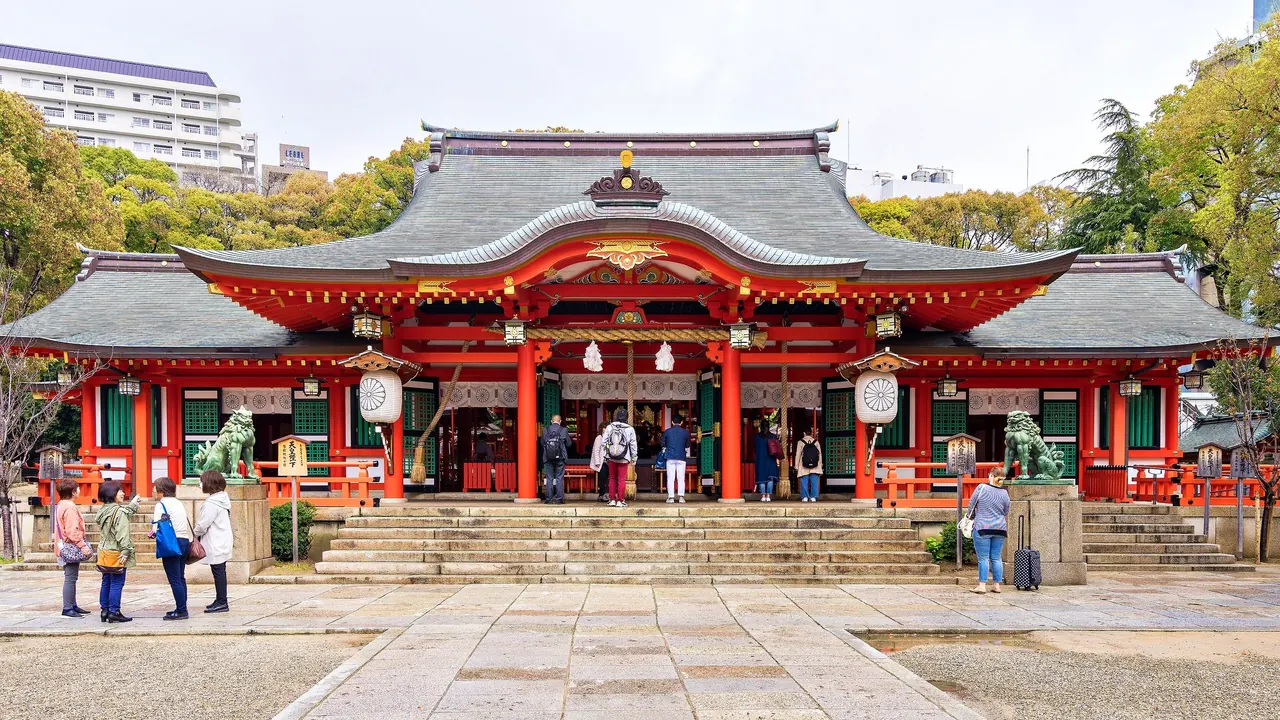
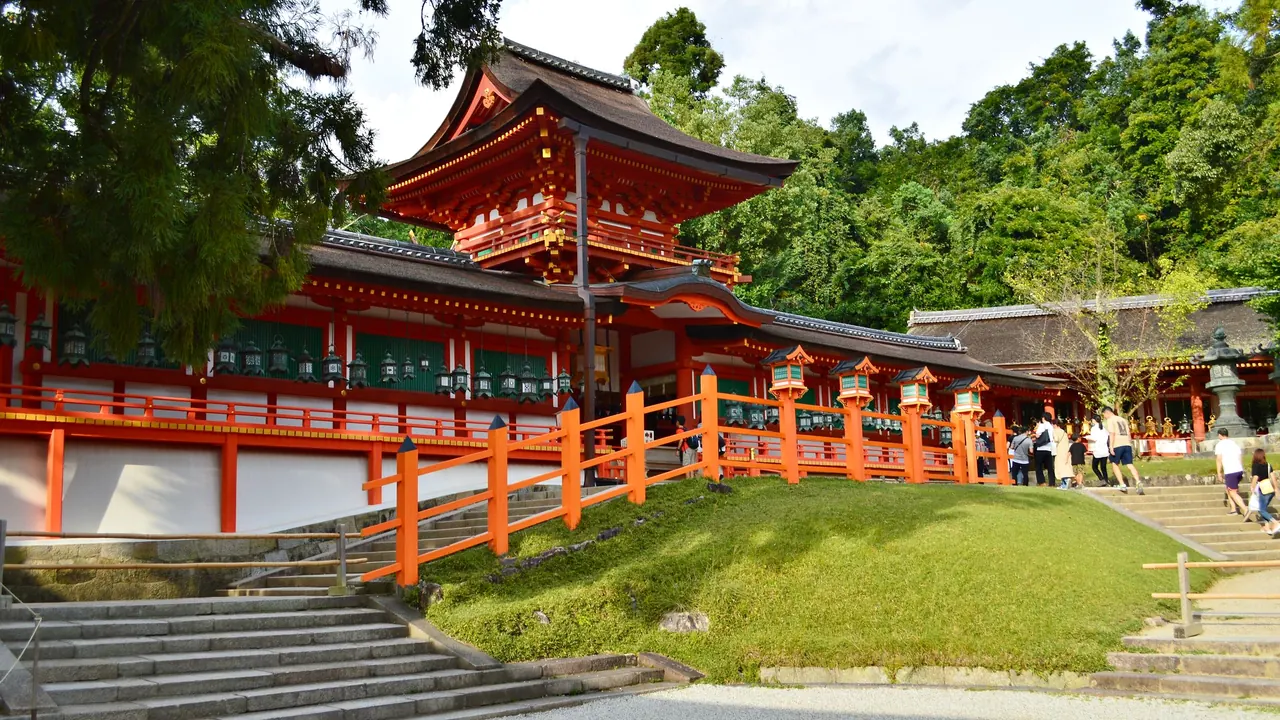
Photos: Kobe by Wei-Te Wong, CC BY-SA 2.0, cropped; Nara by Saigen Jiro, CC0.
Kobe or Nara?
Our verdict in twelve categories, each scored against the same fixed benchmark cities, and the climate month by month, so you can choose for your trip.
Choose Kobe for
- wellness
- beaches
- food and drink
Kobe suits travellers who want a comfortable base where daily life is good. The food runs from Kobe beef and Nada sake to Motomachi's bakeries, there are mountain trails behind the station, and Arima Onsen lies within the city limits for an evening soak. Sannomiya's bars fill after dark. Its sights are pleasant rather than profound, but for a week of eating well, walking and riding out to Himeji or Kyoto, it is the easier choice, and the clear one with children.
Choose Nara for
- culture and sights
- day trips
Go to Nara for the history. The Great Buddha at Todai-ji, the lantern paths to Kasuga Taisha and the Buddhist sculpture of the National Museum are of a rank Kobe cannot approach. Staying the night lets you see them in the quiet early hours, before the day visitors arrive. In return you get early, quiet evenings, a narrow food scene and little for children beyond the deer, so it suits unhurried sightseers more than anyone looking for a lively base.
Scoreboard
Twelve categories on one fixed scale from 0 to 100. The shaded stretch is the gap between the two.
Your match
Pick a travel style or drag the sliders, and both match scores follow your weighting.
Wins on wellness and beaches with your weighting.
Wins on culture and sights and day trips with your weighting.
What matters to you?
Category by category
What the scores mean for a trip.
Beaches & swimming
Kobe at least has a beach. Suma's long stretch of sand is a short train ride from the centre and makes for a proper summer swim in July and August, and Awaji Island across the strait has quieter shores with clearer water. Nara has nothing of the kind: it sits in an inland basin, so a swim means a hotel pool or a long trip to the coast.
Food & drink
Kobe is the stronger place to eat by some distance. Beyond its famous beef there is a port city's baking tradition in Motomachi and Kitano, steamed buns in Nankinmachi, sobameshi and the brewery tasting rooms of Nada, with plenty of good casual eating around the stations.
Nara's cooking is distinctive but narrow: persimmon-leaf sushi, narazuke pickles, Miwa somen noodles and serious summer kakigori, with local sake poured in Naramachi. Many kitchens close early, and for a serious dinner people often take the train to Osaka or Kyoto.
Culture & sights
Here Nara is in a different league. As Japan's eighth-century capital it has the Great Buddha hall of Todai-ji, Kofuku-ji's pagoda, the lantern-lined approach to Kasuga Taisha, Toshodai-ji and Yakushiji, and one of the country's finest collections of Buddhist sculpture. That is enough for two or three unhurried days.
Kobe tells a younger, smaller story: the Western merchant houses of Kitano, Ikuta Shrine, the broken quay at Meriken Park and a moving museum of the 1995 earthquake, with Tadao Ando's art museum on the bay. It is an interesting city to look around, but not one to travel to for its heritage.
Nightlife
Neither city is a clubbing destination, but Kobe at least has an evening scene. The lanes north of Sannomiya are packed with izakaya, whisky bars and tiny counters, and the lit harbour at Harborland suits a drink with a view.
Nara goes quiet once the day visitors leave, with a handful of izakaya and sake bars near Kintetsu Nara station that close early. Both look to Osaka for late nights: twenty minutes away from Kobe, but a longer ride from Nara, and the last train back sets the limit.
Nature & outdoors
Kobe has more dramatic outdoors. The Rokko range rises straight behind the city, with trails from Shin-Kobe past the Nunobiki falls, ropeways up Maya and Rokko for night views over the bay, a long ridge traverse and the rocky Suma Alps.
Nara's green space is gentler and closer at hand. There are the deer-filled lawns of Nara Park, the ancient Kasugayama forest, an easy climb up Mount Wakakusa and the Yamanobe-no-michi trail past orchards and rice fields. The cherry-blossom hills of Yoshino are within reach for a day.
Day trips
Both are superb bases on the same rail network, and the difference is the direction of travel. From Kobe, Himeji Castle is under an hour west and the shinkansen opens up Okayama, Kurashiki and even Hiroshima and Miyajima, while Kyoto is about an hour away.
Nara looks towards Japan's earliest history. Horyu-ji is a short ride away, Asuka's burial mounds are best seen by bicycle, and there are the mountain temples of Hase-dera and Muro-ji and the tea and Byodo-in of Uji. Kyoto is well under an hour away.
Good for families
Kobe is the more rewarding city with children. Oji Zoo, the marine aquarium at Suma, Kobe Animal Kingdom, Harborland's Ferris wheel and the farm at the top of the Rokko cable cars can fill several days, and Universal Studios Japan is about an hour away.
Nara has one great moment, the bowing deer of Nara Park, plus the pillar at Todai-ji that children queue to squeeze through. But it has no zoo, aquarium or theme park. Both cities are safe and easy with a pushchair. Nara simply runs out of things to do sooner.
Getting around
You need no car in either city, but Kobe is the simpler of the two. Its narrow strip between mountains and sea is threaded by parallel rail lines that all take one IC card. Chinatown, the harbour, the arcades and Kitano are all walkable from Sannomiya, though Kitano is uphill.
In Nara the main temples and the museum are a gentle walk from Kintetsu Nara station, but the distances add up over a day. The western temples need a bus or train, and the buses get crowded at weekends and in blossom season. A rental bicycle suits Nara's flat basin well.
Shopping & style
Kobe gives shoppers more. The arcades through Sannomiya and Motomachi, the Daimaru department store among the stone buildings of the old settlement and the small boutiques around Tor Road are good for fashion browsing. Pearls, leather shoes from Nagata and Western-style cakes make good things to bring home.
Nara's shopping is small and centred on crafts. Naramachi sells sumi ink and calligraphy brushes, hand-woven linen, Akahada pottery and carved Ittobori dolls. There are no fashion streets, and keen shoppers in either city end up in Osaka.
Affordability
The two cost much the same, and in similar ways: business hotels near the main stations are reasonably priced, and noodles, set lunches and izakaya plates keep everyday eating cheap. Where the money goes is what differs. In Kobe the expense is a Kobe beef dinner, the mountain cable cars and a night at Arima. Nara's park is free and its temples charge modest fees hall by hall, so the rail fares for day trips are what add up.
Live music & performing arts
Kobe has the livelier stage. It sees itself as the birthplace of Japanese jazz, with clubs and resident trios across Sannomiya and Kitano and the Kobe Jazz Street festival each autumn. The Hyogo Performing Arts Center in nearby Nishinomiya has its own orchestra, and the Takarazuka Revue performs a short ride away.
Nara's performing arts belong to ritual. Gagaku music and bugaku dance are kept alive at Kasuga Taisha, the city is one of the birthplaces of Noh, the winter On-matsuri has run for centuries, and the Omizutori fire rites at Todai-ji light up early spring. Outside those occasions there is little to attend.
Wellness & relaxation
Kobe has a proper hot spring town within its own limits. Arima Onsen, one of Japan's oldest, lies behind Mount Rokko about half an hour away. Its rust-red kinsen and clear ginsen waters, ryokan baths and two public bathhouses make it easy to visit for an afternoon or a night.
Nara has no hot springs of note, only neighbourhood bathhouses and a few bathing complexes on the outskirts. Its restfulness comes from its pace instead: the park early in the morning, a tea house by a temple garden, and the quiet that settles over the old town once the day visitors have gone.
When should you go?
Pick your month. The climate figures are measured averages, not a forecast.
Kobe in July
Nara in July
Daytime high, °C
Rainfall in the month, mm
Where the figures come from
Kobe's sunshine is measured 29 km from the centre, at Osaka.
Nara's sunshine is measured 26 km from the centre, at Osaka.
Temperature and rainfall are climate normals, averaged over the years shown. Kobe: 1971-2000 (sunshine 1991-2020, rainfall 1991-2020) normals, Kobe (1.3 km from centre). Nara: 1971-2000 (sunshine 1991-2020, rainfall 1991-2020) normals, Nara (2.6 km from centre).
Through most of the year the two cities have almost the same weather, so spring and autumn are the best seasons in both. April, May, October and early November bring mild days of around 20°C, first blossom and later maple colour, ideal for temple walks in Nara and the Rokko trails above Kobe. June and July are the wet heart of the year, and Kobe's rain peaks at 226mm in July. August reaches 32°C in both, hot and sticky for walking the streets, though it is also the sunniest month.
The difference is the sea. Only Kobe can turn the summer into a beach season: the water off Suma is warm enough for swimming from July into September and reaches 27°C in August. Nara lies in an inland basin and simply bakes, so summer there is for early mornings and shady tea houses. Winters in both are cool and fairly dry, with highs around 9°C, which is fine for sightseeing in a warm coat.
Which traveller are you?
On a culture and arts trip, Nara is the clear choice. Todai-ji, Kofuku-ji, Kasuga Taisha, the National Museum and nearby Horyu-ji make up eighth-century heritage of the first rank. Kobe's treaty-port sights fill a pleasant two days but cannot compete.
For a food and nightlife trip, Kobe wins easily. Teppanyaki beef, Motomachi's bakeries, Nankinmachi's street snacks and Nada's sake breweries fill the days. After dark, Sannomiya's izakaya and whisky bars keep going long after Nara's kitchens have closed and its streets have emptied.
On a family trip with children, Kobe has far more to do: Oji Zoo, the aquarium beside Suma beach, Harborland's Ferris wheel and the cable cars up Rokko. Feeding Nara's deer makes a wonderful day, but little else in Nara is made for children.
Before you go
| Measure | Kobe | Nara |
|---|---|---|
| Official language | Japanese | Japanese |
| Currency | Yen (JPY) | Yen (JPY) |
| Sockets | AB100 V, 50 and 60 Hz depending on the region | AB100 V, 50 and 60 Hz depending on the region |
| Driving side | Left | Left |
| Time zone | UTC+9 | UTC+9 |
| Emergency number | Police 110, fire 119 | Police 110, fire 119 |
| Elevation | 17 m | 70 m |
| Main airport | Kobe Airport (UKB)7 km from centre15 non-stop destinations | Kansai International Airport (KIX)59 km from centre62 non-stop destinations |
| Public holidays this year | 16 days | 16 days |
By the numbers
| Measure | Kobe | Nara |
|---|---|---|
| City population | 1,521,707 | 352,377 |
| People per km² | 2,732 | 1,273 |
| Museums within 10 km | 46 | 31 |
| UNESCO World Heritage sites within 50 km | 3 | 6 |
| Swim season, months above 21 °C | 5 months | 5 months |
Where else could you go?
Every comparison below shares a destination with this one, so you can follow Kobe or Nara somewhere new.