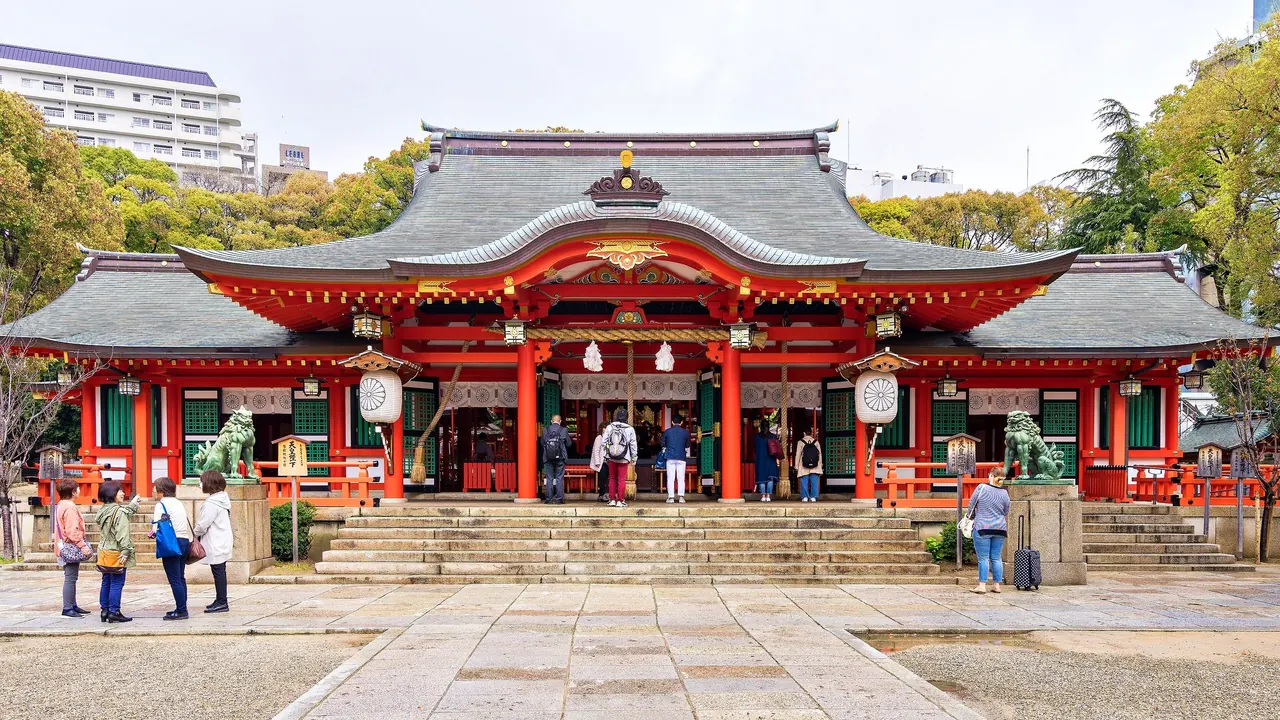
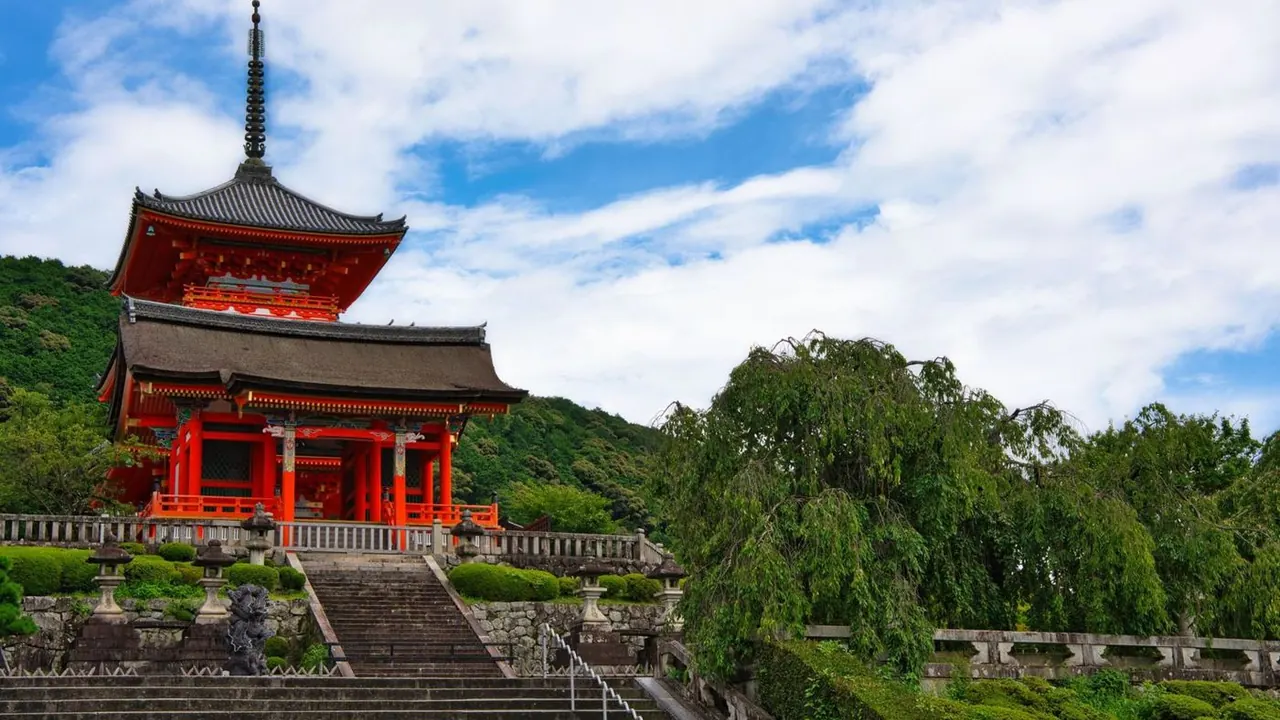
Photos: Kobe by Wei-Te Wong, CC BY-SA 2.0, cropped; Kyoto by Bert Mulder, Pexels License.
Kobe or Kyoto?
Our verdict in twelve categories, each scored against the same fixed benchmark cities, and the climate month by month, so you can choose for your trip.
Choose Kobe for
- beaches
- getting around
- families
Kobe suits travellers who want an easy, comfortable base more than a long list of monuments. It is compact, simple to get around and a little cheaper. Arima's hot springs lie within the city, the Rokko mountains rise straight behind the streets and there is a sandy beach at Suma for summer. Families, and anyone planning to spend much of the trip on day trips to Himeji, Osaka and further west, will find it relaxed and practical.
Choose Kyoto for
- culture and sights
- shopping
- food and drink
If you are coming to Japan for its history, Kyoto is the clear choice. Its temples, gardens, wooden lanes in Gion and imperial villas are on a scale that Kobe's treaty-port sights cannot approach, and its kaiseki and temple cooking, craft shops and geiko dances add to that. The cost is heavy crowds in peak seasons, more expensive rooms and more effort getting between sights spread around the basin.
Scoreboard
Twelve categories on one fixed scale from 0 to 100. The shaded stretch is the gap between the two.
Your match
Pick a travel style or drag the sliders, and both match scores follow your weighting.
Too close to call, 1 point apart
Wins on beaches and getting around with your weighting.
Wins on culture and sights and shopping with your weighting.
What matters to you?
Category by category
What the scores mean for a trip.
Beaches & swimming
Kobe at least faces the sea. Suma's long sandy beach is about fifteen minutes away by train, with warm water and lifeguards in July and August, and Awaji Island across the strait has quieter, clearer water. Even so, it is a summer extra rather than a reason to come.
Kyoto has no coast. The nearest swimming is in the freshwater of Lake Biwa, and the good sea beaches around Amanohashidate need an overnight trip. The nearest sea beach to Kyoto is in fact Kobe's Suma, about an hour away.
Food & drink
Kyoto's cooking is more refined. Kaiseki served in old Gion houses, temple cuisine at Daitokuji and Tenryuji, tofu, yuba and sweets made for tea give it a depth that Kobe does not match, for all its fame. Nishiki Market adds a covered street for snacking.
Kobe's strengths are more casual: Kobe beef grilled on teppanyaki counters, a baking and cake tradition that goes back to its foreign merchants, steamed buns in Chinatown and sobameshi. Each city has a sake-brewing district, Nada in Kobe and Fushimi in Kyoto, so a brewery afternoon works in either.
Culture & sights
This is where the two cities differ most. Kyoto has seventeen UNESCO-listed sites, from Kinkaku-ji and Kiyomizu-dera to the moss garden of Saiho-ji, along with well over a thousand temples and shrines, Nijo Castle and the lanes of Higashiyama. Even a week only covers part of it.
Kobe's sights tell a smaller, more modern story: the Western merchant houses of Kitano, Ikuta Shrine, and the 1995 earthquake, remembered at Meriken Park and in the disaster museum. Tadao Ando's art museum on the bay is a highlight, but two days are enough for the city's sights.
Nightlife
Neither city is made for late nights, and in both, clubbing until late means taking the train to Osaka. The difference is in tone. In Kobe, evenings centre on the lanes of Sannomiya, packed with izakaya and small whisky and cocktail bars, and the lit-up harbour at Harborland is good for a drink by the water.
In Kyoto, going out happens mainly in Pontocho and along the Kiyamachi canal, in sake bars and standing izakaya, with terraces over the Kamo River in summer. It has more atmosphere, but the city winds down earlier.
Nature & outdoors
Both cities have hills on their doorstep, but of different kinds. Kobe's Rokko range rises straight out of the streets. Trails start near Shin-Kobe and pass the Nunobiki waterfalls, there is a long ridge walk and the rugged Suma Alps, and cable cars climb to night views over the bay. The coast towards the Akashi bridge and Awaji adds sea scenery.
Kyoto's landscape is gentler and closely tied to its temples: the bamboo groves of Arashiyama, the cedar-forest path from Kurama to Kibune, the green banks of the Kamo River and boat trips through the Hozu gorge. There are no sea views, but its blossom and maple seasons are among the most celebrated in Japan.
Day trips
Both cities sit on the same excellent rail corridor, so either makes a first-rate base, and each is an easy trip from the other. Kyoto has the edge for temple country, with Nara and Uji close by and the castle and canal towns of Lake Biwa to the east.
Kobe looks west. Himeji is a short ride away, and the shinkansen from Shin-Kobe puts Okayama, Kurashiki and even Hiroshima and Miyajima within a day. Takarazuka and the Nada breweries make shorter outings.
Good for families
Kobe is the easier city with children. Oji Zoo, the marine aquarium beside the sand at Suma, the indoor animal park on Port Island, the Ferris wheel at Harborland and the ropeways up Rokko, with a pasture farm at the top, are all within easy reach of a compact centre.
Kyoto has some excellent attractions for children, especially the Railway Museum with its steam locomotives and the samurai shows at Toei Studio Park. But most days revolve around temples with stairs and crowds, and the city buses are packed in busy seasons.
Getting around
Kobe's long, thin shape makes it easy to understand. Parallel rail lines run east to west on one IC card, and Chinatown, the harbour, the arcades and Kitano are all within walking distance of Sannomiya, though Kitano means a climb.
Kyoto's flat central grid is good for walking and cycling, but its great temples are spread around the edges of the basin, beyond the reach of its two subway lines. That means slow, crowded buses in peak seasons, or a mix of trains, the Randen tram and a hired bicycle.
Shopping & style
Kyoto is the better city for shopping, above all for crafts: Kiyomizu ceramics, Nishijin silk, fans, incense, washi paper, lacquer and hand-forged knives from shops run by the same families for generations, plus monthly flea markets at To-ji and Kitano Tenmangu.
Kobe's shopping is stylish but has less depth. It centres on the covered arcades of Sannomiya and Motomachi, the Daimaru department store in the old foreign settlement and the small shops around Tor Road. Its specialities are pearls, leather shoes from Nagata and Western-style cakes.
Affordability
Kobe is the cheaper of the two. Everyday eating is good value in both cities, so the gap comes mostly from where you sleep. Kobe's business hotels rarely fill up, while Kyoto's hotels and ryokan cost more and become scarce and expensive during cherry blossom and autumn colour.
Each city has its own splurge: a Kobe beef teppanyaki dinner in one, a kaiseki meal in the other.
Live music & performing arts
The two are close here, but what is on stage differs. Kobe's live tradition is jazz, with resident trios in small bars around Sannomiya and Kitano and the Kobe Jazz Street festival in autumn. The Takarazuka Revue performs in its home theatre about forty minutes away.
Kyoto leans towards classical Japanese forms: the spring dances of the geiko and maiko, kabuki at the Minamiza and regular Noh performances, along with an orchestra at the Kyoto Concert Hall. Much of this is seasonal, though, so the choice on an ordinary evening can be thin.
Wellness & relaxation
Kobe has the advantage for rest because Arima Onsen, one of Japan's oldest hot spring towns, lies within the city, about half an hour away on the far side of Mount Rokko. Its rust-coloured iron water and clear carbonated water, together with ryokan serving kaiseki dinners, make an easy afternoon or night away.
Kyoto's calm is more contemplative: century-old sento, hot springs at Kurama and Ohara, zazen sessions, tea ceremonies and nights in temple lodgings. Crowds at the main sights work against it, so it is best found early in the morning and at the northern temples.
When should you go?
Pick your month. The climate figures are measured averages, not a forecast.
Kobe in July
Kyoto in July
Daytime high, °C
Rainfall in the month, mm
Where the figures come from
Kobe's sunshine is measured 29 km from the centre, at Osaka.
Kyoto's sunshine is measured 43 km from the centre, at Osaka.
Temperature and rainfall are climate normals, averaged over the years shown. Kobe: 1971-2000 (sunshine 1991-2020, rainfall 1991-2020) normals, Kobe (1.3 km from centre). Kyoto: 1971-2000 (sunshine 1991-2020, rainfall 1991-2020) normals, Kyoto (3.2 km from centre).
The two cities follow almost the same calendar, and both are at their best in spring and autumn. April and May bring highs of around 20°C and October is similar, which is comfortable for walking temple grounds or the Rokko trails. In July and August highs reach 32°C with heavy humidity in both cities, which makes sightseeing on foot tiring. June and July are the wettest months, and Kyoto's basin gets more rain, around 250mm in July, with a second wet spell in September. Winters are cold, with highs near 9°C, but they get a fair amount of sunshine.
Only Kobe has a real swimming season. The sea in Osaka Bay warms to about 27°C in August and stays warm into September, so a late-summer trip can include a swim at Suma. In Kyoto the summer heat is harder to escape, so its cooler months are the ones to aim for.
Which traveller are you?
On a culture and arts trip, Kyoto wins easily. A thousand years as the capital left it temples, gardens, wooden townhouses, kabuki and Noh, which Kobe's merchant houses and port museums cannot rival. From Kyoto, Kobe is easily seen in a day.
On a family trip with young children, Kobe is the easier base. Its compact centre and simple rail lines, the zoo, the aquarium beside the beach at Suma and the ropeways up Rokko spare children the crowded buses and temple stairs of Kyoto.
For a beach and sun trip, neither city is a resort, but only Kobe has the sea. Suma's sandy beach is a short train ride from the centre and has lifeguards in summer. Kyoto is inland and offers only Lake Biwa or a long journey north.
Before you go
| Measure | Kobe | Kyoto |
|---|---|---|
| Official language | Japanese | Japanese |
| Currency | Yen (JPY) | Yen (JPY) |
| Sockets | AB100 V, 50 and 60 Hz depending on the region | AB100 V, 50 and 60 Hz depending on the region |
| Driving side | Left | Left |
| Time zone | UTC+9 | UTC+9 |
| Emergency number | Police 110, fire 119 | Police 110, fire 119 |
| Elevation | 17 m | 51 m |
| Main airport | Kobe Airport (UKB)7 km from centre15 non-stop destinations | Kansai International Airport (KIX)81 km from centre62 non-stop destinations |
| Public holidays this year | 16 days | 16 days |
By the numbers
| Measure | Kobe | Kyoto |
|---|---|---|
| City population | 1,521,707 | 1,463,723 |
| People per km² | 2,732 | 1,768 |
| Museums within 10 km | 46 | 77 |
| UNESCO World Heritage sites within 50 km | 3 | 4 |
| Swim season, months above 21 °C | 5 months | 5 months |
Where else could you go?
Every comparison below shares a destination with this one, so you can follow Kobe or Kyoto somewhere new.