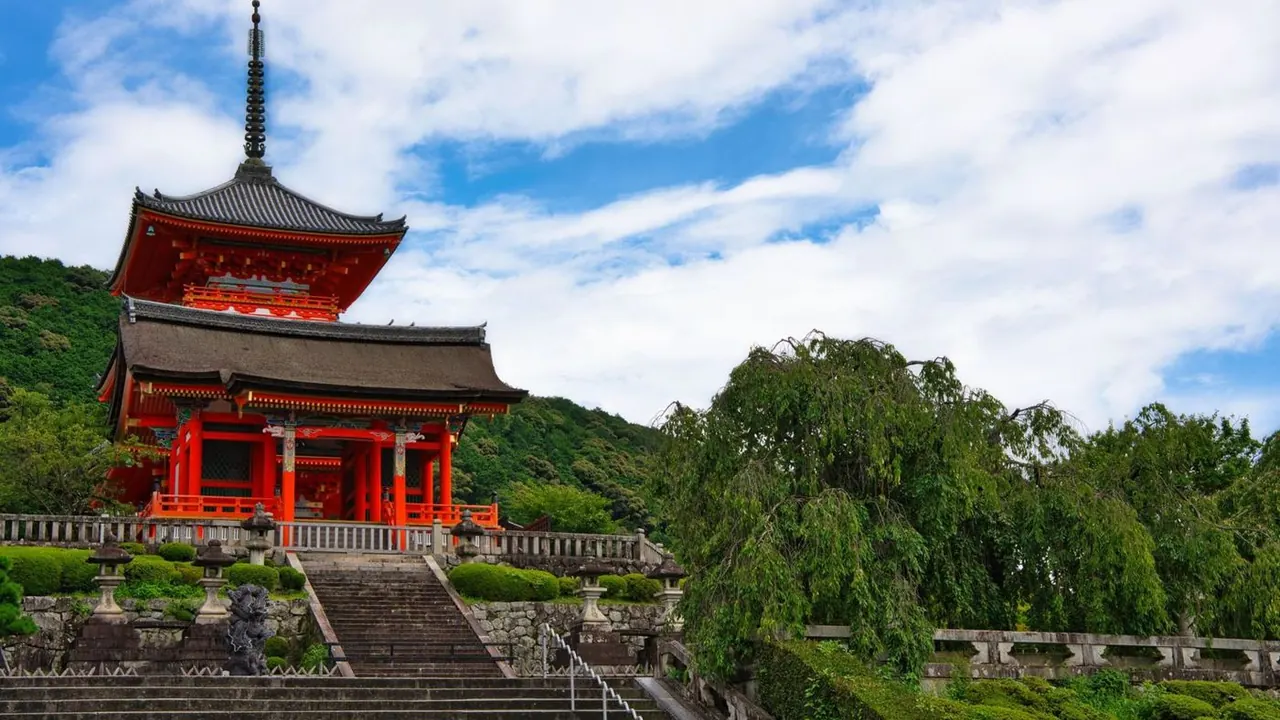
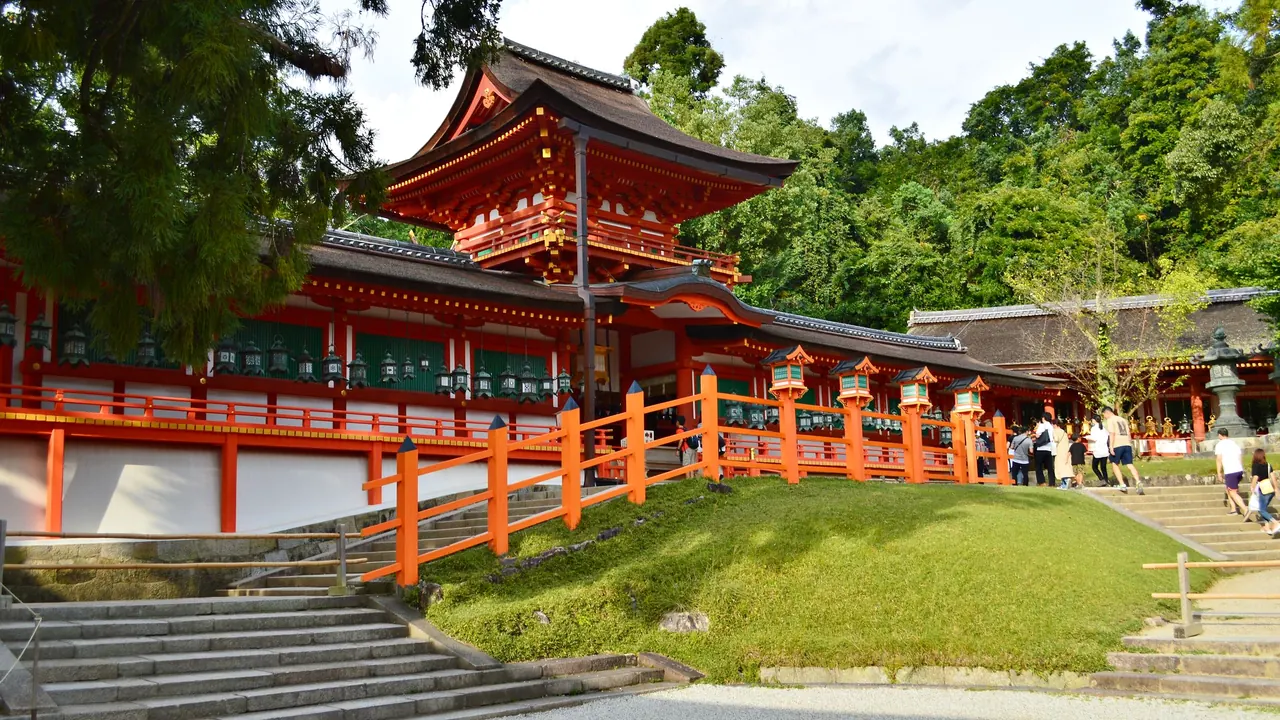
Photos: Kyoto by Bert Mulder, Pexels License; Nara by Saigen Jiro, CC0.
Kyoto or Nara?
Our verdict in twelve categories, each scored against the same fixed benchmark cities, and the climate month by month, so you can choose for your trip.
Choose Kyoto for
- food and drink
- shopping
- live music and the arts
Kyoto is the stronger choice for almost any trip longer than a couple of days. It has far more temples and gardens than Nara. The city also eats exceptionally well, from kaiseki in Gion to the stalls of Nishiki Market. It sells fine crafts, stages kabuki and geisha dances, and has old sento and nearby hot springs for tired legs. Anyone who wants their evenings to hold something more than an early dinner should stay here.
Choose Nara for
- prices
- getting around
Travellers who want early Japan in a smaller, calmer setting, and who are watching their spending, will find Nara suits them better. Todai-ji, Kasuga Taisha and the deer park are all within walking distance of the station. Rooms near the two stations are reasonably priced, and the old town turns very quiet once the day visitors leave. It works best for a slow two or three days, or as a cheaper base with Kyoto and Osaka each a short train ride away.
Scoreboard
Twelve categories on one fixed scale from 0 to 100. The shaded stretch is the gap between the two.
Your match
Pick a travel style or drag the sliders, and both match scores follow your weighting.
Wins on food and drink and shopping with your weighting.
Wins on prices and getting around with your weighting.
What matters to you?
Category by category
What the scores mean for a trip.
Beaches & swimming
Neither city is a place for the sea, but Kyoto has the better fallback. The sandy freshwater beaches on Lake Biwa's western shore, such as Omi-Maiko, are close enough for a summer afternoon swim. From Nara the nearest shore is the industrial edge of Osaka Bay, well over an hour away, so a summer swim there usually means a pool.
Food & drink
Kyoto is one of Japan's great places to eat. It serves kaiseki in Gion and along the Kamo River, shojin ryori inside temple precincts such as Daitokuji, and has an unusual number of serious restaurants for a city its size. Nishiki Market, the izakaya around Shijo and the Fushimi sake breweries cover everyday eating.
Nara's food is narrower and more local. Persimmon-leaf sushi, narazuke pickles, Miwa somen and sake poured at counters in Naramachi are worth trying. Beyond those, food near the park leans towards quick lunches and kitchens close early, so many visitors staying in Nara take the train to Kyoto or Osaka for a proper dinner.
Culture & sights
Both are among the great heritage cities of Japan, but Kyoto works on a far larger scale. Its seventeen UNESCO-listed sites, more than a thousand temples and shrines, Fushimi Inari's tunnels of gates, the rock garden of Ryoan-ji and the machiya lanes of Higashiyama and Gion could fill a week or more.
Nara is older and more concentrated. Its eighth-century monuments show an earlier layer of Japanese history than Kyoto's: the Great Buddha hall at Todai-ji, Kasuga Taisha's lantern-lined paths and the Tang-style halls of Toshodai-ji. The Nara National Museum adds one of the country's finest collections of Buddhist sculpture, and the whole set can be seen properly in two or three days.
Nightlife
Kyoto is not a party city, but it does have an evening scene in Pontocho and along the Kiyamachi canal. There are sake bars, standing izakaya, a few clubs and riverside terraces in summer.
Nara has nothing comparable. Once the day visitors leave, a night out means dinner at an izakaya near Kintetsu Nara station and perhaps a drink in the covered arcades, with no clubs and early closing. From either city, a long night out means taking the train to Osaka.
Nature & outdoors
Kyoto has more to explore on foot. There are trails into the Higashiyama hills up to Daimonji and along the Kyoto Trail, and a cedar-forest path between Kurama and Kibune. You can also take the cable car up Mount Hiei for views over Lake Biwa, walk through Arashiyama's bamboo, and ride the boats down the Hozu gorge.
Nara's green space is smaller and right in the centre. The deer park, the protected Kasugayama Primeval Forest and the easy climb up Mount Wakakusa all begin beside the temples. The Yamanobe-no-michi path past rice fields and orchards makes a lovely half day, but anything more mountainous means travelling out to Yoshino.
Day trips
Both make outstanding bases with almost equal reach, since they are under an hour apart and both are close to Osaka. The difference is in what lies nearest. Kyoto is on the bullet train line, which puts Himeji Castle, Kobe and the castle and canals around Lake Biwa within easy range.
Nara's strength is the countryside to its south and west. Horyu-ji's ancient wooden halls, the burial mounds of Asuka, best seen by bicycle, and the mountain temples of Hase-dera and Muro-ji feel remote, yet each is a short local journey away.
Good for families
Kyoto gives children more to do in town. There is the Kyoto Railway Museum with its roundhouse of steam locomotives, an aquarium and a zoo near the centre, and samurai and ninja shows at Toei Kyoto Studio Park. Nara's deer are an easy day out from there.
In Nara the deer are the main attraction, and a very good one, along with squeezing through the hole in the pillar at Todai-ji. There is no zoo, aquarium or theme park, so families usually find a day or two enough. In both cities, summer heat and temple steps tire young legs.
Getting around
Neither city needs a car and both are easy to get around, but in different ways. Nara's main sights cluster around Kintetsu Nara station and the park, so most days are spent on foot, with a local train or bus out to Yakushiji and Toshodai-ji.
Kyoto has a flat, walkable centre and good cycling along the Kamo River, but its great temples are spread around the edges of the basin, beyond the reach of the two subway lines. Getting to them means combining JR, private railways, the Randen tram and buses that are slow and crowded in peak seasons, so a bicycle, or trains plus walking, usually works better.
Shopping & style
Kyoto is the better city to shop in, especially for crafts. Family firms sell Kiyomizu-ware ceramics, Nishijin silk, fans, incense and hand-forged knives. The city also has the Teramachi and Shinkyogoku covered arcades, department stores on Shijo, and monthly flea markets at To-ji and Kitano Tenmangu.
Nara has a narrower but genuine speciality in sumi ink and calligraphy brushes, and its Naramachi shops also sell hand-woven linen, Akahada pottery and Ittobori carvings. Beyond those, the arcades offer sweets, sake and deer souvenirs, and there are no fashion streets at all.
Affordability
Nara is the easier city on the wallet. Business hotels and guesthouses near its stations are reasonably priced, the park is free and the temples charge modest fees, so a full day of sightseeing stays cheap. Only ryokan, the better restaurants and rail fares for day trips push costs up.
Everyday eating and transport in Kyoto are also good value, but rooms cost more and become scarce and expensive during cherry blossom and autumn colour, and kaiseki dinners tempt even careful spenders. Staying near Kyoto Station and having your good restaurant meals at lunch keeps costs down.
Live music & performing arts
Kyoto has a real stage life. The Minamiza is Japan's oldest kabuki house, the geisha districts hold public dances each spring and Noh is performed regularly. The Kyoto Concert Hall and ROHM Theatre add orchestral music, opera and dance, though much of the traditional programme is seasonal.
In Nara, most of what there is to see is religious ritual. Gagaku court music and bugaku dance are performed at Kasuga Taisha, above all at the On-matsuri in winter, and Todai-ji holds the Omizutori fire rites in early spring. A visit timed around these is memorable, but otherwise little is on, and Osaka is the place for a show.
Wellness & relaxation
Kyoto is the clear choice for bathing. Old neighbourhood sento with tiled murals, hot spring baths at Kurama, Ohara and Arashiyama, and ryokan with deep wooden tubs keep a bathing tradition alive. Zazen sessions, tea ceremonies and overnight temple stays add a quieter, reflective side.
Nara has no hot springs in town, only a few bathhouses and bathing complexes on the outskirts. What it offers instead is quiet. The park early in the morning and the old town after the day visitors go make it restful, though it lacks the baths for a spa-style stay.
When should you go?
Pick your month. The climate figures are measured averages, not a forecast.
Kyoto in July
Nara in July
Daytime high, °C
Rainfall in the month, mm
Where the figures come from
Kyoto's sunshine is measured 43 km from the centre, at Osaka.
Nara's sunshine is measured 26 km from the centre, at Osaka.
Temperature and rainfall are climate normals, averaged over the years shown. Kyoto: 1971-2000 (sunshine 1991-2020, rainfall 1991-2020) normals, Kyoto (3.2 km from centre). Nara: 1971-2000 (sunshine 1991-2020, rainfall 1991-2020) normals, Nara (2.6 km from centre).
The two cities share almost the same weather, so the best seasons are the same for both. Spring and autumn are the times to come. April, May, October and November bring mild days that suit long walks between temples, with cherry blossom or maple colour as a bonus. The rainy season sets in from June. July is the wettest month, with about 250mm in Kyoto against 200mm in Nara, and Nara stays a little drier through summer and early autumn. August is the sunniest month, but highs reach 32°C with heavy humidity, which is too much for a full day on foot.
Winter is cold, with highs around 9°C in January and February, but it is also the driest season and often clear, so walking the streets stays pleasant if you dress for it. Neither city has a beach of its own. The nearest sea warms to 27°C in August, and Kyoto also has the freshwater beaches of Lake Biwa within easy reach for a summer swim.
Which traveller are you?
On a food and nightlife trip, Kyoto is far ahead. Kaiseki in old wooden houses, temple cuisine, Nishiki Market and the Fushimi sake breweries give real depth. Pontocho's small bars are still serving after Nara's kitchens and counters have closed for the night.
For a relaxing and wellness trip, choose Kyoto. It has century-old sento, hot spring baths at Kurama and Ohara, zazen sessions and temple lodgings, a genuine culture of bathing and quiet reflection. Nara offers calm, but it has no hot springs in town.
On a trip on a tight budget, Nara makes money go further. Business hotels and guesthouses near its two stations are reasonably priced and the park and deer cost nothing. The main temples sit within walking distance of each other, which keeps daily transport costs down too.
Before you go
| Measure | Kyoto | Nara |
|---|---|---|
| Official language | Japanese | Japanese |
| Currency | Yen (JPY) | Yen (JPY) |
| Sockets | AB100 V, 50 and 60 Hz depending on the region | AB100 V, 50 and 60 Hz depending on the region |
| Driving side | Left | Left |
| Time zone | UTC+9 | UTC+9 |
| Emergency number | Police 110, fire 119 | Police 110, fire 119 |
| Elevation | 51 m | 70 m |
| Main airport | Kansai International Airport (KIX)81 km from centre62 non-stop destinations | Kansai International Airport (KIX)59 km from centre62 non-stop destinations |
| Public holidays this year | 16 days | 16 days |
By the numbers
| Measure | Kyoto | Nara |
|---|---|---|
| City population | 1,463,723 | 352,377 |
| People per km² | 1,768 | 1,273 |
| Museums within 10 km | 77 | 31 |
| UNESCO World Heritage sites within 50 km | 4 | 6 |
| Swim season, months above 21 °C | 5 months | 5 months |
Where else could you go?
Every comparison below shares a destination with this one, so you can follow Kyoto or Nara somewhere new.