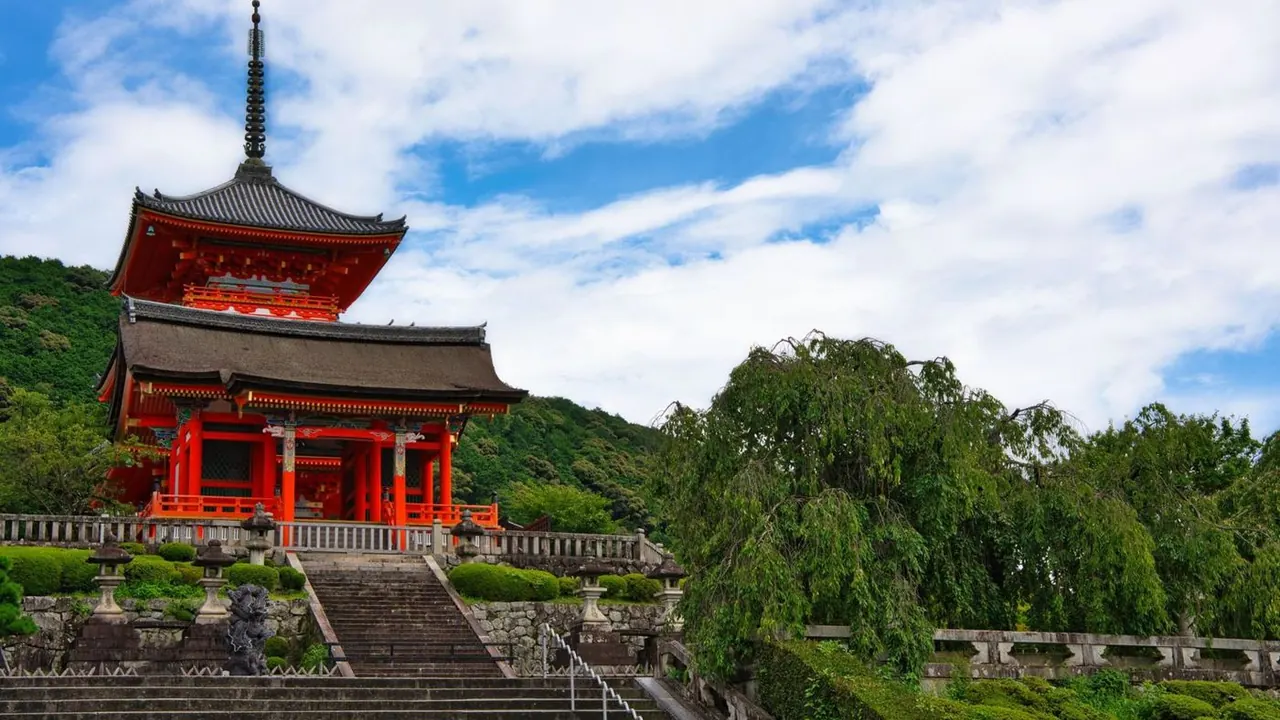
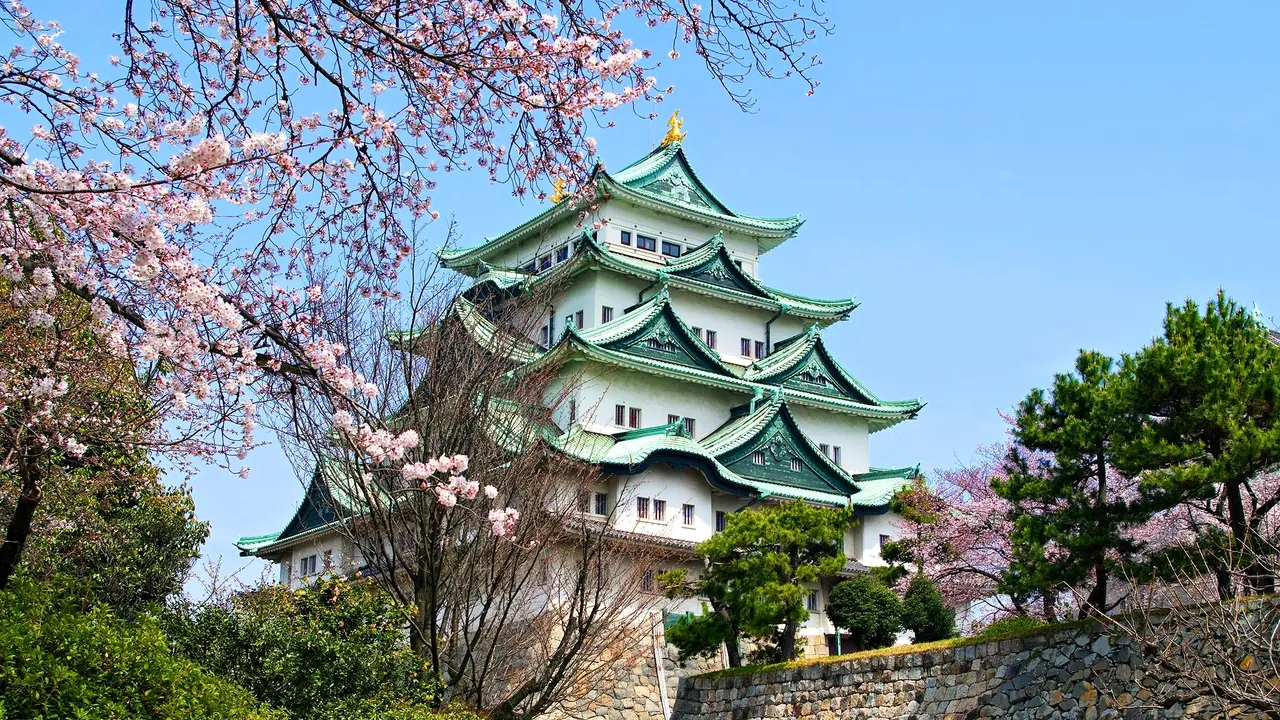
Photos: Kyoto by Bert Mulder, Pexels License; Nagoya by Hiroaki Kaneko, CC BY-SA 3.0, cropped.
Kyoto or Nagoya?
Our verdict in twelve categories, each scored against the same fixed benchmark cities, and the climate month by month, so you can choose for your trip.
Choose Kyoto for
- culture and sights
- nature and the outdoors
- day trips
Kyoto is the choice for travellers who come to Japan for its old heart: temple gardens, the wooden lanes of Higashiyama and Gion, kaiseki and temple cooking, and craft shops run by the same families for generations. It is also the better base for the region, with Nara, Uji, Osaka and Himeji all close by. Its quiet evenings suit people who would rather spend the night in a bathhouse or a ryokan than go out late.
Choose Nagoya for
- beaches
- families
- nightlife
Families and travellers watching their spending will get more out of Nagoya. The city has a large aquarium, a huge zoo, a planetarium, a railway museum, Legoland and Ghibli Park, its business hotels keep room prices moderate, and Kyoto's temples are still a short bullet-train ride away. It also suits anyone curious about industrial Japan or hearty miso-based cooking, as long as they accept that its history comes as separate sights rather than whole historic streets.
Scoreboard
Twelve categories on one fixed scale from 0 to 100. The shaded stretch is the gap between the two.
Your match
Pick a travel style or drag the sliders, and both match scores follow your weighting.
Wins on culture and sights and nature and the outdoors with your weighting.
Wins on beaches and families with your weighting.
What matters to you?
Category by category
What the scores mean for a trip.
Beaches & swimming
Neither city is a beach destination, but Nagoya makes a swim easier. Sandy beaches on the Chita Peninsula, such as Utsumi, are about an hour away by train, and the island of Shinojima is a short ferry ride beyond. They are wide and sheltered, though the water is not very clear.
From Kyoto the nearest swimming is the freshwater shore of Lake Biwa at Omi-Maiko, or Suma, a plain city beach on Osaka Bay. The clear water of the Sea of Japan coast at Amanohashidate is far enough away that you need to stay a night.
Food & drink
Both cities eat very well, but in different styles. Kyoto has the more refined table: kaiseki served in Gion's old wooden houses, shojin ryori inside temple grounds, tofu and yuba, sweets made for tea, and sake from the breweries of Fushimi. It has more serious restaurants than its size would suggest.
Nagoya's cooking is richer and heavier, built on dark red miso. Its dishes include hitsumabushi eel, miso katsu, peppery tebasaki wings and misonikomi udon, each served by its own specialist restaurants. The food is filling and full of local character, but the top tier of restaurants is smaller than Kyoto's.
Culture & sights
This is where the two cities differ most. Kyoto escaped wartime bombing and kept a thousand years of imperial heritage: Kinkaku-ji, the rock garden of Ryoan-ji, the gate tunnels of Fushimi Inari, Nijo Castle and whole lanes of machiya in Higashiyama. That is enough to fill a week without repeating yourself.
Nagoya lost most of its old city in 1945, so its history comes as separate sights in a modern grid: the rebuilt castle with its reconstructed Honmaru Palace, the forest shrine of Atsuta and the Tokugawa Art Museum. Its real strength is industrial history, with the Toyota museum and the railway museum showing how modern Japan was built.
Nightlife
Neither city stays up late, but Nagoya offers more of a night out. Sakae and Nishiki pack izakaya, tiny bars, karaoke and a few dance clubs into narrow buildings, and some places stay open until morning at weekends.
Kyoto's evenings are gentler and more scenic. There is sake and whisky in lantern-lit Pontocho and along the Kiyamachi canal, terraces over the river in summer, and the streets of Gion for atmosphere. For anything louder, people in Kyoto take the train to Osaka.
Nature & outdoors
Kyoto has the greener setting. Forested hills surround it on three sides, so the trail up Daimonji, the bamboo groves of Arashiyama, the cedar-forest path between Kurama and Kibune and the boat trips down the Hozu gorge are all close at hand.
Nagoya sits on the flat, built-up Nobi Plain, and beyond its parks the real countryside is an hour or more away. Options include Mount Gozaisho in the Suzuka Mountains, the autumn maples of Korankei gorge, and the old Nakasendo road through the Kiso Valley.
Day trips
Both are excellent bases, and Kyoto is the better of the two. Nara, Uji, Osaka, Kobe and Himeji are all within about an hour, so many of the region's best-known sights sit around it.
Nagoya's day trips go in other directions: Ise Jingu, the original castle keep at Inuyama, the pottery towns of Seto and Tokoname, and the old post towns of Tsumago and Magome. Kyoto is a quick bullet-train ride away, but Nara takes about two hours.
Good for families
With children, Nagoya is the better choice. The port aquarium is one of the largest in Japan, with orcas and belugas. Higashiyama Zoo, the Science Museum planetarium, the full-size bullet trains at the railway museum, Legoland and Ghibli Park are all in or near the city, and the stations have lifts. Expect long train rides between them.
Kyoto is just as safe and clean, and its Railway Museum is excellent. But most days revolve around temples with stairs and crowds, and many families go to Osaka for a theme park.
Getting around
Both are easy to get around without a car, but in different ways. Kyoto's flat central grid is a pleasure on foot or by bicycle along the Kamo River. However, its two subway lines miss most of the temples, so you rely on a mix of private railways, the Randen tram and buses that are slow and crowded in the peak seasons.
Nagoya's wide postwar avenues are less pleasant to walk. On the other hand, the subway reaches the sights, a single IC card works on the subway and every railway, and the big interchange at Nagoya Station makes trips around the region simple.
Shopping & style
Kyoto is the better place to buy something that will last. Family-run shops sell Kiyomizu-ware ceramics, Nishijin silk, fans, incense, hand-forged knives and matcha, and the monthly flea markets at To-ji and Kitano Tenmangu are worth timing a visit around.
Nagoya is stronger on department stores, with large ones around Sakae and above the station, and international brands nearby. The arcades of Osu add secondhand clothes, anime and electronics, while Arimatsu shibori and Seto pottery offer crafts on a smaller scale.
Affordability
Nagoya is the cheaper place to stay, mainly because its many business hotels keep room prices moderate, and morning service turns a coffee into breakfast. The money goes on eel, bullet-train day trips and the theme parks.
In Kyoto, everyday meals, transport and temple entry are also inexpensive, but hotels and ryokan cost more. In the cherry blossom and autumn colour seasons, rooms become scarce and expensive.
Live music & performing arts
Kyoto's performances are more distinctive. The spring dances of the geisha districts, kabuki at the Minamiza (Japan's oldest kabuki theatre) and regular Noh are things a visitor rarely sees elsewhere, though much of the programme is seasonal.
Nagoya has more Western music and theatre, with opera and ballet at the Aichi Arts Center, the Nagoya Philharmonic's concert season and long-running musicals, alongside kabuki at the Misono-za. Most of it is aimed at Japanese speakers.
Wellness & relaxation
Kyoto offers the deeper calm. You can join zazen meditation or a tea ceremony, stay overnight in a temple lodging, sit before a raked gravel garden, bathe in a century-old sento, or soak in the hot springs at Kurama and Ohara. The catch is the crowds, so it rewards early mornings.
Nagoya's strength is easy everyday bathing in large super sento with saunas and open-air pools, and Gero Onsen, a classic spa town, is about two hours away by train. The city itself is orderly rather than restful.
When should you go?
Pick your month. The climate figures are measured averages, not a forecast.
Kyoto in July
Nagoya in July
Daytime high, °C
Rainfall in the month, mm
Where the figures come from
Kyoto's sunshine is measured 43 km from the centre, at Osaka.
Temperature and rainfall are climate normals, averaged over the years shown. Kyoto: 1971-2000 (sunshine 1991-2020, rainfall 1991-2020) normals, Kyoto (3.2 km from centre). Nagoya: 1991-2020 normals, Nagoya (5.7 km from centre).
The two cities have almost the same climate, so when you go matters more than which you pick. Spring and autumn are the best seasons for walking. April and May, then October and November, bring mild days around 20°C, with cherry blossom in spring and maple colour in autumn. The rainy season starts in June. July and August are hot and sticky, reaching about 32°C in Kyoto and 33°C in Nagoya, too heavy for long days of sightseeing on foot. September stays wet in both cities, and January and February are cold but often clear.
The differences are small. Kyoto gets the heaviest July rain, around 250mm, while Nagoya's wettest month is September, and Nagoya has noticeably more sunshine through the winter. Swimming only makes sense in July and August, when the water off the Chita Peninsula south of Nagoya warms to about 27°C. From Kyoto the summer swim is in the freshwater of Lake Biwa.
Which traveller are you?
On a culture and arts trip, stay in Kyoto and give it most of your days. Its temples and old lanes reward early-morning visits, and evenings can go to Noh or the spring geisha dances. Nagoya's sights fill a day or two.
On a family trip with children, stay in Nagoya and plan one big attraction a day, since they lie far apart. Visit Kyoto as a single bullet-train day trip, starting early before its buses and temple steps fill up.
On a tight budget, a Nagoya base saves on rooms, but every bullet-train return to Kyoto eats into that. It pays if most days stay near Nagoya; if Kyoto is the point, stay there outside the blossom and maple seasons.
Before you go
| Measure | Kyoto | Nagoya |
|---|---|---|
| Official language | Japanese | Japanese |
| Currency | Yen (JPY) | Yen (JPY) |
| Sockets | AB100 V, 50 and 60 Hz depending on the region | AB100 V, 50 and 60 Hz depending on the region |
| Driving side | Left | Left |
| Time zone | UTC+9 | UTC+9 |
| Emergency number | Police 110, fire 119 | Police 110, fire 119 |
| Elevation | 51 m | 25 m |
| Main airport | Kansai International Airport (KIX)81 km from centre62 non-stop destinations | Chubu Centrair International Airport (NGO)37 km from centre43 non-stop destinations |
| Public holidays this year | 16 days | 16 days |
By the numbers
| Measure | Kyoto | Nagoya |
|---|---|---|
| City population | 1,463,723 | 2,326,844 |
| People per km² | 1,768 | 7,129 |
| Museums within 10 km | 77 | 63 |
| UNESCO World Heritage sites within 50 km | 4 | 0 |
| Swim season, months above 21 °C | 5 months | 5 months |
Where else could you go?
Every comparison below shares a destination with this one, so you can follow Kyoto or Nagoya somewhere new.