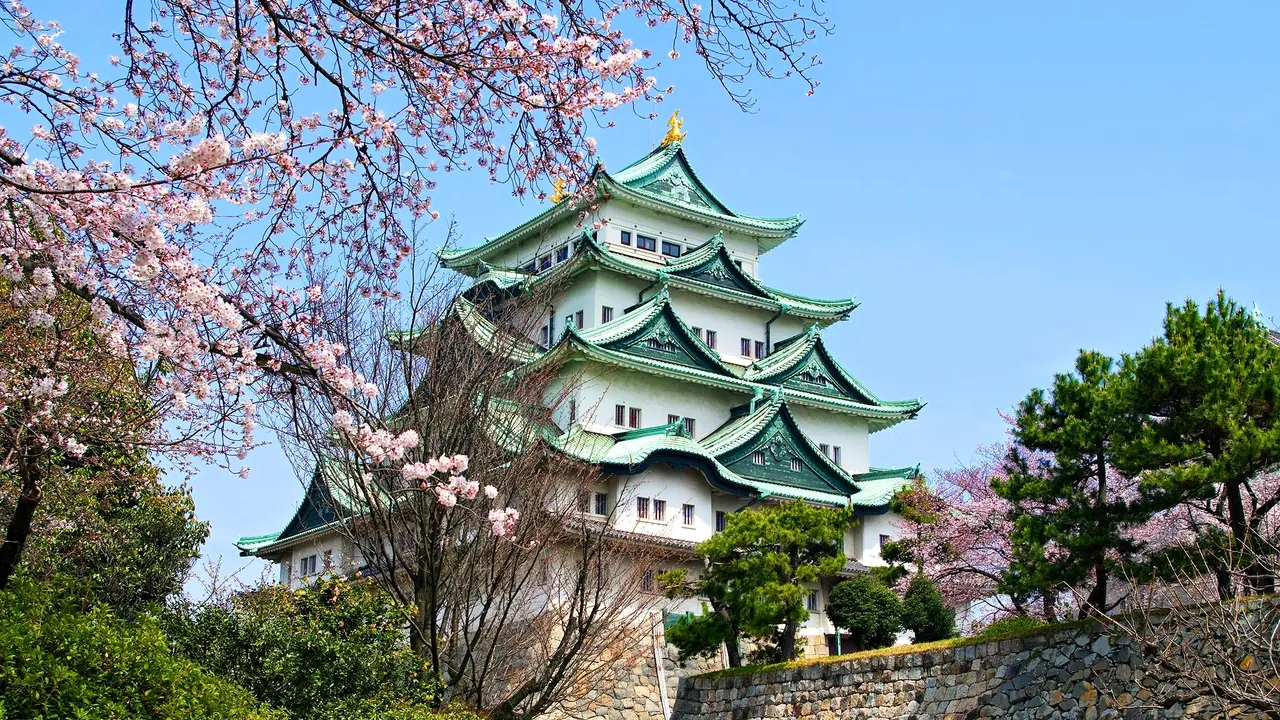
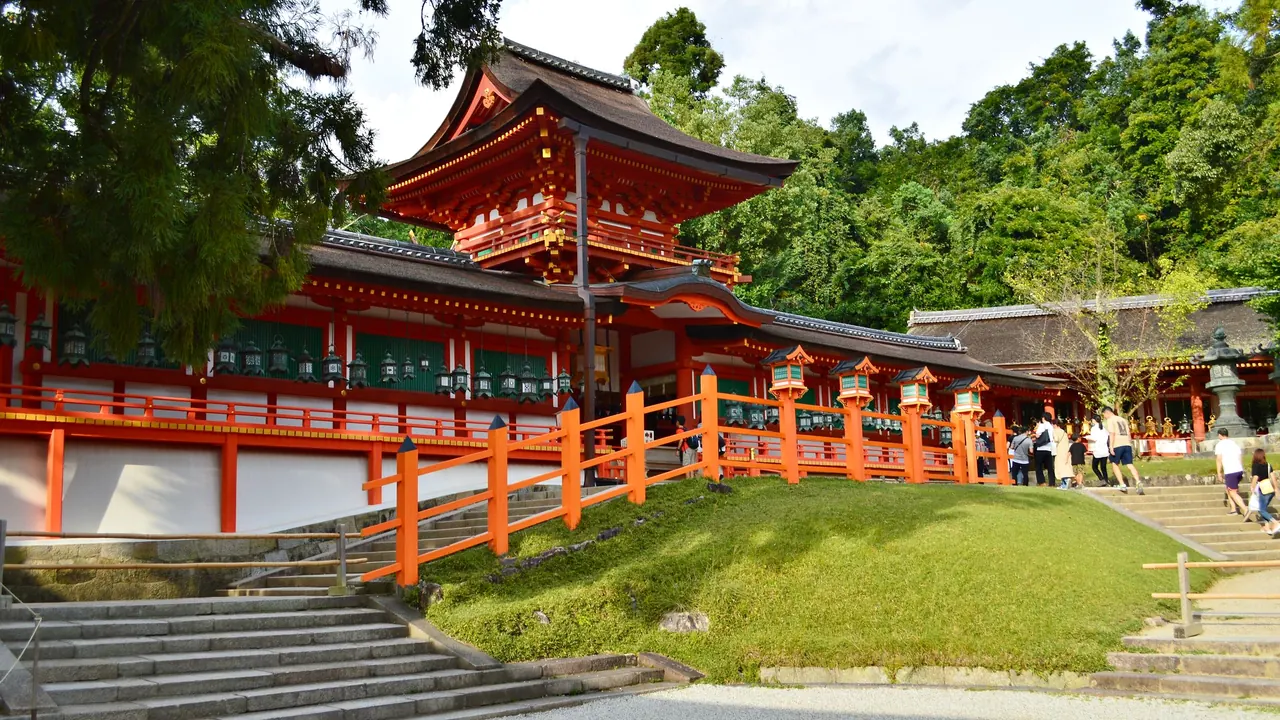
Photos: Nagoya by Hiroaki Kaneko, CC BY-SA 3.0, cropped; Nara by Saigen Jiro, CC0.
Nagoya or Nara?
Our verdict in twelve categories, each scored against the same fixed benchmark cities, and the climate month by month, so you can choose for your trip.
Choose Nagoya for
- food and drink
- families
- nightlife
Nagoya suits the traveller who wants a comfortable, capable base with plenty going on between sights and after dark. It has a distinctive regional kitchen built on red miso, department-store food halls, bathhouses on every side and a long list of things for children, from the port aquarium to Ghibli Park. Its historic sights are fewer and mostly rebuilt, but Kyoto is about 35 minutes away by shinkansen, so it works well as the practical hub of a wider trip through central Japan.
Choose Nara for
- culture and sights
- day trips
- nature and the outdoors
Choose Nara if the point of the vacation is ancient Japan itself. The Great Buddha at Todai-ji, Kofuku-ji's pagoda, the lantern paths of Kasuga Taisha and the deer of Nara Park are all within walking distance of one another, and the quiet evenings after the day visitors leave are part of the appeal. It is thin on food, shopping and nightlife, but Osaka and Kyoto are close enough to make up for that, which makes Nara an even better springboard for day trips than Nagoya.
Scoreboard
Twelve categories on one fixed scale from 0 to 100. The shaded stretch is the gap between the two.
Your match
Pick a travel style or drag the sliders, and both match scores follow your weighting.
Wins on food and drink and families with your weighting.
Wins on culture and sights and day trips with your weighting.
What matters to you?
Category by category
What the scores mean for a trip.
Beaches & swimming
Neither city is a beach destination, but only Nagoya gives you the option. Beaches on the Chita Peninsula such as Utsumi are about an hour away by train, and ferries run on to small islands like Shinojima. In high summer they make a pleasant but ordinary day out, with sheltered water that is not very clear.
Nara is inland and ringed by hills, so a swim means a hotel or public pool. The Osaka Bay shore is industrial, and the clear water of the Kii Peninsula takes most of a day to reach.
Food & drink
Nagoya eats far better. Its regional cooking includes grilled eel hitsumabushi finished with broth, miso katsu, peppery tebasaki wings and misonikomi udon, and each dish has its own specialist restaurants. Morning-service breakfasts, the department-store food halls and Osu's street snacks fill the gaps between meals.
Nara's food is small in range and worth tasting rather than travelling for: persimmon-leaf sushi, narazuke pickles, Miwa somen and local sake at brewery counters in Naramachi. Kitchens near the park mostly serve quick lunches and close early, so many visitors go to Osaka or Kyoto for a serious dinner.
Culture & sights
Nagoya's heritage is largely reconstruction. Little of the feudal city survived the war, so its castle and palace are careful rebuilds, set apart from one another across wide modern streets, with Atsuta Shrine and the Tokugawa samurai collection as the older threads. Where it beats Nara is the twentieth century. Its car and railway museums tell the story of Japanese industry, a subject Nara does not touch.
Nara has the real thing, and in depth. Its temples and shrines go back to the age when it was the capital and have stayed in use ever since, and its Buddhist sculpture is among the oldest and finest in Japan. Most of it lies close together around the park, not scattered across town. Nagoya rewards a selective half-day of sights, but Nara repays slow days on foot, moving from one temple precinct to the next.
Nightlife
Nagoya has a real night scene and Nara barely has one. In Sakae and Nishiki, narrow buildings are stacked with izakaya, tiny bars, karaoke and a few dance clubs that fill at weekends, and some places stay open until morning. Midweek, though, it is mostly office workers eating and drinking after work.
Nara goes quiet once the day visitors leave. An evening out means an izakaya near Kintetsu Nara station, a sake counter or a small bar in the arcades, and there are no clubs. For more than that you take the train to Osaka and keep an eye on the last train back.
Nature & outdoors
There is little to choose between them, but the green spaces are of a different kind. Nara's are on the doorstep: the deer lawns and ponds of Nara Park, the ancient Kasugayama Primeval Forest and an easy climb up Mount Wakakusa. Further out are the Yamanobe-no-michi path along the foothills and Yoshino's blossom hills.
Nagoya sits on a built-up plain, so in town nature means parks and the gardens of Tokugawaen and Shirotori. Its landscapes begin an hour or more away: the ropeway on Mount Gozaisho, Korankei's autumn maples, the Nakasendo through the Kiso Valley and the pearl-farming inlets of the Ise-Shima coast.
Day trips
Both are superb bases, and Nara has the edge. Kyoto and Osaka are each well under an hour away, and Horyu-ji's ancient wooden buildings are a short ride from the centre. Asuka's burial mounds, Uji's tea and the Byodo-in, the mountain temples of Hase-dera and Muro-ji, and Himeji's castle on a longer day give it a remarkably deep list of easy outings.
Nagoya gives up some closeness for range. Kyoto is a quick shinkansen ride and Ise Jingu about an hour and a half by train. Nearer home are the original castle keeps at Inuyama and Hikone, the pottery towns of Seto and Tokoname, and the post towns of Tsumago and Magome.
Good for families
Nagoya is much the stronger choice with children. The port aquarium with its orcas and belugas, the vast Higashiyama Zoo, the Science Museum planetarium, the railway museum's bullet trains, Legoland and Ghibli Park could fill a week, and Nagashima Spa Land's roller coasters are under an hour away. The catch is the long train rides between them.
Nara gives children one unforgettable experience: feeding the bowing deer in the park. They also enjoy the Great Buddha and squeezing through the hole in Todai-ji's pillar. Beyond that there is little made for them, and families usually head to Osaka for an aquarium or theme park.
Getting around
Both are easy to get around without a car, but in different ways. Nara's main sights lie within walking distance of Kintetsu Nara station, and local trains, buses and rental bicycles on the flat basin cover the western temples and Horyu-ji.
Nagoya's wide postwar avenues are easy to navigate but tiring to walk. Beyond the walkable area of Sakae, the castle and Osu, you rely on the subway, a sightseeing loop bus and a single IC card that also works on the railways.
Shopping & style
Nagoya is the place to shop. It has department stores around Sakae and in the towers above the station, luxury brands on the avenues between them, and covered arcades in Osu full of secondhand clothing, anime and electronics, with a flea market at the temple.
Nara's shopping is about traditional crafts: sumi ink and calligraphy brushes, Nara-zarashi linen, Akahada pottery and carved Ittobori dolls in Naramachi's specialist shops, and sweets and deer souvenirs in the arcades near the station. For anything more, people go to Osaka.
Affordability
Day to day, the two cost much the same, and both keep costs down the same way: plenty of business hotels, set lunches, noodle counters and convenience stores. In Nara the park and the deer are free and the temples charge modestly hall by hall, so sightseeing stays cheap. The money goes on ryokan with dinner and rail fares for day trips.
In Nagoya, the extra costs come from the things that draw people there: eel dinners, shinkansen outings and theme park tickets. Its morning-service breakfasts are a small saving you only find there.
Live music & performing arts
Nagoya has a regular programme. There are opera, ballet and orchestras at the Aichi Arts Center, a season from the Nagoya Philharmonic, kabuki at the Misono-za, Noh at the theatre near the castle and jazz in small live houses, though little of it is aimed at visitors who don't speak Japanese.
In Nara, performance is part of ritual. Gagaku and bugaku at Kasuga Taisha, the centuries-old On-matsuri in winter and the Omizutori fire rites at Todai-ji are remarkable if your dates line up, but on an ordinary evening there is little to see.
Wellness & relaxation
For bathing, Nagoya is the better choice. It has sento and large super sento with saunas and open-air pools all over the city, the Nagashima hot-spring complex under an hour away, and the classic spa town of Gero Onsen close enough for a night at a ryokan.
Nara has no hot springs of note, only a few bathhouses and some ryokan baths. Its calm comes from its pace instead: the park at dawn before the crowds, a tea house by a temple, and an old town that empties in the evening, which Nagoya's office streets cannot match.
When should you go?
Pick your month. The climate figures are measured averages, not a forecast.
Nagoya in July
Nara in July
Daytime high, °C
Rainfall in the month, mm
Where the figures come from
Nara's sunshine is measured 26 km from the centre, at Osaka.
Temperature and rainfall are climate normals, averaged over the years shown. Nagoya: 1991-2020 normals, Nagoya (5.7 km from centre). Nara: 1971-2000 (sunshine 1991-2020, rainfall 1991-2020) normals, Nara (2.6 km from centre).
The two cities share the climate of central Japan, so their seasons run almost in step. Spring and autumn are the times for walking temples and streets. April brings cherry blossom and mild days, October is pleasantly warm though still fairly wet, and November is drier, cooler and the month the maples turn. June and July bring the heaviest rain, and July and August are hot and humid, with highs around 33°C in Nagoya, which is too much for long days on foot. Winters are cool and fairly dry at about 9°C in January, fine for sightseeing if you dress for it, and Nagoya's winter days are the sunnier of the two.
Late summer is where they differ most. Nagoya is the wetter city, and September is its rainiest month at around 225mm. It is also the only one of the two where you can swim. The Chita Peninsula beaches are worth the trip in July and August, when Ise Bay warms to about 27°C, and are largely empty the rest of the year. Nara is just as hot, but it stays noticeably drier in September and gets more sunshine in August.
Which traveller are you?
For a culture and arts trip, Nara is the clear choice. The temples and shrines of the ancient capital are close together and of the first rank, with Horyu-ji and Kyoto nearby. Nagoya's sights are fewer, scattered and largely rebuilt.
On a family trip with children, Nagoya is far stronger. It has enough big attractions for children to fill a week, though they are spread out. In Nara, children get one memorable day with the deer, and then families head to Osaka for more.
On a food and nightlife trip, Nagoya wins comfortably. It has a whole regional cuisine with its own specialist restaurants, and a bar district that fills late at weekends. Nara's kitchens are limited and close early, so a real night out means Osaka.
Before you go
| Measure | Nagoya | Nara |
|---|---|---|
| Official language | Japanese | Japanese |
| Currency | Yen (JPY) | Yen (JPY) |
| Sockets | AB100 V, 50 and 60 Hz depending on the region | AB100 V, 50 and 60 Hz depending on the region |
| Driving side | Left | Left |
| Time zone | UTC+9 | UTC+9 |
| Emergency number | Police 110, fire 119 | Police 110, fire 119 |
| Elevation | 25 m | 70 m |
| Main airport | Chubu Centrair International Airport (NGO)37 km from centre43 non-stop destinations | Kansai International Airport (KIX)59 km from centre62 non-stop destinations |
| Public holidays this year | 16 days | 16 days |
By the numbers
| Measure | Nagoya | Nara |
|---|---|---|
| City population | 2,326,844 | 352,377 |
| People per km² | 7,129 | 1,273 |
| Museums within 10 km | 63 | 31 |
| UNESCO World Heritage sites within 50 km | 0 | 6 |
| Swim season, months above 21 °C | 5 months | 5 months |
Where else could you go?
Every comparison below shares a destination with this one, so you can follow Nagoya or Nara somewhere new.