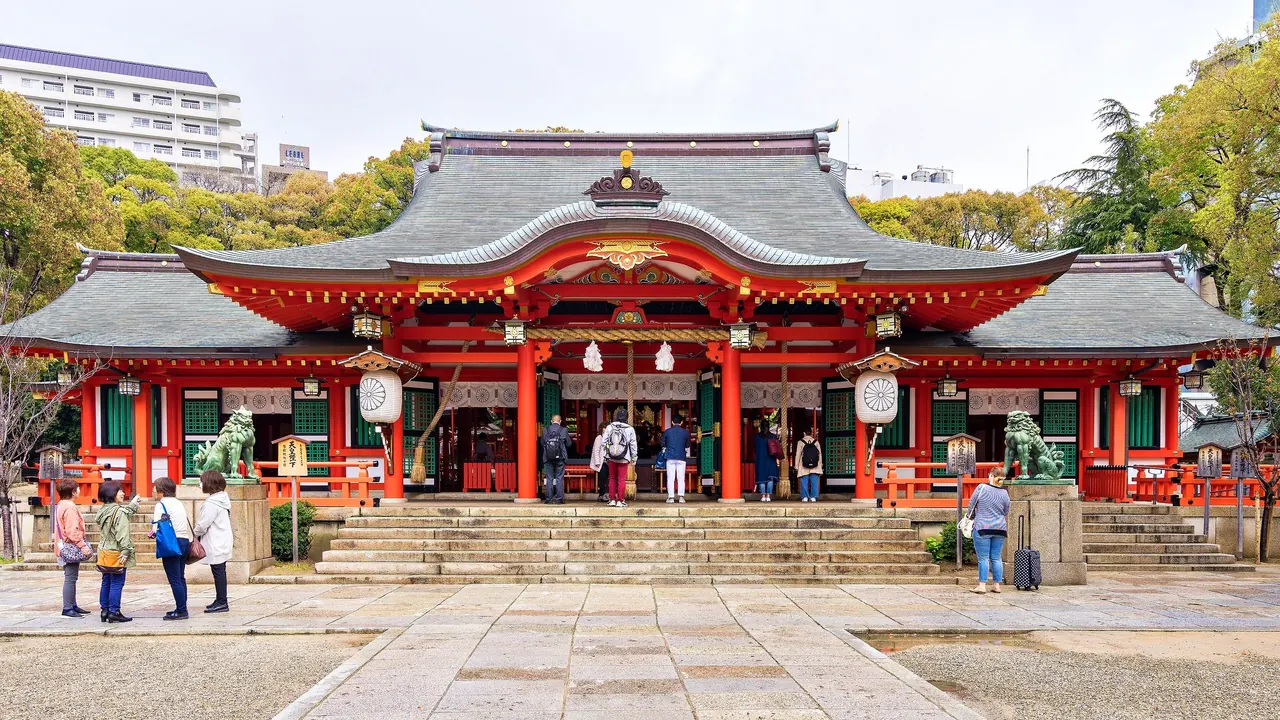
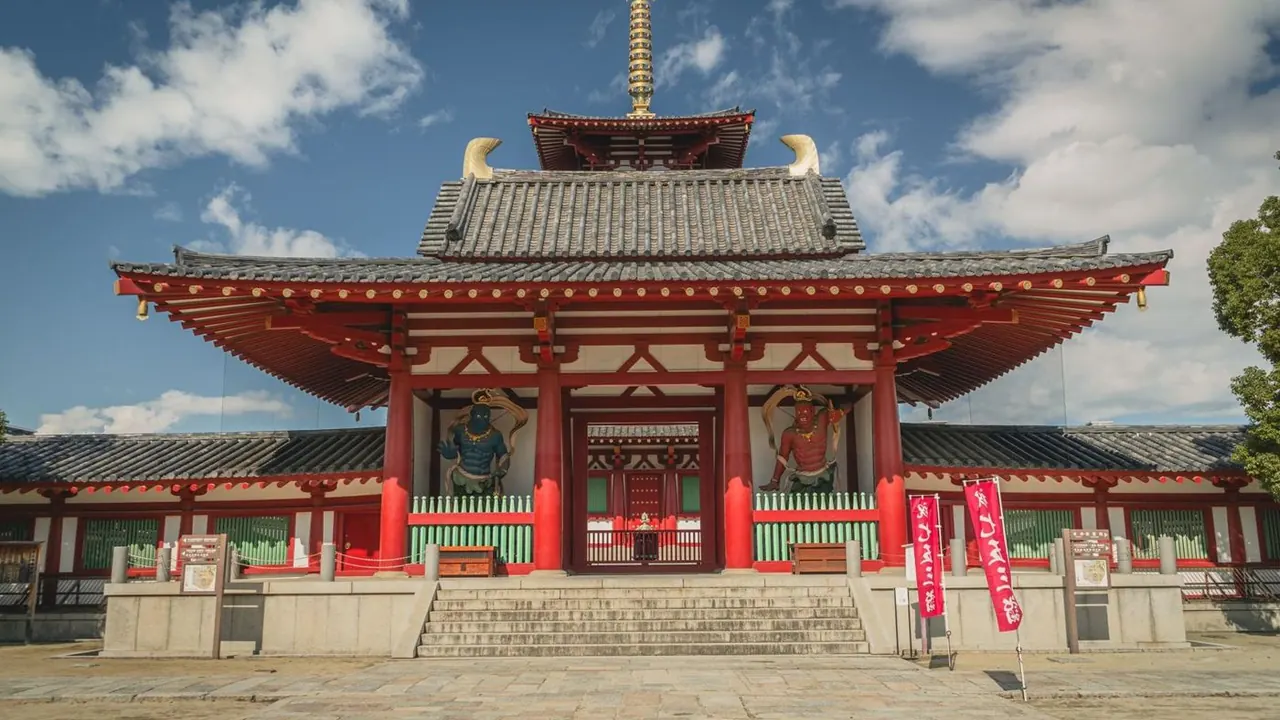
Photos: Kobe by Wei-Te Wong, CC BY-SA 2.0, cropped; Osaka by Sarmat Batagov, Pexels License.
Kobe or Osaka?
Our verdict in twelve categories, each scored against the same fixed benchmark cities, and the climate month by month, so you can choose for your trip.
Choose Kobe for
- nature and the outdoors
- wellness
- beaches
Kobe suits travellers who want a calmer base with mountains at the back door. Trails and ropeways start almost from the station, Arima Onsen's hot springs lie within the city limits, and Suma's sand is a short ride away. Evenings run to a quiet whisky bar or a jazz trio rather than a long night out. It also works well as a gentler place to sleep while the region's sights are visited by train.
Choose Osaka for
- nightlife
- shopping
- food and drink
Osaka is the stronger pick for anyone travelling to eat, drink and stay out late. Its street food, counter dining and bar alleys are among the liveliest in Japan, and the shopping is bigger too. Families do especially well, with Universal Studios Japan and Kaiyukan close to hand. Kyoto and Nara are even closer than they are from Kobe, which makes Osaka the more efficient hub for a packed itinerary.
Scoreboard
Twelve categories on one fixed scale from 0 to 100. The shaded stretch is the gap between the two.
Your match
Pick a travel style or drag the sliders, and both match scores follow your weighting.
Wins on nature and the outdoors and wellness with your weighting.
Wins on nightlife and shopping with your weighting.
What matters to you?
Category by category
What the scores mean for a trip.
Beaches & swimming
Neither city is a beach destination, but Kobe has the easier swim. Suma's long sandy beach is about fifteen minutes from the centre, and Awaji Island across the strait has quieter, clearer water.
From Osaka the same Suma beach, or Tannowa towards Wakayama, takes around an hour, and the coarse sand and suburban settings make these more of a summer outing than a reason to stay.
Food & drink
Kobe eats well but in a more refined key. Its strengths are Kobe beef at teppanyaki counters, a pastry and coffee-house tradition from its treaty-port days, Nankinmachi's buns and the sake breweries of Nada.
Osaka makes food the whole point of the visit. Takoyaki, okonomiyaki and kushikatsu in Dotonbori, grazing at Kuromon Market and elbow-to-elbow izakaya in Tenma give it far greater range and energy, and Kitashinchi's kaiseki counters cover the top end.
Culture & sights
Kobe's sights are small and tied to one story: the merchant houses of Kitano, Ikuta Shrine, and the 1995 earthquake told at Meriken Park and the disaster museum. Tadao Ando's art museum on the bay adds a modern landmark.
Osaka has more weight. It offers Osaka Castle on its original walls, the ancient foundations of Shitennoji and Sumiyoshi Taisha, and a stronger museum cluster on Nakanoshima, including a fine collection of Oriental ceramics. Neither is a heritage city, and both send temple lovers on to Kyoto and Nara.
Nightlife
Kobe's evenings are low-key: whisky bars and tiny counters in the lanes north of Sannomiya, then a stroll by the lit-up harbour at Harborland. For anything loud, Kobe locals take the train to Osaka.
Osaka is where they go. Dotonbori's neon, the standing bars of Ura-Namba, Amerikamura's DJ bars and the little bars around Ohatsutenjin keep going until the first train, and strangers chat at the counter easily.
Nature & outdoors
Kobe lives against its mountains. The Rokko range rises right behind the city, with the Nunobiki falls, cable cars up Maya and Rokko for night views over the bay, and a full ridge traverse for serious walkers.
Osaka's own green space is mostly the castle park and the riverbanks, so getting into nature means riding out to Minoo's waterfall trail, Mount Ikoma or, tellingly, Kobe's Rokko hills.
Day trips
Both are superb bases on the same rail corridor, and the difference is mainly direction. Kobe puts Himeji Castle under an hour away and gets you onto the shinkansen west to Okayama, Kurashiki and Hiroshima.
Osaka sits nearer the temple cities, with Kyoto under half an hour and Nara about forty minutes away. It also reaches the monasteries of Koyasan, Uji's tea houses and the towns of Lake Biwa.
Good for families
Both cities are safe and clean, with baby rooms and lifts everywhere. Kobe offers gentler outings: Oji Zoo, the aquarium beside Suma beach and the ropeways up Rokko to a pasture farm.
Osaka has the big attractions. Universal Studios Japan is a short ride from the centre, Kaiyukan has its whale-shark tank, and Kids Plaza and Expo '70 Commemorative Park add more. The trade-off is weekend crowds and heavier summer heat.
Getting around
Kobe's long, thin shape keeps things simple. Parallel rail lines run east to west, and Chinatown, the harbour and Kitano are all walkable from Sannomiya, though Kitano involves a climb.
Osaka covers more ground smoothly with the Midosuji line and the JR loop, and its flat streets suit a hired bicycle. Changing trains in the underground maze of Umeda can be slow, however. The same IC card works in both cities.
Shopping & style
Kobe's shopping is stylish but compact. It runs to arcades through Motomachi, boutiques in the old foreign settlement around Daimaru, and local specialities such as pearls, Nagata leather shoes and Western-style cakes.
Osaka has the scale Kobe shoppers travel for. Shinsaibashi-suji, the Umeda department stores and the Midosuji flagships cover fashion, Den Den Town covers electronics and anime, and the knife shops of Doguyasuji supply the best souvenir.
Affordability
Costs are much the same in both, and everyday eating is good value in either. In Kobe, the big spends are a Kobe beef dinner, the mountain cable cars and a night in an Arima ryokan, while business hotels rarely fill up.
In Osaka, rooms are the pressure point, especially at weekends and in blossom and leaf season, and a Universal Studios day adds up. Staying just outside Namba or Umeda helps.
Live music & performing arts
Kobe's stage life is mostly jazz. It has small clubs with resident trios around Sannomiya and Kitano, and the Kobe Jazz Street festival each autumn, with classical concerts at the Hyogo Performing Arts Center in Nishinomiya.
Osaka offers more variety. Bunraku has its national home in Nippombashi with English guides, kabuki visits in seasonal runs, and Festival Hall and Symphony Hall host orchestras. Manzai comedy in Namba is a local speciality, though only in Japanese. Both are within reach of the Takarazuka Revue.
Wellness & relaxation
Kobe has the edge because Arima Onsen, with its iron-red kinsen and clear ginsen springs, lies within the city across Mount Rokko. An afternoon soak or an overnight ryokan stay is easy to fit in, and the foothill gardens and harbour promenades keep the pace slow.
Osaka's version of rest is a long evening in a super sento, or an early morning at Sumiyoshi Taisha. Arima is still reachable, but at about an hour away it is a proper excursion from a city that rarely slows down.
When should you go?
Pick your month. The climate figures are measured averages, not a forecast.
Kobe in July
Osaka in July
Daytime high, °C
Rainfall in the month, mm
Where the figures come from
Kobe's sunshine is measured 29 km from the centre, at Osaka.
Temperature and rainfall are climate normals, averaged over the years shown. Kobe: 1971-2000 (sunshine 1991-2020, rainfall 1991-2020) normals, Kobe (1.3 km from centre). Osaka: 1991-2020 normals, Osaka (1.8 km from centre).
The two cities share almost the same climate, so the best months match. Spring, from April into May, and autumn, from October into November, are mild and dry enough for long days on foot, with blossom in the first and red leaves in the second. June and July bring the rainy season, and Kobe catches the heavier July downpours, around 226mm against 175mm in Osaka. Winter is cool, with highs near 10°C, but often clear and fine for sightseeing.
Summer is when the beaches open, and the sea in Osaka Bay reaches about 27°C in August. That is also when walking the streets becomes hard work. Osaka's dense, flat centre is the hotter of the two, peaking around 34°C, while Kobe's sea breezes and nearby mountains take the edge off slightly. Anyone visiting in midsummer will find Kobe a little more bearable.
Which traveller are you?
For a food and nightlife trip, Osaka is the clear choice. Takoyaki stalls, okonomiyaki griddles and the packed izakaya of Ura-Namba lead straight into late bar-hopping in Minami, where many people stay out until the first morning train.
On an outdoors trip, Kobe wins. The Rokko range starts a short walk from Shin-Kobe station, with waterfalls, ridge traverses and the rugged Suma Alps. Osaka's best walks, at Minoo or Mount Ikoma, mean a train ride out of flat concrete first.
For a relaxing and wellness trip, Kobe is the better fit. Arima Onsen lies within the city, about half an hour away, so a ryokan night with a kaiseki dinner is easy, and the city itself slows down quickly beyond Sannomiya.
Before you go
| Measure | Kobe | Osaka |
|---|---|---|
| Official language | Japanese | Japanese |
| Currency | Yen (JPY) | Yen (JPY) |
| Sockets | AB100 V, 50 and 60 Hz depending on the region | AB100 V, 50 and 60 Hz depending on the region |
| Driving side | Left | Left |
| Time zone | UTC+9 | UTC+9 |
| Emergency number | Police 110, fire 119 | Police 110, fire 119 |
| Elevation | 17 m | 20 m |
| Main airport | Kobe Airport (UKB)7 km from centre15 non-stop destinations | Kansai International Airport (KIX)38 km from centre62 non-stop destinations |
| Public holidays this year | 16 days | 16 days |
By the numbers
| Measure | Kobe | Osaka |
|---|---|---|
| City population | 1,521,707 | 2,751,862 |
| People per km² | 2,732 | 12,340 |
| Museums within 10 km | 46 | 44 |
| UNESCO World Heritage sites within 50 km | 3 | 6 |
| Swim season, months above 21 °C | 5 months | 5 months |
Where else could you go?
Every comparison below shares a destination with this one, so you can follow Kobe or Osaka somewhere new.