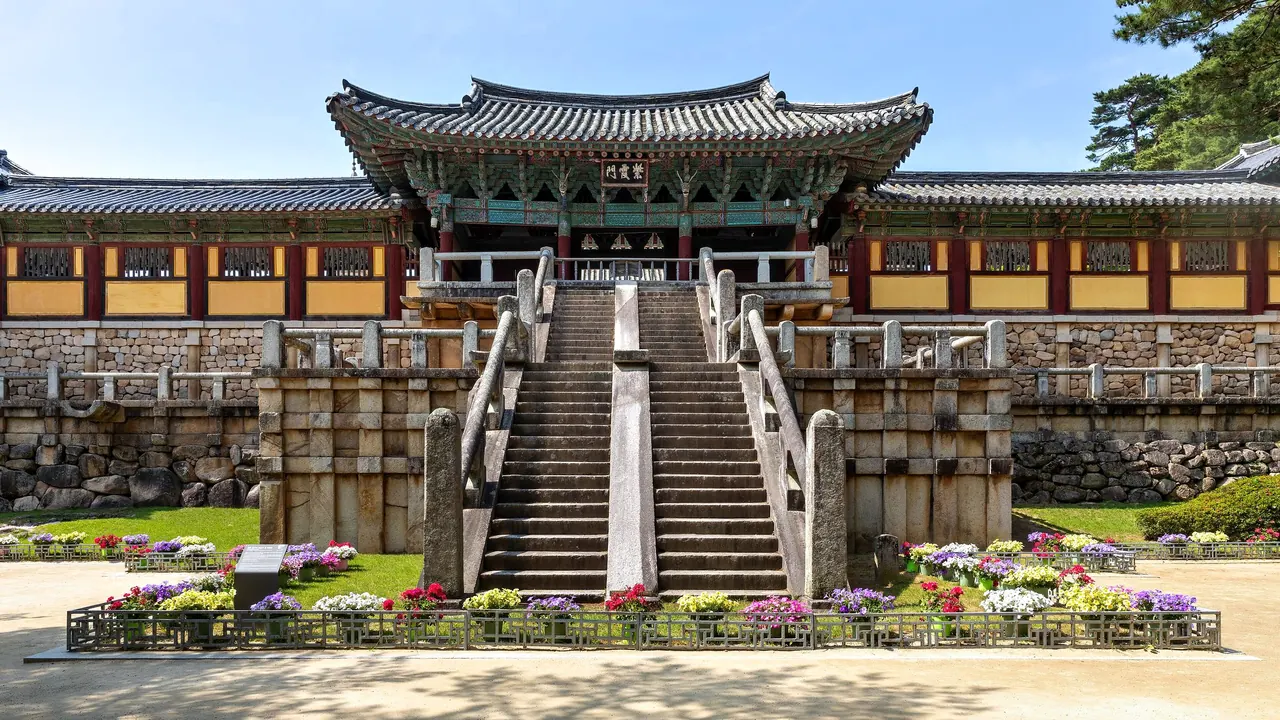
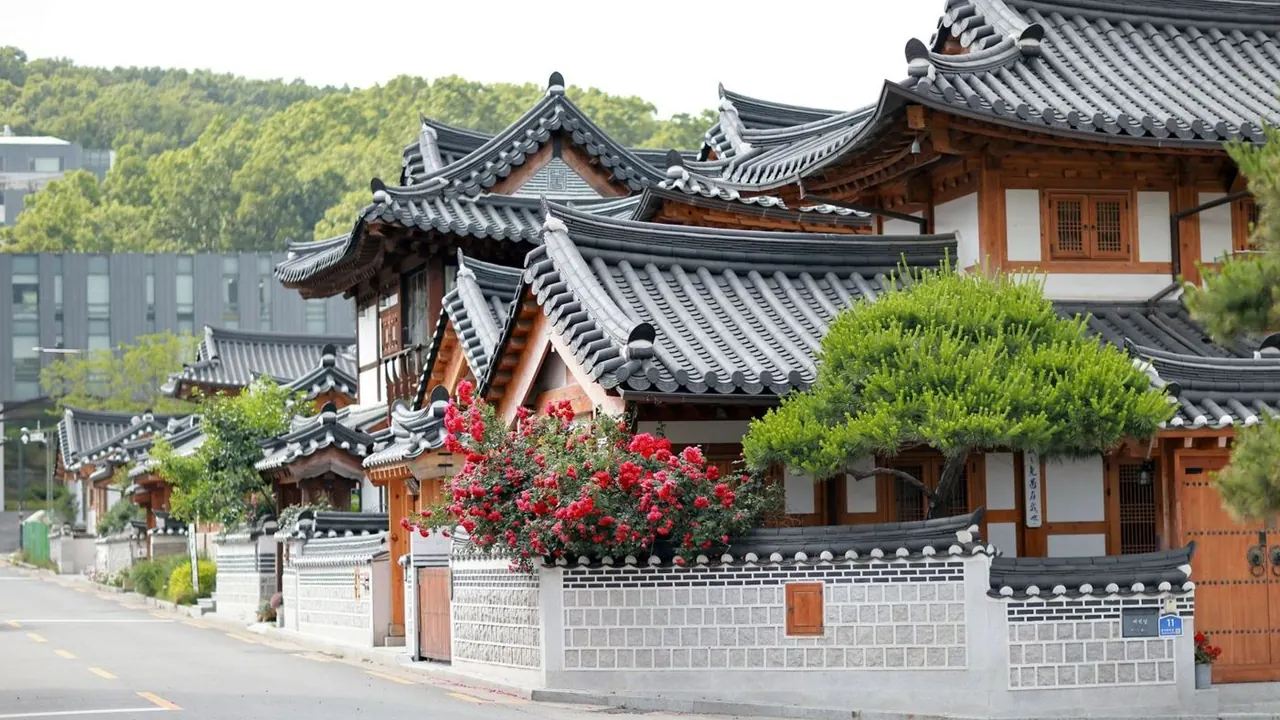
Photos: Gyeongju by Basile Morin, CC BY-SA 4.0, cropped; Seoul by 거열 박, Pexels License.
Gyeongju or Seoul?
Our verdict in twelve categories, each scored against the same fixed benchmark cities, and the climate month by month, so you can choose for your trip.
Choose Gyeongju for
- beaches
- prices
- culture and sights
Gyeongju suits a traveller who wants Korea's ancient past laid out in one calm landscape. The Silla tombs, the observatory, Bulguksa and the Seokguram Buddha all sit in a green valley you can cycle around, evenings are early and quiet, and the money goes further. It is best for two or three unhurried days of history, temple stays and gentle hiking, not for anyone who wants late nights or serious shopping.
Choose Seoul for
- nightlife
- shopping
- live music and the arts
Seoul is the choice for a trip with range. Joseon palaces and one of Asia's great museums are matched by Korean barbecue, cafés, all-night markets and districts like Hongdae and Itaewon that stay out until the first trains. Families, shoppers and anyone who wants the subway to do the work will find it far easier. The trade-off is scale and noise, and calm has to be sought out in palace gardens and on the mountain trails.
Scoreboard
Twelve categories on one fixed scale from 0 to 100. The shaded stretch is the gap between the two.
Your match
Pick a travel style or drag the sliders, and both match scores follow your weighting.
Wins on beaches and prices with your weighting.
Wins on nightlife and shopping with your weighting.
What matters to you?
Category by category
What the scores mean for a trip.
Beaches & swimming
Neither is a beach destination, but Gyeongju at least has a proper coast within reach. About forty minutes east, the sandy and pebbly beaches at Bonggil, Jeonchon and Gampo face the East Sea, and Bonggil adds the strange sight of King Munmu's underwater tomb just offshore. It makes a good half-day, swimming in high summer only.
Seoul's nearest sand lies on the Yellow Sea beyond Incheon, where big tides expose mudflats and the water is rarely clear. In summer the outdoor pools in the Han River parks are the more practical way to cool off.
Food & drink
Seoul is one of the great eating cities of Asia, and Gyeongju is simply a pleasant place to have dinner. Gyeongju's highlights fit in a short list: ssambap spreads near the royal tombs, red-bean Hwangnam bread, beopju rice wine from Gyochon and snack stalls in its two markets, with little beyond Korean cooking.
Seoul runs from Gwangjang Market's mung bean pancakes and tabletop barbecue to fried chicken with beer, temple cuisine and an ambitious modern Korean fine-dining tier. Its café culture alone, in Seongsu, Yeonnam-dong and Ikseon-dong, could fill a day.
Culture & sights
Both are first-rate for history, but from different eras and in different settings. Gyeongju is the Silla capital as an open-air landscape: grassy burial mounds between the houses, Cheomseongdae, Wolji Pond, the gold crowns of the National Museum and, on Tohamsan, the UNESCO-listed Bulguksa and Seokguram grotto. It is ancient, Buddhist and all of a piece.
Seoul's heritage belongs to the later Joseon dynasty, with Gyeongbokgung, Changdeokgung's secret garden and the Jongmyo shrine, plus the hanok lanes of Bukchon. It adds the National Museum of Korea and private art museums, but the sights come in clusters within a modern city.
Nightlife
Here the gap is as wide as it gets. Gyeongju's evening is a stroll to see Wolji Pond floodlit, then perhaps a glass of wine or makgeolli in Hwangnidan-gil before an early night, with no clubs at all.
Seoul is still full at 3am. Hongdae has indie clubs and buskers, Itaewon and Hannam-dong have the international cocktail bars, Gangnam has the dressed-up clubs, and karaoke rooms round off most group nights.
Nature & outdoors
Seoul has the bigger outdoors, which surprises many visitors. Bukhansan National Park's granite peaks sit within the city limits and are reached by subway, and the Han River's cycle paths run for many kilometres.
Gyeongju's landscape is gentler and more historical. A walk on Namsan passes Buddhas carved into the rock, Tohamsan offers sunrise towards the sea, and the flat valley around the tombs and Bomun Lake makes easy cycling under the cherry trees.
Day trips
Both are good bases, pointed at different parts of the country. From Gyeongju the fast train puts Busan about half an hour away, and the lived-in clan village of Yangdong and the Tongdosa monastery are close by road.
Seoul's outings lean towards fortresses and the modern border: Suwon's Hwaseong walls, Namhansanseong, a guided tour to the Demilitarized Zone and Jeonju's hanok quarter by KTX. Most of them are easy to reach by public transport.
Good for families
Seoul is the easier city with children, mainly because of its range. Lotte World is in the city, Everland and its safari are about an hour away, and the zoo, aquariums, science centres and Han River playgrounds give plenty of variety.
Gyeongju works well for a few days, with the amusement and water parks at Bomun Lake, flat paths among the tombs for buggies and tandem bikes. Over a longer stay, though, the steady diet of heritage can tire younger children.
Getting around
Seoul's subway takes you almost anywhere on one tap-on card, from the palaces to the hiking trailheads. The real cost is distance, since a trip across the river can take the best part of an hour.
Gyeongju is the opposite. Its core of tombs, museum and Hwangnidan-gil is compact and flat, ideal on foot or by bike, but the high-speed station is out of town and Seokguram, Yangdong and the coast depend on slow, infrequent buses or taxis.
Shopping & style
Seoul is a shopping destination in its own right, from Myeongdong's skincare and the department-store food halls to Dongdaemun's all-night fashion malls and Cheongdam's luxury flagships. Insadong covers traditional crafts such as celadon and hanji paper.
Gyeongju has little beyond the small design shops of Hwangnidan-gil, market stalls of dried seafood and boxes of Hwangnam bread to carry home.
Affordability
Gyeongju is the cheaper stay. Wandering among the tomb parks costs next to nothing, temple and museum entry is modest, and weekday hanok guesthouses are fair, though weekends, blossom season and taxis between outlying sites push costs up.
Seoul's subway and casual meals are good value, but hotels in Myeongdong or Gangnam, barbecue dinners and smart cafés make the daily total noticeably higher.
Live music & performing arts
Seoul offers a real programme: the Seoul Philharmonic, opera and ballet at the Seoul Arts Center and Sejong Center, court music at the National Gugak Center, non-verbal shows, Hongdae's indie clubs and jazz in Itaewon.
In Gyeongju, performance mostly means open-air traditional shows at Bomun Lake in the warmer months. The exception is the autumn Silla Cultural Festival, when processions and drumming fill the streets around the tombs.
Wellness & relaxation
Seoul has the wider choice of ways to unwind. Its huge round-the-clock jjimjilbang, with clay and jade rooms and attendant body scrubs, sit alongside Korean skincare spas, herbal treatments and foot massage, though quiet has to be found in palace gardens and Insadong teahouses.
Gyeongju's appeal is slowness rather than variety. Hot-spring baths around Bomun Lake, temple stays at Bulguksa or Golgulsa with its sunmudo meditation, and early mornings among the tombs suit a quieter retreat, provided you avoid weekends.
When should you go?
Pick your month. The climate figures are measured averages, not a forecast.
Gyeongju in July
Seoul in July
Daytime high, °C
Rainfall in the month, mm
Where the figures come from
Gyeongju's temperatures are measured 25 km from the centre, at Pohang.
Gyeongju has no rain gauge within 25 km of the centre, so its rainfall comes from a gridded climate dataset read at the city rather than from a gauge further away.
Temperature and rainfall are climate normals, averaged over the years shown. Gyeongju: 1991-2020 normals, Pohang (25.3 km from centre). Seoul: 1991-2020 normals, Seoul (2.2 km from centre).
Both cities share the same Korean rhythm, with blossom in April and May and clear, mild days in October, the best months for walking in either place. Summer is hot and humid in both, and the monsoon is far heavier in Seoul, where July brings around 422mm of rain against roughly 220mm in Gyeongju. Only Gyeongju's coast is worth a swim, and only in July and August, when the East Sea reaches about 25°C.
Winter splits them. Seoul is freezing, with daytime highs near 2°C in January, while Gyeongju stays milder at about 7°C and keeps more sunshine through the cold months, so a winter round of tombs and temples is quite pleasant there. Late spring and autumn remain the safest choice for both.
Which traveller are you?
On a trip on a tight budget, Gyeongju is the better choice. Its main sight is the historic landscape itself, so a full day of history costs very little, and a small town keeps beds and meals cheaper. In Seoul, accommodation alone sets a higher daily minimum.
For a family trip with children, Seoul has more to fill a week. Theme parks, zoos and hands-on museums are all a subway ride away, so wet or tiring days are easy to rescue. Gyeongju's heritage holds children's interest for two or three days, not much longer.
For a food and nightlife trip, Seoul is in another league. Dinner leads into second and third rounds across different neighbourhoods, and there is ambitious modern Korean cooking for a special night out. In Gyeongju you get one good regional meal, and then the town goes quiet.
Before you go
| Measure | Gyeongju | Seoul |
|---|---|---|
| Official language | Korean, Korean Sign Language | Korean, Korean Sign Language |
| Currency | Won (KRW) | Won (KRW) |
| Sockets | CF220 V, 60 Hz | CF220 V, 60 Hz |
| Driving side | Right | Right |
| Time zone | UTC+9 | UTC+9 |
| Emergency number | Police 112, ambulance 119, fire 119 | Police 112, ambulance 119, fire 119 |
| Elevation | 46 m | 38 m |
| Main airport | Gimhae International Airport (PUS)79 km from centre49 non-stop destinations | Incheon International Airport (ICN)49 km from centre163 non-stop destinations |
| Public holidays this year | 18 days | 18 days |
By the numbers
| Measure | Gyeongju | Seoul |
|---|---|---|
| City population | 245,365 | 9,668,465 |
| People per km² | 185 | 15,973 |
| Museums within 10 km | 3 | 81 |
| UNESCO World Heritage sites within 50 km | 6 | 5 |
| Swim season, months above 21 °C | 4 months | 2 months |
Where else could you go?
Every comparison below shares a destination with this one, so you can follow Gyeongju or Seoul somewhere new.