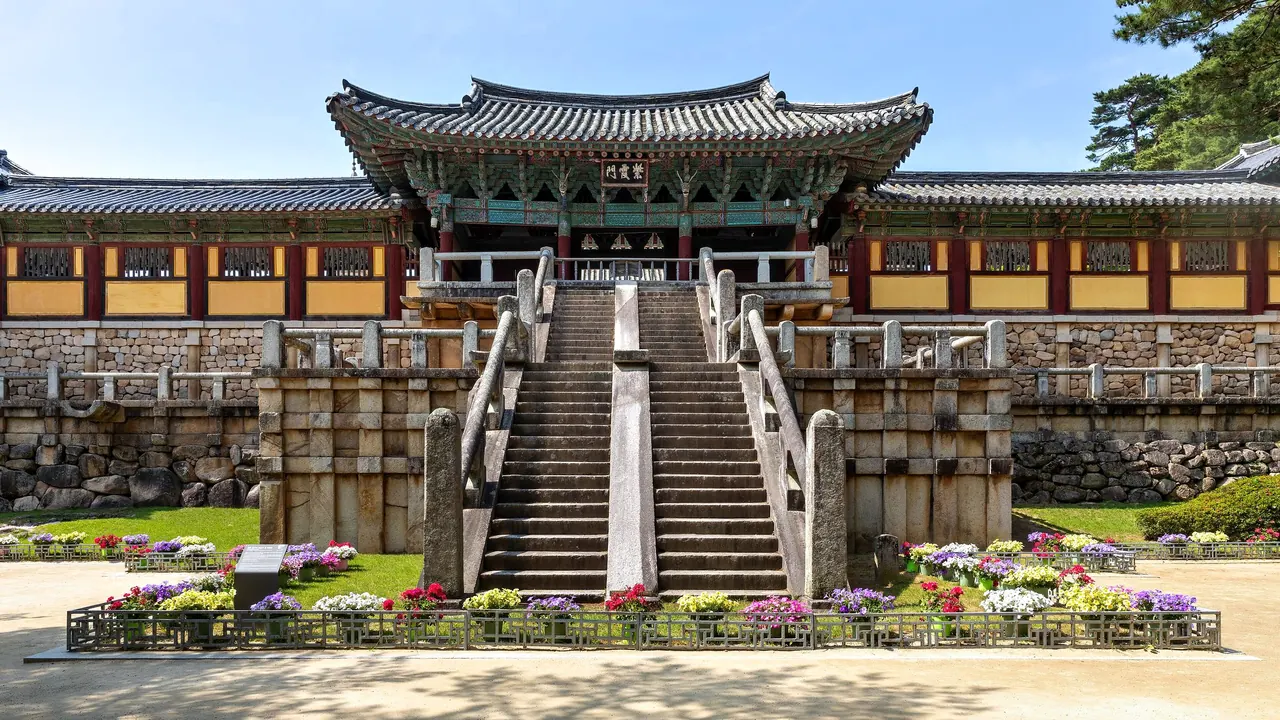
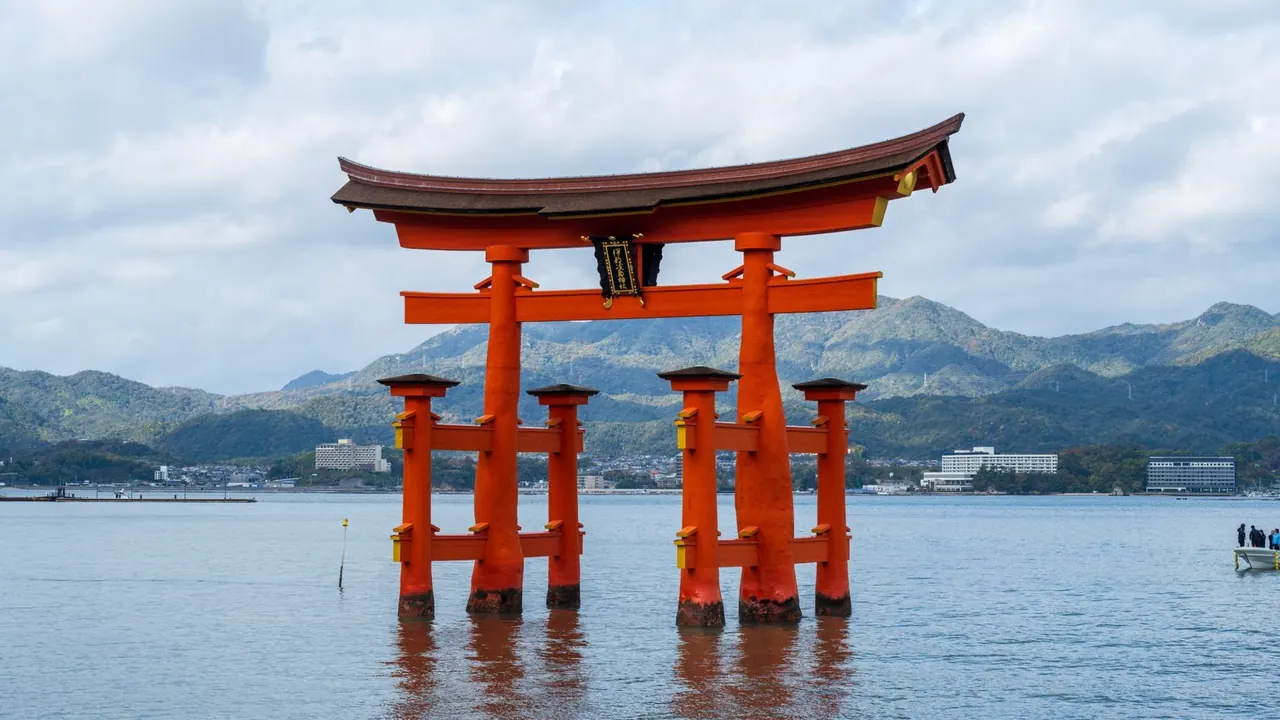
Photos: Gyeongju by Basile Morin, CC BY-SA 4.0, cropped; Hiroshima by Guohua Song, Pexels License.
Gyeongju or Hiroshima?
Our verdict in twelve categories, each scored against the same fixed benchmark cities, and the climate month by month, so you can choose for your trip.
Choose Gyeongju for
- culture and sights
- wellness
- prices
Gyeongju suits travellers who come for history and want it in depth. The Silla capital's burial mounds, palace pond and gold crowns, along with the mountain temples of Bulguksa and Seokguram, fill several unhurried days. Hot-spring baths and temple stays make it a good fit for a calm trip. Expect simple Korean food, very quiet evenings and some taxi rides to reach the outlying sites.
Choose Hiroshima for
- nightlife
- food and drink
- shopping
For a livelier and easier stay, pick Hiroshima. The Peace Memorial Park is one of the most moving visits anywhere. Around it, the city eats well, stays up late in Nagarekawa and is easy to cross by tram. It also works well as a base, with Miyajima, Himeji and the old Inland Sea towns all within a day's reach.
Scoreboard
Twelve categories on one fixed scale from 0 to 100. The shaded stretch is the gap between the two.
Your match
Pick a travel style or drag the sliders, and both match scores follow your weighting.
Wins on culture and sights and wellness with your weighting.
Wins on nightlife and food and drink with your weighting.
What matters to you?
Category by category
What the scores mean for a trip.
Beaches & swimming
Neither city is a beach destination, and in both swimming is a July and August outing out of town. Gyeongju's coast is a bus ride east on the open East Sea, with small sandy and pebbly beaches at Bonggil, Jeonchon and Gampo. At Bonggil, the rocks of King Munmu's underwater tomb give you a reason to go beyond the swim.
Hiroshima's swimming is on the islands, a ferry ride out to small sandy beaches on Miyajima, Ninoshima or Etajima. The sheltered Inland Sea there is calmer and slightly warmer, which suits children, though jellyfish arrive late in the season.
Food & drink
Hiroshima is the better place to eat. It has okonomiyaki layered on the griddle in buildings full of nothing but small stalls, oysters from the bay, conger eel on rice and the izakaya of Nagarekawa. That is several evenings of eating for a food-minded visitor, and the sake breweries of Saijo are a short train ride away.
Gyeongju feeds you well but with less range. The highlights are the ssambap spreads near the royal tombs, boxes of Hwangnam bread and Gyochon's beopju rice wine, plus soups and rice cakes at the Jungang and Seongdong markets. Beyond Korean cooking there is little to choose from.
Culture & sights
Gyeongju is the richer place for sightseeing by a wide margin. As the Silla capital for nearly a thousand years, it has royal burial mounds in the middle of town, the Cheomseongdae observatory, Donggung Palace on Wolji Pond and gold crowns in the National Museum. Up on Tohamsan are the UNESCO-listed Bulguksa temple and Seokguram grotto.
Hiroshima's culture rests largely on one powerful visit: the A-Bomb Dome and the Peace Memorial Museum, which few places anywhere can match. The bombing left little older architecture around it, so the castle grounds, Shukkeien garden and a few art museums make up the rest.
Nightlife
Hiroshima offers far more after dark. Nagarekawa is a grid of buildings full of tiny bars, izakaya and karaoke boxes that stays busy past midnight. An evening at a small counter bar over sake or whisky is easy to find.
In Gyeongju the main evening outing is the floodlit Donggung Palace and Wolji Pond. After that comes a drink in a Hwangnidan-gil wine bar or a soju and grilled-meat restaurant downtown, and then the town goes to bed. For a real night out you take the train to Busan or Daegu.
Nature & outdoors
Both have pleasant green surroundings rather than wild ones, but the outdoors differs in kind. In Gyeongju, nature and heritage go together. Trails across Namsan pass Buddhas carved into the rock, Tohamsan's ridges look out to sunrise over the sea, and the flat valley around the tombs and Bomun Lake is made for cycling.
Hiroshima's best scenery is the sea, with the forested islands of the Inland Sea and the ropeway and trails up Mount Misen, where deer roam the lower slopes. Further out are the riverside walk through Sandankyo Gorge and the Shimanami Kaido, a cycling route that hops across the islands by bridge to Shikoku.
Day trips
Hiroshima has the stronger set of trips close at hand. Miyajima and its floating torii are under an hour away. The shinkansen brings Himeji Castle, Okayama's Korakuen garden and Kurashiki within about an hour. Onomichi, Tomonoura, Iwakuni's arched bridge and the rabbits of Okunoshima can fill more days.
Gyeongju is well placed too. Busan and Daegu are a short hop by high-speed train, and the lived-in clan village of Yangdong and the Tongdosa monastery are each about forty minutes by road. Hahoe and Haeinsa are worth seeing but make long days.
Good for families
Both are safe, clean and easy with children, so the difference lies in what keeps them busy. Gyeongju has the Bomun Lake resort with an amusement park, a water park and swan pedal boats, and families can ride bikes around the flat tomb parks. Several days of heritage can tire younger children, though.
Hiroshima's best family moments involve animals: feeding the deer on Miyajima and meeting Okunoshima's rabbits. It also has a free science museum, Asa Zoo and baseball games with a singing crowd. There is no theme park nearby, and parents of young children should judge how much of the Peace Memorial Museum to see.
Getting around
Hiroshima is easier to get around. Its centre is flat and walkable, and Japan's largest tram network links the station with the Peace Park and the Miyajima ferry. The main station is in town on the shinkansen line, so a car is never needed.
Gyeongju's historic core is a pleasure on foot or by bike. However, the high-speed station lies outside town, and Seokguram, Yangdong and the coast are served by infrequent buses. Many visitors end up taking taxis or hiring a car for a day.
Shopping & style
Hiroshima has more to browse. There is the long covered Hondori arcade with department stores and chains, the malls and food halls by the station, and crafts such as Kumano brushes and Miyajima rice paddles. Gyeongju's shopping comes down to small Silla-themed design shops in the hanok lanes of Hwangnidan-gil, the markets and a box of Hwangnam bread. For anything more you go to Busan or Daegu.
Affordability
The two cost about the same for a visitor, and both keep their main sights cheap: Gyeongju's tomb parks are free or nearly so, and Hiroshima's Peace Park is free with a small museum charge. Where the money goes is different. In Gyeongju it is weekends, blossom season, the Bomun resort hotels and taxis between scattered sites, while in Hiroshima it is shinkansen fares for day trips, evenings of oysters and sake, and a night on Miyajima.
Live music & performing arts
Hiroshima gives a visitor more to watch. Kagura, the masked Shinto dance-drama full of demons and drumming, is staged regularly in the centre. The city also has a symphony orchestra, large concert halls and small live houses for local bands.
In Gyeongju, performances are mostly seasonal and aimed at tourists, such as open-air traditional music and dance at Bomun Lake in the warmer months and shows on Silla themes. The highlight is the autumn Silla Cultural Festival, when court music, drumming and folk dance fill the streets by the tombs.
Wellness & relaxation
Gyeongju is the better choice for slowing down. Hot-spring water feeds the bathhouses and hotel spas around Bomun Lake. Temple stays at Bulguksa and at Golgulsa, known for sunmudo and meditation, bring dawn chanting, vegetarian meals and real quiet.
Hiroshima has no hot springs of its own, so bathing means a sento, a large suburban super-sento or an hour's trip to an onsen village. Its restful side is a ryokan night on Miyajima and slow walks by the rivers and Shukkeien's ponds.
When should you go?
Pick your month. The climate figures are measured averages, not a forecast.
Gyeongju in July
Hiroshima in July
Daytime high, °C
Rainfall in the month, mm
Where the figures come from
Gyeongju's temperatures are measured 25 km from the centre, at Pohang.
Gyeongju has no rain gauge within 25 km of the centre, so its rainfall comes from a gridded climate dataset read at the city rather than from a gauge further away.
Temperature and rainfall are climate normals, averaged over the years shown. Gyeongju: 1991-2020 normals, Pohang (25.3 km from centre). Hiroshima: 1991-2020 normals, Hiroshima (1.7 km from centre).
Spring and autumn are the best seasons in both cities, with mild days for walking between the sites. The two part ways in summer. Gyeongju's rains come late, peaking in July and August at about 220mm a month with highs near 30°C. Hiroshima gets wet earlier, with heavy rain from April through July and a peak near 300mm, and it is hotter in August at 33°C. Both seas are only warm enough for swimming in July and August, and the Inland Sea is a little warmer.
In winter the trade-off changes. Gyeongju is colder, around 7°C by day in January, but noticeably sunnier. Hiroshima stays a few degrees milder under greyer skies.
Which traveller are you?
On a culture and arts trip, Gyeongju is the stronger choice. Nearly a thousand years as the Silla capital left tombs, palace ponds, Bulguksa and Seokguram that easily fill two or three days. Hiroshima's depth rests mostly on the Peace Memorial Park.
For a food and nightlife trip, Hiroshima wins clearly. Griddle okonomiyaki, winter oysters from the bay and Nagarekawa's maze of izakaya and counter bars make for long evenings. Gyeongju's food is simple, and the town is mostly asleep by late evening.
On a relaxing and wellness trip, Gyeongju is the better fit. Hot-spring baths at Bomun Lake, temple stays with dawn chanting and quiet mornings among the tombs set a slow pace. In Hiroshima, bathing means city sento or a trip out to an onsen village.
Before you go
| Measure | Gyeongju | Hiroshima |
|---|---|---|
| Official language | Korean, Korean Sign Language | Japanese |
| Currency | Won (KRW) | Yen (JPY) |
| Sockets | CF220 V, 60 Hz | AB100 V, 50 and 60 Hz depending on the region |
| Driving side | Right | Left |
| Time zone | UTC+9 | UTC+9 |
| Emergency number | Police 112, ambulance 119, fire 119 | Police 110, fire 119 |
| Elevation | 46 m | 3 m |
| Main airport | Gimhae International Airport (PUS)79 km from centre49 non-stop destinations | Hiroshima Airport (HIJ)43 km from centre10 non-stop destinations |
| Public holidays this year | 18 days | 16 days |
By the numbers
| Measure | Gyeongju | Hiroshima |
|---|---|---|
| City population | 245,365 | 1,198,021 |
| People per km² | 185 | 1,324 |
| Museums within 10 km | 3 | 18 |
| UNESCO World Heritage sites within 50 km | 6 | 2 |
| Swim season, months above 21 °C | 4 months | 4 months |
Where else could you go?
Every comparison below shares a destination with this one, so you can follow Gyeongju or Hiroshima somewhere new.
- Busanvs Gyeongju
- Fukuokavs Hiroshima
- Fukuokavs Gyeongju
- Seoulvs Gyeongju
- Osakavs Hiroshima
- Naravs Hiroshima