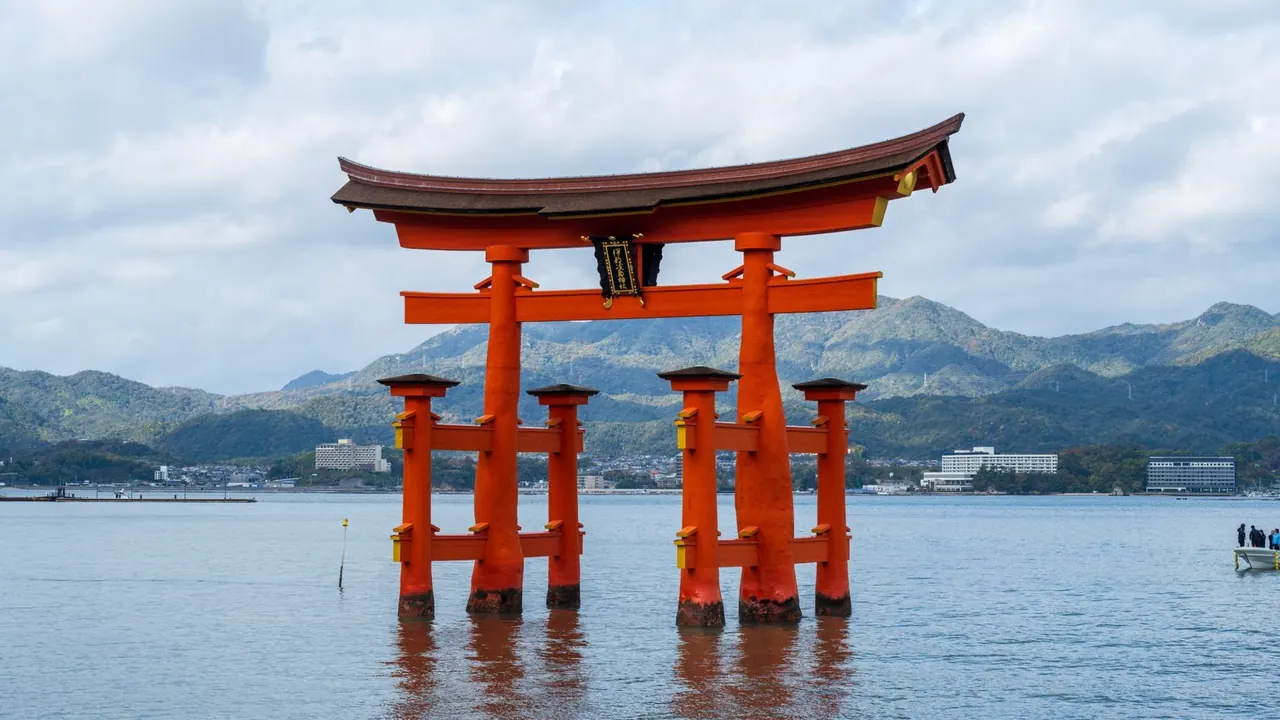
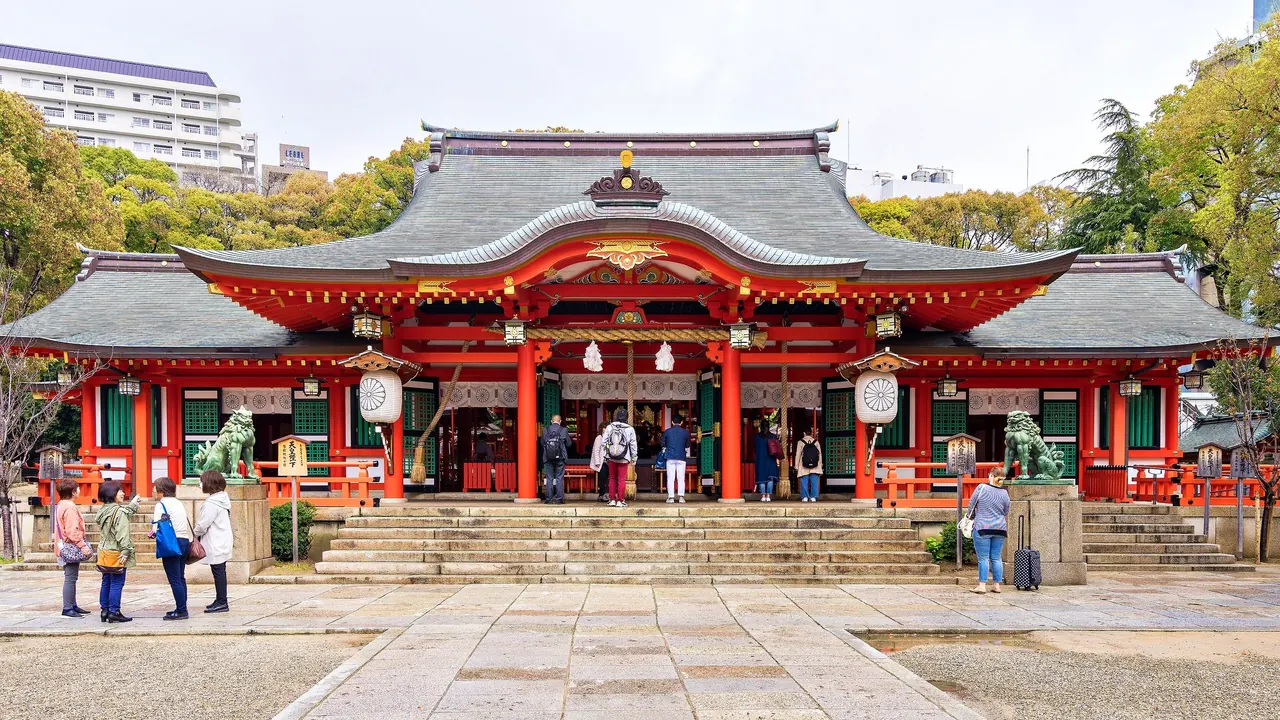
Photos: Hiroshima by Guohua Song, Pexels License; Kobe by Wei-Te Wong, CC BY-SA 2.0, cropped.
Hiroshima or Kobe?
Our verdict in twelve categories, each scored against the same fixed benchmark cities, and the climate month by month, so you can choose for your trip.
Choose Hiroshima for
- culture and sights
- nightlife
Hiroshima is the stronger choice if the trip has a purpose beyond comfort. The Peace Memorial Park and its museum are a visit people remember for years, Miyajima's floating torii is close by, and the islands of the Inland Sea give the surroundings a calm, watery character. Evenings in Nagarekawa are livelier too. It fits naturally into a route heading west through Japan, and two or three days do it justice.
Choose Kobe for
- wellness
- families
- live music and the arts
Kobe suits travellers who want a comfortable base with plenty on the doorstep. The Rokko mountains start behind the station, Arima's hot springs are inside the city limits, and Himeji, Osaka, Kyoto and Nara are all easy day trips by rail. Families have more to do, the trains are simpler, and the jazz bars and bakeries give a quieter, more polished kind of stay.
Scoreboard
Twelve categories on one fixed scale from 0 to 100. The shaded stretch is the gap between the two.
Your match
Pick a travel style or drag the sliders, and both match scores follow your weighting.
Wins on culture and sights and nightlife with your weighting.
Wins on wellness and families with your weighting.
What matters to you?
Category by category
What the scores mean for a trip.
Beaches & swimming
Neither city is a beach destination, but Kobe makes a swim easier. Suma's long sand is about fifteen minutes from the centre by train, with lifeguards in midsummer and an aquarium next to it.
From Hiroshima a swim means a ferry to Miyajima, Ninoshima or Etajima, or a drive towards Kure. The water is sheltered and the island setting is prettier, but it takes most of a day and the beaches are small.
Food & drink
Kobe has the wider table, shaped by its past as a treaty port: Kobe beef at teppanyaki counters, old bakeries and coffee houses in Motomachi and Kitano, Chinatown's steamed buns and the Nada breweries along the shore.
Hiroshima eats more narrowly but with real character. Layered okonomiyaki comes straight off the griddle in whole buildings of stalls, and the bay's oysters are at their best in winter. Both have serious sake, Saijo for Hiroshima and Nada for Kobe, though Nada is the closer of the two.
Culture & sights
Nothing in Kobe compares with the Peace Memorial Park. The A-Bomb Dome and the museum across the river face the bombing of 6 August 1945 directly. This is not a museum to rush, and most visitors have little appetite for much else that day. Later, Shukkeien's Edo-period garden and the castle's original stone walls and moats are quieter ways to finish.
Kobe's sights tell a gentler story of foreign trade: the Western merchant houses of Kitano, the ancient Ikuta Shrine among the shops, and Tadao Ando's art museum on the bay. Its earthquake museum is moving, but overall the city is a pleasant visit rather than an essential one.
Nightlife
Hiroshima has the busier nights. Nagarekawa is the biggest entertainment district in its region, a grid of tiny bars, izakaya and karaoke that stays full past midnight, especially after a home baseball game.
Kobe's Sannomiya lanes are quieter and suit whisky and cocktail bars after dinner. For dancing and late, loud nights, people take the train twenty minutes to Osaka.
Nature & outdoors
Kobe has real mountains on its doorstep. Trails climb from Shin-Kobe station past the Nunobiki waterfalls, ropeways rise to Mount Rokko and Mount Maya, and keen walkers can follow the whole ridge or scramble over the Suma Alps.
Hiroshima's landscape is the sea rather than the hills. Its best outdoor days are on the forested islands of the Inland Sea: the trails up Mount Misen on Miyajima, the cycling route across the Shimanami Kaido bridges, and the riverside walk through Sandankyo Gorge further inland.
Day trips
Both are excellent bases, but Kobe sits on the busier rail corridor. Himeji Castle is under an hour west, Osaka twenty minutes east, and Kyoto and Nara are easy days out, so the great temple cities are all within reach.
Hiroshima's list is quieter and more coastal: Miyajima, the Kintaikyo bridge at Iwakuni, the hillside temples of Onomichi and the rabbit island of Okunoshima. Himeji and Kurashiki are reachable from either city, and Kobe can even reach Miyajima in a long day.
Good for families
Kobe is better set up for children. It has Oji Zoo near the centre, a large aquarium at Suma, an indoor animal park on Port Island, and the Ferris wheel and open space of Harborland, with Universal Studios about an hour away.
Hiroshima is just as safe and easy, and children love the Miyajima deer, the Okunoshima rabbits and a noisy evening at the baseball. But it has no aquarium or theme park nearby, and parents of young children need to think carefully about how much of the Peace Memorial Museum to show them.
Getting around
Kobe is the simpler city to move through. Its long, narrow shape means parallel rail lines run east to west, and JR, private lines, the subway and the driverless Port Liner all take one IC card.
Hiroshima's flat centre is easy on foot, and Japan's largest tram network connects the station, the Peace Park and the Miyajima ferry, though the trams slow down at busy times. Neither city needs a car.
Shopping & style
Around Hiroshima's Hondori arcade the shopping is everyday: department stores, the national chains, and boxes of momiji manju at the station. The best things to take home are crafts, such as Kumano makeup brushes and Miyajima rice paddles, along with Saijo sake and local lemon products.
Kobe dresses up a little more. The old Daimaru store anchors the former foreign settlement, with luxury boutiques in the stone buildings around it and small fashion shops along Tor Road. Its own specialities are pearls and leather shoes from Nagata. Keen shoppers there often still add a day in Osaka.
Affordability
The two cost about the same, with fairly priced business hotels and cheap everyday food in both. The difference is where the bill climbs: in Kobe it is a Kobe beef teppanyaki dinner and a night at an Arima ryokan, in Hiroshima it is oysters, sake and a hotel on Miyajima.
Live music & performing arts
Kobe has more for an evening out. It calls itself the birthplace of Japanese jazz, has small clubs with resident trios around Sannomiya and Kitano, and has a strong concert hall in nearby Nishinomiya. The Takarazuka Revue plays in its home town about forty minutes away.
Hiroshima's draw is kagura, the masked, drum-driven Shinto dance-drama, which has regular evening performances staged for visitors. Beyond that its programme is regional.
Wellness & relaxation
Kobe wins clearly, because Arima Onsen lies within the city, about half an hour away over Mount Rokko. Its rust-coloured iron water and clear carbonated springs are famous across Japan, and an afternoon soak or a night with a kaiseki dinner is easy to arrange.
Hiroshima has no hot springs of its own. Rest there means a sento or a hotel's rooftop bath, an hour's trip to a spa village, or a quiet ryokan night on Miyajima once the day visitors have left.
When should you go?
Pick your month. The climate figures are measured averages, not a forecast.
Hiroshima in July
Kobe in July
Daytime high, °C
Rainfall in the month, mm
Where the figures come from
Kobe's sunshine is measured 29 km from the centre, at Osaka.
Temperature and rainfall are climate normals, averaged over the years shown. Hiroshima: 1991-2020 normals, Hiroshima (1.7 km from centre). Kobe: 1971-2000 (sunshine 1991-2020, rainfall 1991-2020) normals, Kobe (1.3 km from centre).
The two cities share the same year, with Hiroshima a shade warmer and noticeably wetter. Spring from April to May and autumn from October to November are the best times for walking the streets, climbing Mount Misen or the Rokko trails, and taking day trips. The rainy season builds through June and peaks in July, when Hiroshima gets about 299mm against Kobe's lighter but still heavy totals. Winters are cool and fairly dry in both, and fine for sightseeing in a coat.
Swimming is only for July and August, when the sea reaches about 26°C off Hiroshima and 27°C off Kobe. Those are also the hottest and stickiest months, with August highs of around 33°C in Hiroshima, so long walks and hikes are hard work then. Kobe gets a little more August sunshine, which suits a beach afternoon at Suma.
Which traveller are you?
On a culture and arts trip, Hiroshima has the deeper sights. The Peace Memorial Museum and the A-Bomb Dome carry real historical weight, and Shukkeien and the castle grounds add calm. Kobe's merchant houses and earthquake museum make a lighter, pleasant two days.
On a family trip with children, Kobe gives more to do. There is a marine aquarium beside the beach at Suma, a zoo near the centre, cable cars to farm play areas, and Universal Studios within reach. Hiroshima has deer and rabbits but little else of that kind.
For a relaxing and wellness trip, Kobe has Arima Onsen, one of Japan's oldest hot spring towns, about half an hour from the centre. Hiroshima has no springs of its own, so a real onsen means an hour's journey or a Miyajima ryokan.
Before you go
| Measure | Hiroshima | Kobe |
|---|---|---|
| Official language | Japanese | Japanese |
| Currency | Yen (JPY) | Yen (JPY) |
| Sockets | AB100 V, 50 and 60 Hz depending on the region | AB100 V, 50 and 60 Hz depending on the region |
| Driving side | Left | Left |
| Time zone | UTC+9 | UTC+9 |
| Emergency number | Police 110, fire 119 | Police 110, fire 119 |
| Elevation | 3 m | 17 m |
| Main airport | Hiroshima Airport (HIJ)43 km from centre10 non-stop destinations | Kobe Airport (UKB)7 km from centre15 non-stop destinations |
| Public holidays this year | 16 days | 16 days |
By the numbers
| Measure | Hiroshima | Kobe |
|---|---|---|
| City population | 1,198,021 | 1,521,707 |
| People per km² | 1,324 | 2,732 |
| Museums within 10 km | 18 | 46 |
| UNESCO World Heritage sites within 50 km | 2 | 3 |
| Swim season, months above 21 °C | 4 months | 5 months |
Where else could you go?
Every comparison below shares a destination with this one, so you can follow Hiroshima or Kobe somewhere new.