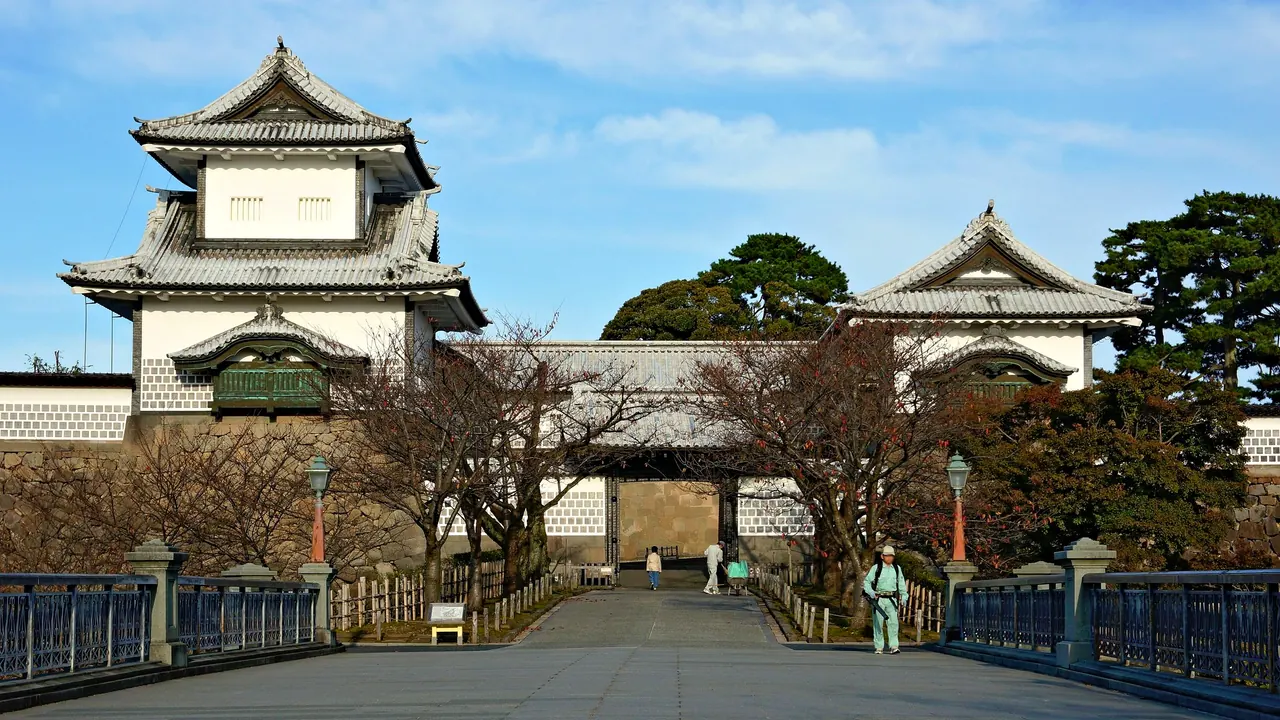
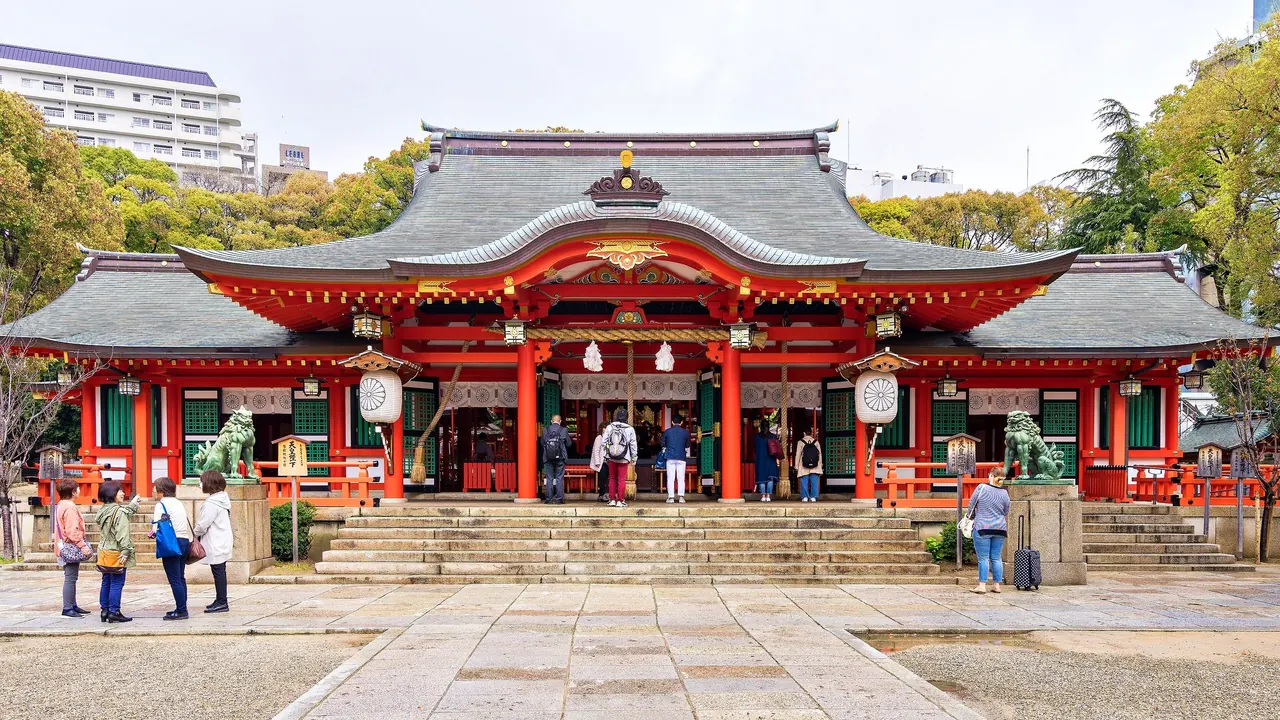
Photos: Kanazawa by 663highland, CC BY 2.5, cropped; Kobe by Wei-Te Wong, CC BY-SA 2.0, cropped.
Kanazawa or Kobe?
Our verdict in twelve categories, each scored against the same fixed benchmark cities, and the climate month by month, so you can choose for your trip.
Choose Kanazawa for
- culture and sights
Kanazawa suits travellers who want old Japan largely intact: Kenroku-en, the latticed teahouses of Higashi Chaya and the samurai lanes of Nagamachi, all within an easy walk, along with a craft tradition of gold leaf and Kutani porcelain. It rewards a slower, focused stay of a few days, ideally with a trip out to Shirakawa-go, for people who care more about townscape and tradition than about convenience.
Choose Kobe for
- families
- getting around
- nature and the outdoors
Pick Kobe if you want a comfortable base with more going on around it. Trains put Himeji, Osaka, Kyoto and Nara within easy reach, the Rokko mountains start at the edge of town, Arima Onsen lies within the city, and children are much better provided for. Its own sights are slighter, so it works best for travellers who treat the city as a starting point rather than the main event.
Scoreboard
Twelve categories on one fixed scale from 0 to 100. The shaded stretch is the gap between the two.
Your match
Pick a travel style or drag the sliders, and both match scores follow your weighting.
Wins on culture and sights with your weighting.
Wins on families and getting around with your weighting.
What matters to you?
Category by category
What the scores mean for a trip.
Beaches & swimming
Neither city is a beach destination, though both have sand and warm water in July and August. Kobe has a slight edge because Suma is a short train ride from the centre, with lifeguards and a summer crowd, and Awaji Island across the strait has clearer water.
Kanazawa's beaches at Uchinada and Chirihama are long and plain, and at Chirihama you can drive on the hard sand. They take more effort to reach, though, and outside high summer they turn grey and windswept.
Food & drink
These are two very different food cities of similar strength. Kanazawa's food comes from the sea and the tea ceremony: seafood bowls at Omicho Market, snow crab in winter, Kaga dishes such as jibuni, and sweets with matcha in the chaya teahouses.
Kobe's food reflects its history as a port: Kobe beef on teppanyaki grills, a long tradition of bakeries and cake shops, and steamed buns in Nankinmachi. Both take sake seriously. Kanazawa draws on the brewers of the Kaga plain, while Kobe has the Nada breweries, with museums and tasting rooms.
Culture & sights
Kanazawa is the stronger city here by a wide margin. Because wartime bombing missed it, it keeps Kenroku-en, the white castle walls, the wooden teahouses of Higashi Chaya and the canal-side samurai lanes of Nagamachi. It also has the 21st Century Museum and the D.T. Suzuki Museum.
Kobe's sights tell the story of a treaty port and an earthquake: the merchants' houses of Kitano, Ikuta Shrine, the broken quay at Meriken Park and the art museum in its Tadao Ando building. They fill a pleasant couple of days, but they are not the reason to choose Kobe.
Nightlife
In both cities an evening out means eating and drinking rather than dancing, but Kobe offers a little more. Sannomiya's lanes towards Kitanozaka are full of whisky and cocktail bars and have a few clubs, the lit harbour at Harborland is good for a last drink, and Osaka's late nights are twenty minutes away by train.
Kanazawa's Katamachi is a dense grid of izakaya and snack bars, mostly full of locals, and there are a few quiet sake bars in old wooden houses by the river. There is very little to go on to afterwards.
Nature & outdoors
Kobe has its mountains on the doorstep. Walks start near Shin-Kobe station and climb past the Nunobiki waterfalls, ropeways go up Maya and Rokko for night views over the bay, and the Suma Alps make a short, rugged hike, all without a car.
Kanazawa's own green spaces are mostly the banks of the Sai and Asano rivers and the low hills to the east. Hakusan's alpine trails and ski slopes and the terraced rice fields of the Noto Peninsula are impressive, but they are about two hours out and hard to reach by public transport.
Day trips
Kobe has the advantage because of its rail links. Himeji Castle, Osaka, Kyoto and Nara are all easy day trips, and the shinkansen adds Okayama, Kurashiki and even Hiroshima with Miyajima.
Kanazawa has fewer day trips, but they are very good. The best are the thatched farmhouses of Shirakawa-go and Gokayama, especially under snow, with Takayama, Eihei-ji and the Kaga hot-spring towns further afield. Expect buses and long days rather than quick train hops.
Good for families
Both are safe, clean Japanese cities where travelling with children is easy, but Kobe gives them much more to do. Oji Zoo, the marine aquarium at Suma, the animal park on Port Island and Harborland's Ferris wheel are all close by, and Universal Studios Japan is about an hour away.
In Kanazawa the highlights for children are the pool installation at the 21st Century Museum and the trap doors of the ninja temple. The zoo, the beaches and the Fukui dinosaur museum all need a drive, and the gardens and teahouses can test young children's patience.
Getting around
Kobe is the simpler city to get around. Its rail lines run side by side along the strip between the mountains and the sea, the subway and Port Liner take the same IC card, and the centre from Chinatown to Kitano is walkable, though the last stretch is uphill.
Kanazawa's sights lie in a flat, walkable band near the station, but the city has no metro or tram. The loop buses do the work and can be slow at busy times. Bike-share helps outside winter, when snow makes walking harder.
Shopping & style
The two cities are equally good for shopping, but in different ways. Kanazawa is for crafts: gold leaf, Kutani porcelain, Kaga yuzen silk and lacquerware, much of it from serious makers.
Kobe is about style, with long covered arcades, the old Daimaru store and the boutiques in the stone buildings of the former foreign settlement, along with pearls, leather shoes from Nagata and Western-style cakes. For more depth, Kobe has Osaka next door, while Kanazawa offers little beyond its department stores and Tatemachi.
Affordability
Costs are close. Both cities have clean, fairly priced business hotels near the station and cheap everyday food. In both, the bill grows with the local speciality: snow crab and kaiseki in Kanazawa, Kobe beef teppanyaki in Kobe. Kobe's short local train rides cost little, while Kanazawa's best outings depend on longer bus and Shinkansen journeys.
Live music & performing arts
Kobe has more on. Jazz is its tradition, with small clubs and resident trios around Sannomiya and Kitano and the Kobe Jazz Street festival every autumn, while the Hyogo Performing Arts Center and the Takarazuka Revue are both close by.
Kanazawa's offering is narrower but more traditional: Noh at the prefectural theatre, geisha dance and shamisen in the chaya teahouses, and the concert season of the Orchestra Ensemble Kanazawa. Beyond these there is little, so plan your evenings around the programme.
Wellness & relaxation
Both cities are good places to soak in hot springs, but Kobe has Arima Onsen within its own boundaries. It is one of Japan's oldest hot-spring towns, famous for its rust-red and carbonated waters, and lies about half an hour from the centre.
Kanazawa's nearest hot spring, Yuwaku, is a small village of ryokan beside a stream, and the larger Kaga hot-spring towns need an overnight stay. What Kanazawa adds is the calm of the city itself: early mornings in Kenroku-en, matcha in a quiet teahouse and evening walks by the Asano River.
When should you go?
Pick your month. The climate figures are measured averages, not a forecast.
Kanazawa in July
Kobe in July
Daytime high, °C
Rainfall in the month, mm
Where the figures come from
Kobe's sunshine is measured 29 km from the centre, at Osaka.
Temperature and rainfall are climate normals, averaged over the years shown. Kanazawa: 1991-2020 normals, Kanazawa (3.2 km from centre). Kobe: 1971-2000 (sunshine 1991-2020, rainfall 1991-2020) normals, Kobe (1.3 km from centre).
Kanazawa's year is shaped by the Sea of Japan. Winter is dark and very wet, with around 300mm of rain or snow in December and little sunshine. Snow-covered gardens and Shirakawa-go under snow are beautiful, but walking the streets is hard work. The wet weather eases in spring. May, at about 22°C, is the most comfortable month, and October comes close behind.
Kobe has the same hot, humid summers, reaching 32°C in August. That is also when the sea off Suma and off Kanazawa's beaches warms to about 27°C, so either city works for a swim. The big difference is winter. Kobe is dry and much sunnier, so December to February is cool but good for sightseeing and hill walks, and its wettest stretch comes in June and July instead. In both cities spring and autumn are the best seasons.
Which traveller are you?
On a culture and arts trip, Kanazawa is the stronger choice. Its Edo-period streets survived the war, so Kenroku-en, the geisha districts and the samurai quarter are all close together. The 21st Century Museum and regular Noh performances add modern art and old theatre.
On a family trip with children, Kobe is much easier. Oji Zoo, the Suma aquarium, Harborland's Ferris wheel and the cable cars up Rokko give children something new every day. Kanazawa's gardens and teahouses can feel slow to younger ones.
For an outdoors trip, Kobe is the clear choice. Trails into the Rokko range start a short walk from Shin-Kobe station and need no car. Kanazawa's real mountains, Hakusan and the Noto coast, are hours away and hard to reach without one.
Before you go
| Measure | Kanazawa | Kobe |
|---|---|---|
| Official language | Japanese | Japanese |
| Currency | Yen (JPY) | Yen (JPY) |
| Sockets | AB100 V, 50 and 60 Hz depending on the region | AB100 V, 50 and 60 Hz depending on the region |
| Driving side | Left | Left |
| Time zone | UTC+9 | UTC+9 |
| Emergency number | Police 110, fire 119 | Police 110, fire 119 |
| Elevation | 28 m | 17 m |
| Main airport | Komatsu Airport / JASDF Komatsu Air Base (KMQ)29 km from centre7 non-stop destinations | Kobe Airport (UKB)7 km from centre15 non-stop destinations |
| Public holidays this year | 16 days | 16 days |
By the numbers
| Measure | Kanazawa | Kobe |
|---|---|---|
| City population | 462,479 | 1,521,707 |
| People per km² | 989 | 2,732 |
| Museums within 10 km | 27 | 46 |
| UNESCO World Heritage sites within 50 km | 1 | 3 |
| Swim season, months above 21 °C | 4 months | 5 months |
Where else could you go?
Every comparison below shares a destination with this one, so you can follow Kanazawa or Kobe somewhere new.