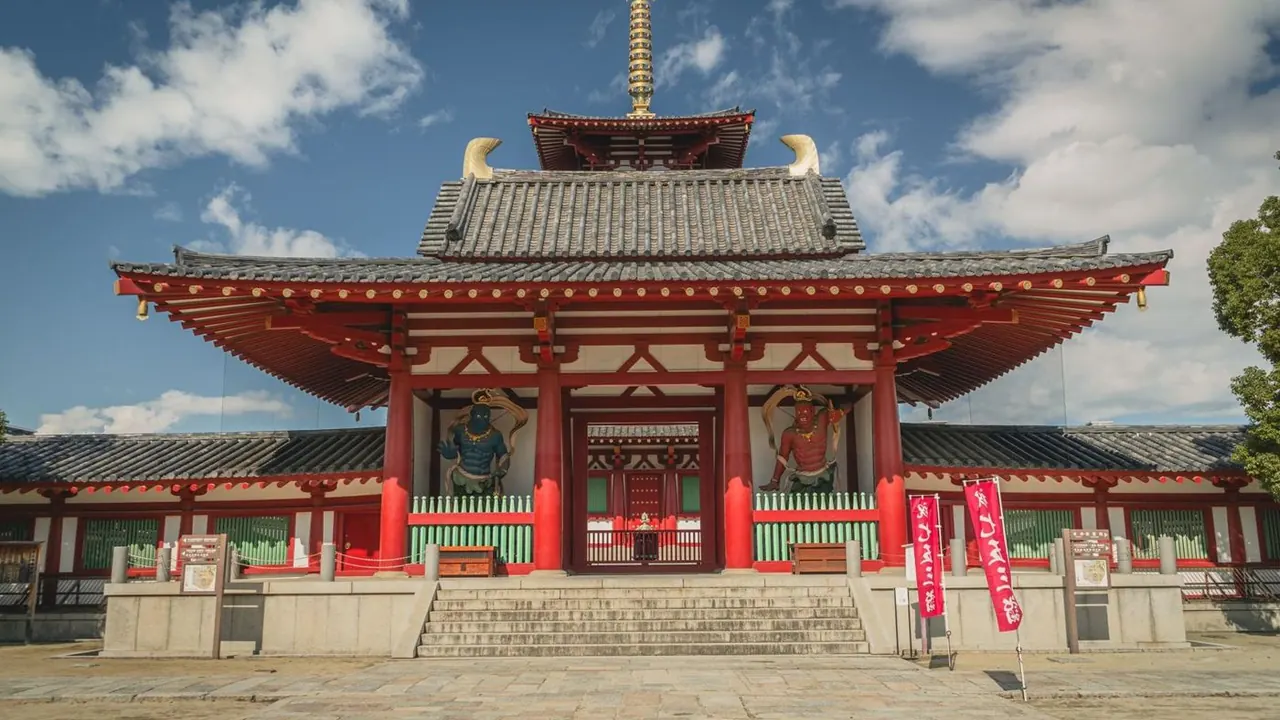
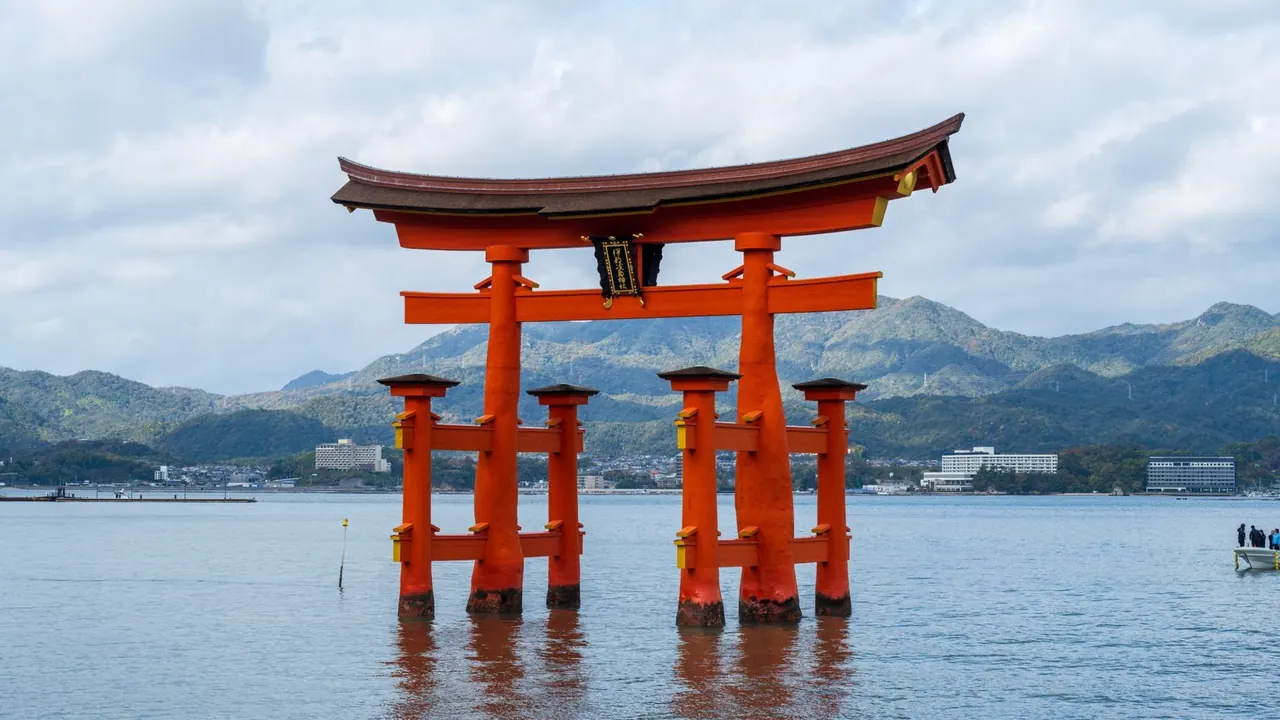
Photos: Osaka by Sarmat Batagov, Pexels License; Hiroshima by Guohua Song, Pexels License.
Osaka or Hiroshima?
Our verdict in twelve categories, each scored against the same fixed benchmark cities, and the climate month by month, so you can choose for your trip.
Choose Osaka for
- nightlife
- families
- shopping
Osaka is the better choice for almost everyone else, and above all for people who travel to eat, go out and keep busy. Its food runs from street griddles to top-level counters, its bars stay lively until the first train, and children have a theme park and a giant aquarium on the bay. It is also the stronger base, with Kyoto, Nara, Kobe and Himeji all a short train ride away.
Choose Hiroshima for
- nature and the outdoors
Hiroshima suits the traveller who wants a quieter, smaller city with one profound reason to be there. The Peace Memorial Park and its museum ask for time and reflection, and the Seto Inland Sea adds a gentler side: ferries to forested islands, the deer and shrine of Miyajima, and the view from Mount Misen. It works best as two or three unhurried days on a longer route through Japan, with okonomiyaki at a counter and an early night.
Scoreboard
Twelve categories on one fixed scale from 0 to 100. The shaded stretch is the gap between the two.
Your match
Pick a travel style or drag the sliders, and both match scores follow your weighting.
Wins on nightlife and families with your weighting.
Wins on nature and the outdoors with your weighting.
What matters to you?
Category by category
What the scores mean for a trip.
Beaches & swimming
Neither city is worth choosing for swimming, and they are about equal on it. What differs is the kind of outing. From Hiroshima a swim usually means a ferry to a small sandy cove on Miyajima, Ninoshima or Etajima, in calm, sheltered water that suits a family afternoon on an island day.
Osaka's beaches are reached by train instead: Suma towards Kobe or Tannowa and Nishikinohama down the coast, roughly an hour away, with coarse sand and a suburban backdrop. They make an easier summer outing from the city, but the setting is plainer than Hiroshima's islands.
Food & drink
Osaka is the far better city for eating. Both cook okonomiyaki on the griddle, but in Osaka that is only the start: takoyaki from Dotonbori stalls, kushikatsu, kitsune udon, grazing at Kuromon Market and in the Umeda food halls, and refined kaiseki and sushi counters in Kitashinchi at the very top level.
Hiroshima's table is narrower but has real character. Its layered okonomiyaki, oysters from the bay in winter and the sake breweries of Saijo are worth seeking out, yet fine dining and foreign cuisines are limited, so a week of meals here would repeat itself sooner.
Culture & sights
The two are evenly matched for sights, and both need about two or three days, but the experience is very different. Hiroshima is built around one visit of great weight: the A-Bomb Dome and the Peace Memorial Museum, which deserve half a day and some emotional space, with the Edo-period Shukkeien garden as a calm counterpoint.
Osaka's heritage comes in scattered pieces: the castle on its huge original walls, the ancient temple of Shitennoji, Sumiyoshi Taisha with its arched bridge, and the ceramics and art museums of Nakanoshima. Much of its interest is the modern city itself, from the neon of Dotonbori to old Shinsekai.
Nightlife
Osaka is one of Japan's best cities for a night out, and Hiroshima cannot match it. Minami alone offers the neon of Dotonbori, the standing bars of Ura-Namba and the clubs and DJ bars of Amerikamura, and strangers chat at the counter until the first morning train.
Hiroshima's Nagarekawa is busy and fun to wander, especially after a baseball game, but its best evenings are slow ones: an izakaya, then a tiny counter bar with a few regulars. Clubs are few and the scene is local.
Nature & outdoors
Here the two are close, but the scenery differs. Hiroshima has the sea: the forested islands of the Inland Sea, the ropeway and trails up Mount Misen, Sandankyo Gorge inland and the Shimanami Kaido bridges for a long day on a bike. Even in town, rivers and green hills are always in view.
Osaka itself is flat and built up, so its nature lies out of town, within an hour by train: the waterfall trail at Minoo, ridge walks in the Rokko mountains and gentle wooded hills to the east. It suits day hikers rather than anyone after island views.
Day trips
Both are good bases, but Osaka is exceptional. Kyoto is under half an hour away, Nara about forty minutes, and Kobe, Himeji, Uji and the monasteries of Koyasan are all easy by frequent trains, enough for a fortnight of days out.
Hiroshima's trips are smaller in scale but full of charm: Miyajima's floating torii, the Kintaikyo bridge at Iwakuni, the temple slopes of Onomichi and the rabbits of Okunoshima. Himeji and Kurashiki are within reach by shinkansen from either city.
Good for families
Osaka is much the stronger choice with children. Universal Studios Japan, the Kaiyukan aquarium with its whale sharks, the Tempozan Ferris wheel, Tennoji Zoo and the Kids Plaza museum give days of easy entertainment, and stations have lifts and baby rooms.
Hiroshima is safe and pleasant with children but quieter: feeding the deer on Miyajima, the Misen ropeway, Okunoshima's rabbits and an evening at a baseball game. It has no theme park or large aquarium, and the Peace Memorial Museum's graphic material needs a parent's judgement.
Getting around
Osaka's subway and rail network is the more powerful, with the Midosuji line running through the main districts and one IC card covering trains on to Kyoto, Nara and Kobe. Its weak point is Umeda, an underground maze where changing lines can mean a long walk.
Hiroshima is simpler but slower. The flat centre puts the Peace Park, the castle and Hondori within walking distance, and the trams reach Miyajimaguchi, though they crawl at busy times, so JR trains are better for the coast.
Shopping & style
Osaka is far stronger for a shopping trip, but Hiroshima has the better crafts to take home. Brushes from the nearby town of Kumano, made for both makeup and calligraphy, and carved wooden rice paddles from Miyajima have no real match in Osaka's arcades, and a bottle of Saijo sake travels well too. Beyond those, the Hondori arcade is good for an afternoon's browsing rather than a whole day.
Osaka has the range. Shinsaibashi-suji runs down towards Namba, the long-established Umeda department stores have luxury floors, Midosuji holds the international flagships, Amerikamura sells vintage clothes and streetwear, and Den Den Town is given over to electronics, anime and games. Its own speciality is practical rather than decorative: a kitchen knife from Sennichimae Doguyasuji.
Affordability
Costs are much the same in both, and both are reasonable by Japanese standards, with cheap filling food and inexpensive transport. Where the money goes differs. In Hiroshima rooms stay fairly priced year round, and the extras are shinkansen tickets for day trips and pricier inns on Miyajima.
In Osaka the pressure falls on rooms in cherry-blossom and autumn-leaf season and at weekends, plus big tickets such as Universal Studios. Staying a little outside Namba or Umeda eases it.
Live music & performing arts
Osaka has far more to see on stage. It is the home of bunraku puppet theatre, with full seasons and English guides at the National Bunraku Theatre, plus seasonal kabuki, orchestras at Festival Hall and Symphony Hall, manzai comedy in Namba and the Takarazuka Revue within reach.
Hiroshima's distinctive offer is kagura, the masked, drum-driven Shinto dance-drama, with evening shows in the centre staged for visitors. Beyond that it is a regional programme of an orchestra, touring productions and small live houses.
Wellness & relaxation
Hiroshima has no hot springs of its own. Still, sento, super-sento and the top-floor baths of many business hotels keep a hot soak within reach, and small spa villages in the hills or by the sea offer a true onsen. Its real strength is pace, with riverside walks, the ponds of Shukkeien and a ryokan night on Miyajima once the day-trippers have gone.
Osaka is the better choice for bathing itself. Old neighbourhood sento are still scattered through its older districts, and big super sento turn an evening into hours of pools, saunas and open-air baths. Arima Onsen in the hills behind Kobe is one of Japan's oldest spa towns, with iron-red springs and traditional inns. The city around all this is fast and loud, though, so calm comes in short spells, such as early morning at Sumiyoshi Taisha.
When should you go?
Pick your month. The climate figures are measured averages, not a forecast.
Osaka in July
Hiroshima in July
Daytime high, °C
Rainfall in the month, mm
Temperature and rainfall are climate normals, averaged over the years shown. Osaka: 1991-2020 normals, Osaka (1.8 km from centre). Hiroshima: 1991-2020 normals, Hiroshima (1.7 km from centre).
The two cities share almost the same calendar. Both are cool but walkable in winter at around 10°C, both turn hot and humid from June, and Osaka runs slightly hotter in August, reaching about 34°C. The main difference is rain: Hiroshima's rainy season is much heavier, with July bringing around 299mm, while Osaka's early summer is wet but noticeably milder. Osaka also gets the sunnier August of the two.
For sightseeing on foot, April and May and then October and November are the comfortable months in both. Sea swimming is a short affair in either, at its best in August and early September when the water is about 26°C off Hiroshima's islands and a degree warmer in Osaka Bay. Hiroshima's soggy July makes that late-summer window matter more there.
Which traveller are you?
On a family trip with children, Osaka is the clear pick. Universal Studios Japan, the Kaiyukan aquarium and Expo Park fill several days, while Hiroshima offers gentler outings such as Miyajima's deer and Okunoshima's rabbits, and its museum needs careful judgement with young children.
For a food and nightlife trip, Osaka wins easily. It eats from takoyaki stalls to Kitashinchi counters and drinks late in Minami and Umeda. Hiroshima's okonomiyaki, winter oysters and Nagarekawa's counter bars make for good, slow evenings, but the range and the late nights are smaller.
On an outdoors trip the two are close, but the landscape differs. Hiroshima has the island-dotted Inland Sea, the trails on Mount Misen and the Shimanami Kaido cycling route. Osaka's outdoors means day hikes in Minoo and the Rokko hills.
Before you go
| Measure | Osaka | Hiroshima |
|---|---|---|
| Official language | Japanese | Japanese |
| Currency | Yen (JPY) | Yen (JPY) |
| Sockets | AB100 V, 50 and 60 Hz depending on the region | AB100 V, 50 and 60 Hz depending on the region |
| Driving side | Left | Left |
| Time zone | UTC+9 | UTC+9 |
| Emergency number | Police 110, fire 119 | Police 110, fire 119 |
| Elevation | 20 m | 3 m |
| Main airport | Kansai International Airport (KIX)38 km from centre62 non-stop destinations | Hiroshima Airport (HIJ)43 km from centre10 non-stop destinations |
| Public holidays this year | 16 days | 16 days |
By the numbers
| Measure | Osaka | Hiroshima |
|---|---|---|
| City population | 2,751,862 | 1,198,021 |
| People per km² | 12,340 | 1,324 |
| Museums within 10 km | 44 | 18 |
| UNESCO World Heritage sites within 50 km | 6 | 2 |
| Swim season, months above 21 °C | 5 months | 4 months |
Where else could you go?
Every comparison below shares a destination with this one, so you can follow Osaka or Hiroshima somewhere new.