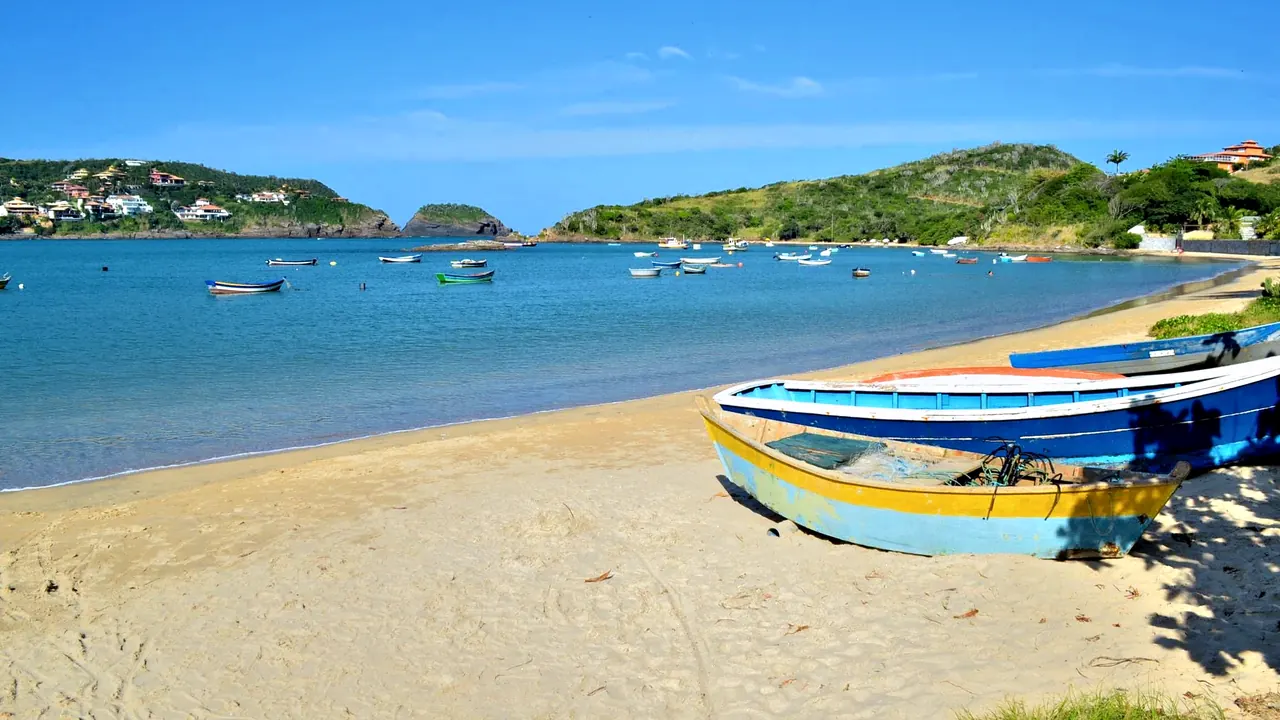
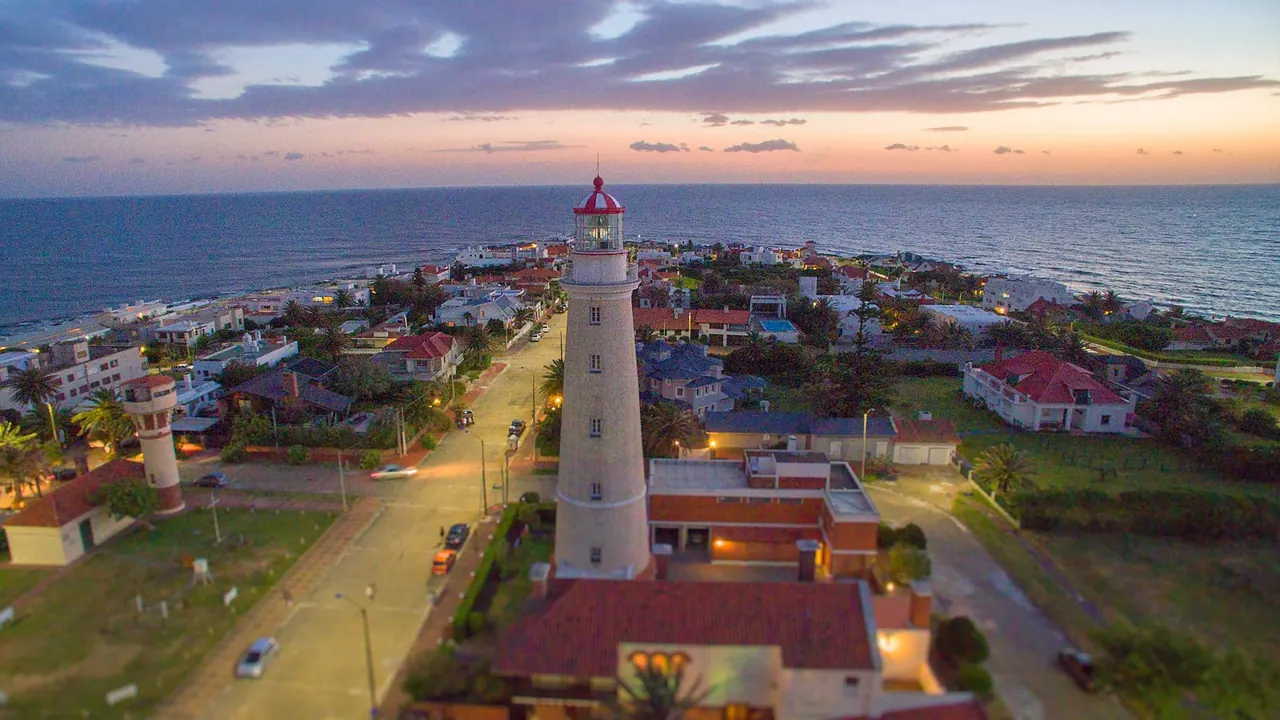
Photos: Buzios by Alberto1939, CC BY-SA 4.0, cropped; Punta del Este by Marcelo Campi, CC BY-SA 2.0, cropped.
Buzios or Punta del Este?
Our verdict in twelve categories, each scored against the same fixed benchmark cities, and the climate month by month, so you can choose for your trip.
Choose Buzios for
- prices
- beaches
- wellness
Buzios suits a vacation built around the water. Each day you choose a cove: clear, sheltered bays for snorkelling and small children, surf beaches on the Atlantic side, and boats to link them. It is the cheaper of the two and warm in every month, so a quiet stay outside the summer peak works well. Expect almost nothing to see on land beyond the coast itself.
Choose Punta del Este for
- day trips
- culture and sights
- nightlife
Punta del Este is for travellers who want more around the beach. In its short, intense season there are late nights in La Barra, Casapueblo at sunset, long lunches at the wineries around Garzón and an easy trip to Montevideo. It is a high-summer resort and an expensive one. Come in January for the scene, or in the shoulder months for calm.
Scoreboard
Twelve categories on one fixed scale from 0 to 100. The shaded stretch is the gap between the two.
Your match
Pick a travel style or drag the sliders, and both match scores follow your weighting.
Too close to call, 1 point apart
Wins on prices and beaches with your weighting.
Wins on day trips and culture and sights with your weighting.
What matters to you?
Category by category
What the scores mean for a trip.
Beaches & swimming
Both towns sit on peninsulas with a calm side and an Atlantic side, but Buzios fits far more variety into its coastline. It has more than twenty beaches, from clear, sheltered coves such as Ferradura and Tartaruga for snorkelling to the long surf sands of Geriba. Water taxis reach the coves you can't drive to, and the sea stays warmer for more of the year.
Punta del Este has the same split in a simpler form: Playa Mansa for calm swimming, Playa Brava for surf, and wide beaches running east to José Ignacio. Even in high summer the water is refreshing rather than warm, and outside the season it is too cold for most swimmers.
Food & drink
Neither is a place to plan a trip around food, and the two eat very differently. Buzios is about seafood by the bay: moqueca, grilled fish and shrimp along Rua das Pedras and the Orla Bardot, with kiosk snacks and caipirinhas on the sand.
Punta del Este cooks over wood embers, with parrilla beef and lamb, chivito sandwiches, and fish from the port where sea lions wait by the stalls. It also has the wine country around Garzón, where Tannat and Albariño make a long winery lunch possible, and Buzios has nothing like that.
Culture & sights
Neither town is built for sightseeing, but Punta del Este has a little more to fill an afternoon. Casapueblo, the white house-studio Carlos Páez Vilaró built on the cliffs at Punta Ballena, is a real sight. The hand sculpture on Playa Brava, the lighthouse and a museum of Latin American art add to it.
Buzios offers about an hour's stroll: the whitewashed streets of the old fishing village, the chapel of Sant'Ana, the boats on Ossos beach and the Bardot statue on the waterfront.
Nightlife
Both scenes depend on the summer calendar, but Punta del Este goes harder while it lasts. From Christmas to late January, the clubs in La Barra and along the coast road run until after sunrise, and beach clubs hold afternoon parties for a young, moneyed crowd.
Buzios is smaller and centred on one street. People eat late on Rua das Pedras, then move on to lounge bars and small clubs, and New Year and Carnival bring the busiest nights. Out of season, both towns go quiet after dinner.
Nature & outdoors
Buzios is best seen from the water. There are turtles and reef fish in the sheltered coves, schooner trips around the islands and steady wind for kitesurfing at Rasa and Manguinhos. Arraial do Cabo, under an hour away, has some of the best diving in Brazil.
The landscape at Punta del Este is gentler and greener, with pine woods, dunes and lagoons for kayaking and birdwatching. Boats run to the sea lion colony on Isla de Lobos, and southern right whales pass in spring. It has more to do on land, such as the Lussich Arboretum and the low hills near Piriápolis, but much less under the water.
Day trips
Punta del Este has far more within reach. Montevideo, with its old town and port market, is two hours away. Piriápolis, José Ignacio, the wine village of Pueblo Garzón and the colonial core of Maldonado are all easy outings, and Colonia and Cabo Polonio are worth an overnight stay.
From Buzios the choice is thin: the seventeenth-century fort at Cabo Frio, boat trips from Arraial do Cabo and a few quiet coastal villages. Rio is three hours by road, too far for a comfortable day out.
Good for families
Both suit a simple beach stay with children, who stay out late with everyone else in either place, and neither has a zoo or aquarium. Punta del Este has the edge. Its residential neighbourhoods are safe and green, the Mansa side is calm, and the summer crowd is largely local families. Sea lion boat trips and the arboretum add variety.
Buzios has lovely shallow bay coves and plenty of pousadas with pools. But it is hilly, getting between beaches means taking taxis, and Rua das Pedras gets crowded at night.
Getting around
The pattern is the same in both: a compact centre you can walk, then a resort that spreads out beyond it. In Buzios that means a hilly peninsula with no pavements on some roads, so taxis, beach buggies and water taxis between the bay beaches do most of the work. The road transfer from Rio's airport takes about three hours.
Punta del Este stretches along the coast instead. It has a seaside path for walking and cycling, buses to Maldonado and La Barra, and coaches to Montevideo. A hire car is the easier way to reach José Ignacio and the wineries, although summer traffic slows the coast road.
Shopping & style
Punta del Este gives you more choice. There are fashion and beachwear chains on Avenida Gorlero, a large mall just inland, and designer boutiques that open for the summer. La Barra and José Ignacio have homeware and design shops, and the Plaza Artigas market sells leather, wool and mate gourds, though much of this closes out of season.
Buzios has a narrower range but a pleasant one. Brazilian swimwear labels, linen, jewellery and galleries line the lanes around Rua das Pedras and stay open late, and there is an evening craft fair.
Affordability
Buzios is much easier on the budget, though it is not cheap by Brazilian standards. It costs roughly what a mid-range vacation in Southern Europe would. Per-kilo lunches, beach kiosks and the months from April to November bring costs down further.
Punta del Este is priced for wealthy summer visitors from across the region, in a country that is already costly, and January is especially steep. Buses, groceries and the parrillas on the peninsula help. December, March and the shoulder months bring far lower room rates, but fewer places are open.
Live music & performing arts
Punta del Este has something to plan around, at least in January. A long-established international jazz festival takes place on a country estate near the town. Chamber concerts around José Ignacio and touring Argentine shows fill out the summer, and for the rest of the year Montevideo is the place to look.
In Buzios, live music means bossa nova and samba in waterfront restaurants. It is a pleasant backdrop to dinner but never the reason for an evening out.
Wellness & relaxation
Buzios is the easier place to slow down, mainly because the warmth lasts. Its hillside pousadas and resorts have pools and massage rooms looking out to sea. From April to November, a day of cove, long lunch and sunset over the bay is quiet and unhurried. In high season, a calm stay means sleeping well away from Rua das Pedras.
In Punta del Este, the calm is found in its pine-shaded streets and in the slow lagoon country beyond José Ignacio. Its day spas and yoga studios mostly open only for the summer, and its quietest time, the shoulder months, is also its cooler time. As in Buzios, there is no bathing tradition to plan a trip around.
When should you go?
Pick your month. The climate figures are measured averages, not a forecast.
Buzios in July
Punta del Este in July
Daytime high, °C
Rainfall in the month, mm
Where the figures come from
Buzios's temperatures are measured 46 km from the centre, at Macae / Barra.
Buzios has no rain gauge within 25 km of the centre, so its rainfall comes from a gridded climate dataset read at the city rather than from a gauge further away.
Punta del Este's temperatures are measured 79 km from the centre, at Rocha.
Punta del Este has no rain gauge within 25 km of the centre, so its rainfall comes from a gridded climate dataset read at the city rather than from a gauge further away.
Temperature and rainfall are climate normals, averaged over the years shown. Buzios: 2007-2020 (rainfall 1991-2020) normals, Macae / Barra (45.7 km from centre). Punta del Este: 1991-2020 normals, Rocha (78.5 km from centre).
Buzios is warm all year, peaking at 33°C in February, so the beach never really closes. The catch is that its summer is also its wet season. Rain builds from November and peaks at 191mm in March. June to September are far drier, down to 35mm in August, and still warm enough for the beach, though the sea is a little cooler then.
Punta del Este has a real winter. Highs fall to about 15°C in July, the sea is far too cold for swimming, and rain is spread fairly evenly through the year. Its beach season runs from December to March, when the days are at their sunniest and the sea reaches about 23°C at best. Spring and autumn are mild enough for walking the streets. Its summer, the only time both cities are good for swimming, is also when Buzios is at its wettest.
Which traveller are you?
On a beach and sun trip, Buzios is the stronger choice. It has more than twenty beaches, from snorkelling coves to surf sands, and the sea is warmer. You can go to the beach in any month, while Punta del Este's swimming season is short.
For a trip on a tight budget, Buzios goes further. A day on a sheltered cove with a snorkel costs very little, and the cheaper months are still warm enough to swim. In Punta del Este, the low season brings cold water and a half-closed resort.
On a food and nightlife trip, Punta del Este pulls ahead, especially in January. Late dinners at a parrilla or a long winery lunch near Garzón lead on to clubs in La Barra that run until sunrise. That is a bigger scene than evenings on Rua das Pedras in Buzios.
Before you go
| Measure | Buzios | Punta del Este |
|---|---|---|
| Official language | Portuguese | - |
| Currency | Brazilian Real (BRL) | Peso Uruguayo (UYU) |
| Sockets | CN60 Hz | CFIL230 V, 50 Hz |
| Driving side | Right | Right |
| Time zone | UTC-3 | UTC-3 |
| Emergency number | Police 190, ambulance 192, fire 193 | 911 |
| Elevation | 5 m | 11 m |
| Main airport | Rio de Janeiro Galeão – Tom Jobim International Airport (GIG)140 km from centre54 non-stop destinations | Capitan Corbeta CA Curbelo International Airport (PDP)18 km from centre6 non-stop destinations |
| Public holidays this year | 14 days | 15 days |
By the numbers
| Measure | Buzios | Punta del Este |
|---|---|---|
| City population | 40,006 | 9,277 |
| People per km² | 577 | 455 |
| Museums within 10 km | 0 | 5 |
| UNESCO World Heritage sites within 50 km | 0 | 0 |
| Swim season, months above 21 °C | 12 months | 3 months |
Where else could you go?
Every comparison below shares a destination with this one, so you can follow Buzios or Punta del Este somewhere new.
- Montevideovs Punta del Este
- Rio de Janeirovs Buzios
- Colonia del Sacramentovs Punta del Este
- Paratyvs Buzios
- Buenos Airesvs Punta del Este
- Sao Paulovs Buzios