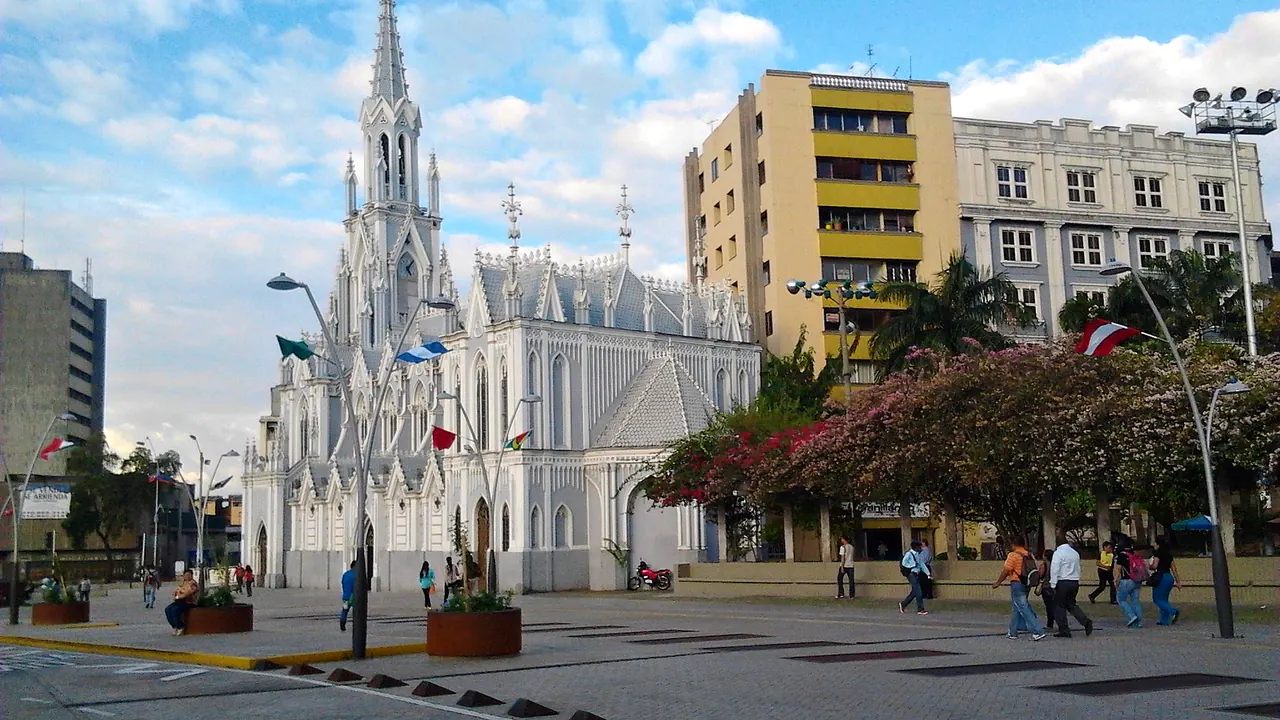
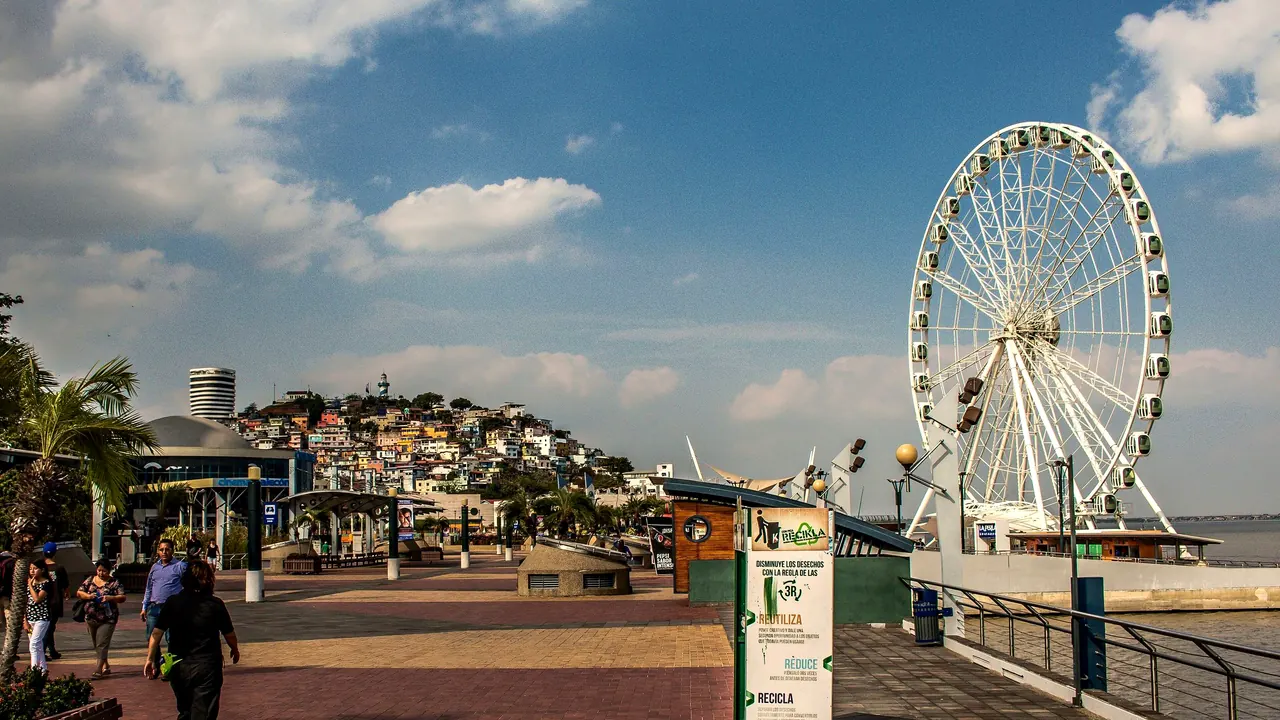
Photos: Cali by Melissa Marin, CC BY-SA 3.0, cropped; Guayaquil by Paulakindsvater, CC BY-SA 4.0, cropped.
Cali or Guayaquil?
Our verdict in twelve categories, each scored against the same fixed benchmark cities, and the climate month by month, so you can choose for your trip.
Choose Cali for
- nightlife
- live music and the arts
- nature and the outdoors
Cali suits travellers who want their evenings to be the point of the trip. Salsa runs through the whole city, from vinyl-playing salsotecas to the late clubs of Juanchito, and cloud forest and some of Colombia's best birding start at the edge of town. It is also the cheaper place to stay, so a week of dance classes, early hikes and long nights doesn't cost much.
Choose Guayaquil for
- beaches
- food and drink
- culture and sights
Guayaquil makes more sense as a stop on a wider route through coastal Ecuador. The beaches of Playas and Salinas are a drive rather than a boat journey away, the crab houses and ceviche are serious eating, and the compact riverfront can be seen in a day or two before you head for the Galápagos, Cuenca or the surf coast.
Scoreboard
Twelve categories on one fixed scale from 0 to 100. The shaded stretch is the gap between the two.
Your match
Pick a travel style or drag the sliders, and both match scores follow your weighting.
Wins on nightlife and live music and the arts with your weighting.
Wins on beaches and food and drink with your weighting.
What matters to you?
Category by category
What the scores mean for a trip.
Beaches & swimming
Neither city is on the sea, but Cali is further from it. The Western Cordillera stands between the city and the Pacific, so Juanchaco and Ladrilleros mean a drive of around three hours and then a boat. Day to day, Caleños swim in the river pools of the Pance instead.
Guayaquil sits on a tidal river where nobody swims, but the coast is close enough for a day out. Playas has a long grey-sand shore about an hour and a half away, and Salinas has a sheltered bay, with the warmest water early in the year.
Food & drink
Both cities eat well on their own regional cooking, but the cuisines are different. Cali's strengths are sweet and starchy: lulada and cholado from street carts, warm pandebono in the morning, and coconut stews from the Afro-Colombian coast eaten at the counters of the Galería Alameda.
Guayaquil's cooking is built on the sea and the mangroves. You start the day with encebollado, eat shrimp ceviche at lunch, and spend an evening cracking whole crabs with a mallet at long tables. Modern cooking with local cacao in Urdesa and Samborondón gives it a little more range at the top end.
Culture & sights
Neither is a heritage city, and a day or two covers the sights in either. What you see is different. Cali keeps a small colonial core of whitewashed churches and the Mudéjar tower of San Francisco, with the low houses of San Antonio for walking, and La Tertulia gives it a respected modern art museum.
Guayaquil lost its wooden colonial town to fire in 1896, so its sightseeing happens along the river. You walk the Malecón, climb the painted hillside of Las Peñas to the lighthouse, and watch the iguanas in Parque Seminario, while the MAAC covers the pre-Columbian cultures of the coast.
Nightlife
This is where the two cities differ most. In Cali, going out means dancing salsa, and locals of every age do it with startling skill, from small salsotecas spinning old records to the big Juanchito halls that run until near dawn. A few lessons before you arrive pay off, and in December the Feria de Cali turns the whole city into a party.
Guayaquil goes out late too, but its bars and clubs are scattered between the terraces of Las Peñas, Urdesa's main avenue and the lounges of Samborondón. Reggaeton is as likely as salsa, and you need taxis between areas. It is fun with local friends, but it isn't a reason to visit.
Nature & outdoors
Cali has the mountains. The Farallones de Cali national park climbs from the Pance valley into cloud forest, locals hike up to the Cerro de las Tres Cruces early in the morning, and the forests around Kilometre 18 are full of tanagers and hummingbirds. Lake Calima adds steady wind for windsurfing.
Guayaquil's landscape is flat delta. It has its own rewards: howler monkeys and macaws in the dry forest of Cerro Blanco, boardwalks on Isla Santay, and boat trips among dolphins in the mangrove channels near Puerto El Morro. Rainy-season humidity cuts long walks short, though.
Day trips
Cali has the easier choice of outings close to town. Buga's basilica and tidy colonial centre are about an hour north, the old sugar estates along the way include the hacienda where the novel María is set, and the towns around Lake Calima make a breezy day out.
Guayaquil is more of a gateway than a base. The Santa Elena peninsula and its ancient burial museum are two hours west, and nearer cacao haciendas show how chocolate is made. But Cuenca, Montañita and the Galápagos all need at least a night away.
Good for families
For children the two cities come out about even, and in both the heat and the taxi rides shape the day. Cali has one big outing, its riverside zoo of Colombian animals. Families add weekend picnics in the Pance river pools and water parks for rainy afternoons.\n\nGuayaquil has no major zoo, so its outings are smaller ones: feeding the iguanas in Parque Seminario, riverboats along the Malecón, the climb to the lighthouse on Cerro Santa Ana, and the native animals at the Parque Histórico in Samborondón.
Getting around
In both cities most visitors use taxis or ride-hailing, and both have bus rapid transit that is crowded and takes some learning. Cali is the more spread-out of the two, though San Antonio, Granada and the riverside are close enough to walk between.
In Guayaquil the main sights sit in one flat, compact strip from downtown to Las Peñas, so it is easier to see on foot, heat permitting. The Aerovía cable car across the river is fun for the view but not much use for getting anywhere.
Shopping & style
Both cities do most of their shopping in big malls, and neither has a boutique quarter. What you take home is different. Cali's distinctive buys are salsa shoes and dancewear, along with Colombian swimwear and leather.
Guayaquil's artisans' market sells toquilla straw hats, tagua-nut carvings and chocolate from local cacao, though the finest hats come from elsewhere in Ecuador. The Bahía street market is worth a look for the scene alone.
Affordability
Both are cheap for eating and getting around, but Cali goes further. Its comfortable guesthouses in Granada and San Antonio cost little, and dance classes and nights out are cheap too.
In Guayaquil the extra cost is mainly the hotels, which are mostly business hotels priced for corporate travellers. Imported drinks and the international restaurants of Samborondón also add up, although the free riverfront sights and comedor lunches make up some of the difference.
Live music & performing arts
Cali's stage is the dance floor, set to music. Cabaret-style salsa shows with full orchestras and dozens of dancers run regularly, and dance-school showcases put the footwork up close. In August the Petronio Álvarez festival brings the marimba and drums of the Pacific coast. The Teatro Experimental de Cali also has a long place in Latin American theatre.
Guayaquil offers less to plan an evening around. There are plays and touring acts at the Teatro Sánchez Aguilar and the Teatro Centro de Arte, and the city has a musical heritage of its own in the pasillo ballad, with the Julio Jaramillo museum in Las Peñas.
Wellness & relaxation
Cali has the gentler, greener setting for a slow day: a garden café on the slopes of San Antonio, or a weekend at a country house with a pool in the hills around Pance. Apart from that, both cities offer little more than hotel spas and day spas in the suburbs.\n\nGuayaquil's quiet moments are shorter. The best is the early evening breeze in the Malecón gardens, and visitors who want real rest leave for the coast or the cooler Andean valleys.
When should you go?
Pick your month. The climate figures are measured averages, not a forecast.
Cali in July
Guayaquil in July
Daytime high, °C
Rainfall in the month, mm
Temperature and rainfall are climate normals, averaged over the years shown. Cali: 1991-2020 normals, Cali / Alfonso Bonillaaragon (19.5 km from centre). Guayaquil: 1991-2020 (rainfall 1981-2010) normals, Guayaquil / Simon Bolivar (4.5 km from centre).
Cali stays warm all year, with daytime highs that hardly move from 27°C or 28°C, so the choice is about rain. The city gets two wetter spells, in April and May and again in October and November, peaking around 131mm in April. The drier, sunnier stretches run from June to August and from December to February, and August is the brightest month of all. Because it is never fiercely hot, streets can be walked in any season.
Guayaquil is hotter and much more sharply divided. From January to April the rains are heavy, around 362mm in March, and the humid heat makes walking hard work, but the sea is at its warmest then. From June to November the city is close to dry and slightly less hot, which suits sightseeing, though the water cools to about 23°C and the coast is often grey.
Which traveller are you?
On a beach and sun trip, Guayaquil is the better base of the two. Playas is about an hour and a half by road and Salinas around two hours, while Cali's Pacific shore needs a long drive and a boat crossing, which turns it into an overnight trip.
For a food and nightlife trip, Cali wins clearly. Salsa sets the rhythm of the city, with dance halls running until dawn at weekends, and its fruit drinks, bakeries and market counters keep you fed. Nights out in Guayaquil are spread out and mostly for locals.
On an outdoors trip, Cali has the steeper, greener country. The Farallones rise behind the southern suburbs with cloud-forest trails, and the birding forests at Kilometre 18 are close by. Guayaquil offers flat mangroves and dry forest, and real mountains are a long drive away.
Before you go
| Measure | Cali | Guayaquil |
|---|---|---|
| Official language | Spanish | Spanish, Shuar, Northern Quichua |
| Currency | Colombian Peso (COP) | US Dollar (USD) |
| Sockets | AB110 V, 60 Hz | AB120 V, 60 Hz |
| Driving side | Right | Right |
| Time zone | UTC-5 | UTC-5 |
| Emergency number | 123 | 911 |
| Elevation | 1,018 m | 4 m |
| Main airport | Alfonso Bonilla Aragon International Airport (CLO)19 km from centre28 non-stop destinations | José Joaquín de Olmedo International Airport (GYE)4 km from centre16 non-stop destinations |
| Public holidays this year | 19 days | 11 days |
By the numbers
| Measure | Cali | Guayaquil |
|---|---|---|
| City population | 2,471,474 | 2,650,288 |
| People per km² | 4,382 | 7,476 |
| Museums within 10 km | 10 | 6 |
| UNESCO World Heritage sites within 50 km | 0 | 0 |
| Swim season, months above 21 °C | - | 12 months |
Where else could you go?
Every comparison below shares a destination with this one, so you can follow Cali or Guayaquil somewhere new.