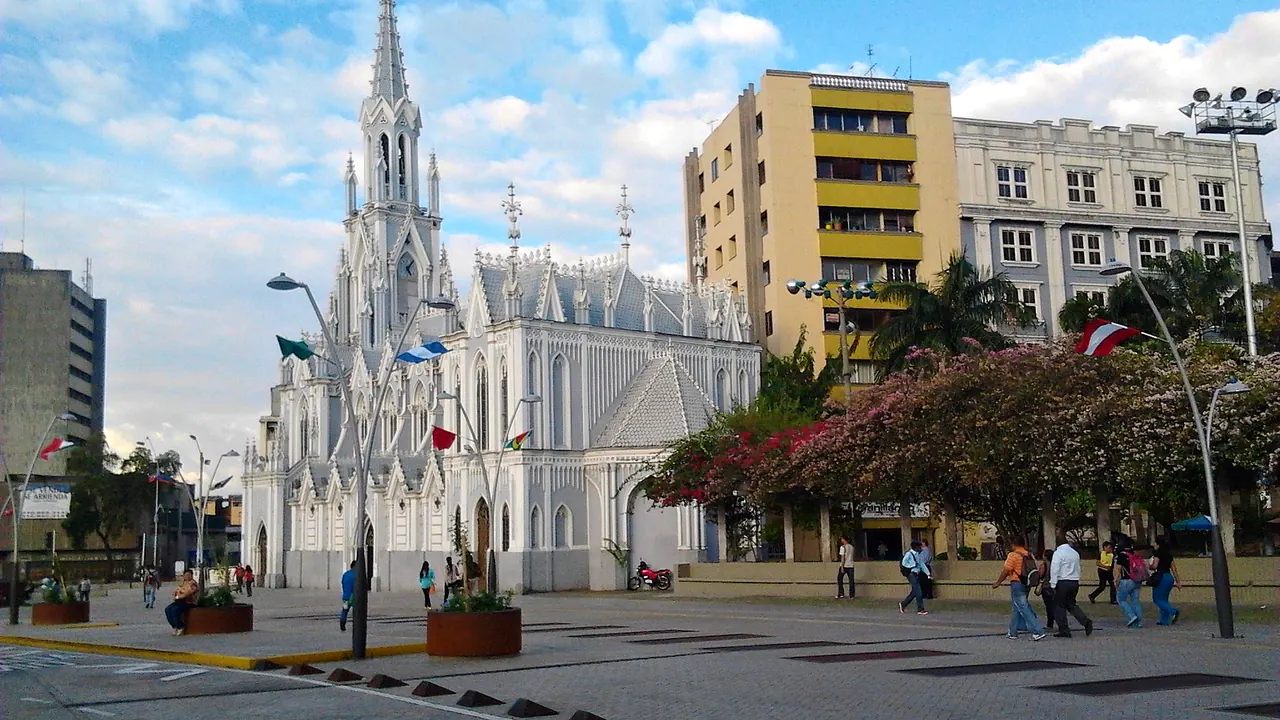
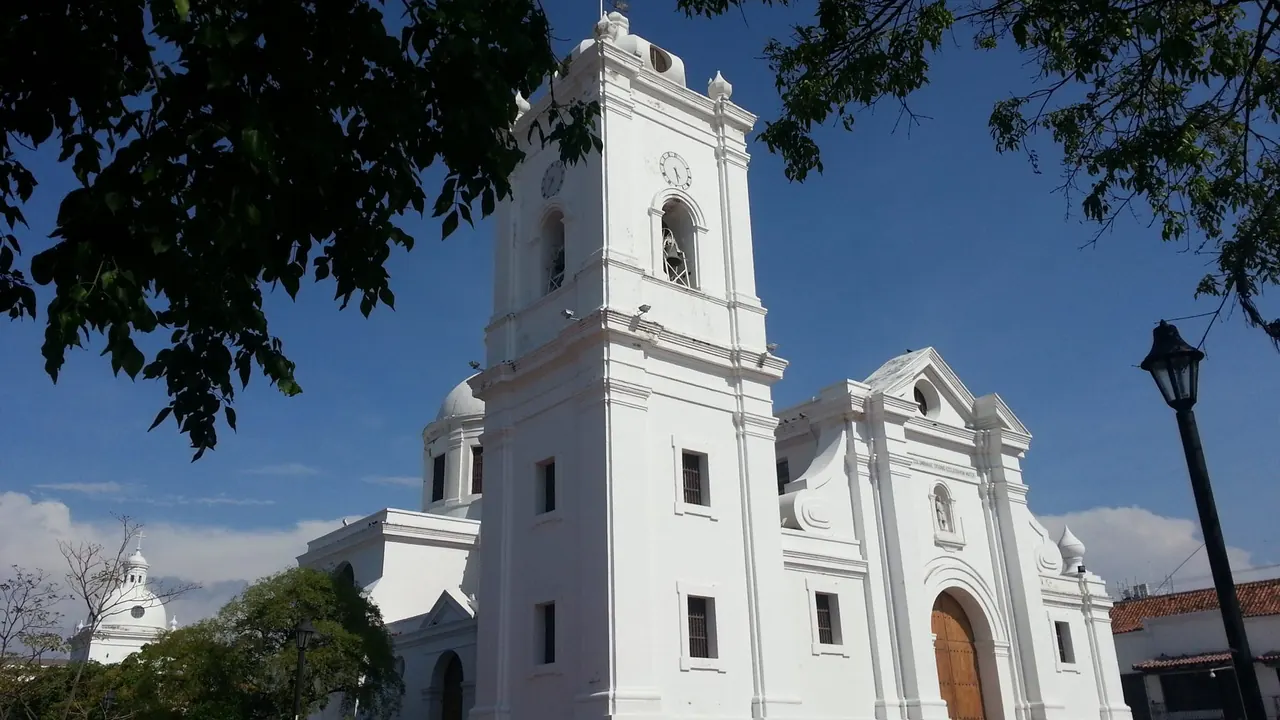
Photos: Cali by Melissa Marin, CC BY-SA 3.0, cropped; Santa Marta by Oliver H, CC BY-SA 3.0, cropped.
Cali or Santa Marta?
Our verdict in twelve categories, each scored against the same fixed benchmark cities, and the climate month by month, so you can choose for your trip.
Choose Cali for
- live music and the arts
- nightlife
- food and drink
Cali is the pick for travellers who want their evenings to be the point of the trip. Salsa runs through the city, from vinyl-playing salsotecas to the late clubs of Juanchito and the Petronio Álvarez festival. The cooking of the Valle and the Pacific coast gives the days plenty to eat. It suits dancers, music lovers and anyone happy to give up a beach for the dance floor.
Choose Santa Marta for
- beaches
- nature and the outdoors
- wellness
Santa Marta answers a different wish: sea, sun and wild country on the doorstep. Warm Caribbean water, the coves of Tayrona and the cloud forest of Minca under the Sierra Nevada make it the better base for beach days and walking. The town itself is mostly a place to sleep and eat between outings.
Scoreboard
Twelve categories on one fixed scale from 0 to 100. The shaded stretch is the gap between the two.
Your match
Pick a travel style or drag the sliders, and both match scores follow your weighting.
Too close to call, 1 point apart
Wins on live music and the arts and nightlife with your weighting.
Wins on beaches and nature and the outdoors with your weighting.
What matters to you?
Category by category
What the scores mean for a trip.
Beaches & swimming
This is where the two cities differ most. Santa Marta lives by the sea, which stays warm all year. It has the calm grey sand of El Rodadero, small coves such as Bahía Concha and the golden beaches of Tayrona, where you should swim only in sheltered spots like La Piscina and Cabo San Juan.
Cali has no coast of its own. Swimming there means the Pance river pools at weekends or a hotel pool. The Pacific beaches at Juanchaco and Ladrilleros are an overnight trip by road and boat.
Food & drink
Cali's food is more distinctive. It draws on both the Valle del Cauca and the Afro-Colombian Pacific: lulada, champús and cholado from street carts, warm pandebono in the morning and seafood stews with coconut. At the Galería Alameda market you can eat at the counters among the fruit and fish.
Santa Marta serves plain, satisfying Caribbean cooking: fried fish with coconut rice, arepas de huevo, fresh juices and coffee from the Sierra Nevada. The evening choice around Parque de los Novios is modest, and neither city is a fine-dining destination.
Culture & sights
Neither city is built for sightseeing, and each can be seen in about a day. The difference lies in the kind of past. Santa Marta, Colombia's oldest surviving Spanish city, has the whitewashed cathedral, Tairona gold in the Casa de la Aduana and the hacienda where Bolívar died.
Cali's colonial core is younger in feel but has more variety. It has La Merced, the brick tower of San Francisco, modern art at La Tertulia and the low houses of San Antonio, which make the nicest walk. Its real culture is in its music.
Nightlife
People travel to Cali for its nights out. Dancing is the whole point, whether in small salsotecas spinning old records, the big Juanchito clubs at weekends or the louder bars along Avenida Sexta, and a few lessons first pay off. The December Feria turns the city into a party for a week.
Evenings in Santa Marta are more casual: terrace drinks around Parque de los Novios, vallenato and champeta at El Rodadero, and backpacker parties in Taganga. It is fun, but the scene is small and comes alive mainly at weekends and in the peak seasons.
Nature & outdoors
Both cities sit beneath mountains, but Santa Marta's are on a grander scale. The Sierra Nevada climbs from the Caribbean to snow peaks. Close by are Tayrona's rainforest coast, Minca's cloud forest and coffee farms, the Lost City trek, and diving and snorkelling from Taganga.
Cali still has plenty. The Farallones park rises behind its southern suburbs, locals climb to Tres Cruces at dawn, the forests at Kilometre 18 are excellent for birding and Lake Calima is good for windsurfing. What it lacks is the drop from summit to sea.
Day trips
Cali's outings run to the towns and estates of the valley, while Santa Marta's lean towards literature and the coast. From Cali, the pilgrimage town of Buga and its basilica are about an hour away, past old sugar haciendas such as El Paraíso, the setting of the novel María. Ginebra adds a day of Valle cooking and music.
Santa Marta offers García Márquez's childhood home in Aracataca, the carnival port of Barranquilla and Palomino, where a river meets the sea. These are modest outings, and the famous names need an overnight stay: Popayán and the coffee region from Cali, or Cartagena from Santa Marta.
Good for families
Both cities welcome children, but neither is built around them, so the choice comes down to the kind of day you want. Cali offers the riverside zoo, water parks, malls with play areas and the Pance pools, with most journeys made by taxi. Santa Marta offers beach time instead, with El Rodadero's calm, shallow bay, a small aquarium and sheltered coves, although Tayrona's long walks and strong currents suit older children better.
Getting around
Cali is flat and spread out, so most visitors rely on cheap taxis or ride-hailing, and the MIO rapid buses run on their own lanes along the main avenues. San Antonio, Granada and the riverside are close enough to walk between by day, although heat and uneven pavements make it hard going, and walking at night is best avoided.
Santa Marta's old centre is compact enough to cover on foot, but everything beyond it goes by road. Crowded minibuses run to El Rodadero, Taganga and along the coast, shared jeeps climb to Minca and taxis handle most short trips. For Tayrona and the mountains, many visitors book a tour or a driver.
Shopping & style
Cali has more to browse. Its large malls sell Colombian fashion labels, swimwear and leather, and it has its own speciality in salsa shoes and dancewear. The Galería Alameda stalls are good for coffee and fruit.
Santa Marta's shopping comes down to crafts and coffee: Arhuaco mochilas, Wayuu bags and hammocks, and beans from the mountain farms. It is the better place for those things, but not for a day of shopping.
Affordability
From day to day, the two cost about the same: low-cost guesthouses, cheap set lunches and street food, and short taxi rides that barely add up. In Cali, dance classes and nights out are inexpensive too, so a trip built around salsa stays cheap.
Where the spending climbs is different. In Cali it is the upscale restaurants of the north and the December feria. In Santa Marta it is the excursions, with a separate foreigners' rate for Tayrona and costly guided treks to the Lost City, and beach hotels fill up and cost more at Christmas and Easter.
Live music & performing arts
Cali has far more to see. There are big salsa shows with full orchestras, dance-school showcases, the Petronio Álvarez festival of Pacific music in August and the Festival Mundial de Salsa. The Teatro Municipal and the Filarmónica add a small formal programme on top.
Santa Marta has no regular season at all. Its music is informal: accordion vallenato and champeta in bars, and drummers and dancers in the squares on busy evenings.
Wellness & relaxation
Neither city is a spa destination, but Santa Marta has better places to rest nearby. The eco-lodges of Minca, with hammocks and river pools in the cool cloud forest, and the yoga retreats along the coast towards Palomino make it easy to add a few quiet nights.
Cali is built for energy rather than rest. Its calm moments are a garden café in San Antonio or a weekend at a country house with a pool in the hills around Pance.
When should you go?
Pick your month. The climate figures are measured averages, not a forecast.
Cali in July
Santa Marta in July
Daytime high, °C
Rainfall in the month, mm
Temperature and rainfall are climate normals, averaged over the years shown. Cali: 1991-2020 normals, Cali / Alfonso Bonillaaragon (19.5 km from centre). Santa Marta: 1991-2020 normals, Santa Marta / Simon Bolivar (11.9 km from centre).
Cali's temperature barely changes through the year, with highs of around 28°C every month, so the real question is rain. It has two wetter spells, March to May and October to November, and April is the wettest month at about 131mm. Its drier windows run from December to February and from June to August, and July and August are the driest and sunniest. Mornings and evenings are comfortable for walking all year.
Santa Marta is hotter, at 31°C to 32°C all year, and far sunnier. From December to April it is almost completely dry, the best time for Tayrona and the mountain trails, though the trade winds make the sea rougher from December to March. Rain builds from May and peaks in October, when the sea is at its warmest, around 29°C. Midday in the old town is tiring in every season.
Which traveller are you?
For a beach and sun trip, Santa Marta wins easily. The calm bay at El Rodadero, warm Caribbean water and the jungle-backed coves of Tayrona are all within an hour. Cali is inland, and its nearest beaches need a long drive and a boat.
On a food and nightlife trip, Cali is the stronger choice. Its nights revolve around salsa, from old-vinyl salsotecas to Juanchito clubs that run until near dawn. Its Valle and Pacific cooking, from lulada to coconut seafood stews, beats Santa Marta's narrower Caribbean menus.
For an outdoors trip, Santa Marta has the bigger country. Tayrona's rainforest coast, Minca's cloud forest and the multi-day trek to the Lost City all start close by. Cali has good birding at Kilometre 18 and trails in the Farallones, but on a smaller scale.
Before you go
| Measure | Cali | Santa Marta |
|---|---|---|
| Official language | Spanish | Spanish |
| Currency | Colombian Peso (COP) | Colombian Peso (COP) |
| Sockets | AB110 V, 60 Hz | AB110 V, 60 Hz |
| Driving side | Right | Right |
| Time zone | UTC-5 | UTC-5 |
| Emergency number | 123 | 123 |
| Elevation | 1,018 m | 8 m |
| Main airport | Alfonso Bonilla Aragon International Airport (CLO)19 km from centre27 non-stop destinations | Simón Bolívar International Airport (SMR)13 km from centre6 non-stop destinations |
| Public holidays this year | 19 days | 19 days |
By the numbers
| Measure | Cali | Santa Marta |
|---|---|---|
| City population | 2,471,474 | 505,915 |
| People per km² | 4,382 | 1,723 |
| Museums within 10 km | 10 | 3 |
| UNESCO World Heritage sites within 50 km | 0 | 0 |
| Swim season, months above 21 °C | - | 12 months |
Where else could you go?
Every comparison below shares a destination with this one, so you can follow Cali or Santa Marta somewhere new.