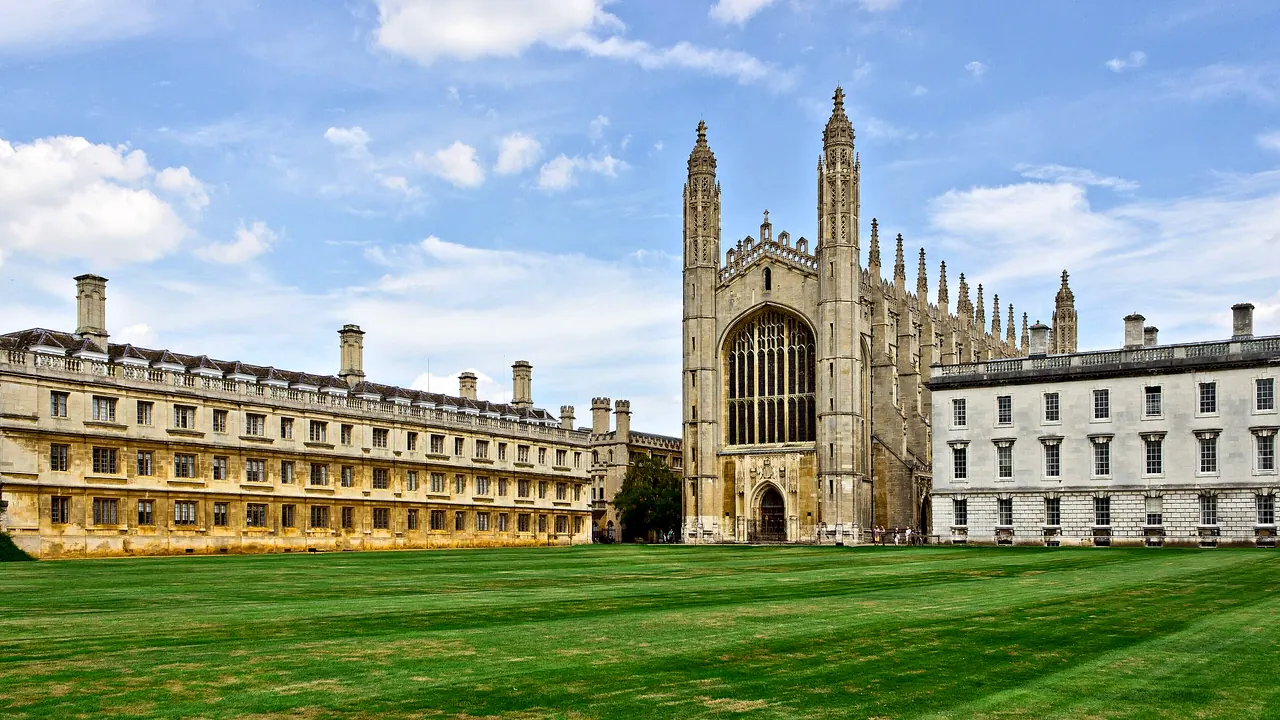
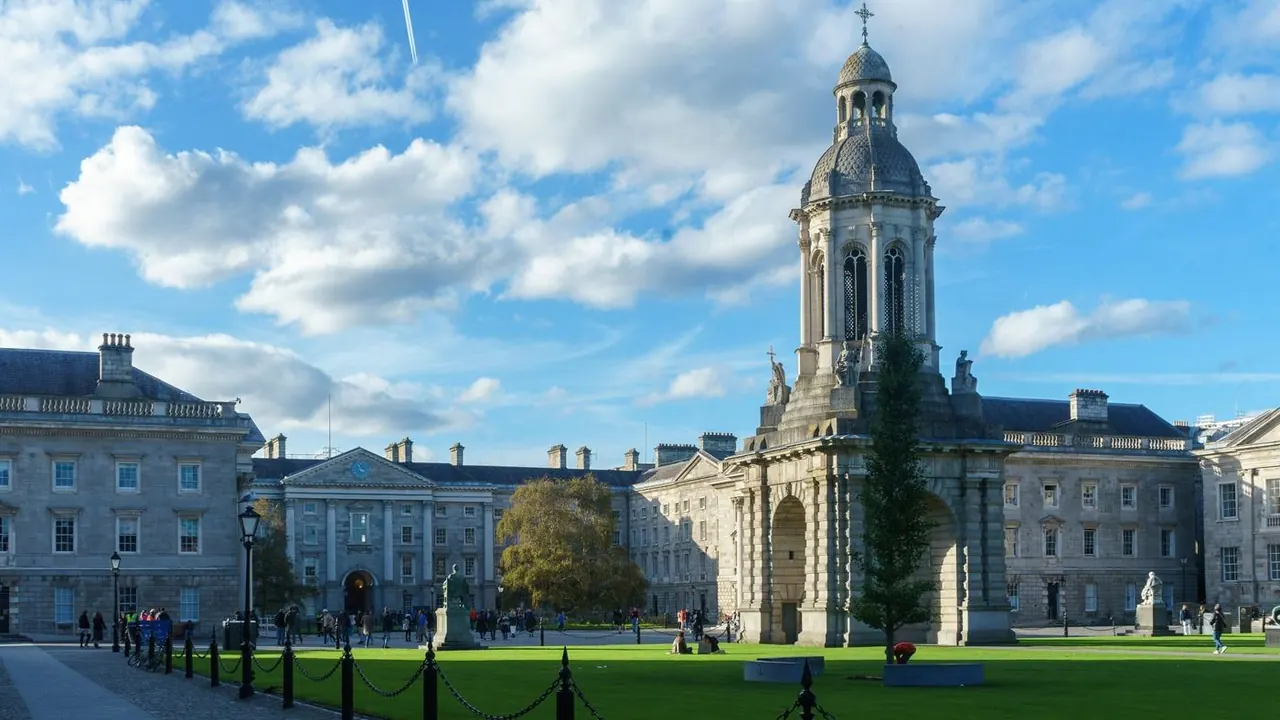
Photos: Cambridge by Dmitry Tonkonog, CC BY-SA 3.0, cropped; Dublin by David Kernan, CC BY 4.0, cropped.
Cambridge or Dublin?
Our verdict in twelve categories, each scored against the same fixed benchmark cities, and the climate month by month, so you can choose for your trip.
Choose Cambridge for
- wellness
- prices
- culture and sights
Cambridge is for the traveller who wants a quiet, concentrated dose of history. Its colleges, chapels and university museums are packed into a small, flat centre you can cover on foot or by bike. Evenings are calm, with evensong and a riverside pub. It also makes a good base for slow trips out to Ely, the Suffolk wool towns and London. It costs a little less and feels more restful, but don't expect big nights or wild scenery.
Choose Dublin for
- nature and the outdoors
- nightlife
- beaches
Dublin suits someone who wants a livelier capital with the outdoors close by. The pubs, traditional sessions and theatres fill the evenings in a way Cambridge can't. The DART runs out to cliff walks at Howth and swims at the Forty Foot, and the Wicklow Mountains rise just past the suburbs. Pick it for talk, music and sea air rather than peace and quiet, and expect it to cost more.
Scoreboard
Twelve categories on one fixed scale from 0 to 100. The shaded stretch is the gap between the two.
Your match
Pick a travel style or drag the sliders, and both match scores follow your weighting.
Wins on wellness and prices with your weighting.
Wins on nature and the outdoors and nightlife with your weighting.
What matters to you?
Category by category
What the scores mean for a trip.
Beaches & swimming
Neither city is for a beach vacation, but Dublin at least has real sand on its doorstep. Dollymount, Sandymount, Killiney and Portmarnock all line the bay and are easy to reach on the DART. The cold Irish Sea makes swimming there a brisk all-year habit rather than lazy sunbathing.
Cambridge is far inland. The nearest coast in Suffolk or Norfolk is about an hour and a half's drive away. On a hot day, people swim at Jesus Green Lido or in the Cam at Grantchester Meadows.
Food & drink
Dublin eats and drinks a little better, mainly because of its produce and its pubs. Atlantic shellfish, grass-fed lamb and farmhouse cheeses are served in the bistros of Dublin 2 and Dublin 8. Stout and Irish whiskey give a trip a taste you won't find elsewhere.
Cambridge has nothing comparable to seek out. It offers good old pubs serving ales and roasts, cream teas by the river, the daily stalls on Market Hill and a wider mix of cuisines along Mill Road. Either city will fill a few days without any meal you'll remember for long.
Culture & sights
Cambridge edges ahead because its sights are so concentrated. Eight centuries of colleges stand along the Backs, led by King's College Chapel and Trinity's Great Court. The Fitzwilliam's collection would suit a far larger city. Expect to pay to enter some colleges, and some close around exams.
Dublin's strengths are different: national treasures and a story of nationhood. It has the Book of Kells and the Long Room, the Chester Beatty's manuscripts, two medieval cathedrals and Kilmainham Gaol. All of this sits in a Georgian streetscape steeped in Joyce and Wilde. Each city fills about three days.
Nightlife
Dublin is the far better night out. Its old pubs with snugs and coal fires around Baggot Street are made for conversation, and Camden Street and George's Street carry on with cocktail bars and late bars. Clubs are scarce, though, and the night tends to end not long after closing time.
Cambridge gives you a pleasant pint by the river or in a historic inn. Its small, student-led club scene fades in the summer break and at Christmas, and anyone after a big night takes the train to London.
Nature & outdoors
Here Dublin is much stronger. Phoenix Park has fallow deer, and North Bull Island draws wintering waders. Howth has seals and a cliff path, and the granite hills, bogs and glacial lakes of Wicklow lie about an hour away at Glendalough.
Cambridge's countryside is flat and soft. You can punt along the Backs, walk across cattle-grazed meadows to Grantchester, watch dragonflies at Wicken Fen or take a short woodland walk at Wandlebury. It's lovely for a gentle cycle, but there are no hills or dramatic views.
Day trips
Cambridge has a slight edge because so much is close and easy by rail. London is under an hour away, Ely's cathedral is a short hop, and Norwich, Bury St Edmunds and the timber-framed towns of Lavenham and Long Melford are within easy reach. Audley End, Anglesey Abbey and Wimpole are almost on the doorstep.
Dublin's outings take you further back in time and into wilder country. Newgrange and the Boyne Valley are among the oldest monuments in Europe, Glendalough's round tower stands in the Wicklow hills and Kilkenny has its castle. Many of these sites are easier with a car or a tour.
Good for families
Both cities are easy and safe with children. The difference is in what they offer. Cambridge is small and green, with punting, the whale skeleton at the Museum of Zoology and the airfield of historic aircraft at Duxford. The college sights themselves will bore most young children.
Dublin has a proper zoo inside Phoenix Park, the Viking displays at Dublinia and a theme park within half an hour's drive. Its beaches suit rock-pooling more than swimming, though, and the rain means you'll need indoor back-up plans.
Getting around
Cambridge is slightly easier. Nearly everything lies inside a flat, largely pedestrian core, and a hired bike gets you to Grantchester. The station is a fair walk from the centre, and the buses are only adequate.
Dublin's centre is also walkable, and it has something Cambridge lacks: the DART along the bay and two Luas lines, all on one tap-on card. There is no metro, though, so slow buses serve the airport and the suburbs. Both cities need a car or a coach tour for the countryside.
Shopping & style
Dublin gives you more to buy and more to take home. Grafton Street and Brown Thomas cover the main high street, and the Powerscourt Townhouse adds small shops in a Georgian setting. The design and craft shops around Drury Street sell Aran knitwear, linen, tweed and crystal.
Cambridge works on a smaller scale. Its real draw is books, from academic booksellers to second-hand dealers in the lanes, plus independents on Green Street and Trinity Street and the market on Market Hill. You'll shop between sights rather than plan a day around it.
Affordability
Neither city is cheap, but Dublin is the harder on the wallet, mostly because of its hotel rooms. Prices rise further at weekends or when there's a big match or concert. Rooms outside the centre near a DART or Luas stop help, as do the free national museums.
Cambridge is expensive too, especially in summer and at graduation time, but costs a little less overall. Free university museums, free evensong and a centre you can cover entirely on foot keep daily spending down. A college room outside term can be the best-value bed in town.
Live music & performing arts
Dublin has more on, and theatre leads. It has the Abbey and the Gate, an autumn theatre festival and traditional sessions in the pubs almost every night. The National Concert Hall is home to the national symphony orchestra.
Cambridge's strength is narrower but rare. Hearing the choirs of King's, St John's or Trinity sing evensong by candlelight is a remarkable experience. Beyond that, there's the Arts Theatre, the Footlights comedy tradition and the summer folk festival. Neither city has a permanent opera house.
Wellness & relaxation
Cambridge is the more restful of the two, even though it has no spa culture. Rest there means drifting in a punt, sitting in a college garden or the Botanic Garden, or swimming at the lido. Come early or late in summer, when King's Parade is crowded.
Dublin's one real ritual is bracing: a cold sea dip at the Forty Foot or Seapoint, followed by a seafront sauna. Otherwise, you'll find calm in Phoenix Park, St Stephen's Green or the villages along the bay.
When should you go?
Pick your month. The climate figures are measured averages, not a forecast.
Cambridge in July
Dublin in July
Daytime high, °C
Rainfall in the month, mm
Where the figures come from
Cambridge's temperatures are measured 59 km from the centre, at Wattisham.
Cambridge has no rain gauge within 25 km of the centre, so its rainfall comes from a gridded climate dataset read at the city rather than from a gauge further away.
Temperature and rainfall are climate normals, averaged over the years shown. Cambridge: 1991-2020 normals, Wattisham (58.5 km from centre). Dublin: 1991-2020 normals, Dublin Airport (9.3 km from centre).
Neither city is warm enough for a beach trip, so choose on comfort for walking. Cambridge has the warmer, sunnier summer, with afternoons around 22°C in July and August. Its driest spell is late winter and spring, at about 36mm a month. That makes April to June a good time for punting and cycling the meadows. Winters are grey and short of light, but rarely bitter.
Dublin is a little milder in winter and a little cooler in summer, peaking around 20°C. It is wetter all year, and wettest in autumn, with about 83mm in November. May and June bring its sunniest days and are the best months for the coast and the hills. The sea only reaches about 15°C in late summer, so any swim there is a cold dip.
Which traveller are you?
On an outdoors trip, pick Dublin. Around Cambridge you get flat fen with level cycling and riverside walks, and little more. From Dublin the DART reaches sea cliffs and coastal paths, and the Wicklow Way crosses granite hills just beyond the suburbs.
For a food and nightlife trip, Dublin wins. Cambridge has fine old pubs, but evenings stay modest and the city goes quiet when term ends. Dublin has better produce, stout and whiskey, and late bars on Camden and Wexford Streets.
On a relaxing and wellness trip, Cambridge suits better. Neither city has a spa culture, but Cambridge is small, green and unhurried, especially early and late in the day. Dublin is a busier capital, where rest usually means a bracing sea swim.
Before you go
| Measure | Cambridge | Dublin |
|---|---|---|
| Official language | English | English, Irish |
| Currency | Pound Sterling (GBP) | Euro (EUR) |
| Sockets | G230 V, 50 Hz | G230 V, 50 Hz |
| Driving side | Left | Left |
| Time zone | UTC, UTC+1 in summer | UTC, UTC+1 in summer |
| Emergency number | 112 or 999 | 112 |
| Elevation | 6 m | 20 m |
| Main airport | London Stansted Airport (STN)37 km from centre197 non-stop destinations | Dublin Airport (DUB)9 km from centre200 non-stop destinations |
| Public holidays this year | 8 days | 11 days |
By the numbers
| Measure | Cambridge | Dublin |
|---|---|---|
| City population | 123,867 | 592,713 |
| People per km² | 3,043 | 5,154 |
| Museums within 10 km | 17 | 41 |
| UNESCO World Heritage sites within 50 km | 0 | 1 |
| Swim season, months above 21 °C | - | None |
Where else could you go?
Every comparison below shares a destination with this one, so you can follow Cambridge or Dublin somewhere new.
- Londonvs Cambridge
- Kilkennyvs Dublin
- Oxfordvs Cambridge
- Belfastvs Dublin
- Brightonvs Cambridge
- Limerickvs Dublin