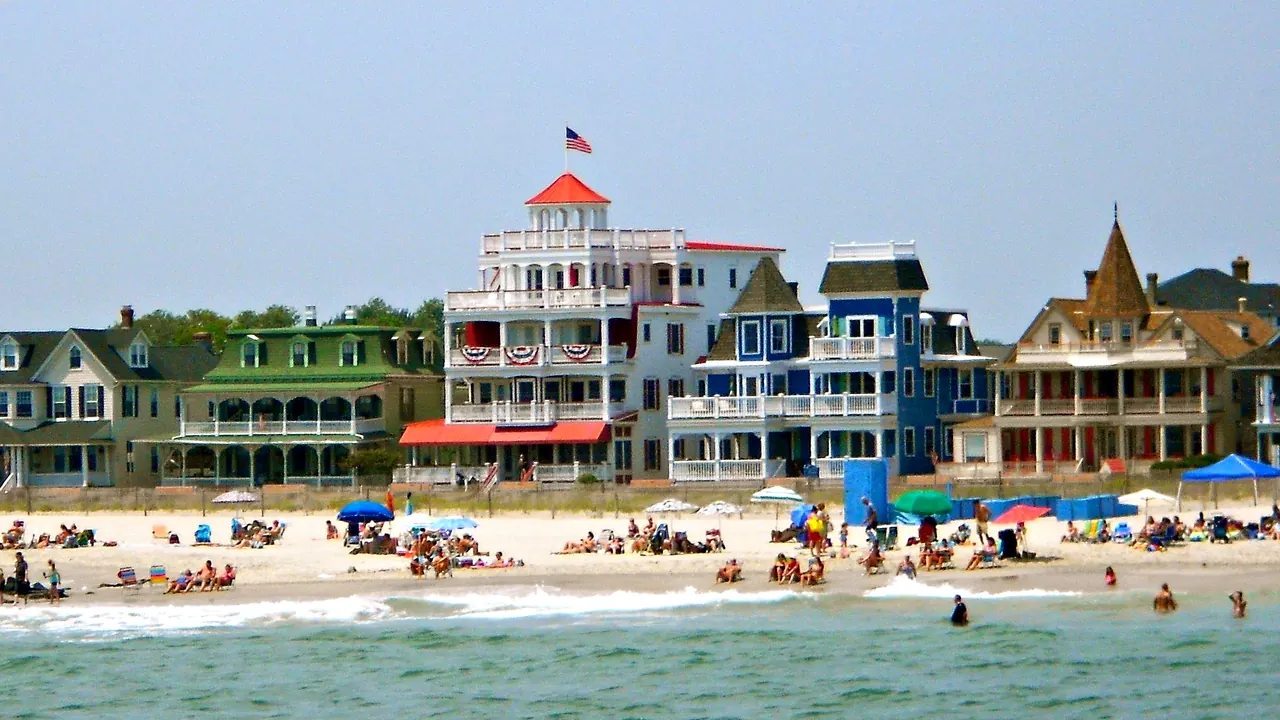
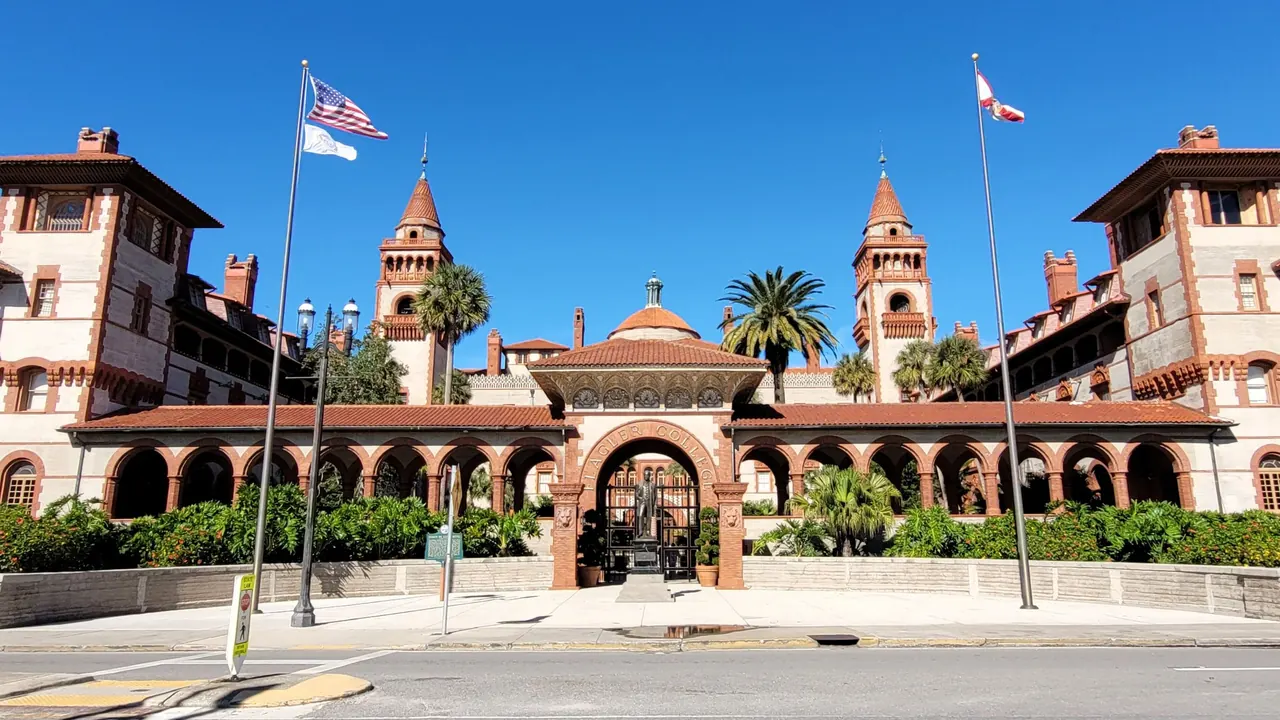
Photos: Cape May by Smallbones, CC0; St. Augustine by Farragutful, CC BY-SA 4.0, cropped.
Cape May or St. Augustine?
Our verdict in twelve categories, each scored against the same fixed benchmark cities, and the climate month by month, so you can choose for your trip.
Choose Cape May for
- nature and the outdoors
- getting around
- families
Cape May suits a slow summer trip built around the beach, the bike and the porch. Its Victorian streets, its sand and its promenade sit within an easy flat walk of each other, so it works well for families with young children and for anyone who wants to leave the car parked once they arrive. Its history is one handsome Victorian layer that you can enjoy in a day or two of strolling, and in autumn the town draws birders to one of North America's great migration routes. Expect to pay more for all this, and expect quiet evenings.
Choose St. Augustine for
- culture and sights
- prices
- nightlife
If you want more to explore between swims, St. Augustine is the better pick. The Spanish fort, the colonial lanes and the Gilded Age hotels give it far greater depth as a sightseeing town, and its warmer sea and mild winters stretch the season across most of the year. It is also easier on the budget and a little livelier after dark, though reaching the beach means a short drive over the bridge rather than a stroll.
Scoreboard
Twelve categories on one fixed scale from 0 to 100. The shaded stretch is the gap between the two.
Your match
Pick a travel style or drag the sliders, and both match scores follow your weighting.
Wins on nature and the outdoors and getting around with your weighting.
Wins on culture and sights and prices with your weighting.
What matters to you?
Category by category
What the scores mean for a trip.
Beaches & swimming
These two are evenly matched for a beach trip, but the experience differs. Cape May's sand runs right along the edge of town, so you walk from your guesthouse to the lifeguarded beach in minutes, and the bay side adds pebble-hunting for Cape May diamonds. Its swimming season, though, lasts barely three months.
St. Augustine's beaches lie across the Bridge of Lions on Anastasia Island, a short drive from the old town. They are wide and flat, with dunes at the state park and quieter stretches at Crescent Beach. The water stays warmer for much longer, though it is usually greener and murkier than the cooler Jersey Atlantic.
Food & drink
Both are small seafood towns with a few better dining rooms, and neither is worth travelling to just for the food. Cape May's strength is its working fishing harbour: scallops, flounder and local oysters, plus long porch breakfasts in Victorian houses. Many kitchens shorten their hours in winter.
St. Augustine has a flavour of its own, thanks to its Minorcan settlers. The fiery datil pepper turns up in hot sauces, pilau and a spicy clam chowder. Steer away from the tourist-facing places on St. George Street and towards the chef-led restaurants around San Marco.
Culture & sights
Cape May is a Victorian town through and through. Gingerbread-trimmed cottages, painted-lady guesthouses and porched hotels line its shady grid, and the whole district is a National Historic Landmark, best seen on a walking or trolley tour. Add the Physick Estate and the lighthouse climb, and you have seen most of it.
St. Augustine is older, and its history is Spanish colonial. The coquina star fort, the old city gate and the balconied lanes of the Spanish quarter make up one layer. Flagler's extravagant Gilded Age hotels, with their Tiffany glass, form a second. Fort Matanzas and the Cathedral Basilica add more, so a sightseer will stay busy much longer here.
Nightlife
Neither town is built for late nights, but St. Augustine has more going on. Its courtyard bars and taverns around St. George Street and the bayfront draw a lively weekend crowd, and Flagler College students fill them in term time.
Cape May's evenings are quieter still. A few pubs and hotel bars around the pedestrian mall host families and wedding parties, and the town is mostly asleep by midnight. For anything louder, you drive to the Wildwoods.
Nature & outdoors
Cape May's position at the tip of a peninsula makes it the stronger outdoor destination. Autumn migration pours raptors, songbirds and monarch butterflies through the Point and Higbee Beach, and birders come from far away to see it. Dolphin boats are close to a sure thing in summer, and whale trips run in the cooler months.
St. Augustine's coastline is low marsh, dune and hammock forest, with good kayaking among dolphins and ospreys and long walks in the Guana Tolomato Matanzas reserve. Its humid summers are harder going, though, so the best months for being outside run from late autumn to spring.
Day trips
St. Augustine has slightly more big-name outings within reach, although each one means a drive. Jacksonville is under an hour away, and Kennedy Space Center and the Orlando parks make long but popular days out.
Cape May's best outing is the bay crossing to colonial Lewes in Delaware, which feels like an excursion in its own right. The Wildwoods and Atlantic City are close by, but Philadelphia is a tiring round trip.
Good for families
Cape May suits young children a little better. Its lifeguarded beaches sit right by town, the streets are slow and safe for surrey rides, and crabbing, dolphin boats and a free county zoo fill the gaps. One catch is that some historic-district B&Bs don't accept small children.
In St. Augustine, the Alligator Farm and the cannon firings at the fort make strong attractions, and pirate museums keep older children interested. The summer heat and the drive to the beach make each day a bit more work.
Getting around
Getting there is car-dependent for both towns, but Cape May is easier once you arrive. The historic district, the beach promenade and the Washington Street Mall are all a flat stroll apart, and a bike handles nearly everything else.
St. Augustine's old town is just as walkable, and trolleys loop round the sights. The beaches and the lighthouse are across the water, however, and the local buses are of little use to visitors, so most people end up driving every day.
Shopping & style
Shopping is a pastime in both towns rather than a reason to go. Cape May's pedestrian mall leans towards bookshops, homeware and boutiques. St. Augustine has more range: the galleries and antique dealers on Aviles Street, bottles of datil-pepper sauce to take home and an outlet mall by the interstate for mainstream brands.
Affordability
St. Augustine is the gentler of the two on your wallet. Chain motels on the island and by the highway, along with midweek stays, keep costs manageable, and its public beaches charge no entry.
Cape May at peak season is one of the dearer resorts on the coast. Minimum stays at the B&Bs, big-city dinner bills, seasonal beach tags and paid parking all add up. Many budget travellers stay in the Wildwoods and visit for the day.
Live music & performing arts
St. Augustine offers a bit more, and it is mostly music. Touring rock, country and folk acts play the open-air amphitheatre in the woods for much of the year, and cover bands perform on old-town patios most nights.
Cape May leans towards the stage and the recital hall instead. There is a professional theatre season in a converted church, a company devoted to historic American drama and a long-running chamber music festival in late spring. Outside summer, the programme shrinks to a few weekend shows.
Wellness & relaxation
Neither town has bathhouses or much in the way of spas, and both slow you down mainly through their pace. Cape May has a slight edge for rest, with rocking chairs on deep porches, parlour teas and bay sunsets, especially in its calm spring and autumn. St. Augustine offers courtyard gardens and evening strolls along the seawall, but its sticky summers and busy long weekends make it feel gentle rather than restorative.
When should you go?
Pick your month. The climate figures are measured averages, not a forecast.
Cape May in July
St. Augustine in July
Daytime high, °C
Rainfall in the month, mm
Where the figures come from
Cape May has no rain gauge within 25 km of the centre, so its rainfall comes from a gridded climate dataset read at the city rather than from a gauge further away.
St. Augustine has no rain gauge within 25 km of the centre, so its rainfall comes from a gridded climate dataset read at the city rather than from a gauge further away.
St. Augustine's sunshine is measured 73 km from the centre, at Jacksonville International.
Temperature and rainfall are climate normals, averaged over the years shown. Cape May: 2006-2020 (rainfall 1991-2020) normals, Wildwood / Sally Marshall Crossing (8.4 km from centre). St. Augustine: 2006-2020 (sunshine 1991-2020, rainfall 1991-2020) normals, St Augustine / Kingsley Mobile Home Park (7.6 km from centre).
Cape May is a summer town. The sea is only pleasant for swimming from mid-June, reaches about 24°C in August and cools again after mid-September, and July and August bring hot days. Winter highs fall to around 6°C, which is too cold for much beyond brisk walks. Rain falls steadily all year, with no real dry or wet season, so May, June, September and early October are the most comfortable months for walking the streets and the marsh trails.
St. Augustine follows almost the opposite calendar. The water is warm enough to swim from May to October and reaches 28°C in high summer, but June to September is hot, humid and stormy, with rainfall peaking at about 173mm in September. Winter days of around 18°C are ideal for exploring the old town, although the sea is too cool for most swimmers then. May is the sunniest month and the best all-round choice, with swimmable water, fairly dry weather and heat that is still bearable. October is a good second choice.
Which traveller are you?
On a culture and arts trip, Cape May offers one Victorian house museum, the Physick Estate, and a theatre season in a converted church, enough for a day or two. St. Augustine fills a longer itinerary, with the Lightner Museum's collections, a boat out to Fort Matanzas and evening concerts in the woods.
For an outdoors trip, Cape May is the better base, especially in autumn, when birders plan whole vacations around the migration. Flat lanes and back-bay marshes make bikes and kayaks the natural way to explore, and both spring and autumn are comfortable for long days outside.
On a trip with a tight budget, Cape May in high summer is one of the coast's pricier places to sleep, with beach tags and parking on top. St. Augustine is the safer choice, since much of what it offers costs nothing, from wandering the old streets to a day on the island sand.
Before you go
| Measure | Cape May | St. Augustine |
|---|---|---|
| Currency | US Dollar (USD) | US Dollar (USD) |
| Sockets | AB120 V, 60 Hz | AB120 V, 60 Hz |
| Driving side | Right | Right |
| Time zone | UTC-5, UTC-4 in summer | UTC-5, UTC-4 in summer |
| Emergency number | 911 | 911 |
| Elevation | 3 m | 152 m |
| Main airport | Atlantic City International Airport (ACY)65 km from centre11 non-stop destinations | Jacksonville International Airport (JAX)76 km from centre48 non-stop destinations |
| Public holidays this year | 13 days | 11 days |
By the numbers
| Measure | Cape May | St. Augustine |
|---|---|---|
| City population | 2,768 | 14,329 |
| People per km² | 390 | 433 |
| Museums within 10 km | 4 | 12 |
| UNESCO World Heritage sites within 50 km | 0 | 0 |
| Swim season, months above 21 °C | 3 months | 8 months |
Where else could you go?
Every comparison below shares a destination with this one, so you can follow Cape May or St. Augustine somewhere new.
- Rehoboth Beachvs Cape May
- Bethany Beachvs Cape May
- Ocean City, Marylandvs Cape May
- Atlantic Cityvs Cape May
- Daytona Beachvs St. Augustine
- Philadelphiavs Cape May