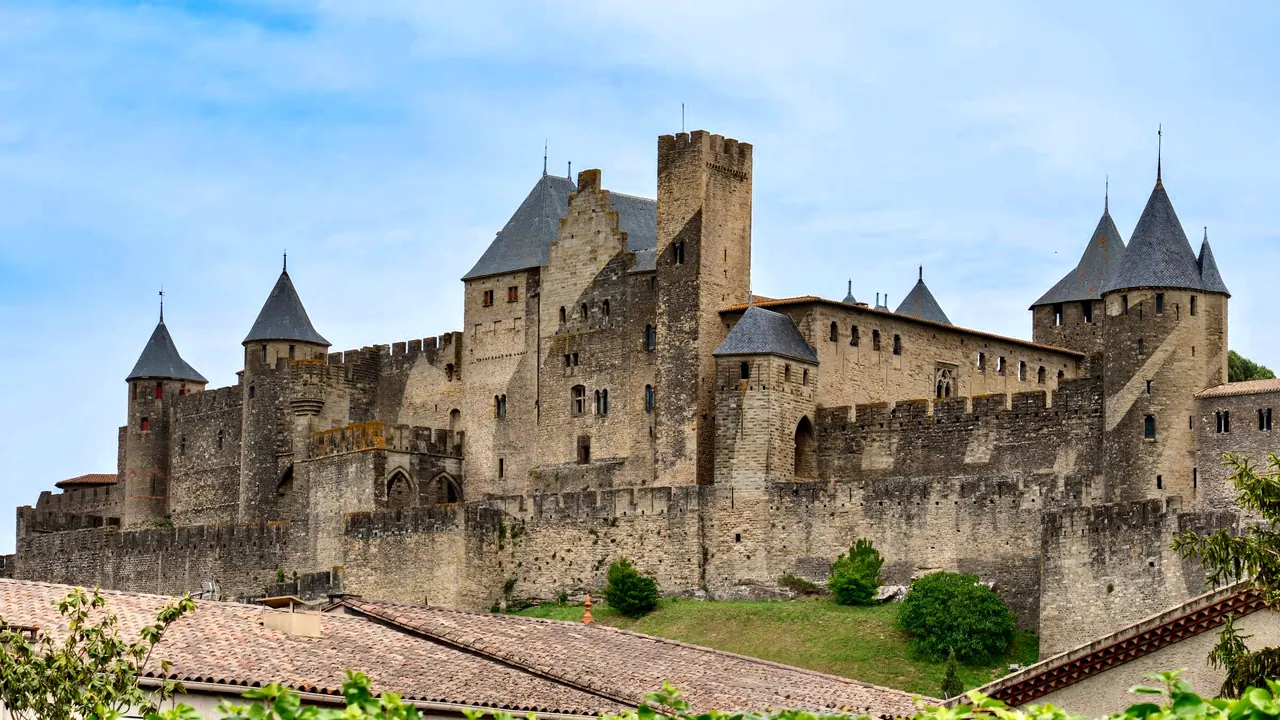
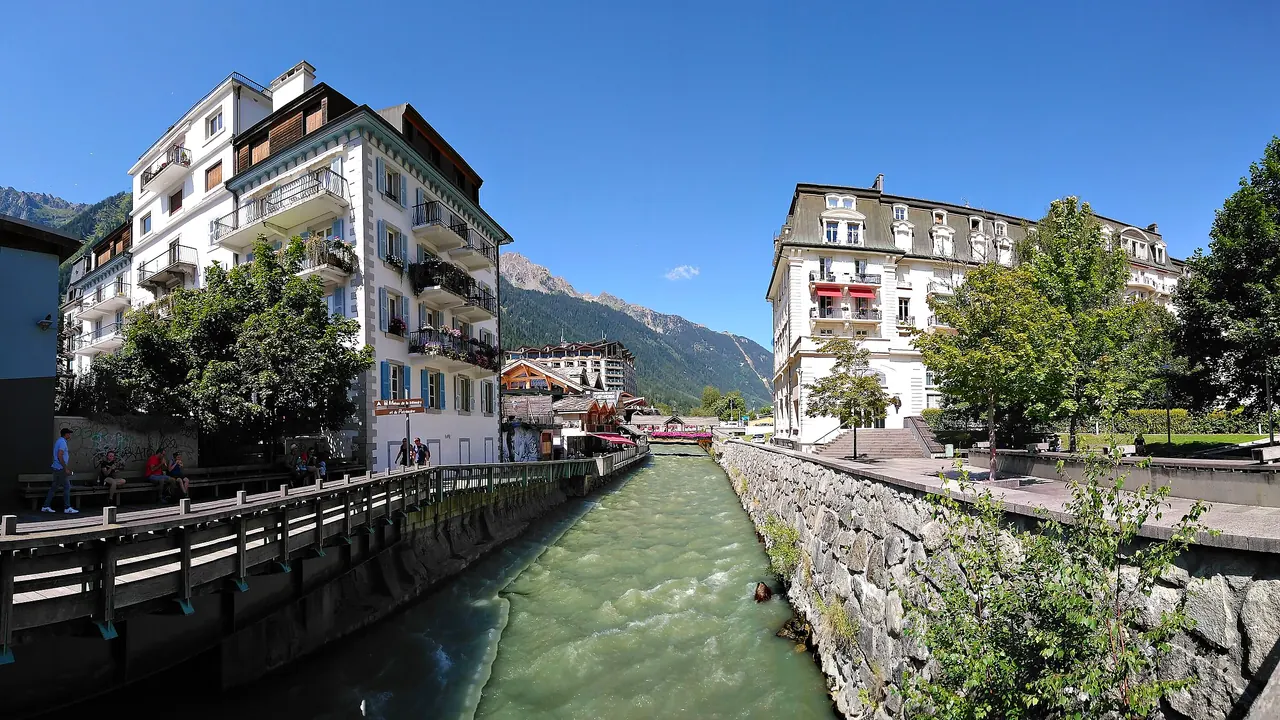
Photos: Carcassonne by Susanne Jutzeler, suju-foto, Pexels License; Chamonix by Tiia Monto, CC BY-SA 3.0, cropped.
Carcassonne or Chamonix?
Our verdict in twelve categories, each scored against the same fixed benchmark cities, and the climate month by month, so you can choose for your trip.
Choose Carcassonne for
- culture and sights
- prices
- beaches
Carcassonne is the better choice for travellers who want history they can walk through and a region to explore. The walled Cité and the Bastide below it take a couple of days. After that, the Cathar castles, the wine villages and the Canal du Midi fill the rest of the week, at provincial prices and under a dry, sunny summer.
Choose Chamonix for
- nature and the outdoors
- getting around
- nightlife
Anyone whose ideal day ends with tired legs should go to Chamonix. The Mont Blanc massif rises from the edge of town, with cable cars, glacier trails, climbing and skiing that few places in Europe can match. There are also livelier evenings and warm spa pools for afterwards. It costs a great deal more, though, and the town itself has few sights.
Scoreboard
Twelve categories on one fixed scale from 0 to 100. The shaded stretch is the gap between the two.
Your match
Pick a travel style or drag the sliders, and both match scores follow your weighting.
Too close to call, 2 points apart
Wins on culture and sights and prices with your weighting.
Wins on nature and the outdoors and getting around with your weighting.
What matters to you?
Category by category
What the scores mean for a trip.
Beaches & swimming
Neither town is a beach destination, but Carcassonne gets closer. The Lac de la Cavayère, a short drive from the Cité, has sandy shores and lifeguards. The long Mediterranean sands at Gruissan and Narbonne-Plage are about an hour away by car, so a proper day at the sea is possible.
Chamonix has mountain lakes instead. Lac de Passy, with Mont Blanc behind it, is warm enough to swim only in high summer, and Lake Annecy is a little over an hour's drive away. A swim there is a pleasant break, never part of the plan.
Food & drink
Both towns eat well on regional cooking rather than variety. In Carcassonne the dish is cassoulet and the real strength is the wine: Corbières, Minervois and blanquette from Limoux. The best meals are down in the Bastide around the Place Carnot market, not inside the Cité walls.
Chamonix runs on melted cheese. Fondue, raclette and tartiflette are eaten on terraces facing the glaciers, or bought from the town's cheese shops for a picnic. Chamonix also has more burger, pizza and international places, but many restaurants close between seasons.
Culture & sights
This is where Carcassonne pulls far ahead. La Cité, with its double walls, fifty-two towers, the Château Comtal and the stained glass of Saint-Nazaire, is a sight of European importance. Below the hill, the Bastide Saint-Louis and the Canal du Midi add a second layer.
Chamonix's heritage is narrower: the story of mountaineering, told in the Musée Alpin, the statues of the pioneers and the climbers' cemetery. It holds your interest for a morning, but nothing in the town compares with Carcassonne's walls.
Nightlife
Chamonix has more going on after dark, at least in winter. Après-ski fills the bars from late afternoon, a lane of pubs in the old town stays busy until late, and a couple of small clubs open on busy nights. The crowd is young and mostly English-speaking.
In Carcassonne an evening means a floodlit walk on the walls and a glass of wine on a terrace around Place Carnot. It is pleasant and calm, but from either town a real night out means a trip to a city.
Nature & outdoors
Chamonix is in another league. Cable cars lift you from the valley to 3,842m on the Aiguille du Midi, and the Mer de Glace and Lac Blanc are an easy day's outing. The valley has steep skiing in winter and mountaineering, climbing and paragliding in summer.
Carcassonne's outdoors is gentler and mostly needs a car. There are forest walks in the Montagne Noire, hikes past Cathar ruins in the Corbières hills and summer rafting in the upper Aude gorges. The shaded towpath of the Canal du Midi is the easy choice for cycling.
Day trips
Carcassonne has the richer choice of days out. The Cathar castles of Peyrepertuse and Quéribus, villages such as Lagrasse and Minerve, Narbonne and Toulouse by train, and the wine estates open for tastings could fill a week without repeating anything.
Chamonix's day trips cross borders. Courmayeur and the Roman town of Aosta in Italy are reached through the tunnel, Martigny in Switzerland by train, and Annecy or Geneva by road. Beyond those, the choice thins out into other resorts along slow mountain roads.
Good for families
Chamonix suits active families slightly better. Winter brings nursery slopes and sledging. In summer there are easy lake trails, a summer luge, treetop courses and the Merlet animal park, all in a small town that is easy to walk, though the highest cable cars are not for small children.
In Carcassonne the castle is a ready-made adventure, with jousting and falconry in summer, and the lake beach and water park fill a second day. The weak point is the Cité itself: steep, crowded cobbles in the summer heat, and hard going with a pushchair.
Getting around
Chamonix is easier to manage without a car. Valley buses and the Mont Blanc Express link Les Houches to Vallorcine and are free with the guest card, and the main cable car stations are in the centre. The catch is the crowded ski buses in winter.
Carcassonne is simple on foot, with the flat Bastide and a twenty-five minute walk up to the Cité, and trains run to Toulouse and Narbonne. The castles and villages that make the region worth visiting are hard to reach without a hire car, though.
Shopping & style
Neither town is a shopping destination, but Chamonix has one real speciality. Its outdoor shops, some run by the same families for generations, sell technical climbing and ski gear with expert advice, and serious climbers and skiers save their big purchases for a visit here.
The lanes of Carcassonne's Cité are mostly toy swords and Cathar trinkets. The best things to take home are edible: tinned cassoulet, Corbières wine and Limoux blanquette.
Affordability
Carcassonne is much the cheaper stay. Rooms in the Bastide are moderately priced outside July and August, local wine and lunchtime set menus are good value, and car hire is the main extra cost.
Chamonix is expensive. Room prices are high in the school vacations and in summer, and lift passes, cable cars and guides add up fast. Self-catering, free valley transport and trails that start from the valley floor soften the cost but do not close the gap.
Live music & performing arts
Carcassonne has the stronger summer stage. In July the Festival de Carcassonne brings concerts, theatre and dance to the open-air theatre inside the Cité walls, and on Bastille Day fireworks light up the ramparts. The municipal theatre keeps a modest programme going for the rest of the year.
Chamonix has its summer jazz festival, with some sets played high in the mountains, and little else beyond church concerts and mountain film evenings. For opera or an orchestra, Carcassonne visitors go to Toulouse and Chamonix visitors go to Geneva.
Wellness & relaxation
Chamonix is the better place to unwind after a hard day. Its large day spa has hot outdoor pools and saunas facing the glaciers, many chalets have their own, and the thermal springs of Saint-Gervais-les-Bains are about twenty-five minutes down the valley.
Carcassonne has no bathing culture of its own, only hotel spas and small thermal villages in the upper Aude valley. Its calm comes from slow lunches and canal walks outside high summer.
When should you go?
Pick your month. The climate figures are measured averages, not a forecast.
Carcassonne in July
Chamonix in July
Daytime high, °C
Rainfall in the month, mm
Where the figures come from
Carcassonne has no rain gauge within 25 km of the centre, so its rainfall comes from a gridded climate dataset read at the city rather than from a gauge further away.
Carcassonne's sunshine is measured 68 km from the centre, at Perpignan.
Chamonix's temperatures are measured 35 km from the centre, at Bourg-St-Maurice.
Chamonix has no rain gauge within 25 km of the centre, so its rainfall comes from a gridded climate dataset read at the city rather than from a gauge further away.
Temperature and rainfall are climate normals, averaged over the years shown. Carcassonne: 1999-2020 (sunshine 1991-2020, rainfall 1991-2020) normals, Carcassonne (2.8 km from centre). Chamonix: 1999-2020 (rainfall 1991-2020) normals, Bourg-St-Maurice (34.9 km from centre).
Carcassonne has the drier, sunnier climate. July and August reach about 29°C with very little rain, which is warm enough for the lake and a day on the coast, though the ramparts are hard work at midday. May, June and September are the best months for walking the town and the hills, since they are warm without the peak heat. October brings the heaviest rain, and winter is cool and grey rather than truly cold.
Chamonix is wet all year round. Even its driest summer months get several times Carcassonne's July rainfall, and December reaches about 169mm. Summer is the time for hiking and climbing, with valley highs around 27°C in July. Winter days of about 5°C suit skiing rather than strolling. The seasons work the opposite way in the two towns: Carcassonne is best when it is warm and dry, and Chamonix has a second peak season in the cold months.
Which traveller are you?
For an outdoors trip, Chamonix is the clear choice. Cable cars carry you to high glaciers from the town centre, and the Grand Balcon and Lac Blanc trails start close by. The valley has skiing in winter and climbing, via ferrata and paragliding in summer.
On a culture and arts trip, Carcassonne is the better pick. La Cité, the Basilica of Saint-Nazaire and the Bastide Saint-Louis fill two full days, the Cathar castles and Albi add more history, and in July there are performances inside the walls.
On a trip with a tight budget, Carcassonne goes much further. Provincial room rates, cheap local wine and good-value set menus keep costs down, especially in spring and autumn. In Chamonix, lift passes, cable cars and resort prices make every day expensive.
Before you go
| Measure | Carcassonne | Chamonix |
|---|---|---|
| Official language | French | French |
| Currency | Euro (EUR) | Euro (EUR) |
| Sockets | CE230 V, 50 Hz | CE230 V, 50 Hz |
| Driving side | Right | Right |
| Time zone | UTC+1, UTC+2 in summer | UTC+1, UTC+2 in summer |
| Emergency number | 112 | 112 |
| Elevation | 81 m | 995 m |
| Main airport | Carcassonne Salvaza Airport (CCF)4 km from centre10 non-stop destinations | Geneva International Airport (GVA)68 km from centre150 non-stop destinations |
| Public holidays this year | 11 days | 11 days |
By the numbers
| Measure | Carcassonne | Chamonix |
|---|---|---|
| City population | 46,080 | 8,705 |
| People per km² | 708 | 75 |
| Museums within 10 km | 6 | 3 |
| UNESCO World Heritage sites within 50 km | 2 | 0 |
Where else could you go?
Every comparison below shares a destination with this one, so you can follow Carcassonne or Chamonix somewhere new.
- Annecyvs Chamonix
- Genevavs Chamonix
- Zermattvs Chamonix
- Lausannevs Chamonix
- Toulousevs Carcassonne
- Turinvs Chamonix