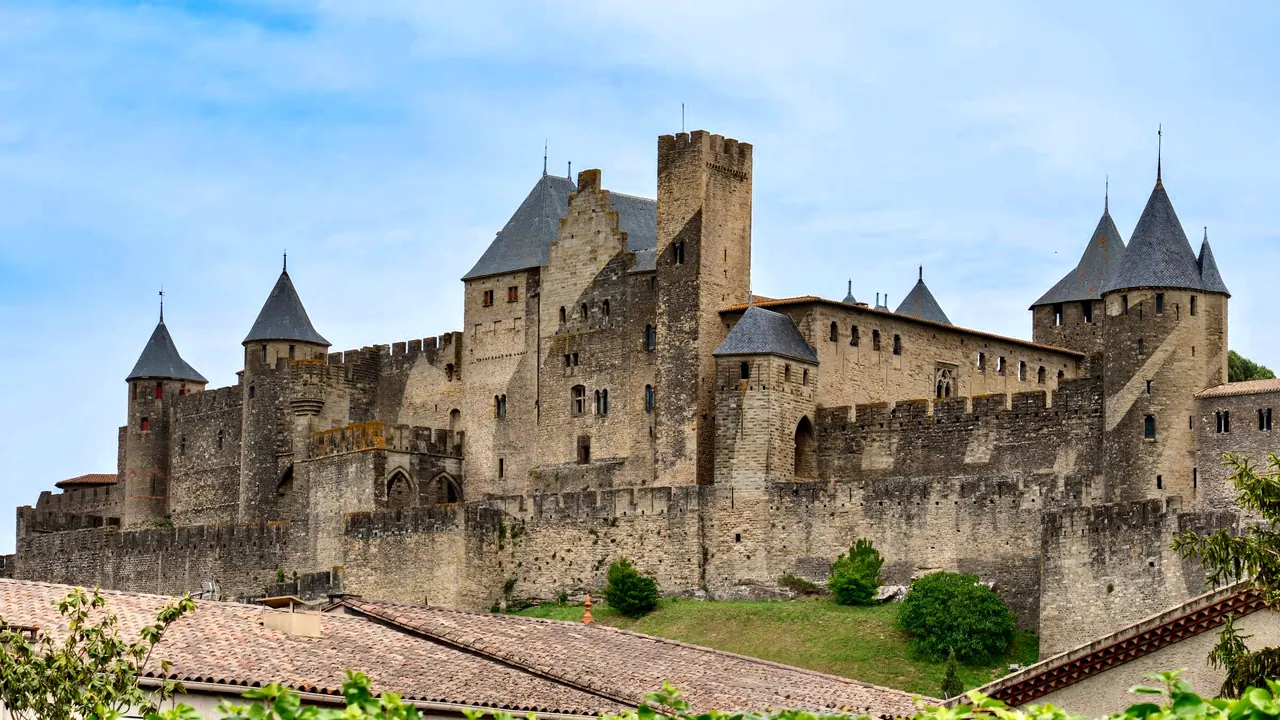
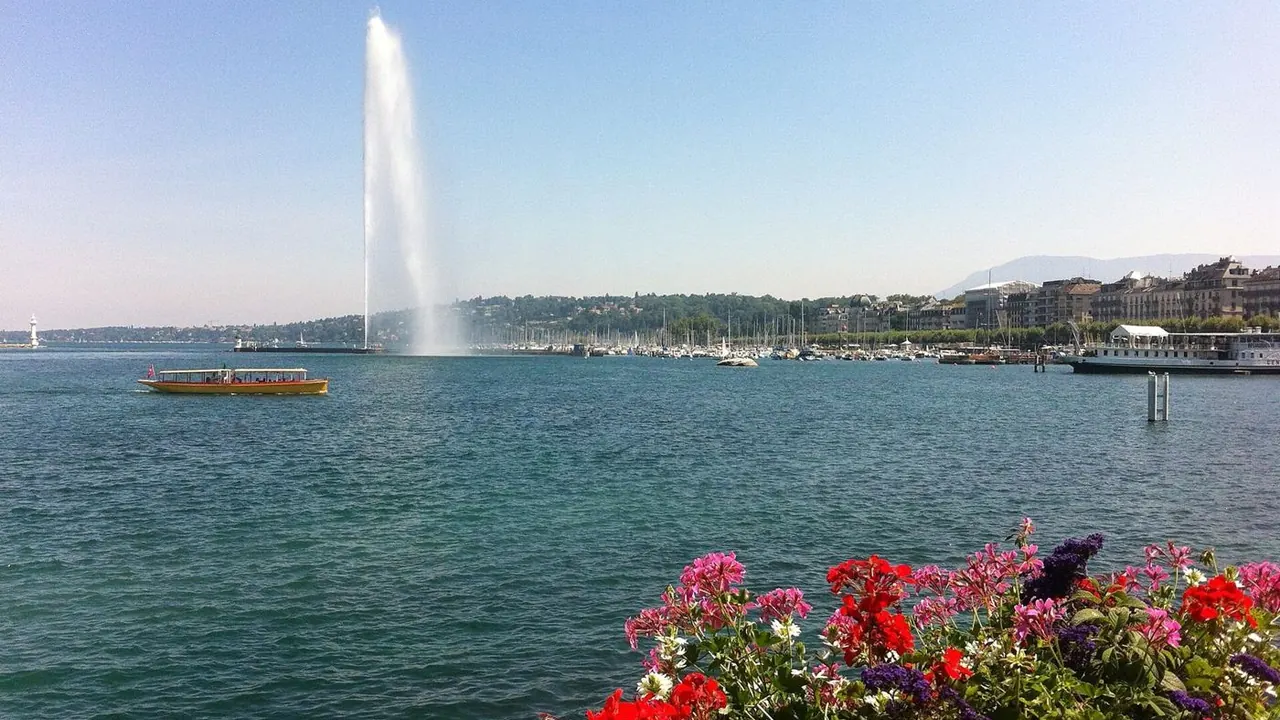
Photos: Carcassonne by Susanne Jutzeler, suju-foto, Pexels License; Geneva by Diviosen, CC BY-SA 3.0, cropped.
Carcassonne or Geneva?
Our verdict in twelve categories, each scored against the same fixed benchmark cities, and the climate month by month, so you can choose for your trip.
Choose Carcassonne for
- prices
- culture and sights
Carcassonne is the choice for a slower, cheaper trip built around medieval history and the warm south. La Cité and the Cathar castles in the hills give a stay a strong sense of the Middle Ages. Southern French prices and long dry summers make a week of castles, cassoulet and Corbières wine easy on the wallet. It suits travellers who are happy to hire a car and keep their evenings quiet.
Choose Geneva for
- shopping
- getting around
- live music and the arts
Travellers who want mountains, a lake and a city that runs like clockwork will be happier in Geneva. The Salève, the Jura and the Alps are close, and trams and trains reach almost everything without a car. For evenings and rainy days there is opera, a serious orchestra and the watch boutiques. The catch is the cost, which is among the steepest anywhere in Europe.
Scoreboard
Twelve categories on one fixed scale from 0 to 100. The shaded stretch is the gap between the two.
Your match
Pick a travel style or drag the sliders, and both match scores follow your weighting.
Wins on prices and culture and sights with your weighting.
Wins on shopping and getting around with your weighting.
What matters to you?
Category by category
What the scores mean for a trip.
Beaches & swimming
Neither city suits a beach vacation, but Geneva makes swimming part of city life. In summer people dive off the Bains des Pâquis jetty in the middle of town, and the Eaux-Vives shore and Genève-Plage add lawns and pools. The water stays cold until June, though.
Carcassonne's nearest swim is the Lac de la Cavayère, a short drive out, with sandy shores and lifeguards. It does have real sea within reach, on the long sandy beaches of Gruissan and Narbonne-Plage. Those beaches are a day out, about an hour away by car.
Food & drink
Geneva has the wider choice of food. Lake perch, fondue and raclette sit alongside a broad spread of international cuisines and polished fine dining in Carouge and the Old Town. The canton's own vineyards supply Chasselas and Gamay. Meals are expensive at every level, though, and cheap casual food is scarce.
Carcassonne's food is narrower but more rooted in the region. Cassoulet is on almost every menu, and Corbières, Minervois and Limoux wines come at fair prices. The good meals are in the Bastide, around Place Carnot and its market, not in the set-menu restaurants inside the Cité walls.
Culture & sights
The two are evenly matched for sightseeing, and each takes two or three days, but they tell different stories. Carcassonne is about the Middle Ages. It has the double-walled Cité with its fifty-two towers, the ramparts of the Château Comtal, the stained glass of Saint-Nazaire and the Canal du Midi below the Bastide.
Geneva's sights come from the Reformation and from world diplomacy. They run from Calvin's St Pierre Cathedral and the Reformation Wall to the Palais des Nations, the Red Cross museum and CERN. Geneva also has the larger museums, while Carcassonne's are few and small.
Nightlife
Geneva offers more after dark, though not much by big-city standards. Bars in the Pâquis behind the station stay busy late, Carouge has wine bars and terraces, and the alternative centres in Plainpalais and Jonction run club nights. Weeknights are quiet, and drinks are expensive.
Carcassonne's evenings are calmer still: a stroll on the floodlit walls, a glass of wine on a terrace or a drink in the bars around Place Carnot. There are almost no clubs, and anyone who wants a late night goes to Toulouse or Montpellier.
Nature & outdoors
Geneva is by far the stronger base for the outdoors. Mont Blanc shows at the end of the lake, and the Salève cable car and the Jura ridge are close. The lake offers sailing and paddleboarding, and the high Alps around Chamonix are about an hour away, with skiing in winter.
Carcassonne's countryside is gentler and drier. There is beech forest in the Montagne Noire, garrigue and Cathar ruins in the Corbières, rafting in the Aude gorges and flat cycling on the Canal du Midi towpath. Beyond the canal you nearly always need a car, and the summer heat and wind push walking into spring and autumn.
Day trips
Both are excellent bases for days out, but the trips are very different. From Carcassonne they are about castles and wine. There are Peyrepertuse and Quéribus on their limestone ridges, Lastours, villages such as Lagrasse and Minerve, and Narbonne and Toulouse by train. Most of the rest needs a car.
Geneva's list is more varied and easier without a car. Lake steamers and trains reach Lausanne, the Lavaux terraces, Montreux and the Château de Chillon. Annecy and Yvoire lie across the French border, and Gruyères and Bern each make a full day.
Good for families
For children the two come out broadly even, but the days look different. Carcassonne gives them a real castle, with drawbridges, ramparts and summer jousting and falconry, plus the lifeguarded lake beach and water park at the Cavayère. The steep Cité is hard going with a pushchair, especially in the crowds of July and August.
Geneva is flatter and easier to manage, with trams that take pushchairs, the big animal dioramas of the Natural History Museum, lakeside playgrounds and the little yellow harbour boats. It has no zoo or theme park, so families tend to add a day in the mountains.
Getting around
In Carcassonne the town itself is simple on foot. The Bastide is flat, the Cité is about twenty-five minutes away across the Pont Vieux and up a steady climb, and trains run well to Toulouse and Narbonne. The castles, villages and vineyards that make the region worth visiting are poorly served by public transport, though, so most visitors hire a car.
A car matters far less in Geneva. The compact centre is walkable, and trams, buses and the yellow lake boats run as one punctual network. The airport is minutes from the main station by train, and regional rail reaches the French suburbs and the rest of Switzerland, so even mountain days can often be done without driving.
Shopping & style
Geneva is a serious shopping city at the top end. It has the flagship watch and jewellery boutiques of the Rue du Rhône, chocolatiers in the Old Town, craft workshops in Carouge and the flea market on Plainpalais.
Carcassonne is not a shopping town. The lanes of the Cité sell plastic swords and Cathar trinkets, and the Bastide has a modest high street. The best things to take home are tinned cassoulet and wine from the Corbières, Minervois and Limoux.
Affordability
This is where Carcassonne pulls well ahead. Prices are those of a provincial town in southern France, local wine is cheap, lunchtime set menus are good and the town is small enough to walk. A stay stays affordable as long as you avoid sleeping and eating inside the Cité and the peak months of July and August.
Geneva is among the most expensive cities in the world to visit, from hotel rooms to a simple glass of wine. Free museums, free local transport for hotel guests and cheap lidos help a little, and many visitors save money by staying across the border in France.
Live music & performing arts
Geneva has a full stage programme all year. There is opera and ballet at the Grand Théâtre, the Orchestre de la Suisse Romande in Victoria Hall, French-language theatre at the Comédie and concerts at the Bâtiment des Forces Motrices in the middle of the Rhône.
Carcassonne's big moment is July. The Festival de Carcassonne brings concerts and theatre to the open-air stage inside the Cité walls, and Bastille Day brings fireworks over the ramparts. Outside summer there is the modest municipal theatre and little more, and opera means a trip to Toulouse.
Wellness & relaxation
Carcassonne has no bathing tradition of its own, and the thermal villages of the upper Aude, such as Alet-les-Bains, are modest local places. Its calm is a matter of pace: slow lunches and walks along the Canal du Midi outside high summer, when the Cité is hot and crowded.
For a restful stay, the lake gives Geneva what Carcassonne lacks. In winter the Bains des Pâquis runs a sauna and hammam where regulars plunge straight into the cold water, the lakefront hotels have proper spas, and Évian and Divonne are an easy trip. Quiet Sundays and the lakeside promenades add to it.
When should you go?
Pick your month. The climate figures are measured averages, not a forecast.
Carcassonne in July
Geneva in July
Daytime high, °C
Rainfall in the month, mm
Where the figures come from
Carcassonne has no rain gauge within 25 km of the centre, so its rainfall comes from a gridded climate dataset read at the city rather than from a gauge further away.
Carcassonne's sunshine is measured 68 km from the centre, at Perpignan.
Temperature and rainfall are climate normals, averaged over the years shown. Carcassonne: 1999-2020 (sunshine 1991-2020, rainfall 1991-2020) normals, Carcassonne (2.8 km from centre). Geneva: 1991-2020 normals, Geneve-Cointrin (5.7 km from centre).
Carcassonne has the warmer, drier and sunnier climate. Summer days reach 29°C in July and August, which is right for the lake but makes the ramparts hard going at midday, and July is the driest month, at 22mm. Spring and September are the most comfortable times for walking the Cité and the hills. Rain picks up in October and November, and winters are cool but fairly bright.
Geneva runs close behind in summer, only a degree or three cooler from May to August. The gap widens in winter, when January highs are around 5°C against Carcassonne's 10°C. Rain falls steadily all year and is heaviest in autumn, and winters are grey, with only about 50 hours of sunshine in December. June to early September is its best stretch, when the lake is warm enough to swim and the long days suit the mountain trails.
Which traveller are you?
On a trip on a tight budget, Carcassonne is far kinder. Rooms in the Bastide, cheap local wine and lunchtime set menus keep costs moderate. Geneva is expensive at every level, and many careful visitors end up sleeping across the border in France.
For an outdoors trip, Geneva has the edge. The Salève cable car, the Jura forest trails, sailing on the lake and Chamonix about an hour away are all within reach, mostly by public transport. Carcassonne's hills and gorges need a car and a cooler season.
On a shopping trip, Geneva is the obvious pick. The Rue du Rhône holds the flagship boutiques of the great Swiss watch houses, Carouge has craft workshops and Plainpalais has a flea market. Carcassonne offers little beyond Cité souvenirs and a good bottle of Limoux blanquette.
Before you go
| Measure | Carcassonne | Geneva |
|---|---|---|
| Official language | French | French, German, Italian, Romansh |
| Currency | Euro (EUR) | Swiss Franc (CHF) |
| Sockets | CE230 V, 50 Hz | CJ230 V, 50 Hz |
| Driving side | Right | Right |
| Time zone | UTC+1, UTC+2 in summer | UTC+1, UTC+2 in summer |
| Emergency number | 112 | 112 |
| Elevation | 81 m | 403 m |
| Main airport | Carcassonne Salvaza Airport (CCF)4 km from centre10 non-stop destinations | Geneva International Airport (GVA)5 km from centre150 non-stop destinations |
| Public holidays this year | 11 days | 9 days |
By the numbers
| Measure | Carcassonne | Geneva |
|---|---|---|
| City population | 46,080 | 211,152 |
| People per km² | 708 | 13,280 |
| Museums within 10 km | 6 | 34 |
| UNESCO World Heritage sites within 50 km | 2 | 2 |
Where else could you go?
Every comparison below shares a destination with this one, so you can follow Carcassonne or Geneva somewhere new.
- Annecyvs Geneva
- Lausannevs Geneva
- Chamonixvs Geneva
- Toulousevs Carcassonne
- Lyonvs Geneva
- Zermattvs Geneva