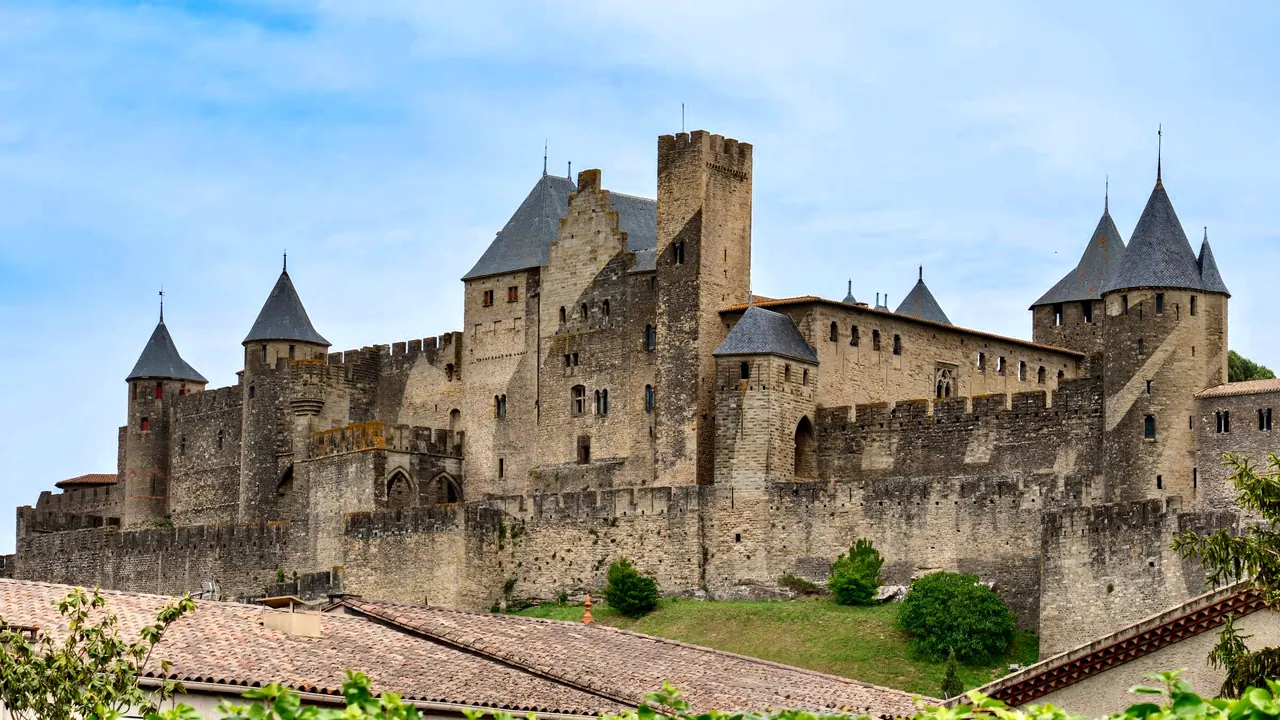
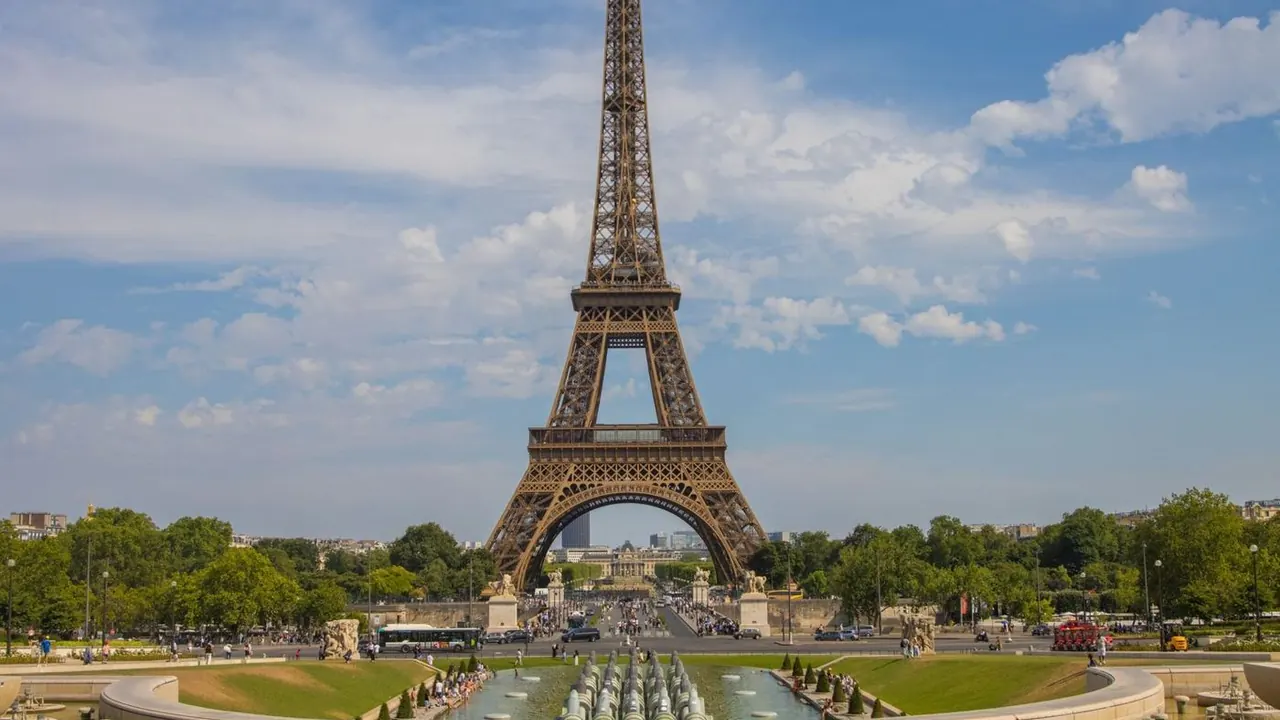
Photos: Carcassonne by Susanne Jutzeler, suju-foto, Pexels License; Paris by Efrem Efre, Pexels License.
Carcassonne or Paris?
Our verdict in twelve categories, each scored against the same fixed benchmark cities, and the climate month by month, so you can choose for your trip.
Choose Carcassonne for
- prices
- beaches
- nature and the outdoors
Carcassonne suits a slower trip built around one extraordinary place and the countryside around it. The walled Cité fills a day or two, and then the draw is the region: Cathar castles on their ridges, Corbières and Minervois wine, cassoulet in the Bastide, a swim in the lake or a drive to the Mediterranean. Summers are hotter and sunnier, and costs are lower. It works best for someone happy with quiet evenings and a hire car.
Choose Paris for
- shopping
- nightlife
- live music and the arts
Paris is the choice when you want a city with real depth in almost everything: the great museums, eating at every level, serious shopping, opera and jazz, and nights that run until dawn. The metro and a walkable centre tie it together, and trains reach Versailles, Reims and the Loire without a car. It costs more and rarely feels restful, but a week there still leaves plenty unseen.
Scoreboard
Twelve categories on one fixed scale from 0 to 100. The shaded stretch is the gap between the two.
Your match
Pick a travel style or drag the sliders, and both match scores follow your weighting.
Wins on prices and beaches with your weighting.
Wins on shopping and nightlife with your weighting.
What matters to you?
Category by category
What the scores mean for a trip.
Beaches & swimming
Neither city is on the coast, but Carcassonne gets you to the water far more easily. The Lac de la Cavayère, a short drive from the Cité, has sandy shores and lifeguards in summer, and the long, shallow Mediterranean beaches at Gruissan and Narbonne-Plage make an easy day out by car.
Paris has to make do with sand laid on the riverbanks in summer, swimming in the Bassin de la Villette and the Seine, and some fine Art Deco pools. The nearest real sea is the cool Channel at Deauville, two hours away by train.
Food & drink
Carcassonne is good at one kind of cooking: cassoulet, southern French bistros and fairly priced local wine such as blanquette de Limoux. The better meals are down in the Bastide around Place Carnot and the market hall rather than inside the Cité, and beyond that the choice soon runs out.
Paris is one of the world's great food cities, with every level from zinc-counter bistro to haute cuisine. Pho in the 13th, North African cooking in Belleville, the Marché d'Aligre and serious pastry add range that Carcassonne cannot match. The one thing they share is the warning to avoid set menus near the big sights.
Culture & sights
Carcassonne has one of the most striking single sights in Europe: the double-walled Cité with its fifty-two towers, the Château Comtal and the Gothic glass of Saint-Nazaire, plus the Bastide and the Canal du Midi below. Museums are few and small, though, and two days covers it.
Paris works on another scale altogether. The Louvre, Orsay, the Orangerie, Cluny and the Pompidou would each be the main draw anywhere else, and Sainte-Chapelle and Notre-Dame stand alongside the whole Haussmann cityscape. You could spend weeks there and still not see everything.
Nightlife
Carcassonne goes quiet once the day visitors leave. Its evening pleasures are a walk on the floodlit walls and a drink at the cafés around Place Carnot. Paris offers a full night out, from the bars of Oberkampf, Belleville and the Canal Saint-Martin to cocktails in South Pigalle and house and techno clubs that run until dawn.
Nature & outdoors
Carcassonne has the edge here because it has real landscape close by. The beech and chestnut forest of the Montagne Noire, the garrigue of the Corbières with Cathar ruins on its ridges, and the Aude gorges with summer rafting are all within reach, although you need a car for almost all of it. The Canal du Midi towpath is the easy option.
Paris is a city of parks and woods: the Luxembourg, the cliffs of the Buttes-Chaumont, and the Bois de Boulogne for rowing and cycling. Fontainebleau's boulders and forest trails are a short train ride away, but the outdoors here means gentle walking rather than hills.
Day trips
Carcassonne's days out are about the countryside rather than other towns. The Cathar strongholds of Peyrepertuse and Quéribus, clinging to the crests to the south, are the trip most visitors remember. Lagrasse, Minerve and Mirepoix reward a slow drive through the Corbières and Minervois vineyards, with wine tastings on the way. Only Toulouse and Narbonne are easy by train, so almost everything else depends on a hire car.
Paris offers a longer and more varied list, and nearly all of it is reached by rail. Versailles, Fontainebleau, Chartres and Monet's Giverny each make an easy outing. Fast trains put the Champagne cellars of Reims, old Rouen and the Loire châteaux within a comfortable return trip. Carcassonne gives you one region to explore in depth, while Paris opens up half of northern France, so on a long stay you could spend as much time outside the city as in it.
Good for families
Carcassonne gives children a real castle, with drawbridges, ramparts, summer jousting and falconry, and the lake with its water park adds a second day. After that you need the car, and the steep cobbles and summer heat of the Cité are hard going with a pushchair.
Paris can keep a family busy for much longer. Disneyland and Parc Astérix are nearby, and in the city there are the Cité des Sciences, the Jardin des Plantes galleries, and carousels and toy boats in the Luxembourg. The costs are metro stairs, crowded trains and small hotel rooms.
Getting around
In Paris the walk itself is part of the pleasure, and the dense metro, the RER and the bike-share cover everything else, so a car only gets in the way. Expect stairs and rush-hour crowds. Carcassonne is easy on foot, from the flat Bastide up to the Cité, but its castles, villages and vineyards are poorly served by public transport. Most visitors end up hiring a car.
Shopping & style
Shopping is one of the main reasons to visit Paris. There are couture flagships on Avenue Montaigne, Galeries Lafayette and Le Bon Marché, designers and vintage shops in the Marais, the covered passages, the Saint-Ouen flea market and the bouquinistes along the Seine.
Carcassonne has plastic swords in the Cité and a modest high street in the Bastide. The best things to take home are tinned cassoulet, Limoux blanquette and produce from the Place Carnot market.
Affordability
Carcassonne is clearly the cheaper stay. It has moderately priced rooms in the Bastide, cheap local wine, good lunchtime menus and almost no transport costs in town. Prices rise inside the Cité walls and in July and August, and car hire is the main extra cost.
Paris is expensive from the start: small, costly hotel rooms, terrace drinks that add up, and full museum admission. Bakeries, picnics, the free permanent collections of the city's own museums and a room in the outer arrondissements all soften the bill.
Live music & performing arts
Carcassonne's season mostly happens in July, when the Festival de Carcassonne puts concerts and theatre on the open-air stage inside the Cité. Bastille Day fireworks over the walls are the other big night. For the rest of the year there is little beyond the municipal theatre.
Paris has a full calendar all year. There is ballet at the Palais Garnier, opera at the Bastille, orchestras at the Philharmonie, jazz in the cellar clubs around the rue des Lombards and cabaret in Pigalle. Much of the theatre is in French, but the music needs no translation.
Wellness & relaxation
Neither city has a bathing tradition of its own, but Paris has a little more to book. There is the tiled hammam of the Grande Mosquée, smaller neighbourhood hammams and plenty of day spas. Proper rest there comes only in short spells.
Carcassonne relies on hotel spas and the modest thermal villages of the upper Aude, such as Rennes-les-Bains, about an hour away. What it does offer is a slow pace outside high summer, with long lunches and the shaded canal towpath.
When should you go?
Pick your month. The climate figures are measured averages, not a forecast.
Carcassonne in July
Paris in July
Daytime high, °C
Rainfall in the month, mm
Where the figures come from
Carcassonne has no rain gauge within 25 km of the centre, so its rainfall comes from a gridded climate dataset read at the city rather than from a gauge further away.
Carcassonne's sunshine is measured 68 km from the centre, at Perpignan.
Temperature and rainfall are climate normals, averaged over the years shown. Carcassonne: 1999-2020 (sunshine 1991-2020, rainfall 1991-2020) normals, Carcassonne (2.8 km from centre). Paris: 1991-2020 (sunshine 1961-1990) normals, Paris-Montsouris (4.6 km from centre).
Carcassonne has the warmer, sunnier climate. June to September is properly summery, with July and August reaching 29°C, warm enough for the lake beach and day trips to the coast, though the midday heat makes the steep Cité and long hikes hard work. July is also the driest month. Spring and early autumn are the best time for walking the ramparts and the hills, and the rain comes mainly in October and November, peaking around 76mm. Winters are cool but fairly bright for the season.
Paris is milder and greyer. Summer highs sit around 26°C, comfortable for walking all day, and May is its wettest month at about 75mm, with rain spread fairly evenly through the rest of the year. From November to February it is cold and markedly darker than Carcassonne, a season for museums and cafés rather than strolling. Late spring and September suit both cities well, while high summer favours Paris for sightseeing and Carcassonne for sun.
Which traveller are you?
For a food and nightlife trip, Paris wins easily. It has neo-bistros in the 10th and 11th, couscous in Belleville and natural-wine bars, and then the bars of Oberkampf and the clubs that run until dawn. Carcassonne offers good cassoulet and quiet evenings on Place Carnot.
On a trip on a tight budget, Carcassonne goes further. Rooms in the Bastide are moderately priced outside high summer, local wine and lunchtime set menus are cheap, and the town is walkable. Paris rewards picnics and free museums, but its hotels hit the budget hard.
For a beach and sun trip, Carcassonne is the better of two inland options. Its summers are hotter and sunnier, the Lac de la Cavayère has a lifeguarded sandy shore nearby, and the Mediterranean is about an hour's drive away. From Paris, the sea means a cool Normandy beach.
Before you go
| Measure | Carcassonne | Paris |
|---|---|---|
| Official language | French | French |
| Currency | Euro (EUR) | Euro (EUR) |
| Sockets | CE230 V, 50 Hz | CE230 V, 50 Hz |
| Driving side | Right | Right |
| Time zone | UTC+1, UTC+2 in summer | UTC+1, UTC+2 in summer |
| Emergency number | 112 | 112 |
| Elevation | 81 m | 27 m |
| Main airport | Carcassonne Salvaza Airport (CCF)4 km from centre10 non-stop destinations | Charles de Gaulle International Airport (CDG)22 km from centre277 non-stop destinations |
| Public holidays this year | 11 days | 11 days |
By the numbers
| Measure | Carcassonne | Paris |
|---|---|---|
| City population | 46,080 | 2,103,778 |
| People per km² | 708 | 19,960 |
| Museums within 10 km | 6 | 251 |
| UNESCO World Heritage sites within 50 km | 2 | 5 |
Where else could you go?
Every comparison below shares a destination with this one, so you can follow Carcassonne or Paris somewhere new.
- Toulousevs Carcassonne
- Montpelliervs Carcassonne
- Gironavs Carcassonne
- Lillevs Paris
- Barcelonavs Carcassonne
- Avignonvs Carcassonne