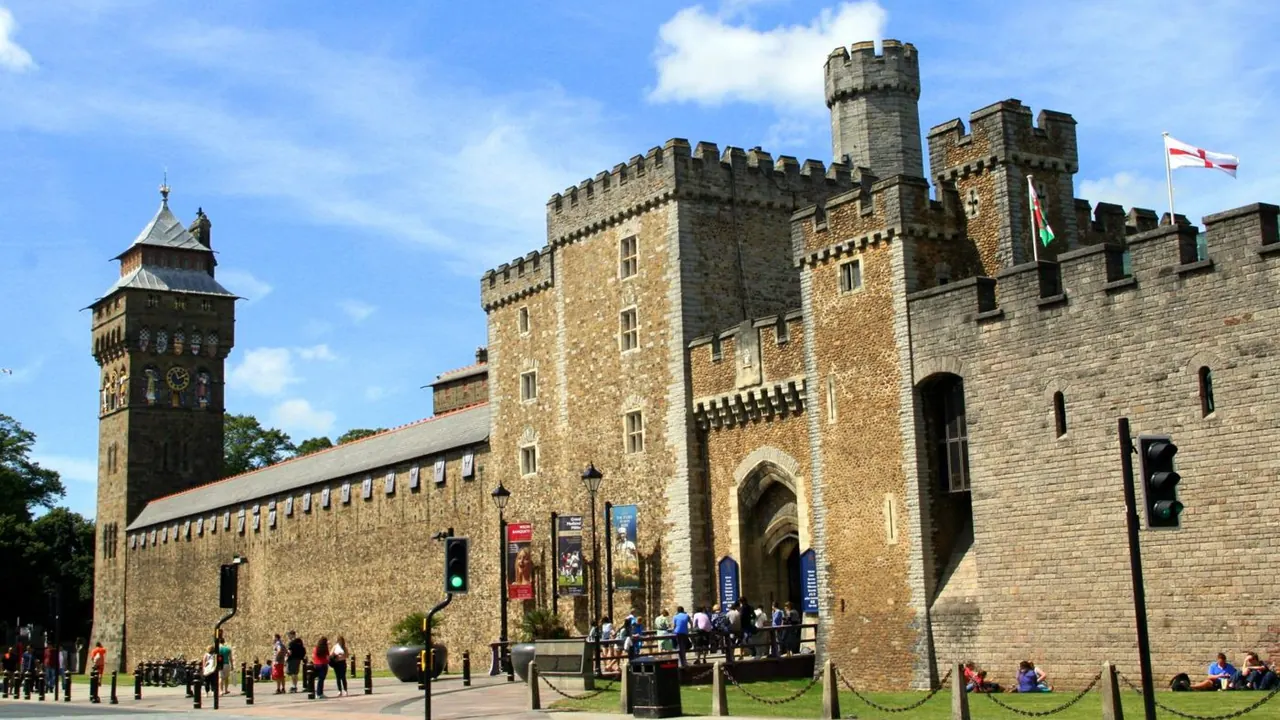
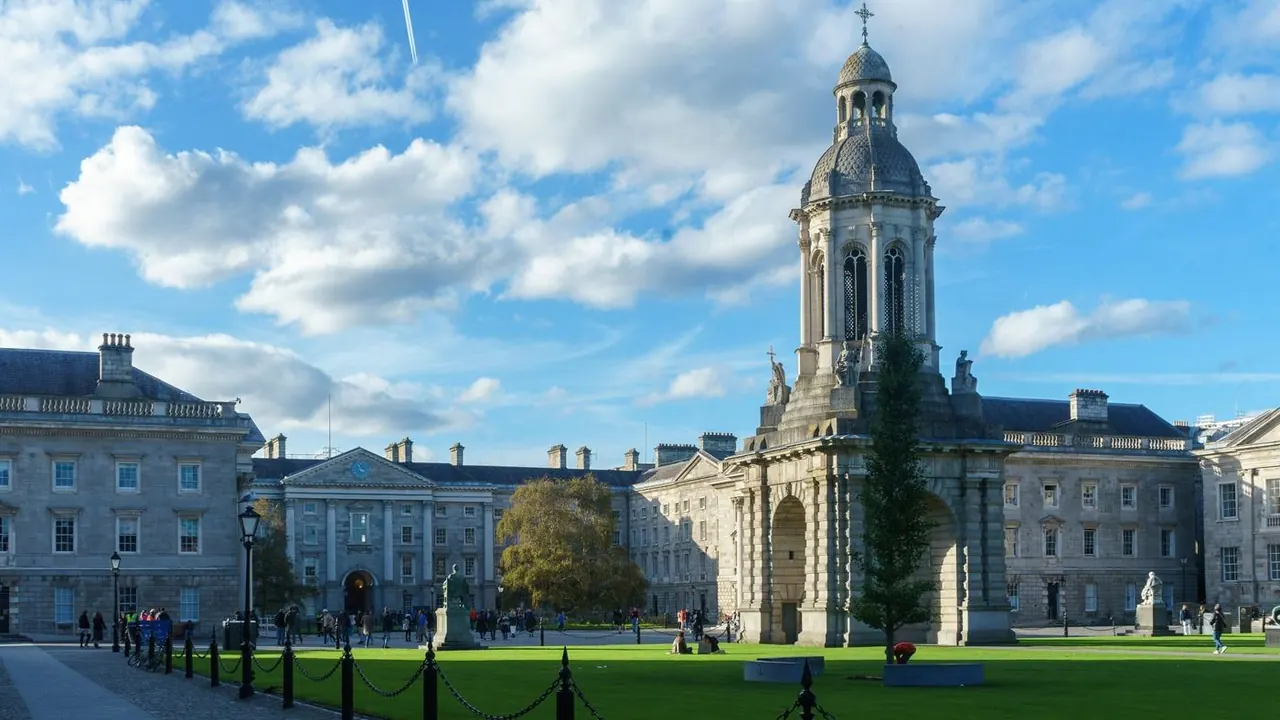
Photos: Cardiff by Tevfik Teker, CC BY 3.0, cropped; Dublin by David Kernan, CC BY 4.0, cropped.
Cardiff or Dublin?
Our verdict in twelve categories, each scored against the same fixed benchmark cities, and the climate month by month, so you can choose for your trip.
Choose Cardiff for
- prices
- beaches
- wellness
Cardiff suits a traveller who wants a compact, good-value capital with plenty to do beyond it. Rooms and meals cost noticeably less than across the Irish Sea, the national museums are free, and short train rides reach Caerphilly, Castell Coch, Bath and Bristol. It works well for a relaxed few days of castles, arcades and the Brecon Beacons, especially if you avoid big match weekends.
Choose Dublin for
- nightlife
- live music and the arts
- culture and sights
Dublin is the better pick when the evenings matter as much as the days. Its pubs, theatre and nightly traditional music sessions give it a social life Cardiff can't match, and the Book of Kells, the Chester Beatty Library and the Georgian squares add more depth to the sightseeing. You pay well for the privilege, so it suits a trip where the budget has some give.
Scoreboard
Twelve categories on one fixed scale from 0 to 100. The shaded stretch is the gap between the two.
Your match
Pick a travel style or drag the sliders, and both match scores follow your weighting.
Too close to call, 1 point apart
Wins on prices and beaches with your weighting.
Wins on nightlife and live music and the arts with your weighting.
What matters to you?
Category by category
What the scores mean for a trip.
Beaches & swimming
Cardiff has no sand of its own. Beyond the barrage the Bristol Channel is brown and tidal, and the Bay behind it is a lake for walking round, not for swimming. For a beach you take the train to Barry Island's promenade and funfair or to Penarth's pebbles under the pier, or drive an hour or more west to the surf at Porthcawl and the wide sands of Gower.
Dublin has the sand close by, with Dollymount, Sandymount and Killiney on or near the DART, but its water is colder. What it has instead is a swimming culture, the all-year dips at the Forty Foot and Seapoint, which are fun to join for a few bracing minutes.
Food & drink
Eating is broadly level and neither city is a reason to go, but the character differs. Cardiff's best moments are Welsh cakes off the griddle in the Victorian market, laverbread and cockles, the bistros of Pontcanna and Canton, and the long run of Middle Eastern and South Asian cooking on City Road.
Dublin leans on its produce, Atlantic shellfish and grass-fed beef in the bistros of Dublin 2 and Dublin 8, and above all on drink: slow-poured stout and whiskey distilleries. Cardiff's local ales are good, but Dublin's pubs are what visitors remember.
Culture & sights
Dublin has the richer sightseeing. The Book of Kells and the Long Room at Trinity, the Chester Beatty Library, two medieval cathedrals and Kilmainham Gaol give it older layers and more weight, all set among Georgian terraces and steeped in Joyce and Wilde.
Cardiff's highlights are fewer but distinctive. The castle's Victorian Gothic interiors and the strong Impressionists in the National Museum reflect its coal-port wealth, and St Fagans' open-air village of rebuilt Welsh buildings has no real equal in Dublin. Most of Cardiff's fabric, though, is Victorian or later.
Nightlife
Dublin is the better night out, built around pubs and conversation: mahogany bars near Grafton and Baggot Streets, younger late bars on Camden and George's Streets, and Temple Bar for the crowds. Clubbing is thin, as venues close soon after the pubs.
Cardiff goes out in a louder, more mainstream way, with big groups on St Mary Street on Saturdays and the whole centre in red on rugby days. Womanby Street's small alternative bars are the best of it, but the scene is seen in a couple of nights and goes quiet midweek.
Nature & outdoors
The outdoors are equally good, and the difference is height and coast. Cardiff's Bute Park leads into the Taff Trail, and the Brecon Beacons, about an hour's drive, offer the proper hill walk up Pen y Fan across open moorland.
Dublin keeps more of its nature within reach by train: deer in Phoenix Park, birdlife on North Bull Island, the cliff path at Howth and the Bray to Greystones walk. The Wicklow Mountains and Glendalough are gentler granite hills, softer country than the Beacons.
Day trips
Cardiff's outings are castles and English cities, Dublin's are prehistoric tombs and monastic ruins. From Cardiff, Caerphilly's huge fortress is twenty minutes by train, Castell Coch stands in the woods just north, Chepstow and Tintern Abbey pair up in the Wye Valley, and Bath and Bristol are about an hour away. Most of it is easy without a car.
From Dublin the pull is further back in time: Newgrange and Knowth in the Boyne Valley, older than the pyramids, and Glendalough's round tower in the Wicklow Mountains. These reward the effort but often need a tour or a hire car, while Kilkenny and Belfast are simple by train.
Good for families
Techniquest's hands-on science at the Bay and the farm animals and craft demonstrations at St Fagans are Cardiff's main draws for children, and there is no zoo. Roath Park's rowing boats and, in summer, Barry Island's sands and funfair round it out, all within a compact, flat city.
Dublin's anchor is its long-established zoo inside Phoenix Park, with deer to spot in the park around it, plus Dublinia's Vikings and a theme park half an hour's drive away. Its beaches are for rock pools and kites rather than swimming, and in both cities a rainy day needs an indoor plan.
Getting around
Both centres are small, flat and walkable, and neither has a metro. Cardiff gets by on local trains, buses and a water taxi down the Taff to the Bay, which sits about half an hour's walk from the centre.
Dublin has more of a network, with two Luas tram lines and the DART along the bay, all on one card, which makes the coast especially easy. Away from those lines its buses can crawl in rush hour, including to the airport.
Shopping & style
Shopping is about even and largely high-street in both. Cardiff's distinctive feature is its glass-roofed Victorian arcades, the Royal, Morgan and Castle, full of record shops, vintage clothes and books, with lovespoons and Welsh blankets to take home.
Dublin has Grafton Street, the Brown Thomas department store and the Georgian Powerscourt Townhouse, and better souvenirs in Aran knitwear, linen, tweed and whiskey from the design shops around Drury Street.
Affordability
Cardiff is much the cheaper of the two. Its hotels are moderate on ordinary weekdays, pubs charge normal British prices, and free museums and short train rides keep the days inexpensive. Just check for rugby internationals or stadium concerts, when rooms jump.
Dublin is one of Europe's expensive cities, with room rates the biggest hit and few budget options. Free national museums, lunch menus and staying out along the DART or Luas soften the bill, but drinks and dinners still add up quickly.
Live music & performing arts
Dublin has the stronger stage life, led by theatre: the Abbey, founded by Yeats and Lady Gregory, the Gate's classic productions, and the autumn Dublin Theatre Festival. Add traditional sessions in pubs almost every night and the National Concert Hall, and evenings are well filled, though opera is limited to short seasons.
Cardiff turns that around on opera, as the Wales Millennium Centre houses Welsh National Opera. The BBC National Orchestra of Wales, student shows at the Royal Welsh College and the small band venues of Womanby Street give it a good, if smaller, musical life.
Wellness & relaxation
Neither city is built for unwinding, and both offer little beyond hotel spas. Cardiff's calm is in slow café mornings in Pontcanna and riverside walks through Bute Park.
Dublin has the one real ritual of the two, the cold sea dip at the Forty Foot or Seapoint, often followed by a seafront sauna, and quiet afternoons in its Georgian squares or bayside villages.
When should you go?
Pick your month. The climate figures are measured averages, not a forecast.
Cardiff in July
Dublin in July
Daytime high, °C
Rainfall in the month, mm
Where the figures come from
Cardiff has no rain gauge within 25 km of the centre, so its rainfall comes from a gridded climate dataset read at the city rather than from a gauge further away.
Cardiff's sunshine is measured 83 km from the centre, at Lyneham.
Temperature and rainfall are climate normals, averaged over the years shown. Cardiff: 1991-2020 normals, Cardiff-Wales Airport (14.9 km from centre). Dublin: 1991-2020 normals, Dublin Airport (9.3 km from centre).
Both cities share the same mild, damp Atlantic pattern, with summer highs of about 20°C in July and August and no month too hot for walking. Late spring through September is the comfortable stretch for both, and October to January brings the heaviest rain and short, grey days. Winter is cool rather than cold, fine for museums and pubs but poor for hill walks.
The difference shows in summer. Cardiff gets clearly more sunshine from June to August, around 208 hours in July, while Dublin's summer is cloudier and its August is one of its wetter months. The sea is cool off both, but Cardiff's coast reaches about 18°C in August against Dublin's 15°C, so a paddle at Barry Island is a little kinder than a dip in Dublin Bay.
Which traveller are you?
On a trip on a tight budget, Cardiff is the clear choice. Hotels are moderate on ordinary weekdays, the national museums and St Fagans are free, and cheap local trains reach castles and the coast, while Dublin's rooms and rounds of drinks drain a wallet fast.
For a food and nightlife trip, Dublin wins on the strength of its pubs. Old snugs with coal fires, late bars on Camden and Wexford Streets, stout and whiskey tastings make for better nights than Cardiff's weekend crowds on St Mary Street, though the meals in either are solid rather than memorable.
On a culture and arts trip, Dublin gives more. The Abbey and the Gate theatres, nightly trad sessions, the Book of Kells and Kilmainham Gaol outweigh Cardiff's castle and Impressionists, although Cardiff does have Welsh National Opera, which Dublin lacks.
Before you go
| Measure | Cardiff | Dublin |
|---|---|---|
| Official language | English | English, Irish |
| Currency | Pound Sterling (GBP) | Euro (EUR) |
| Sockets | G230 V, 50 Hz | G230 V, 50 Hz |
| Driving side | Left | Left |
| Time zone | UTC, UTC+1 in summer | UTC, UTC+1 in summer |
| Emergency number | 112 or 999 | 112 |
| Elevation | 41 m | 20 m |
| Main airport | Cardiff International Airport (CWL)15 km from centre30 non-stop destinations | Dublin Airport (DUB)9 km from centre200 non-stop destinations |
| Public holidays this year | 8 days | 11 days |
By the numbers
| Measure | Cardiff | Dublin |
|---|---|---|
| City population | 383,536 | 592,713 |
| People per km² | 2,734 | 5,154 |
| Museums within 10 km | 9 | 40 |
| UNESCO World Heritage sites within 50 km | 1 | 1 |
| Swim season, months above 21 °C | None | None |
Where else could you go?
Every comparison below shares a destination with this one, so you can follow Cardiff or Dublin somewhere new.