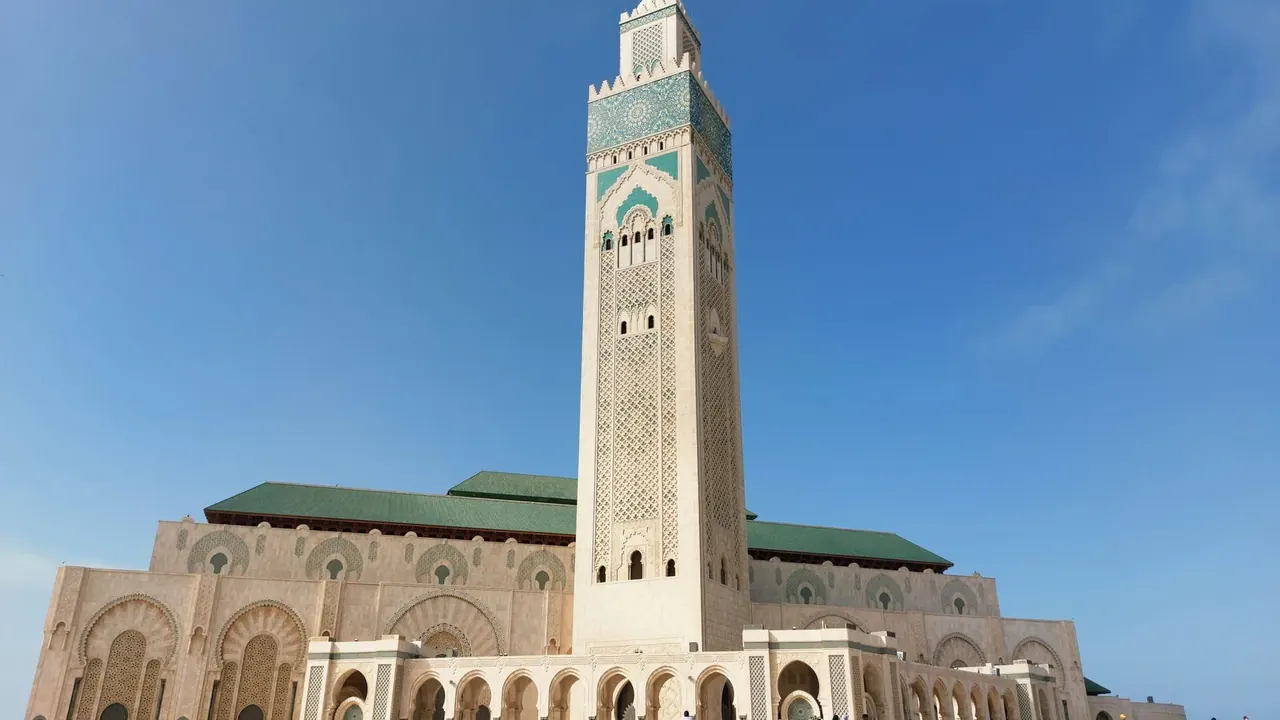
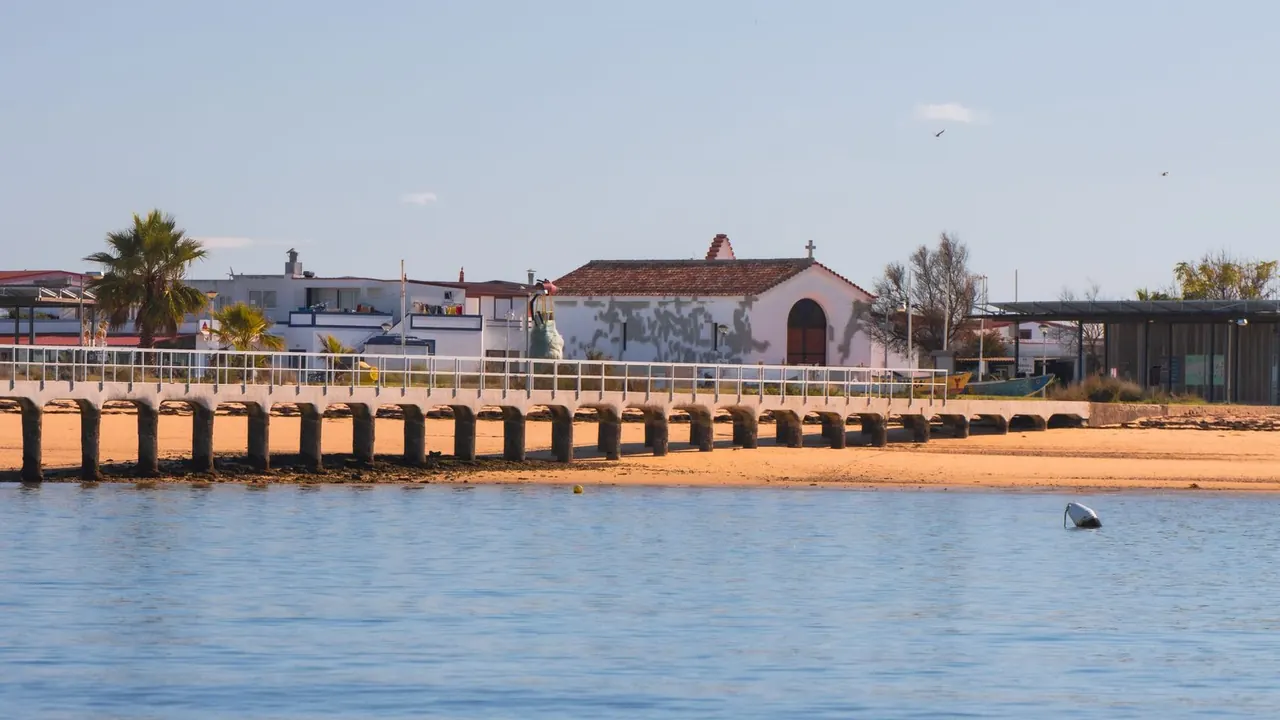
Photos: Casablanca by Samir Bakkah, Pexels License; Faro by Efrem Efre, Pexels License.
Casablanca or Faro?
Our verdict in twelve categories, each scored against the same fixed benchmark cities, and the climate month by month, so you can choose for your trip.
Choose Casablanca for
- wellness
- culture and sights
- shopping
Casablanca suits travellers who want a large, modern Moroccan city rather than a resort. The draw is the Hassan II Mosque over the ocean, the Art Deco boulevards of the protectorate era, grilled fish picked at the Marché Central, a long hammam scrub and a well-dressed night out on the Corniche. It also works as the first stop on a wider trip through Morocco, with fast trains to Rabat and beyond.
Choose Faro for
- nature and the outdoors
- beaches
- families
Faro is the better pick for a slower, outdoor trip built around water. The sandy barrier islands of the Ria Formosa, boat trips through the lagoon, flamingos in the salt pans and a small walled old town give families and nature lovers more to do than the big Moroccan port. A string of Algarve towns within easy reach fills the rest of the week.
Scoreboard
Twelve categories on one fixed scale from 0 to 100. The shaded stretch is the gap between the two.
Your match
Pick a travel style or drag the sliders, and both match scores follow your weighting.
Too close to call, level with your weighting
Wins on wellness and culture and sights with your weighting.
Wins on nature and the outdoors and beaches with your weighting.
What matters to you?
Category by category
What the scores mean for a trip.
Beaches & swimming
Casablanca's beach is the long sand of the Corniche at Ain Diab, but the swell and currents are strong, so many people swim in the pools of the beach clubs instead. Better sands at Dar Bouazza or Mohammedia mean a drive.
Faro's beaches are the stronger draw, even though none is in town. A bus over the bridge to Praia de Faro or a ferry to Ilha Deserta and Culatra brings you to kilometres of dune-backed sand and a calmer sea. Here the beach can be the reason for the trip, not just a spare afternoon.
Food & drink
Casablanca gives you the broader choice of where and how to eat. Everyday Moroccan cooking runs from tagines, Friday couscous and harira to msemen and snails in broth from Old Medina stalls, and at the Marché Central you can pick your fish and have it grilled next door. Maarif, Gauthier and the Corniche add French-style brasseries, pâtisseries and a solid run of smarter restaurants for an evening out.
Faro's cooking is narrower but has one real strength in the shellfish of the Ria Formosa: clams, oysters and cockles, along with cataplana from its copper pan and almond and fig sweets. Fine dining and international food are thin on the ground, and the better seafood houses are a short train ride away in Olhão.
Culture & sights
Casablanca has more to see. The Hassan II Mosque, one of the few in Morocco open to non-Muslims, is a landmark on its own, and the Art Deco and neo-Moorish streets around Boulevard Mohammed V, the Habous quarter and the Museum of Moroccan Judaism fill two or three days.
Faro's heritage fits inside its medieval walls. You enter through the Arco da Vila to reach the cathedral tower over the lagoon, a Roman mosaic in the convent museum and the bone-lined Capela dos Ossos. It is charming, but a single unhurried day covers it.
Nightlife
Nights in Casablanca happen behind closed doors, but there are more of them and they run later. Lounges and clubs along the Corniche at Ain Diab play house and Arabic pop into the small hours at weekends, while protectorate-era bars and hotel cocktail lounges fill the evenings downtown. You take taxis between them, and the streets themselves stay quiet.
Faro's evenings are smaller and spent outside. Terraces on Rua do Prior and near the marina fill up when the university is in term, and in summer people drink out on the squares, though most visitors call it a night after dinner. For big clubs, people go to Albufeira.
Nature & outdoors
Faro has far more natural landscape on its doorstep. The Ria Formosa starts at the edge of the old town, and you can explore its channels by kayak or paddleboard and watch flamingos and spoonbills at Ludo. The cork-oak hills of the Serra do Caldeirão offer quieter walking on the Via Algarviana.
Casablanca sits on a flat plain, and its outdoor life comes down to the sea. You can run along the Corniche to the El Hank lighthouse, walk among the eucalyptus of Bouskoura forest, and learn to surf at Ain Diab or Dar Bouazza. Surfing is the one thing it does better than Faro.
Day trips
From Casablanca, one day out stands well above the rest: Rabat, an hour away by train, with the Kasbah des Oudayas, the Chellah ruins and the Hassan Tower. El Jadida's Portuguese cistern and Azemmour's riverside medina lie down the coast, but Marrakech and Fes are too far for a comfortable return trip.
Faro gives you a fuller week of outings. Tavira and Olhão are short train rides away, and Loulé's market hall, the Roman villa at Milreu and Silves castle are close by road. Lagos, Sagres and even Seville make longer but worthwhile days.
Good for families
Faro is the easier place with children. The lagoon beaches are gentle, the boat trips to the islands are a treat in themselves, and the compact old town is quiet enough to wander. The drawback is that the Algarve's water parks and marine park need a car.
Casablanca has its attractions, including the aquarium and indoor rides in the Corniche mall, the zoo and amusement park at Ain Diab, and calm beach-club pools. Between them, though, heavy traffic, broken pavements and rough sea make it better suited to older children for a few days.
Getting around
In Faro you mostly walk. The old town, marina, shopping streets and station are close together on flat ground, the airport is next door, and ferries leave from below the walls. You will want a car only to explore the wider Algarve, where the coastal railway is slow.
Casablanca is spread out, so you combine the tram, which runs from downtown to Ain Diab, with red petits taxis that share rides and sometimes skip the meter. The big roundabouts are hard to cross on foot. Its fast intercity trains, however, beat anything Faro has.
Shopping & style
Casablanca is the stronger shopping city. It has a huge Corniche mall with international and luxury labels, Moroccan designers in Maarif, low-pressure craft shops in the Habous quarter and the Derb Ghallef flea market for curiosities, although carpet hunters do better elsewhere in Morocco.
Faro is about small, local buys from Rua de Santo António: cork goods, painted ceramics, tinned fish and flor de sal from the lagoon salt pans. For wider choice, Loulé's market is a short drive inland.
Affordability
Both cities are cheap day to day and pricier for rooms, but Casablanca stretches a budget a little further. Taxis, the tram, market fish and simple Moroccan meals cost very little, and the business hotels and Corniche drinks are easy to avoid.
In Faro, grilled fish, house wine and buses are fairly priced. Rooms climb steeply in July and August, though, and touring the Algarve often means paying for a hire car as well.
Live music & performing arts
Casablanca has the edge, mostly because of its festivals and its own music scene. The large theatre on Place Mohammed V, a long-running jazz festival, an urban music and hip-hop festival, and chaabi, rap and gnawa all come from or play in the city.
Faro's stages are smaller and more classical: chamber music in the ornate Teatro Lethes and the regional orchestra at the Teatro das Figuras, with fado only now and then. In both cities an ordinary week can be quiet, so check what is on.
Wellness & relaxation
For actual treatments, Casablanca is the better place. Every neighbourhood has its hammam with black soap and kessa glove, Maarif has more refined versions with massage, and the thalassotherapy centres on the Corniche use Atlantic seawater. The city around them is loud, though.
Faro has no bathing tradition, and its spas are resort spas along the golf coast. What it offers instead is a slow pace: long lunches, lagoon walks at sunset and quiet winters. The spring-water spa at Caldas de Monchique is over an hour away.
When should you go?
Pick your month. The climate figures are measured averages, not a forecast.
Casablanca in July
Faro in July
Daytime high, °C
Rainfall in the month, mm
Temperature and rainfall are climate normals, averaged over the years shown. Casablanca: 1991-2020 normals, Casablanca (5.6 km from centre). Faro: 1991-2020 normals, Faro / Aeroporto (2.8 km from centre).
Casablanca is mild all year. Summer highs stay around 26 to 27°C, so even July and August are comfortable for walking the city, and the months from June to September are almost dry. Rain returns in October and peaks in November at about 78mm, though winter days still reach the high teens. The Atlantic stays cool, warming to about 23°C only in August.
Faro has the hotter, sunnier summer, with highs near 29°C in July and August and very long sunny days. That makes June to September the beach season, with warm weather lasting into October, but midsummer afternoons are better spent at the sea than in the streets. Spring and autumn are the best walking months. Winters are a little cooler than in Casablanca and December is the wettest month, at about 102mm. The sea is much the same temperature off both cities.
Which traveller are you?
On a beach and sun trip, Faro is the clear choice. Ferries and buses reach long, quiet sands on Ilha Deserta, Culatra and Praia de Faro, where the sea is calmer than the heavy Atlantic swell along Casablanca's Corniche.
For a culture and arts trip, Casablanca offers more. You can go inside the Hassan II Mosque, walk the Art Deco downtown and the Habous quarter, and catch a jazz festival or a gnawa performance. Faro's walled old town takes about a day.
On a family trip with children, Faro is easier. It has gentle lagoon beaches, boat rides to the islands and a quiet, compact old town, while Casablanca's traffic, broken pavements and risky currents make days with young children harder going.
Before you go
| Measure | Casablanca | Faro |
|---|---|---|
| Official language | Arabic, Standard Moroccan Tamazight | Portuguese |
| Currency | Moroccan Dirham (MAD) | Euro (EUR) |
| Sockets | CE50 Hz | CF230 V, 50 Hz |
| Driving side | Right | Right |
| Time zone | UTC+1 | UTC, UTC+1 in summer |
| Emergency number | Police 19/112, ambulance 15, fire 15 | 112 |
| Elevation | 115 m | 10 m |
| Main airport | Mohammed V International Airport (CMN)26 km from centre112 non-stop destinations | Faro - Gago Coutinho International Airport (FAO)3 km from centre91 non-stop destinations |
| Public holidays this year | 11 days | 14 days |
By the numbers
| Measure | Casablanca | Faro |
|---|---|---|
| City population | 3,215,935 | 64,560 |
| People per km² | 8,375 | 319 |
| Museums within 10 km | 3 | 2 |
| UNESCO World Heritage sites within 50 km | 0 | 0 |
| Swim season, months above 21 °C | 5 months | 3 months |
Where else could you go?
Every comparison below shares a destination with this one, so you can follow Casablanca or Faro somewhere new.