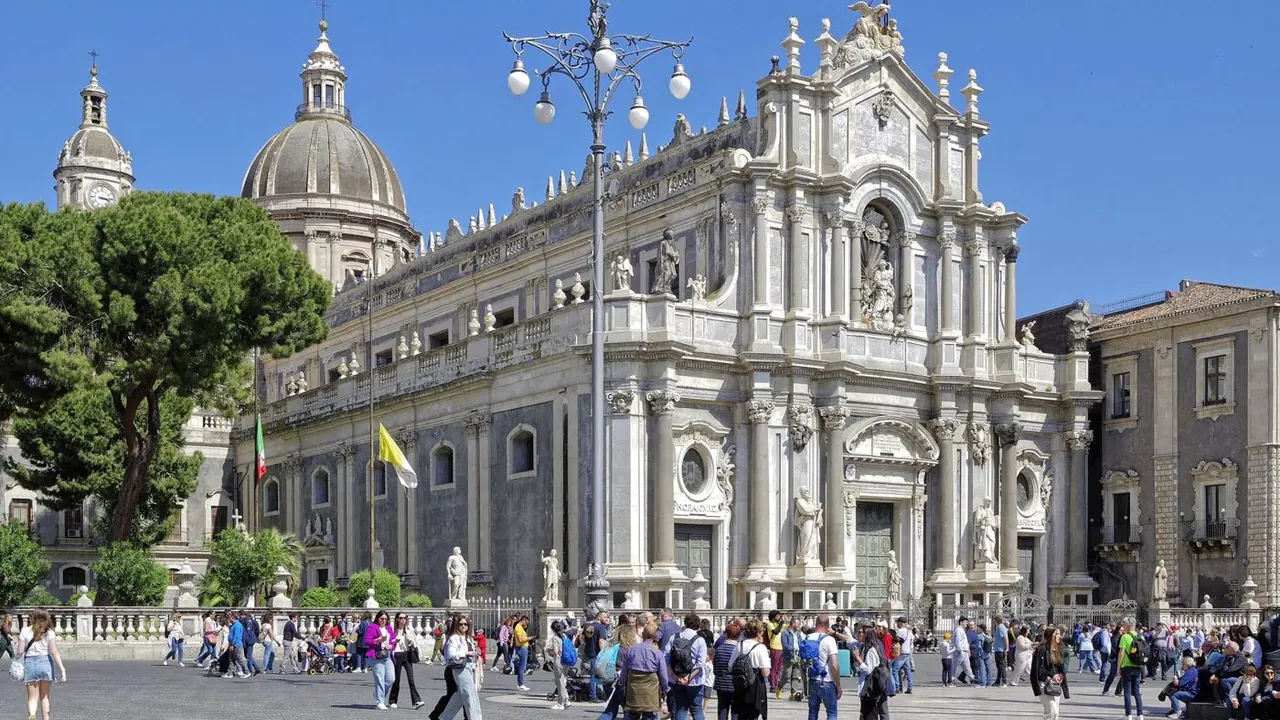
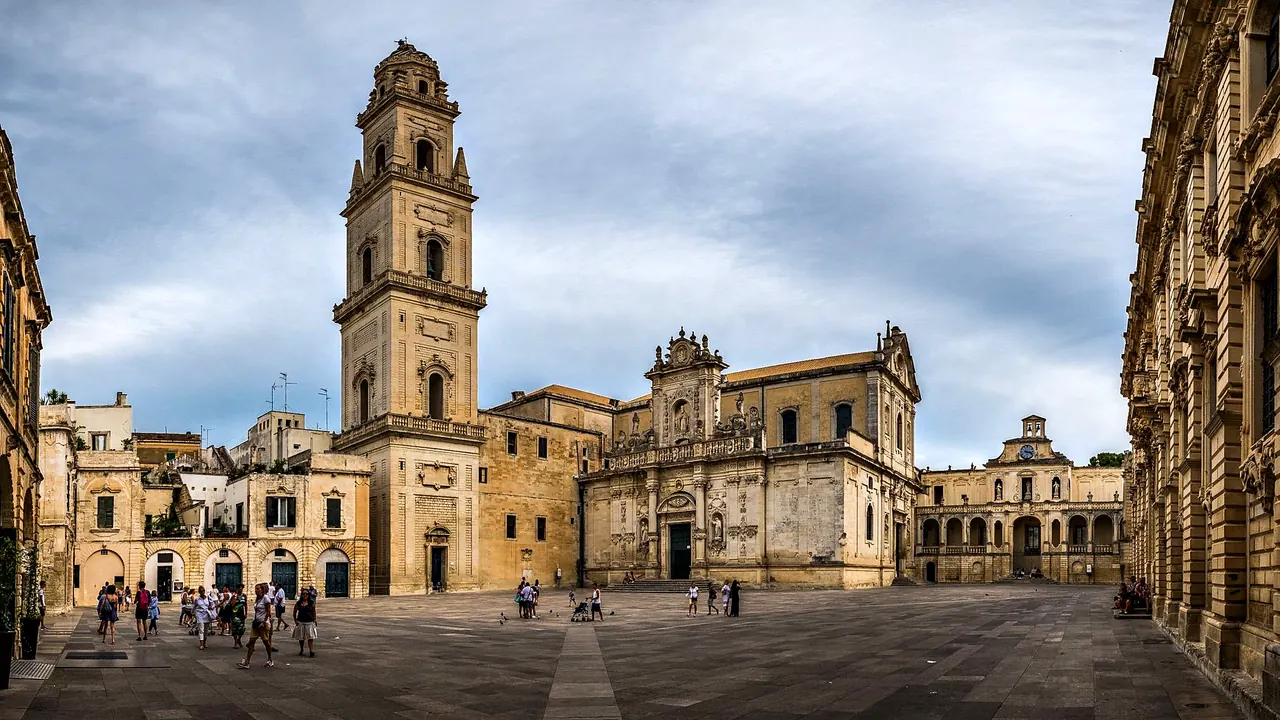
Photos: Catania by Berthold Werner, CC BY-SA 4.0, cropped; Lecce by Giuseppe Milo, CC BY 3.0, cropped.
Catania or Lecce?
Our verdict in twelve categories, each scored against the same fixed benchmark cities, and the climate month by month, so you can choose for your trip.
Choose Catania for
- nature and the outdoors
- nightlife
- live music and the arts
Catania suits travellers who want a full itinerary. Etna is within an hour, Siracusa and Taormina sit on either side, the street food is the richer of the two and the nights run later. Choose it for a trip built around excursions, eating and the volcano, as long as you can put up with traffic and noise in the city itself.
Choose Lecce for
- wellness
- culture and sights
Lecce rewards a slower stay. Its honey-coloured baroque centre is the more beautiful of the two and the easier to stroll, since it is largely free of cars. The cliff spa grottoes of Santa Cesarea and the quiet masserie on the plain make rest easy to arrange. It fits a vacation of mornings on the Salento beaches and long evenings in the piazzas.
Scoreboard
Twelve categories on one fixed scale from 0 to 100. The shaded stretch is the gap between the two.
Your match
Pick a travel style or drag the sliders, and both match scores follow your weighting.
Wins on nature and the outdoors and nightlife with your weighting.
Wins on wellness and culture and sights with your weighting.
What matters to you?
Category by category
What the scores mean for a trip.
Beaches & swimming
The beaches are equally good, but in very different ways. Catania has the sea on its doorstep: the long sand of La Playa begins just south of the centre, and to the north you swim from lava platforms and ladders off Aci Trezza, with the basalt stacks just offshore.
Lecce is inland, and its nearest sand is plain. Half an hour or more away, though, the Salento has the prettier water: pale coves at Torre dell'Orso and long, shallow, fine sand at Porto Cesareo. Reaching them means a car or a summer bus.
Food & drink
Catania eats better and with more variety. There are cone-shaped arancini and fried crispelle at the tavola calda counters, horse meat smoking over the grills on Via Plebiscito, and fish fresh from La Pescheria. Breakfast is pistachio granita made with nuts from Bronte, and Etna's volcanic reds and whites go with all of it.
Lecce's cooking is distinctive but narrow. It means pasticciotto and iced almond coffee in the morning, ciceri e tria and orecchiette at lunch, and Negroamaro in the evening. It is satisfying peasant food, with little beyond the Apulian repertoire.
Culture & sights
Catania's baroque is the darker of the two. After the earthquake of 1693 the city was rebuilt in black lava stone trimmed with pale limestone. Its highlights are Via dei Crociferi, a single street of churches and convents, the vast Benedictine monastery of San Nicolò l'Arena and the Swabian Castello Ursino. Its great cultural moment is the Feast of Sant'Agata in early February.
Lecce's baroque came out of a seventeenth-century building boom rather than a rebuilding, and it makes the more complete and more striking townscape. The soft, honey-coloured limestone let masons cover Santa Croce with carved fruit, beasts and cherubs, and the enclosed Piazza del Duomo glows at dusk. Half a Roman amphitheatre lies open below Piazza Sant'Oronzo, so the pleasure here is mostly in simply walking the streets.
Nightlife
Catania goes out later and louder. A large student population packs the lanes around Piazza Bellini and the Teatro Massimo well past midnight, and in summer the La Playa beach clubs, close to town, turn into open-air dance floors.
Lecce's evenings are gentler: the passeggiata, an aperitivo on the piazza, then a wine bar in the old town. For dancing in summer you have to drive out to the coast near Gallipoli.
Nature & outdoors
Etna gives Catania an advantage Lecce cannot match. A smoking volcano of about 3,300m sits less than an hour away, with craters, lava-flow trails and birch woods, and the Alcantara Gorge and the Nebrodi forests lie beyond it.
Lecce's outdoors is the coast. There are clifftop paths and sea caves between Otranto and Santa Maria di Leuca, birdwatching in the wetlands at Le Cesine and the Alimini lakes, and pine woods at Porto Selvaggio. Inland it is flat olive country.
Day trips
Both make good bases, but Catania's list is longer and more famous. Siracusa's Ortigia and Taormina's theatre are each about an hour away, the baroque towns of Noto, Modica and Ragusa are within two hours, and the mosaics of Piazza Armerina are inland.
From Lecce, Otranto's cathedral mosaic and Gallipoli's island old town are the closest highlights. The trulli of Alberobello and white Ostuni lie further north. Either way, a car makes most of these trips far simpler.
Good for families
Neither city does much for children, but the problems are different. Lecce's centre is largely car-free and safe to wander, and the shallow beaches around Porto Cesareo suit toddlers, though there are no attractions built for children.
Catania has more to do, with Etnaland's water park and crater walks on Etna for older children. The city itself is harder work, with heavy traffic, narrow pavements and little shade.
Getting around
Both have compact old towns that are easy on foot, and in both you will want a car beyond them. Lecce's flat, partly pedestrian centre is the more pleasant to walk, and fast trains run north to Bari, but local Salento railways are slow and the beach buses run only in summer.
Catania has more public transport, with a metro line, regional buses to Siracusa, Taormina and the Etna refuge, and the slow Circumetnea railway around the volcano. Its traffic and parking are worse.
Shopping & style
Catania offers a bit more. Via Etnea gives you a long run of Italian fashion chains, and the daily La Fiera market is a lively place to browse. The souvenirs worth carrying home are edible: pistachio cream from Bronte and Etna wine.
Lecce's shopping is mostly its crafts, especially cartapesta saints made in old-town workshops, plus carved limestone and Grottaglie ceramics. Outside those you will find mainly souvenirs and a few fashion shops.
Affordability
The two cost much the same, and both get noticeably dearer in high summer, when rooms and beach-club loungers go up. In Catania, street food makes cheap meals easy, but guided trips to Etna's summit craters are a real expense.
In Lecce, the cheap pleasures are pastries, simple osterie and bed and breakfasts in old palazzi. August is the month to avoid, because all of Italy seems to descend on the Salento.
Live music & performing arts
Catania has the stronger stage. Bellini was born here, and the grand Teatro Massimo Bellini runs a full opera and symphonic season. Small companies also keep the Sicilian puppet theatre of knights and Saracens alive.
Lecce's theatres have only a modest season. Its real draw is pizzica, the tambourine dance played at village festivals all summer, which peaks in August at the Notte della Taranta in Melpignano.
Wellness & relaxation
Lecce is the better place to unwind. The afternoon shutdown and evenings in the piazzas set a slow pace, the sulphur springs of Santa Cesarea fill cliffside grottoes less than an hour away, and the old masserie on the plain are now spa retreats.
Catania's centre is noisy and full of traffic, and its spas are mostly in hotels. Rest there comes from long lunches or a stay in the quieter villages on Etna.
When should you go?
Pick your month. The climate figures are measured averages, not a forecast.
Catania in July
Lecce in July
Daytime high, °C
Rainfall in the month, mm
Where the figures come from
Lecce's temperatures are measured 38 km from the centre, at Brindisi.
Lecce has no rain gauge within 25 km of the centre, so its rainfall comes from a gridded climate dataset read at the city rather than from a gauge further away.
Temperature and rainfall are climate normals, averaged over the years shown. Catania: 1991-2020 (sunshine 1961-1990, rainfall 1971-2000) normals, Catania / Fontanarossa (5.2 km from centre). Lecce: 1991-2020 (sunshine 1981-2010) normals, Brindisi (38 km from centre).
Both cities follow the southern Mediterranean pattern of dry, hot summers and wet winters. In both, the sea is warm enough for swimming from June into October and is at its warmest in August, at around 26°C. Catania runs a little hotter, with August afternoons reaching about 32°C against Lecce's 30°C, so in July and August the streets of either city are hard going at midday. Lecce gets slightly more sunshine all year round.
Autumn is where they part. Lecce's rains come earlier and heavier, peaking in November at about 102mm, so October there is already unsettled. Catania stays drier and warmer into October, and its wettest month is December. For comfortable sightseeing, May and late September suit both, and Catania keeps its mild weather a few weeks longer.
Which traveller are you?
On an outdoors trip, Catania is the clear choice. Etna offers summit craters, trails over lava flows, beech woods and even winter skiing within an hour. You can wade through the Alcantara Gorge, and the lava coast is good for diving. Around Lecce the plain is flat, which mostly means cycling and coastal paths.
For a food and nightlife trip, Catania leads again. Arancini, horse meat from the grills on Via Plebiscito, La Pescheria and Etna wines give it more range. The bars around Piazza Bellini stay full past midnight, while Lecce's late scene means a drive to Gallipoli.
On a relaxing and wellness trip, Lecce is the calmer base. Its old town is mostly free of traffic, the sulphur pools of Santa Cesarea lie under an hour away, and masserie on the plain have quiet spas. Catania's centre is loud and has no bathing tradition.
Before you go
| Measure | Catania | Lecce |
|---|---|---|
| Official language | Italian | Italian |
| Currency | Euro (EUR) | Euro (EUR) |
| Sockets | CFL230 V, 50 Hz | CFL230 V, 50 Hz |
| Driving side | Right | Right |
| Time zone | UTC+1, UTC+2 in summer | UTC+1, UTC+2 in summer |
| Emergency number | 112 | 112 |
| Elevation | 7 m | 49 m |
| Main airport | Catania-Fontanarossa Airport (CTA)4 km from centre96 non-stop destinations | Brindisi Airport (BDS)39 km from centre49 non-stop destinations |
| Public holidays this year | 13 days | 13 days |
By the numbers
| Measure | Catania | Lecce |
|---|---|---|
| City population | 311,584 | 94,783 |
| People per km² | 1,704 | 393 |
| Museums within 10 km | 25 | 11 |
| UNESCO World Heritage sites within 50 km | 3 | 0 |
| Swim season, months above 21 °C | 5 months | 4 months |
Where else could you go?
Every comparison below shares a destination with this one, so you can follow Catania or Lecce somewhere new.