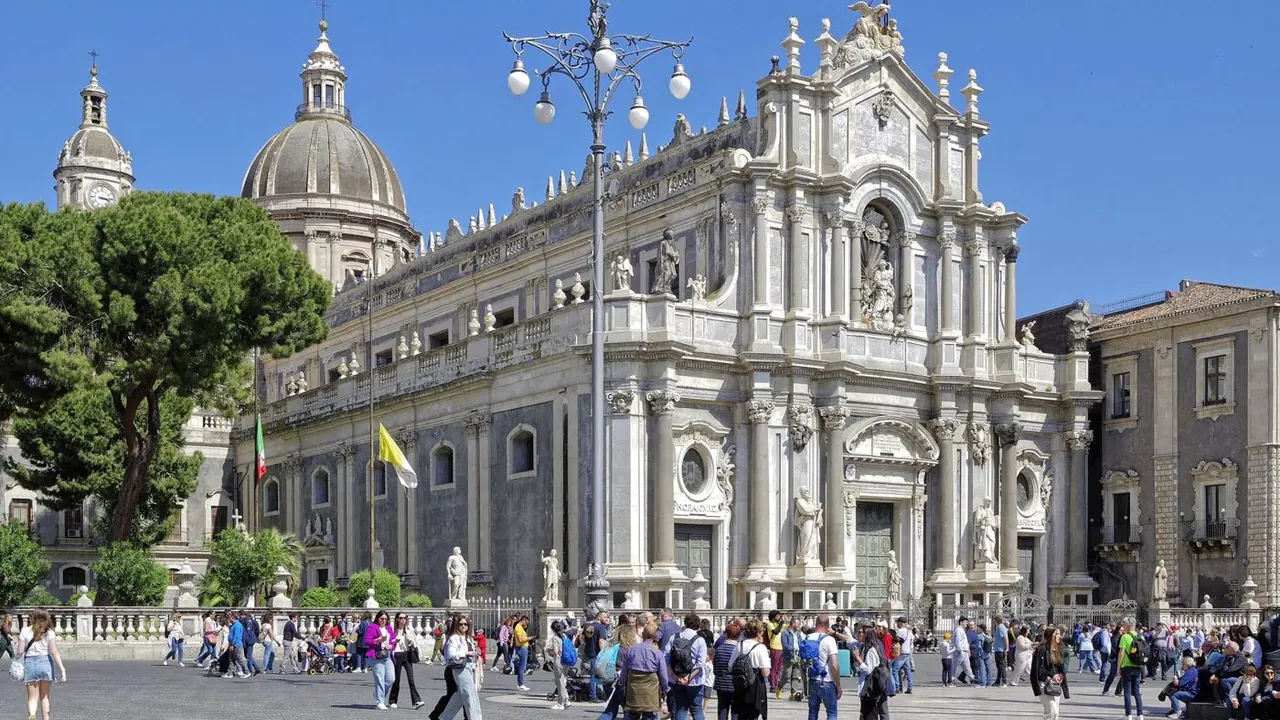
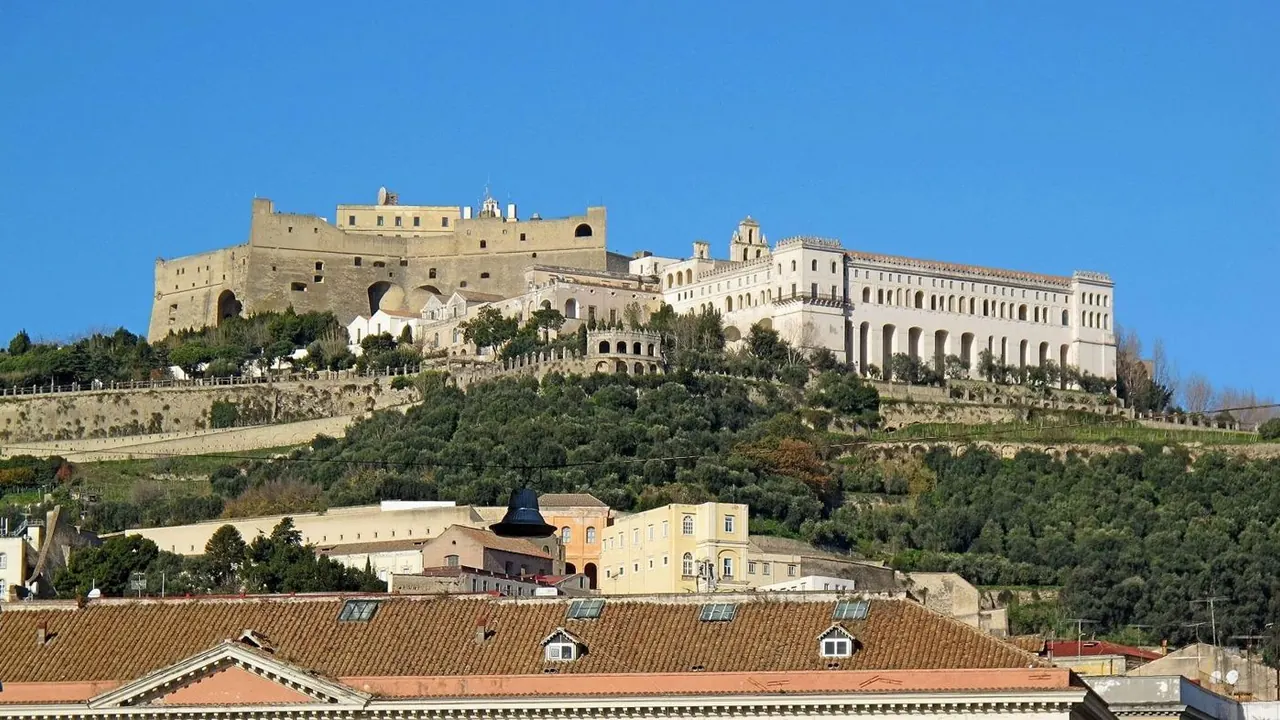
Photos: Catania by Berthold Werner, CC BY-SA 4.0, cropped; Naples by pietro scerrato, CC BY 3.0, cropped.
Catania or Naples?
Our verdict in twelve categories, each scored against the same fixed benchmark cities, and the climate month by month, so you can choose for your trip.
Choose Catania for
- beaches
- nature and the outdoors
- families
Catania suits travellers who want sun, sea and a volcano more than a long list of sights. Its own coastline gives you a sandy beach to the south and clear lava-rock swimming to the north, Etna is close enough for a morning on the craters, and the summers are drier and longer. Pick it if your days are for swimming, hiking and eating street food, with Siracusa and Taormina as outings.
Choose Naples for
- culture and sights
- shopping
- wellness
Naples is the stronger choice for anyone who travels for history and art. The Greek street plan, the Archaeological Museum and the underground city can fill a week on their own, and Pompeii, Herculaneum, Capri and the Amalfi Coast are all close by. It also gets around more easily without a car, has a grander opera house, and Ischia's thermal gardens are within reach when you want to rest.
Scoreboard
Twelve categories on one fixed scale from 0 to 100. The shaded stretch is the gap between the two.
Your match
Pick a travel style or drag the sliders, and both match scores follow your weighting.
Wins on beaches and nature and the outdoors with your weighting.
Wins on culture and sights and shopping with your weighting.
What matters to you?
Category by category
What the scores mean for a trip.
Beaches & swimming
Catania has much better swimming on its doorstep. La Playa is a long sandy beach with beach clubs, just south of the centre. To the north, the lava platforms at Aci Castello and Aci Trezza drop into very clear water around the basalt sea stacks. You get a choice between sand and rock without leaving the city.
Naples mostly offers sunbathing on the rocks below the Lungomare and small lidos in Posillipo, and the water near the port is not always clean. For a real beach day you take a boat to Procida, Ischia or Capri, or go out along the Sorrento peninsula.
Food & drink
These are two of Italy's great street-food cities, and Naples comes out a little ahead. It is the home of pizza, and it adds fried pizza, cones of fried seafood, sfogliatelle and babà, along with the habit of drinking espresso standing at the bar. Its markets at Pignasecca and Porta Nolana are full of buffalo mozzarella and San Marzano tomatoes.
Catania answers with ragù-filled arancini, anchovy crispelle, horse meat grilled on Via Plebiscito and pistachio granita with brioche for breakfast. It also has the better wine country close by, in Etna's volcanic vineyards, and La Pescheria is the more theatrical market. Its fine-dining scene is small and most of the best eating is casual, while Naples keeps its most ambitious restaurants out on the coast.
Culture & sights
Naples has far more to see. Its historic centre is one of Europe's largest, laid out by the Greeks and packed with churches along Spaccanapoli. It also has the National Archaeological Museum, the Cappella Sansevero, the underground tunnels and catacombs, and the Capodimonte gallery. That fills a week easily.
Catania's appeal is more unified: a late-baroque city of black lava and pale limestone, listed by UNESCO, with Via dei Crociferi and the vast San Nicolò l'Arena monastery. Its Roman theatre and Castello Ursino add depth, but the museums are modest and two or three days covers it.
Nightlife
The two are evenly matched, and both even have a Piazza Bellini at the centre of their student nights. In Catania the drinking spreads around the Teatro Massimo and Via Gemmellaro. In summer the crowd moves out to La Playa, where the beach clubs become open-air dance floors close to town.
Naples has two distinct scenes: students on the steps by the old Greek walls, and a smarter crowd in the bars behind Piazza dei Martiri in Chiaia. Neither city has much serious club culture.
Nature & outdoors
Both cities sit under a volcano, but Etna gives Catania the edge. It is far higher and often smoking, and you can take a cable car from Rifugio Sapienza, walk over lava flows and through birch woods, and even ski in winter with a view of the sea. The Alcantara Gorge and the Nebrodi forests add more variety.
Naples has the easier climb to the crater rim of Vesuvius and the strange crater landscape of the Phlegraean Fields, with Astroni and Lake Avernus. For walking, it has the Path of the Gods and the island peaks of Capri and Ischia. Snorkelling is good off both cities, at the Gaiola park in Naples and around Catania's sea stacks.
Day trips
Naples has the stronger list, and you need less effort to reach it. Pompeii, Herculaneum, Oplontis and Stabiae are all on one local train line. Caserta's palace is a short ride inland, and ferries leave the centre for Capri, Ischia and Procida, while the Amalfi Coast and Paestum are also within reach.
Catania is still an excellent base. Ortigia in Siracusa and the theatre at Taormina are each about an hour away, and the baroque towns of Noto, Modica and Ragusa Ibla make a fine circuit, as do the mosaics at Piazza Armerina. The difference is that many of these trips go far more smoothly with a hire car.
Good for families
Neither city is easy with young children, and both are warm towards them. The difference is in what each offers. Catania has a gently shelving sandy beach in town, the Etnaland water park and crater walks that older children love, though the streets are hot and short on shade.
Naples has more to do on a rainy day: the zoo, Edenlandia, the science museum, the funiculars and the tunnels underground. But scooters in the lanes and steps for pushchairs push many families to stay in Sorrento or on an island instead.
Getting around
Naples is the easier city without a car. Metro Line 1 links the station, the centre and Vomero through its art stations, and four funiculars climb the hills. You never need to drive, even if the buses and the Circumvesuviana test your patience.
Catania's centre is just as walkable along Via Etnea, but beyond it there is only a single metro line and slow buses. The Circumetnea railway is scenic rather than practical, so many visitors end up hiring a car and then struggling to park it.
Shopping & style
Naples gives you far more to shop for. It has a tradition of tailoring, with suits, shirts and ties made in the workshops of Chiaia, plus the iron-and-glass Galleria Umberto I and boutiques on Via dei Mille. The nativity workshops of San Gregorio Armeno and the coral and cameos of Torre del Greco offer souvenirs found nowhere else.
In Catania, Via Etnea is mostly chain stores, and the pleasure is in the noisy La Fiera market. The best things to take home are pistachio cream, Etna wine and Caltagirone ceramics.
Affordability
Both cities are cheap by Western European standards, with street food for a full meal and modest guesthouses in the old centre. What differs is where the costs creep up. In Catania it is guided trips to Etna's summit and the hire car for the baroque towns. In Naples it is ferries, island hotels and entry fees to Pompeii and the other sites.
Live music & performing arts
Naples has the finer stage. The Teatro di San Carlo is the oldest opera house in Europe still in use, with a full season of opera, ballet and concerts. Add the conservatory concerts, chamber music in churches and Neapolitan song in the trattorias, and you have more evenings to fill.
Catania has its own claim as Bellini's birthplace, with the Teatro Massimo Bellini and a museum of his manuscripts. It also keeps the marionette theatre of the opera dei pupi, which is a real curiosity, but beyond that there is little on offer.
Wellness & relaxation
Neither city is restful, but Naples has thermal water on its edge. The spa at Agnano uses springs known since Roman times, and Ischia's terraced thermal parks are a short hydrofoil ride away. Many visitors who want to unwind stay on the island instead.
Catania has no such bathing tradition, and its spas are mostly in coastal and hillside hotels. Rest comes from the slow rhythm of granita, long lunches and the evening stroll, or from moving up to a quiet village on Etna.
When should you go?
Pick your month. The climate figures are measured averages, not a forecast.
Catania in July
Naples in July
Daytime high, °C
Rainfall in the month, mm
Where the figures come from
Catania's sunshine is measured 88 km from the centre, at Messina.
Naples has no rain gauge within 25 km of the centre, so its rainfall comes from a gridded climate dataset read at the city rather than from a gauge further away.
Naples's sunshine is measured 28 km from the centre, at Grazzanise.
Temperature and rainfall are climate normals, averaged over the years shown. Catania: 1991-2020 normals, Catania / Fontanarossa (5.2 km from centre). Naples: 2005-2020 (sunshine 1991-2020, rainfall 1991-2020) normals, Napoli / Capodichino (4.6 km from centre).
Catania has the longer, hotter and drier summer. The air is warm enough for the beach from May, and in both cities the sea is pleasant for swimming from June into October, reaching about 26°C in August. Catania's July and August are fierce, with afternoons around 32°C, which is too hot for the baroque streets at midday. Naples peaks nearer 31°C. Both get long, sunny summer days, and Catania gets slightly more sun.
The rain comes back in September in both cities, but Naples gets far more. November there brings about 148mm, nearly twice Catania's wettest month. For walking Naples, May and June are the best window: warm, mostly dry, and before the peak heat. In Catania, April, May and October suit sightseeing best, with warm days and light rain, and its winters are milder and drier than those in Naples.
Which traveller are you?
On a beach and sun trip, Catania is the better base. It has sand at La Playa and rock swimming along the Riviera dei Ciclopi, all within the city, and drier summers. In Naples the clean water is mostly a ferry ride away.
For a culture and arts trip, Naples is far ahead. It has the Greek street grid, the Pompeii treasures in the Archaeological Museum, the Veiled Christ, the catacombs and the San Carlo opera house. Catania's baroque centre takes two or three days to see.
On a relaxing and wellness trip, Naples wins thanks to its volcanic springs. There is the Roman-era spa at Agnano, and Ischia's terraced thermal parks are an hour away by hydrofoil. Catania has no bathing tradition, so rest there means hotel spas or a quiet Etna village.
Before you go
| Measure | Catania | Naples |
|---|---|---|
| Official language | Italian | Italian |
| Currency | Euro (EUR) | Euro (EUR) |
| Sockets | CFL230 V, 50 Hz | CFL230 V, 50 Hz |
| Driving side | Right | Right |
| Time zone | UTC+1, UTC+2 in summer | UTC+1, UTC+2 in summer |
| Emergency number | 112 | 112 |
| Elevation | 7 m | 17 m |
| Main airport | Catania-Fontanarossa Airport (CTA)4 km from centre96 non-stop destinations | Naples International Airport (NAP)7 km from centre131 non-stop destinations |
| Public holidays this year | 13 days | 13 days |
By the numbers
| Measure | Catania | Naples |
|---|---|---|
| City population | 311,584 | 913,462 |
| People per km² | 1,704 | 7,676 |
| Museums within 10 km | 25 | 65 |
| UNESCO World Heritage sites within 50 km | 3 | 5 |
| Swim season, months above 21 °C | 5 months | 5 months |
Where else could you go?
Every comparison below shares a destination with this one, so you can follow Catania or Naples somewhere new.