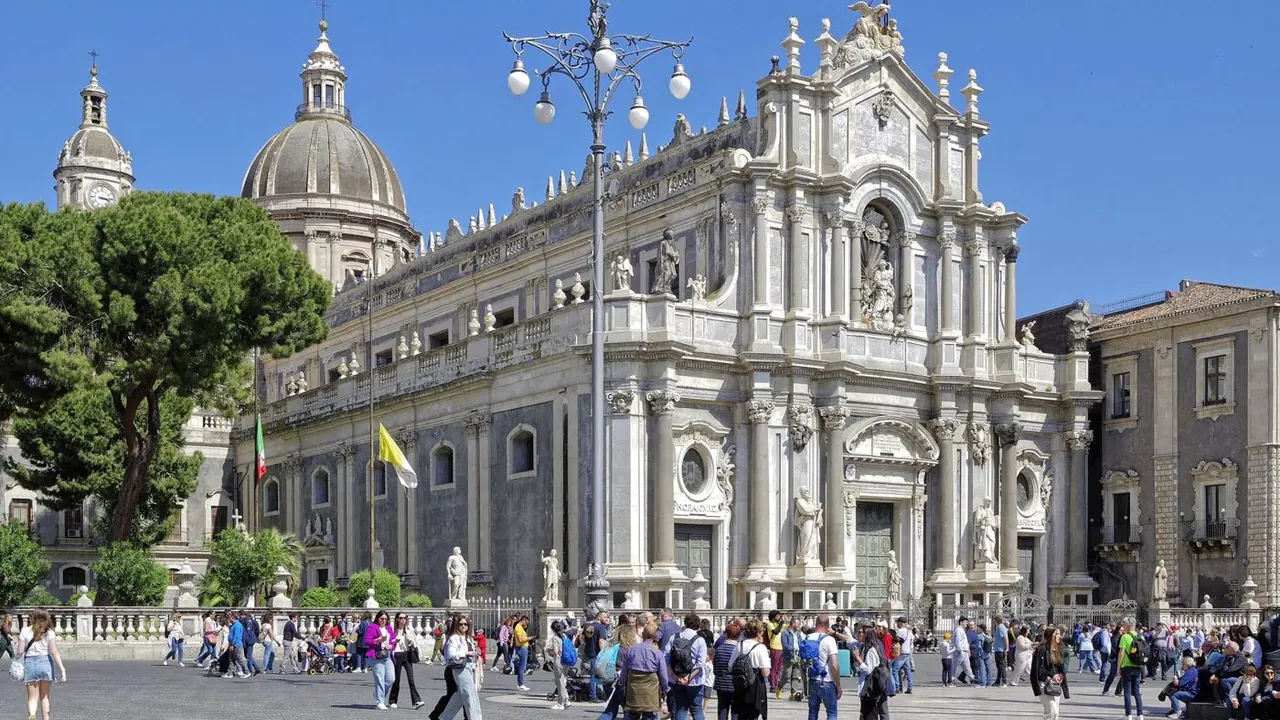
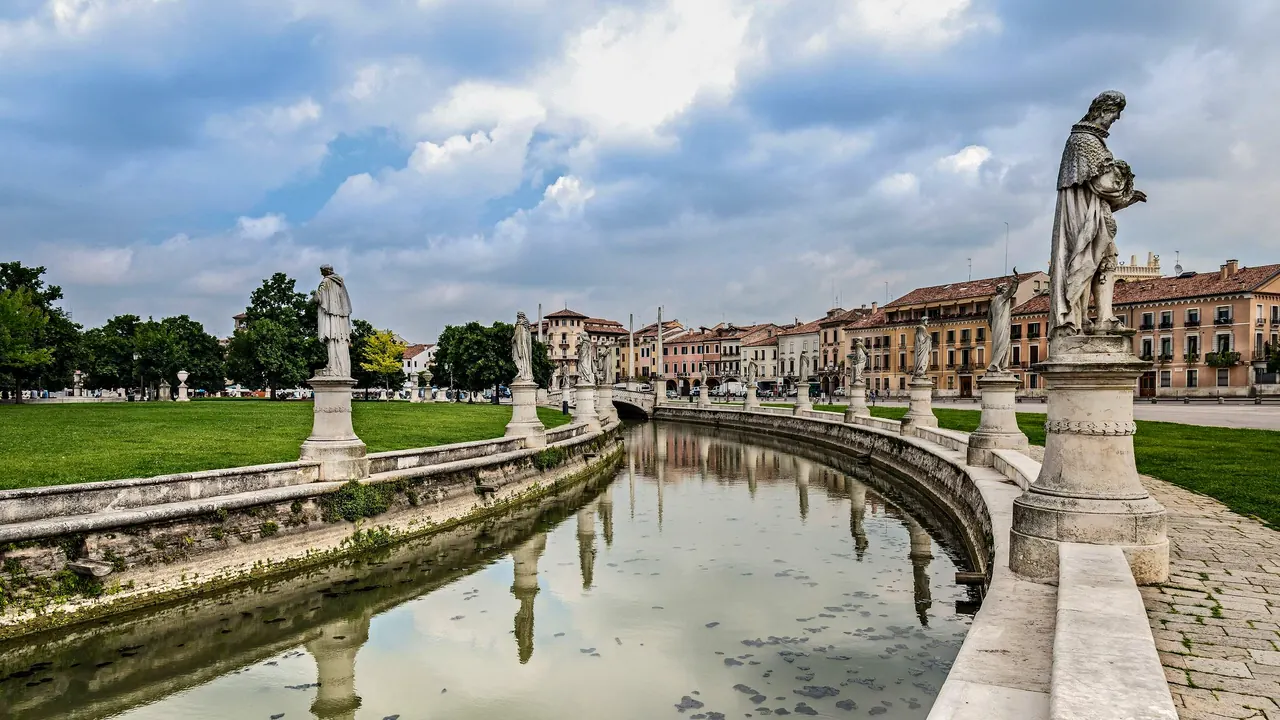
Photos: Catania by Berthold Werner, CC BY-SA 4.0, cropped; Padua by Didier Descouens, CC BY-SA 4.0, cropped.
Catania or Padua?
Our verdict in twelve categories, each scored against the same fixed benchmark cities, and the climate month by month, so you can choose for your trip.
Choose Catania for
- beaches
- nature and the outdoors
- live music and the arts
Catania suits travellers who want the south in full: a smoking volcano on the skyline, swimming off lava rocks or lying on long sand, street food at every corner and nights that run late. It works best for a warm-weather trip with some energy in it, where days on Etna or along the coast matter more than galleries, and where you don't mind traffic, rough pavements and probably a hire car.
Choose Padua for
- wellness
- getting around
- culture and sights
Padua is the choice for a calmer, more cerebral stay. The Giotto frescoes and a compact, walkable centre are the draw, along with a railway station that puts Venice, Verona and Vicenza within easy reach every day. Add thermal pools a short ride away and it rewards travellers who want art, easy logistics and rest more than beaches or a big night out.
Scoreboard
Twelve categories on one fixed scale from 0 to 100. The shaded stretch is the gap between the two.
Your match
Pick a travel style or drag the sliders, and both match scores follow your weighting.
Wins on beaches and nature and the outdoors with your weighting.
Wins on wellness and getting around with your weighting.
What matters to you?
Category by category
What the scores mean for a trip.
Beaches & swimming
Catania is a real seaside city and Padua is not. Catania offers two very different kinds of swimming: the broad sand and beach clubs of La Playa to the south, and to the north the black basalt of the Riviera dei Ciclopi, where you climb down ladders into clear water beside the sea stacks. Isola Bella at Taormina adds a prettier cove within an hour.
From Padua the sea takes an hour each way, to Sottomarina or the Lido of Venice. The Adriatic there is shallow and calm, which suits small children, but it means long rows of umbrellas on flat sand, an outing rather than part of daily life.
Food & drink
Catania eats better, and above all more boldly. Its street food alone could fill a trip: cone-shaped arancini, fried crispelle, horse meat grilled on Via Plebiscito, pistachio granita with brioche at breakfast. The dripping theatre of La Pescheria and Etna's volcanic wines complete it.
Padua's cooking is quieter Venetian home food, such as bigoli with duck, baccalà and risotto with peas, bought fresh from the morning markets beneath the Palazzo della Ragione. Its strongest suit is the ritual of the standing spritz in the squares, where Catania's is the counter snack eaten on the move.
Culture & sights
Padua holds the greater art. Giotto's Scrovegni Chapel is one of the turning points of European painting, and it sits among a UNESCO-listed group of fourteenth-century fresco cycles, Donatello's work at the Basilica of Saint Anthony, the world's oldest permanent anatomical theatre and the oldest botanical garden still in its original place.
Catania's appeal lies more in the streetscape than in its interiors. The city is a single piece of late baroque in black lava and pale limestone, from the elephant fountain to Via dei Crociferi and the vast San Nicolò monastery, with Roman ruins surfacing between buildings. Its museums are modest, though, and the art inside does not compare with Padua's.
Nightlife
Catania stays out later and makes more noise. Crowds drink in the lanes around Piazza Bellini well past midnight, and in summer the La Playa beach clubs turn into open-air dance floors.
Padua's evening centres on the aperitivo, with spritz glasses in Piazza delle Erbe and small wine bars in the old ghetto. It is sociable but winds down earlier. The seasons also run in opposite directions: Catania peaks in summer, while Padua empties when the students leave.
Nature & outdoors
Here the two are very different. Catania lives under an active volcano of about 3,300m, close enough for a morning on its craters, with cable cars, lava trails, birch woods and winter skiing. The Alcantara Gorge and the snorkelling around the sea stacks are extras.
Padua sits on a flat plain. Its outdoors means the Euganean Hills about 15km away, with vineyards, chestnut woods and quiet roads for cyclists, along with level rides on the Brenta towpaths. Serious mountain walking means driving to the pre-Alps.
Day trips
Both cities make excellent bases, but Padua's position is hard to beat. Venice is under half an hour by train, Vicenza is closer still, and Verona, Bologna and Ferrara are all easy trips without a car. The Brenta villas and the walled towns of Este and Montagnana fill the gaps.
Catania's list is also impressive: Ortigia and the Greek theatre at Siracusa, Taormina above the sea, the baroque towns of Noto, Modica and Ragusa, and the mosaics at Piazza Armerina. The difference is effort, since the baroque circuit and the inland sites are far easier with a hire car.
Good for families
Catania has more for children to do, as long as you get out of town. There is the gently shelving sand at La Playa, crater walks on Etna that older children love, and the Etnaland water park for hot days. The city itself is tiring, with heavy traffic, uneven pavements and little shade.
Padua is the reverse. Its flat, safe, largely pedestrian centre and the open space of Prato della Valle are easy with a pushchair, but the sights are mostly frescoes and churches. For real entertainment families travel about an hour and a quarter to Gardaland and Lake Garda.
Getting around
Padua is much easier. Its flat core is closed to most traffic, everything from the Scrovegni Chapel to the Basilica is within a 20-minute walk under arcades, a tram runs from the station, and fast trains reach the whole region.
Catania's baroque centre is walkable too, but beyond it the single metro line, slow buses and drivers who ignore pedestrians make it hard going. Most visitors end up hiring a car for Etna and the baroque towns, and then struggle to park it.
Shopping & style
Neither city is worth a trip for its shops, but they shop in different ways. In Catania it means the long run of chain stores up Via Etnea towards the volcano and the noisy daily La Fiera market around Piazza Carlo Alberto. Padua's arcades between the station and the old squares have more independent boutiques and university bookshops, and a large antiques market fills Prato della Valle one Sunday a month.
Most of the best things to take home are edible. From Catania that means Bronte pistachio cream, almond pastries and Etna wine, and the local crafts are painted Caltagirone ceramics and pieces carved from lava stone. From Padua it means cheese and Euganean wine from the delicatessens under the Palazzo della Ragione.
Affordability
Catania is a little kinder to the budget, mainly because its street food makes a full meal for very little and rooms in the old centre are reasonable outside high summer. The extras add up, though: summit trips on Etna, beach-club sunbeds and a hire car.
Padua costs what you would expect in northern Italy, but it saves money in other ways. A stay there is a cheaper way to see Venice, and since the centre is walkable and trains do the rest, there is no car to pay for. The Scrovegni Chapel and the museums charge normal entry fees.
Live music & performing arts
Catania has more to offer on its own stage. The Teatro Massimo Bellini runs a full opera and symphonic season in the composer's home town, and the opera dei pupi, Sicily's marionette theatre of knights and Saracens, gives you something you won't find in the north.
Padua's own programme is smaller: prose and some opera at Teatro Verdi, and chamber concerts in the Sala dei Giganti and the Basilica. What it does have is the Fenice in Venice and the summer Arena in Verona, both close enough for an evening.
Wellness & relaxation
Padua is far better for rest. About 12km out, Abano Terme and Montegrotto Terme form one of Europe's largest thermal districts, with hot mineral pools and mud cures used since Roman times. They are easy to reach for an afternoon soak after the frescoes.
Catania has no thermal tradition, and its centre is loud with traffic, so spa time means a hotel on the coast or on Etna's slopes. What calm it has comes from its slow lunches and evening passeggiata.
When should you go?
Pick your month. The climate figures are measured averages, not a forecast.
Catania in July
Padua in July
Daytime high, °C
Rainfall in the month, mm
Where the figures come from
Padua's temperatures are measured 35 km from the centre, at Treviso / Istrana.
Padua has no rain gauge within 25 km of the centre, so its rainfall comes from a gridded climate dataset read at the city rather than from a gauge further away.
Padua's sunshine is measured 36 km from the centre, at Treviso / S. Angelo.
Temperature and rainfall are climate normals, averaged over the years shown. Catania: 1991-2020 (sunshine 1961-1990, rainfall 1971-2000) normals, Catania / Fontanarossa (5.2 km from centre). Padua: 1991-2020 normals, Treviso / Istrana (35.4 km from centre).
Catania has the longer and more reliable warm season. Swimming is comfortable from June into October, when the Ionian holds around 26°C at its peak, and the summer is almost rain-free and very sunny. July and August reach about 32°C, which is beach weather rather than sightseeing weather. The rain arrives in October, its wettest month at about 123mm, but winter stays mild enough for walking the baroque streets and climbing Etna's lower trails.
Padua swings much further between seasons. Winter is cold and grey, with January highs near 8°C and fog over the plain, and summer is as hot as Catania's but more humid. Rain falls all year rather than in one season, and November is the wettest month at about 97mm. The Adriatic warms enough for a day at the sea only in high summer. Spring and September are the best times for the frescoes, the canals and the hills, and that is when Catania's shoulder months are at their best too.
Which traveller are you?
For a beach and sun trip, Catania wins easily. It has a sandy city beach at La Playa and the clear water off the lava platforms of Aci Trezza, plus months of dry, sunny weather. From Padua the sea is an hour away and has little scenery.
On an outdoors trip, Catania has Etna: crater walks, lava fields, beech woods and winter skiing with a sea view, plus the Alcantara Gorge and snorkelling along the lava coast. Padua's Euganean Hills and canal towpaths are pleasant but much gentler.
For a relaxing and wellness trip, Padua is the clear choice. The thermal pools and mud treatments of Abano and Montegrotto are a short ride away, and the city moves at an unhurried pace under its arcades. Catania is noisy and has almost no spa tradition.
Before you go
| Measure | Catania | Padua |
|---|---|---|
| Official language | Italian | Italian |
| Currency | Euro (EUR) | Euro (EUR) |
| Sockets | CFL230 V, 50 Hz | CFL230 V, 50 Hz |
| Driving side | Right | Right |
| Time zone | UTC+1, UTC+2 in summer | UTC+1, UTC+2 in summer |
| Emergency number | 112 | 112 |
| Elevation | 7 m | 12 m |
| Main airport | Catania-Fontanarossa Airport (CTA)4 km from centre96 non-stop destinations | Venice Marco Polo Airport (VCE)39 km from centre103 non-stop destinations |
| Public holidays this year | 13 days | 13 days |
By the numbers
| Measure | Catania | Padua |
|---|---|---|
| City population | 311,584 | 206,496 |
| People per km² | 1,704 | 2,220 |
| Museums within 10 km | 25 | 29 |
| UNESCO World Heritage sites within 50 km | 3 | 5 |
| Swim season, months above 21 °C | 5 months | 4 months |
Where else could you go?
Every comparison below shares a destination with this one, so you can follow Catania or Padua somewhere new.
- Venicevs Padua
- Taorminavs Catania
- Syracuse, Sicilyvs Catania
- Veronavs Padua
- Bolognavs Padua
- Cortina d'Ampezzovs Padua