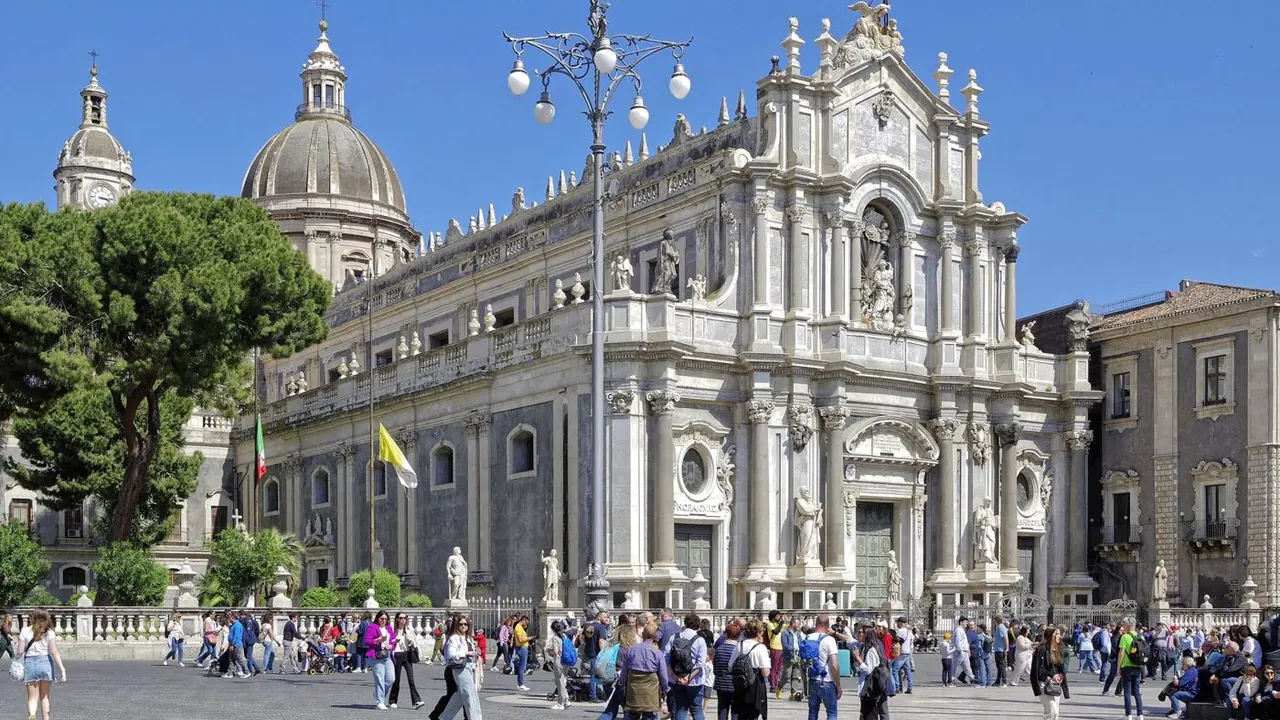
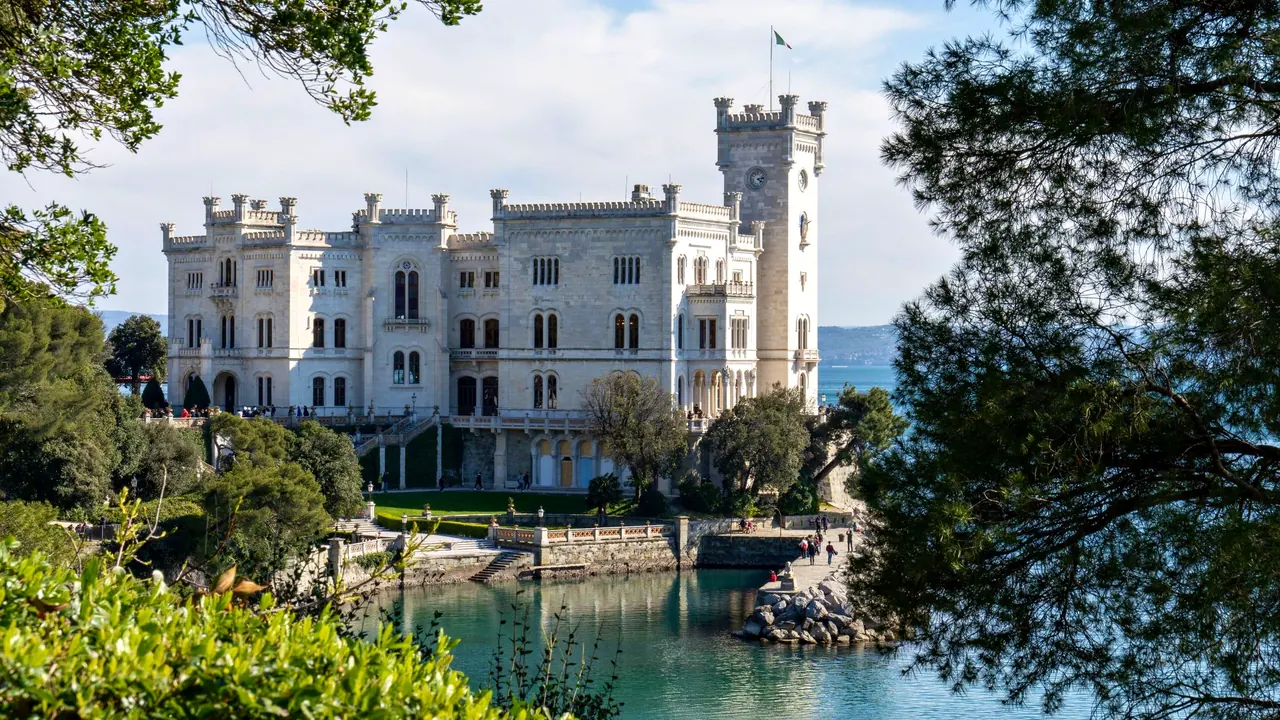
Photos: Catania by Berthold Werner, CC BY-SA 4.0, cropped; Trieste by Tibor Szabo, Pexels License.
Catania or Trieste?
Our verdict in twelve categories, each scored against the same fixed benchmark cities, and the climate month by month, so you can choose for your trip.
Choose Catania for
- nightlife
- food and drink
- nature and the outdoors
Catania suits travellers who want heat, the sea and a volcano on the doorstep. Etna, the lava coast and the long sand of La Playa give a summer trip more to do outdoors. The street food and the fish market make eating the highlight, and the nights run late around Piazza Bellini. In return you need some patience with traffic and noise, and a car for the baroque towns.
Choose Trieste for
- getting around
- wellness
- families
Trieste is the better pick for a quieter, more orderly trip. Its Habsburg centre is flat and easy to walk, the coffee houses and the Molo Audace pier set an unhurried pace, and the Karst plateau begins right behind the city. You swim off concrete and rock rather than sand, and evenings end with a drink by the sea rather than on a dance floor. For many people who choose it, that is exactly the point.
Scoreboard
Twelve categories on one fixed scale from 0 to 100. The shaded stretch is the gap between the two.
Your match
Pick a travel style or drag the sliders, and both match scores follow your weighting.
Wins on nightlife and food and drink with your weighting.
Wins on getting around and wellness with your weighting.
What matters to you?
Category by category
What the scores mean for a trip.
Beaches & swimming
Catania offers a choice Trieste lacks. South of the centre is the broad sand of La Playa with its beach clubs. To the north, around Aci Castello and Aci Trezza, you swim from lava platforms into clear water beside the sea stacks. The sea is slightly warmer at its peak, and the season lasts into October.
Trieste swims almost entirely off concrete and rock: the stepped platforms and lawns at Barcola, or the old bathing establishments near town. The pebble coves at Sistiana and Duino are prettier. It works well for confident swimmers, but anyone who wants sand will be disappointed.
Food & drink
Catania is the stronger eating city, and it is built on street food: cone-shaped arancini, fried crispelle, pistachio granita with brioche, and horse meat grilled over smoke on Via Plebiscito. The trattorias around La Pescheria cook its fish, and Etna's volcanic vineyards give the wine real depth.
Trieste's food is unusual rather than plentiful. The buffet counters of boiled pork with horseradish, the jota soup and the Central European cakes show its Austrian and Slavic side, and the coffee culture is a pleasure of its own. The choice of restaurants is narrower, though. In both cities the best meals are casual.
Culture & sights
Both cities are best seen on foot over a couple of days rather than in long museum visits, but they come from different worlds. Catania is Sicilian baroque in black lava stone and pale limestone, rebuilt after the earthquake of 1693. It has the churches of Via dei Crociferi, the vast Benedictine monastery and Roman ruins that surface below the streets.
Trieste is a Habsburg port of grand palaces. It has the sea-facing Piazza Unità, the Serbian Orthodox church on the Canal Grande and Miramare Castle on the coast. The Risiera di San Sabba adds a sobering twentieth-century chapter.
Nightlife
Catania stays out far later. Students fill the lanes around Piazza Bellini and Via Gemmellaro until well past midnight, and in summer the beach clubs on La Playa turn into open-air dance floors.
A Trieste evening is an aperitivo: spritz or local white wine around Piazza Unità and the Canal Grande, with the Barcola kiosks busy on summer nights. Clubs are few, and in winter the centre is quiet by midnight.
Nature & outdoors
Etna gives Catania the edge. The active volcano, about 3,300m high and less than an hour away, has a cable car and trails across lava flows, side craters and beech woods, plus winter skiing with sea views. The Alcantara Gorge and the snorkelling around the Cyclops sea stacks add more.
Trieste's outdoors is gentler and starts at the edge of town: clifftop paths on the Karst plateau, the Val Rosandra gorge and caves such as the Grotta Gigante. Sailing on the gulf is a real draw, though the winter Bora can be harsh.
Day trips
Both cities make excellent bases, and the difference is where the trips go. From Catania they stay in eastern Sicily: Ortigia and the Greek theatre in Siracusa, Taormina above the sea, the baroque towns of Noto, Modica and Ragusa, and the mosaics at Piazza Armerina. A car makes the baroque circuit far easier.
From Trieste you cross borders. Aquileia and the star-shaped fortress town of Palmanova are in Friuli, Piran and Ljubljana are in Slovenia, Istria is in Croatia, and Venice is a long day out by train.
Good for families
Neither city is built around children, and the compromises are different. Catania has gently shelving sand at La Playa, crater walks on Etna and the Etnaland water park, but its centre is hot, congested and short on shade.
Trieste is calmer and easier to manage, with Miramare's gardens, the Grotta Gigante, an aquarium and a science centre. Swimming off concrete steps and rock suits older children better than toddlers, though, and the upper town is steep.
Getting around
Trieste is the easier city to get around. Its main sights sit on flat ground by the sea, a dense bus network runs to Barcola, Miramare and the Karst, and boats cross the bay to Muggia. Only the climb to San Giusto takes effort.
Catania's small centre along Via Etnea is walkable too. Beyond it, though, the single metro line, slow buses in heavy traffic and drivers who do not stop for pedestrians make things harder. Many visitors end up hiring a car and struggling to park.
Shopping & style
Neither city is a shopping destination, and in both the best things to bring home are edible. Catania's appeal is its markets, the noisy daily La Fiera and the fish market, along with Bronte pistachio cream, Caltagirone ceramics and lava-stone crafts. Trieste offers quieter browsing in the antique shops of the old town, plus coffee from local roasters, Karst wine and presnitz.
Affordability
Day to day, Catania is somewhat cheaper. A street-food lunch is a full meal, trattorias near the markets are fairly priced, rooms in the old centre are reasonable for most of the year, and the baroque streets cost nothing to wander. The bills climb with July and August rooms, beach-club sunbeds, guided trips to Etna's summit and a hire car.
Trieste is fairly priced rather than cheap. Buffet lunches, coffee at the bar, the buses, swimming at Barcola and walks on the Karst cost little, but seafood restaurants and smarter hotels charge normal Italian city prices. Rooms get scarce around the Barcolana regatta and in high summer.
Live music & performing arts
Opera anchors both cities equally, each in its own way. Catania is Bellini's birthplace, with the Teatro Massimo Bellini and the opera dei pupi marionette tradition. Trieste has the waterfront Teatro Verdi for opera and ballet, a fondness for operetta that is rare in Italy, and a Slovenian-language theatre. Away from the main houses, both have little jazz or live music, so plan evenings around the theatre season.
Wellness & relaxation
Trieste is the more restful of the two. Coffee houses with the newspaper, an older and slower population and sunset walks on the Molo Audace make quiet days easy, even though spas are limited to hotels.
Catania is noisy and full of traffic, with no bathing tradition, and its spas are mostly out on the coast or on Etna's slopes. Long lunches and the evening passeggiata help. If real calm is the aim, stay in one of the villages on the volcano instead.
When should you go?
Pick your month. The climate figures are measured averages, not a forecast.
Catania in July
Trieste in July
Daytime high, °C
Rainfall in the month, mm
Temperature and rainfall are climate normals, averaged over the years shown. Catania: 1991-2020 (sunshine 1961-1990, rainfall 1971-2000) normals, Catania / Fontanarossa (5.2 km from centre). Trieste: 1991-2020 normals, Trieste (1.6 km from centre).
Catania has a long, dry and sunny summer. The sea is warm enough to swim from June into October and reaches 26°C in August. July and August are hot, with highs around 32°C, which makes midday sightseeing hard work, so April, May and October are the most comfortable months for walking the baroque streets. Rain arrives in autumn and is heaviest in early winter, but winters stay mild, with days around 15°C.
Trieste is cooler and wetter all year. Its swimming season is shorter, roughly June to September, although in midsummer the Adriatic gets almost as warm as the Ionian. There is no dry season. Autumn is the wettest time, with up to 125mm in November, and January highs of about 9°C, along with the Bora wind, make winter raw. Late May, June and September are the best months for walking, and July and August are warm without being punishing. Catania gets more sunshine in every month.
Which traveller are you?
On a food and nightlife trip, Catania gives you more to work with. Lunch is a scacciata or cipollina from a tavola calda counter and dinner a plate of pasta alla Norma, followed by the old centre's wine and cocktail bars. Trieste's evenings rarely go beyond aperitivo.
For a relaxing and wellness trip, Trieste fits better. A morning swim off the Barcola platforms, a gentle walk along the Strada Napoleonica above the gulf and the literary air of Joyce and Svevo set a slow rhythm. Catania's fierce summer afternoons wear you out.
For a short city break, Trieste is easier to manage. Piazza Unità, the Canal Grande, the museums and the waterfront all lie close together on flat ground. Outside central Catania, the traffic, slow buses and lack of parking eat into a short stay.
Before you go
| Measure | Catania | Trieste |
|---|---|---|
| Official language | Italian | Italian |
| Currency | Euro (EUR) | Euro (EUR) |
| Sockets | CFL230 V, 50 Hz | CFL230 V, 50 Hz |
| Driving side | Right | Right |
| Time zone | UTC+1, UTC+2 in summer | UTC+1, UTC+2 in summer |
| Emergency number | 112 | 112 |
| Elevation | 7 m | 2 m |
| Main airport | Catania-Fontanarossa Airport (CTA)4 km from centre96 non-stop destinations | Trieste Airport (TRS)31 km from centre32 non-stop destinations |
| Public holidays this year | 13 days | 13 days |
By the numbers
| Measure | Catania | Trieste |
|---|---|---|
| City population | 311,584 | 198,417 |
| People per km² | 1,704 | 2,332 |
| Museums within 10 km | 25 | 33 |
| UNESCO World Heritage sites within 50 km | 3 | 5 |
| Swim season, months above 21 °C | 5 months | 4 months |
Where else could you go?
Every comparison below shares a destination with this one, so you can follow Catania or Trieste somewhere new.
- Rovinjvs Trieste
- Ljubljanavs Trieste
- Bledvs Trieste
- Venicevs Trieste
- Cortina d'Ampezzovs Trieste
- Palermovs Catania