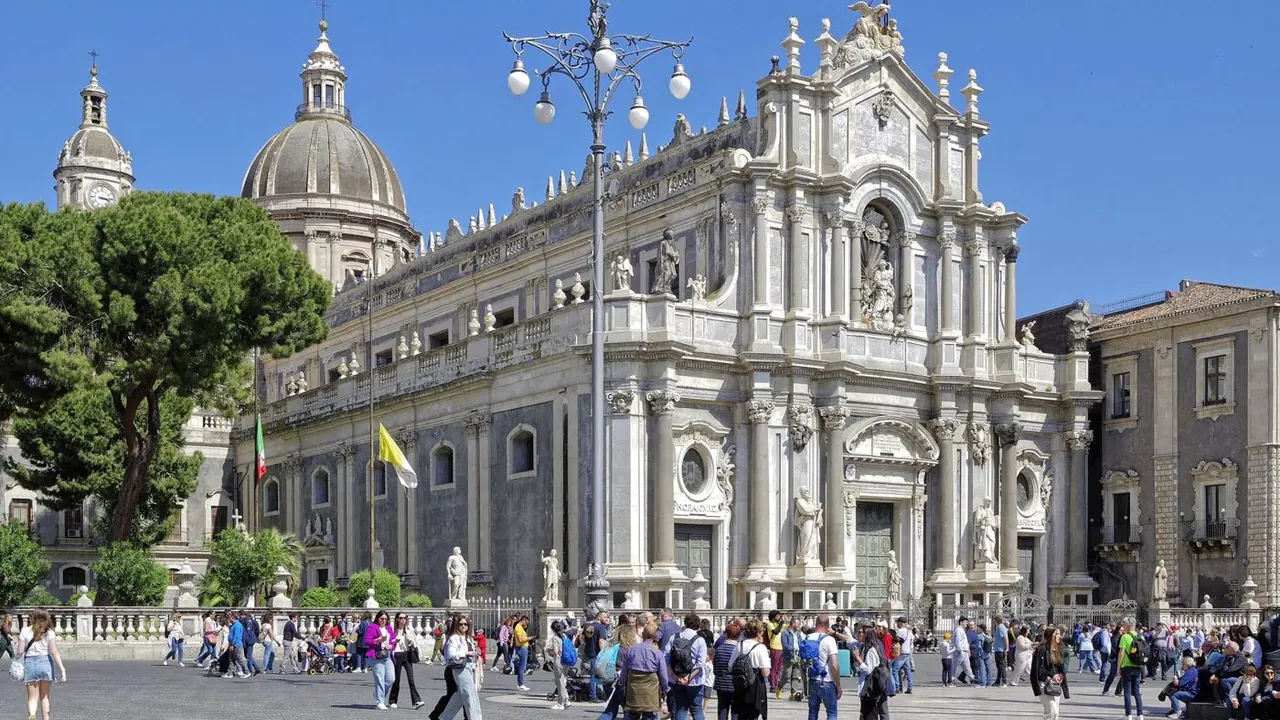
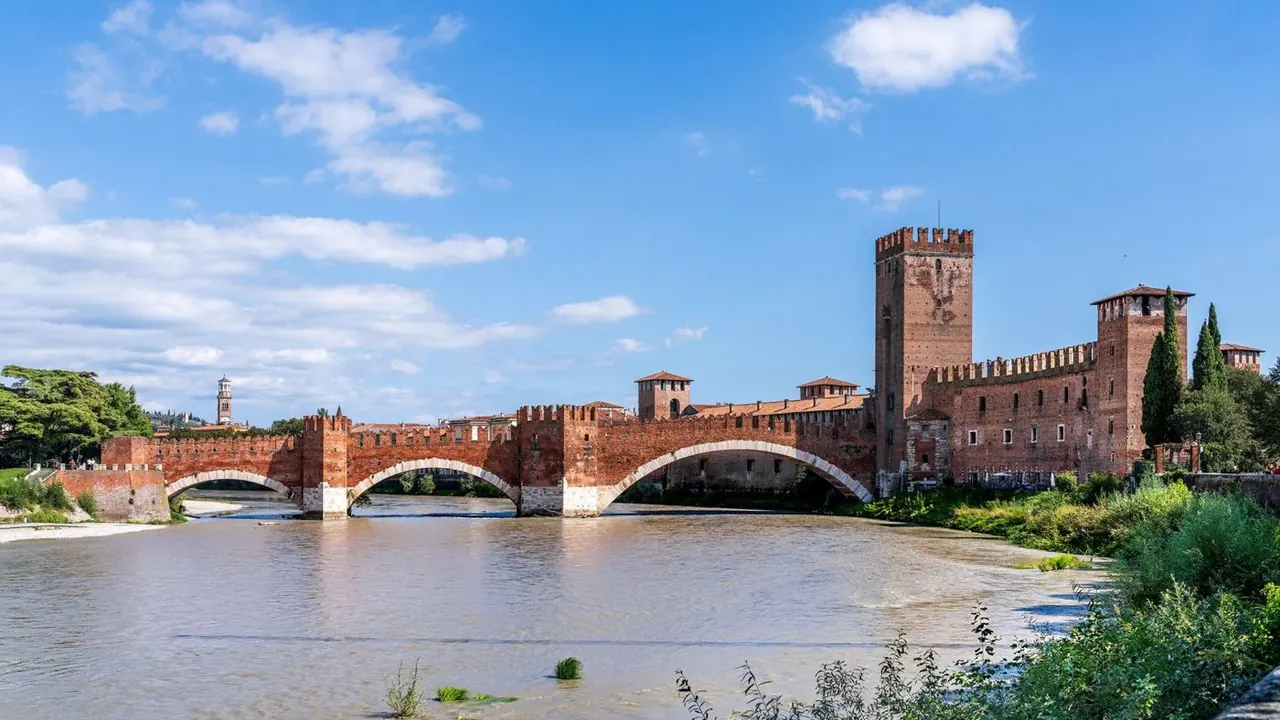
Photos: Catania by Berthold Werner, CC BY-SA 4.0, cropped; Verona by NorbertNagel, CC BY-SA 4.0, cropped.
Catania or Verona?
Our verdict in twelve categories, each scored against the same fixed benchmark cities, and the climate month by month, so you can choose for your trip.
Choose Catania for
- beaches
- nightlife
- nature and the outdoors
Catania is for travellers who want heat, sea and a city with an edge. It has the stronger beaches, the better street food and a later, louder night out. Above all it has Etna on the doorstep, a live volcano you can walk on in the morning before swimming off lava rock in the afternoon. It is also the cheaper of the two. Choose it if you can put up with traffic, rough pavements and a centre that never really quietens down.
Choose Verona for
- getting around
- wellness
- families
Verona suits a slower, more polished trip built around history, music and easy travel. Its Roman, medieval and Renaissance centre is richer and flat enough to cover entirely on foot. Summer opera in the Arena is a reason to come in itself, and the train puts Venice, Padua, Vicenza and Lake Garda within a day's reach. Families and anyone after a calmer stay will find it gentler, though it costs more.
Scoreboard
Twelve categories on one fixed scale from 0 to 100. The shaded stretch is the gap between the two.
Your match
Pick a travel style or drag the sliders, and both match scores follow your weighting.
Too close to call, 1 point apart
Wins on beaches and nightlife with your weighting.
Wins on getting around and wellness with your weighting.
What matters to you?
Category by category
What the scores mean for a trip.
Beaches & swimming
Catania has the sea right in town, and two quite different kinds of shore. La Playa offers long, easy sand with beach clubs. North of the centre, around Aci Trezza, you swim off ladders into clear water among basalt sea stacks.
Verona has no coast of its own. Swimming means a half-hour trip to Lake Garda's lidos, lawns and Sirmione's limestone shelves. The calm, tideless water is pleasant, but it is a day out rather than something you do every day, and the season is shorter.
Food & drink
Catania eats on the street and at the market. Ragù-filled arancini, crispelle, horse meat grilled over smoke and granita with brioche make it the more exciting city to graze through. La Pescheria supplies the trattorias around it with fish caught that morning.
Verona's cooking is slower and heavier inland food: Amarone risotto, bigoli and bollito with pearà, served in wood-panelled osterie. Its strength is wine, with Valpolicella and Soave made within a short drive. Etna's volcanic wines give Catania a serious answer even there.
Culture & sights
Verona has more history packed inside its loop of the Adige: the Arena, a Roman theatre, Piazza dei Signori and the Scaliger tombs, San Zeno's bronze doors, and Castelvecchio's museum in Scarpa's celebrated setting. Each era leaves a clear mark, and the museum is stronger.
Catania is mostly one striking moment, the dark-and-pale baroque city rebuilt after 1693. Via dei Crociferi and the vast San Nicolò monastery are its high points, with Roman fragments surfacing here and there. The museums are modest, but the Feast of Sant'Agata in February is a spectacle Verona cannot match.
Nightlife
Catania stays out far later. Its large student population packs the lanes around Piazza Bellini and Via Gemmellaro with outdoor drinkers well past midnight. In summer the beach clubs on La Playa become open-air dance floors.
Verona's evenings revolve around the aperitivo: a spritz or a glass of Valpolicella in Piazza delle Erbe, with cheaper student bars across the river in Veronetta. Most nights the streets empty early. The exception is in summer, when the opera crowd leaving the Arena livens up the centre for a while.
Nature & outdoors
With Etna less than an hour away, Catania offers the more dramatic outdoors: a smoking 3,300m volcano with craters and lava flows to walk across, and even skiing in winter. The Alcantara Gorge lies beyond it, and the Riviera dei Ciclopi is good for snorkelling and diving.
Verona's landscapes are gentler and greener. There are vineyard walks and cycling in Valpolicella, beech woods on the Lessinia plateau, and Monte Baldo above Lake Garda, where the northern end draws windsurfers and sailors. Both cities' summer heat makes low-level walking hard work.
Day trips
Catania opens up eastern Sicily. Siracusa's island old town of Ortigia and Taormina's theatre above the sea are each about an hour away, and Acireale and the Etna wine villages are closer still. The baroque towns of Noto, Modica and Ragusa Ibla, the Roman mosaics at Piazza Armerina and Caltagirone's ceramic staircase make a superb list. Most of them are an hour and a half or more away, though, and buses only cover the main towns, so the baroque circuit really needs a car.
Verona gives you more variety for less effort. Vicenza is under half an hour by train, Padua about forty-five minutes and Mantua under an hour, and Venice is only a little over an hour away. Sirmione and the other Garda towns, plus the Soave and Valpolicella cellars, are even closer. You can see Palladio, Giotto and the Grand Canal on the same trip and never drive at all.
Good for families
Verona is the easier city with children. Its centre is flat, largely pedestrian and fine with a pushchair, and Gardaland, the safari park at Parco Natura Viva and Garda's shallow water are all about half an hour away.
Catania has gently shelving sand at La Playa, Etnaland and a volcano that older children love. The city itself is harder going, with heavy traffic, narrow uneven pavements, little shade and few attractions aimed at children.
Getting around
Verona's main sights lie within a small, flat centre that is largely closed to traffic, so you hardly need transport at all. When you do, frequent trains run to Venice, Milan and the lake.
Catania's old centre is walkable too, but step outside it and things get harder. There is one metro line, buses are slow in the traffic and drivers do not always stop for pedestrians. Many visitors end up hiring a car for Etna and the baroque towns, and then struggle to park.
Shopping & style
Neither city is a shopping destination, but Verona is the smarter place to browse. Marble-paved Via Mazzini and the boutiques and jewellers on Corso Porta Borsari give it a polished feel.
Catania's Via Etnea is mostly chain stores. The real fun is the noise of La Fiera and La Pescheria, and the best things to take home are Bronte pistachio cream, Caltagirone ceramics and Etna wine, where Verona's would be Amarone and pandoro.
Affordability
Catania goes further on a modest budget. Street food counts as a full meal, trattorias by the market are fairly priced and rooms in the old centre are reasonable for most of the year. Summer rooms, sunbeds, guided trips to the craters and a hire car are the costs that add up.
In Verona, rooms are the main expense. Hotels in the historic centre are expensive for a city its size, and on opera nights and during trade fairs they are scarce and dear. On the other hand, you hardly spend anything getting around, and wine counters and Veronetta's osterie keep everyday eating fair.
Live music & performing arts
Verona has the headline event: grand Verdi and Puccini productions in the Roman Arena on most summer evenings, plus Shakespeare, dance and jazz in the Roman theatre. The Teatro Filarmonico carries on through the cooler months.
Catania, Bellini's birthplace, has a fine opera house in the Teatro Massimo Bellini, with a season visitors can actually attend. Its own speciality is the opera dei pupi, the marionette theatre of knights and Saracens. Beyond that, there is not enough to fill many evenings.
Wellness & relaxation
Verona is the more restful choice. Sirmione's lakeside thermal pools, the warm spring-fed lake near Lazise and the Roman-era springs at Caldiero are all close, and the Giardino Giusti and the riverside offer calm within the city.
Catania's centre is noisy and full of traffic, and it has no bathing tradition. Spas are found in hotels on the coast or on Etna's lower slopes. The rest it does offer comes from the pace of the day, with a slow granita and a long lunch, or from a quieter village up on the volcano.
When should you go?
Pick your month. The climate figures are measured averages, not a forecast.
Catania in July
Verona in July
Daytime high, °C
Rainfall in the month, mm
Where the figures come from
Catania's sunshine is measured 88 km from the centre, at Messina.
Temperature and rainfall are climate normals, averaged over the years shown. Catania: 1991-2020 normals, Catania / Fontanarossa (5.2 km from centre). Verona: 1991-2020 normals, Verona / Villafranca (11.6 km from centre).
Catania is the hotter, drier and sunnier city. From June to August it barely rains, and highs reach about 32°C in August, too hot for walking the streets in the afternoon. The sea is warm enough to swim from June into October and peaks at 26°C in August. Spring and October are the best months for sightseeing and Etna. The rain comes in late autumn and winter, with December the wettest at about 83mm, but winter days stay mild.
Verona has a clearer cycle of seasons. January highs are only about 7°C, so winter is a cold time for strolling, and summer peaks around 30°C without Catania's extreme heat. Rain falls all year. Thunderstorms are common in summer, and autumn is the wettest stretch, with September at about 85mm. May, June and September are the best months for walking, and the Garda lidos are only worth the trip from June to September.
Which traveller are you?
For a beach and sun trip, Catania is the clear choice. La Playa's long sand and the clear water off the lava rocks of the Riviera dei Ciclopi are right by the city, and the sea stays warm into October. Verona's swimming means a trip to Lake Garda.
For a culture and arts trip, Verona comes out ahead. It has the Roman Arena, San Zeno, the Scaliger tombs and Scarpa's Castelvecchio, opera under the stars in summer, and Padua's Giotto chapel and Palladio's Vicenza an easy train ride away.
For a food and nightlife trip, pick Catania. Arancini, horse-meat grills on Via Plebiscito and La Pescheria fill the day. At night the lanes around Piazza Bellini stay full well past midnight, and in summer the dancing moves to the beach clubs.
Before you go
| Measure | Catania | Verona |
|---|---|---|
| Official language | Italian | Italian |
| Currency | Euro (EUR) | Euro (EUR) |
| Sockets | CFL230 V, 50 Hz | CFL230 V, 50 Hz |
| Driving side | Right | Right |
| Time zone | UTC+1, UTC+2 in summer | UTC+1, UTC+2 in summer |
| Emergency number | 112 | 112 |
| Elevation | 7 m | 59 m |
| Main airport | Catania-Fontanarossa Airport (CTA)4 km from centre96 non-stop destinations | Verona Villafranca Valerio Catullo Airport (VRN)10 km from centre96 non-stop destinations |
| Public holidays this year | 13 days | 13 days |
By the numbers
| Measure | Catania | Verona |
|---|---|---|
| City population | 311,584 | 255,588 |
| People per km² | 1,704 | 1,285 |
| Museums within 10 km | 25 | 18 |
| UNESCO World Heritage sites within 50 km | 3 | 5 |
| Swim season, months above 21 °C | 5 months | - |
Where else could you go?
Every comparison below shares a destination with this one, so you can follow Catania or Verona somewhere new.