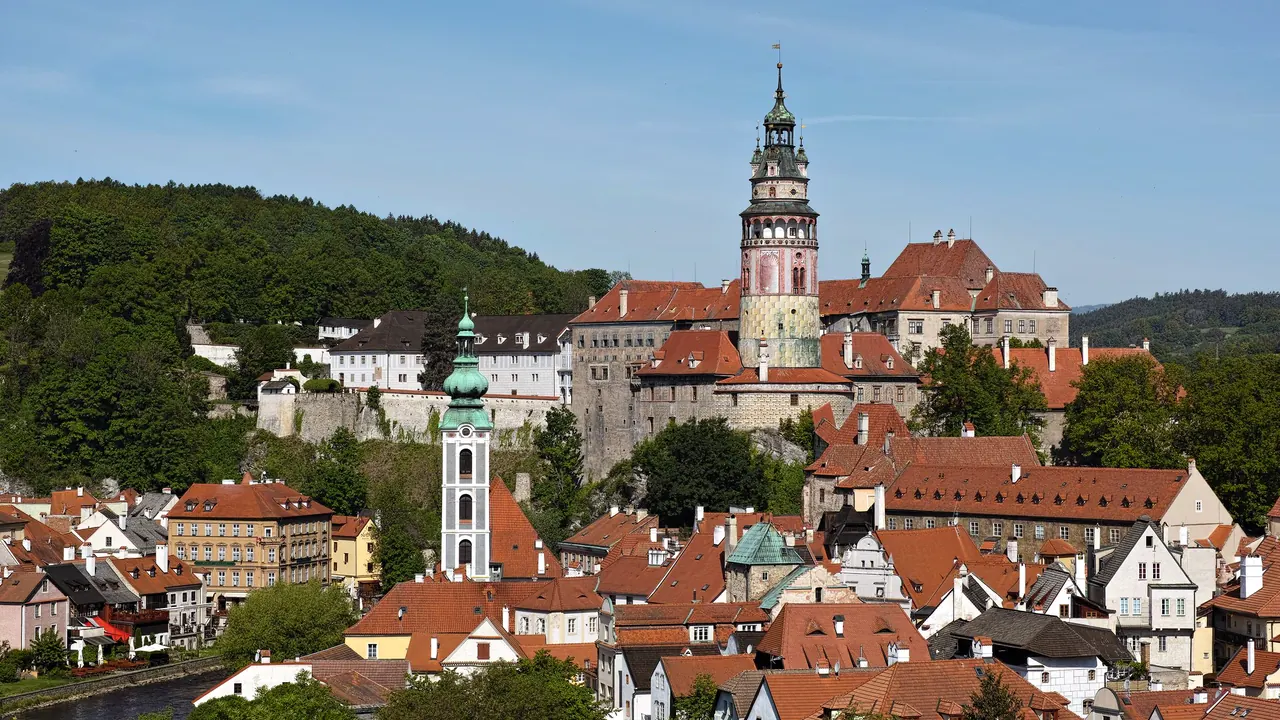
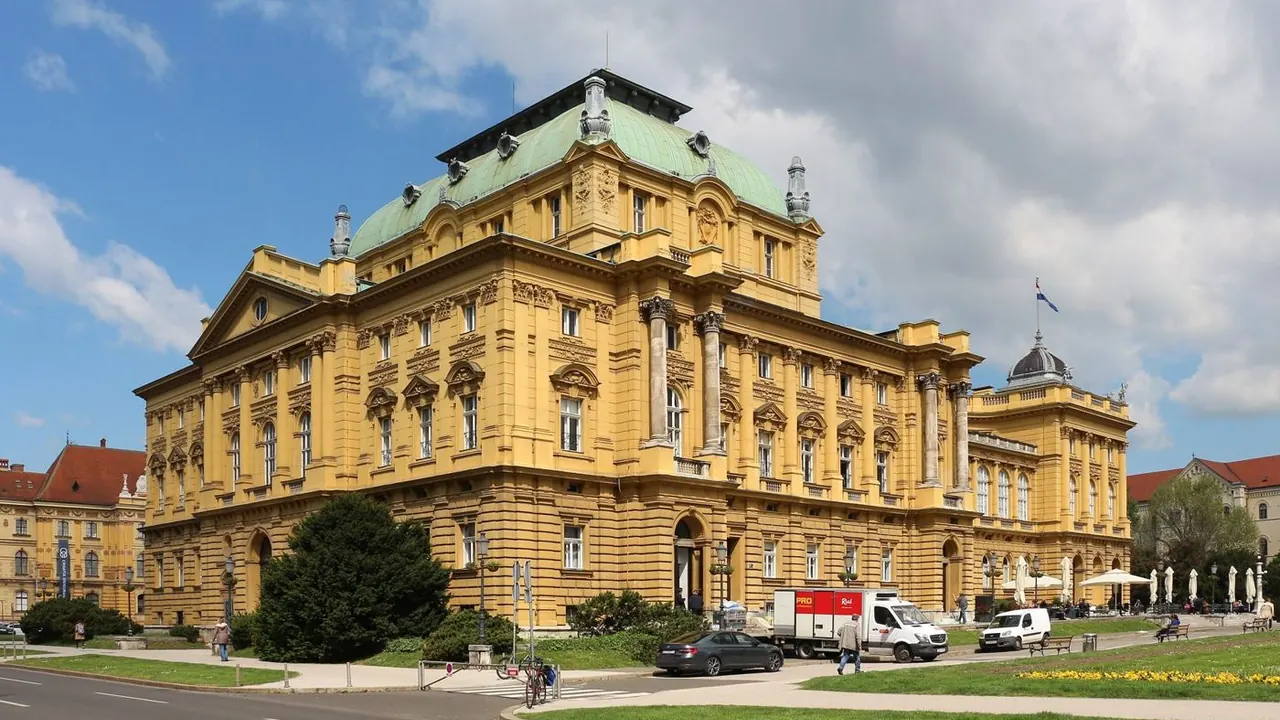
Photos: Cesky Krumlov by Xth-Floor, CC BY-SA 4.0, cropped; Zagreb by Bernard Gagnon, CC BY-SA 4.0, cropped.
Cesky Krumlov or Zagreb?
Our verdict in twelve categories, each scored against the same fixed benchmark cities, and the climate month by month, so you can choose for your trip.
Choose Cesky Krumlov for
- beaches
- culture and sights
- nature and the outdoors
Cesky Krumlov suits a slower, scenic trip. It is a castle town wrapped in a loop of the Vltava, at its best early in the morning and in the evening, with a day on the river by canoe and walks in the Bohemian Forest close by. It rewards travellers who want a picture-book setting and quiet nights, and who are happy for the evening to be dinner and a beer by the water.
Choose Zagreb for
- nightlife
- food and drink
- live music and the arts
Pick Zagreb if you would rather have a working capital than a showpiece. You eat better there, can go out later, and can see opera, ballet and concerts through the year. Trams make a few days with children or without a car easy. The sights are less of a postcard, but there is far more to fill an evening or a wet afternoon.
Scoreboard
Twelve categories on one fixed scale from 0 to 100. The shaded stretch is the gap between the two.
Your match
Pick a travel style or drag the sliders, and both match scores follow your weighting.
Wins on beaches and culture and sights with your weighting.
Wins on nightlife and food and drink with your weighting.
What matters to you?
Category by category
What the scores mean for a trip.
Beaches & swimming
Neither city is a beach destination, but Cesky Krumlov has the better swim within reach. Lipno, about half an hour south in the Bohemian Forest, has grassy and sandy shores, and the water is close to 20°C in high summer. In town the Vltava is for rafts, not swimming.
Zagreb's swimming is inside the city: the pebbly former gravel pit at Jarun and the smaller Bundek lake. Both are fine for a hot afternoon and little more. For the sea you have to go to the Adriatic, two hours away, which makes it a separate stop rather than a day out.
Food & drink
Zagreb is the better place to eat. Dolac market sets the tone each morning, štrukli and turkey with mlinci give the city dishes of its own, and wines from Plešivica and Slavonia go with them. Café terraces in the Lower Town make eating and drinking part of the day.
Cesky Krumlov serves solid South Bohemian cooking, such as roast duck with dumplings, river trout and game, in vaulted cellars and riverside terraces. Its town-brewed beer is the highlight. The choice is narrow, though, and many menus are written for day-trippers.
Culture & sights
Cesky Krumlov has the stronger sights. The entire old town in its bend of the river is UNESCO-listed, and the huge castle above it has a painted tower, the three-tiered Cloak Bridge and a Baroque theatre with its stage machinery intact. It works as one complete scene rather than a set of collections, and a day or two covers it.
Zagreb's sights are split between the hilltop Upper Town, with St Mark's tiled roof and the twin-spired cathedral, and the Austro-Hungarian Lower Town. It has more museums, from old masters to naive art, and Mirogoj cemetery is lovely, but nothing in the city matches Krumlov's intact townscape.
Nightlife
Only Zagreb has real nightlife. The terraces on Tkalčićeva fill on warm nights, and there are smaller cocktail and craft beer bars around Flower Square. In summer the crowd moves to the lakeside clubs at Jarun, and students keep alternative venues going all year.
In Cesky Krumlov an evening out means a pub, a cellar bar or a riverside terrace. Outside summer the lanes empty early, and there are no clubs at all.
Nature & outdoors
Both have gentle green country rather than dramatic scenery, and both offer about as much of it. Cesky Krumlov's outdoors is river and forest: a day canoeing down the Vltava, the spruce woods and peat bogs of the Bohemian Forest national park, sailing on Lipno and cross-country skiing in winter.
Zagreb's outdoors starts at a tram stop. Medvednica's beech woods and mountain huts rise straight from the northern edge of the city, and Maksimir has lakes and oak woods. Plitvice's lakes and waterfalls make a long but rewarding day to the south.
Day trips
Both have a good spread of excursions without one headline destination. Around Cesky Krumlov they are mostly castles and monasteries: white neo-Gothic Hluboká, Zlatá Koruna, the Baroque farmhouses of Holašovice and the fish-pond spa town of Třeboň. Most are much easier by car.
Zagreb's trips go further afield: the castles and pilgrimage church of Zagorje, baroque Varaždin, Samobor's old square and the Plešivica wine roads. Ljubljana is also reachable by train for a long day.
Good for families
In Cesky Krumlov, most families remember a gentle raft trip down the Vltava, and the bears kept in the castle moat, as they have been for centuries. Older children can climb the painted tower and roam the courtyards, and the town is small, safe and largely free of cars. Lipno's treetop walk and lake shores make a good day out nearby. However, the guided interiors suit adults, and once you have seen the castle and done the river there is little else for children.
Zagreb has more for children to do from one day to the next. Maksimir park has the zoo as well as lakes and oak woods to run around in. On hot days children can swim in the lifeguarded areas at Jarun or at the smaller Bundek lake, and Medvednica's beech woods are close enough for a gentle walk to a mountain hut. Zagreb has no single big attraction, but its parks, lakes and easy trams give a family a fuller stay than Krumlov's castle-and-river day can.
Getting around
Zagreb is easier to get around. Its dense tram network covers most of the city, buses connect to Medvednica and the airport, and you only need a car for Zagorje and Plitvice.
Cesky Krumlov's centre takes a quarter of an hour to cross on foot, though the climb to the castle takes effort. Beyond the town, bus and train links are thin, so most visitors hire a car or join tours.
Shopping & style
Neither city is a shopping destination, but Zagreb at least has ordinary shopping. Ilica has chains, local fashion and small design shops, there are malls on the edge of town, and a flea market runs on Sunday mornings at Britanski trg. Its souvenirs have a story behind them, from licitar hearts to the necktie, which comes from Croatia.
Cesky Krumlov's lanes sell almost nothing but souvenirs: Bohemian glass, garnets, marionettes and green moldavite, plus a few workshops making ceramics and prints.
Affordability
Costs are similar, and both are good value by Western European standards. What differs is where the money goes. In Cesky Krumlov you pay extra for location, such as castle-view rooms and terraces on the main lanes, and each castle tour has its own ticket.
In Zagreb the everyday things are cheap, including trams, museum entry, market food and coffee on a terrace. Upmarket restaurants and cocktails cost what they would in Western Europe.
Live music & performing arts
Zagreb has a season that runs all year. The Croatian National Theatre stages opera, ballet and drama, the Zagreb Philharmonic plays at the Lisinski hall, and the Komedija does operetta, with chamber concerts in churches as well. Most of the spoken theatre is in Croatian.
Cesky Krumlov's performances happen only in summer. Plays and opera are staged in the castle garden's revolving open-air theatre, and a classical festival brings concerts to the castle and churches. Most visitors see the Baroque theatre only on a tour.
Wellness & relaxation
Neither city has a bathing tradition, so in both you rest by slowing down or take a trip out to a spa. From Cesky Krumlov the nearest is Třeboň, with its peat baths. Zagreb has several warm mineral-pool resorts in Zagorje within about an hour, which gives it a little more choice.
The calm differs too. Krumlov's old town goes still once the day visitors leave, while Zagreb offers long café mornings and shaded parks.
When should you go?
Pick your month. The climate figures are measured averages, not a forecast.
Cesky Krumlov in July
Zagreb in July
Daytime high, °C
Rainfall in the month, mm
Where the figures come from
Cesky Krumlov's temperatures are measured 50 km from the centre, at Grainet-Rehberg.
Cesky Krumlov has no rain gauge within 25 km of the centre, so its rainfall comes from a gridded climate dataset read at the city rather than from a gauge further away.
Temperature and rainfall are climate normals, averaged over the years shown. Cesky Krumlov: 1991-2020 normals, Grainet-Rehberg (50.3 km from centre). Zagreb: 1991-2020 (sunshine 1981-2010, rainfall 1981-2010) normals, Zagreb / Gric (0.6 km from centre).
Both cities are inland with a continental climate, but Zagreb is several degrees warmer all year. Cesky Krumlov peaks at about 23°C in July and August. That is comfortable for walking the lanes, and it is the only stretch when Lipno is warm enough to swim. Summer is also its wettest season, with July the rainiest month. From December to February daytime highs sit near freezing, which suits a quiet winter stay more than long days outdoors.
Zagreb reaches about 29°C in July. That is warm enough for its lakes but heavy going on the Upper Town slopes at midday, and July is also its sunniest month. June and August bring heavy showers. In both cities, May and September are the most pleasant months for sightseeing. Zagreb stays mild well into October, when Cesky Krumlov is already turning cold.
Which traveller are you?
On a food and nightlife trip, Zagreb is the clear choice. Dolac market, štrukli, local wines and café terraces make for good eating, and the evening carries on along Tkalčićeva and at the Jarun clubs. Cesky Krumlov winds down after dinner.
For a culture and arts trip built around sights, Cesky Krumlov stands out. The whole UNESCO-listed old town, the vast castle and its Baroque theatre form one intact scene. Zagreb is the better pick only if evenings at the opera or a concert matter more.
On a family trip with young children, Zagreb works better. Its flat streets and pushchair-friendly trams make getting around easy, and the zoo, the Tesla technical museum and the funicular keep children busy. Cesky Krumlov's bears and raft trip are charming, but its steep cobbles wear out small legs.
Before you go
| Measure | Cesky Krumlov | Zagreb |
|---|---|---|
| Official language | Czech | Croatian |
| Currency | Czech Koruna (CZK) | Euro (EUR) |
| Sockets | CE230 V, 50 Hz | CF230 V, 50 Hz |
| Driving side | Right | Right |
| Time zone | UTC+1, UTC+2 in summer | UTC+1, UTC+2 in summer |
| Emergency number | 112 | 112 |
| Elevation | 492 m | 127 m |
| Main airport | Václav Havel Airport Prague (PRG)143 km from centre178 non-stop destinations | Zagreb Franjo Tuđman International Airport (ZAG)11 km from centre66 non-stop destinations |
| Public holidays this year | 13 days | 14 days |
By the numbers
| Measure | Cesky Krumlov | Zagreb |
|---|---|---|
| City population | 12,797 | 767,131 |
| People per km² | 576 | - |
| Museums within 10 km | 4 | 27 |
| UNESCO World Heritage sites within 50 km | 2 | 0 |
Where else could you go?
Every comparison below shares a destination with this one, so you can follow Cesky Krumlov or Zagreb somewhere new.
- Ljubljanavs Zagreb
- Praguevs Cesky Krumlov
- Grazvs Zagreb
- Salzburgvs Cesky Krumlov
- Hallstattvs Cesky Krumlov
- Bledvs Zagreb