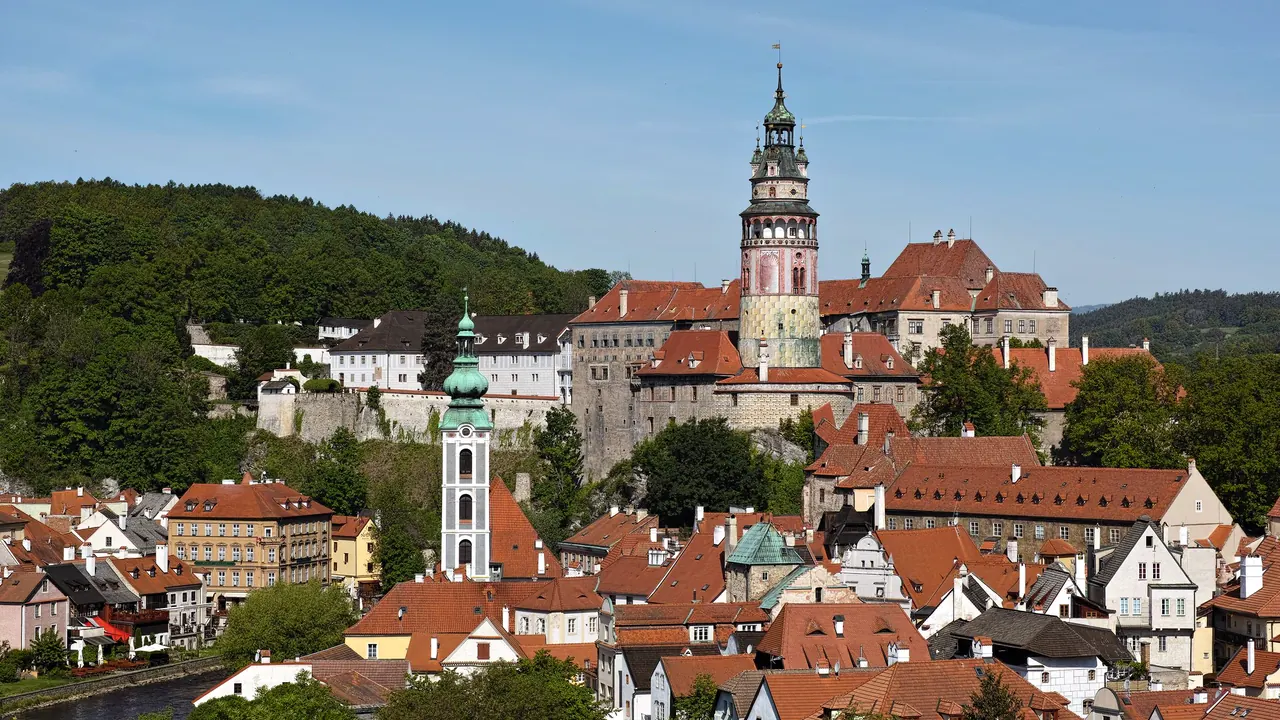
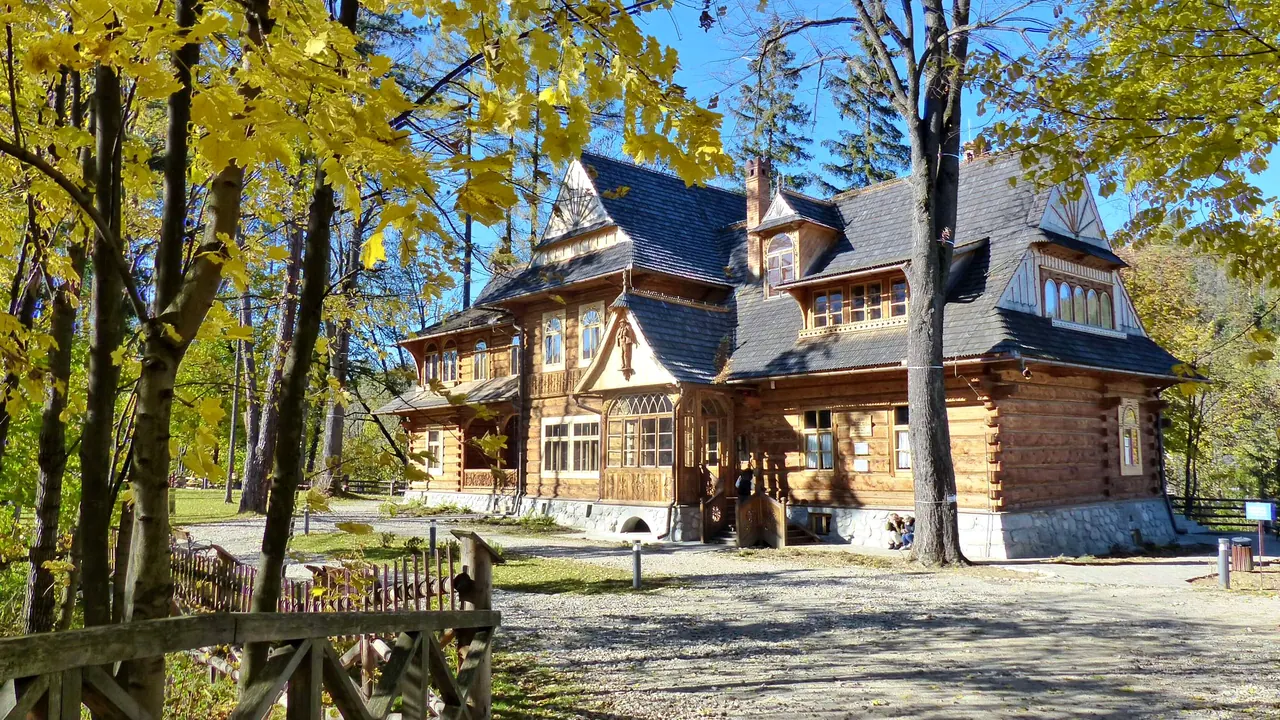
Photos: Cesky Krumlov by Xth-Floor, CC BY-SA 4.0, cropped; Zakopane by Wojciech Grzegorz Domagała, CC BY-SA 4.0, cropped.
Cesky Krumlov or Zakopane?
Our verdict in twelve categories, each scored against the same fixed benchmark cities, and the climate month by month, so you can choose for your trip.
Choose Cesky Krumlov for
- culture and sights
- beaches
- getting around
Cesky Krumlov is the pick for travellers who want a complete historic town to wander: painted Renaissance houses packed into a bend of the Vltava, a vast castle above them and a Baroque theatre inside. It suits a slow, quiet stay of two or three days with a canoe trip on the river and drives to South Bohemian castles and villages, as long as you're happy with early, peaceful evenings.
Choose Zakopane for
- wellness
- nature and the outdoors
- families
Choose Zakopane if the mountains are the point. The Tatras begin at the edge of town, with real alpine walking in summer and skiing in winter, and the steaming thermal pools nearby make recovery part of the routine. Families who like the outdoors and groups who want a livelier evening on Krupówki will also get more from it.
Scoreboard
Twelve categories on one fixed scale from 0 to 100. The shaded stretch is the gap between the two.
Your match
Pick a travel style or drag the sliders, and both match scores follow your weighting.
Wins on culture and sights and beaches with your weighting.
Wins on wellness and nature and the outdoors with your weighting.
What matters to you?
Category by category
What the scores mean for a trip.
Beaches & swimming
Neither is a swimming destination, but Cesky Krumlov has the better summer option. Lipno reservoir, about half an hour south in the Bohemian Forest, has grassy and sandy shores and water near 20°C in high summer. The Vltava in town is for rafting, not bathing.
In Zakopane, swimming in the Tatra lakes is banned, and the reservoir at Czorsztyn is an hour away with only modest bathing spots. What it does have is thermal pools, which are warm all year when Lipno is out of season.
Food & drink
Zakopane's highland cooking is more distinctive. There is grilled oscypek with cranberry jam from street stalls, kwaśnica with smoked rib and lamb in timber inns with open fires and fiddlers, and cheese straight from shepherds' huts in summer.
Cesky Krumlov serves solid South Bohemian roasts, duck and dumplings in cellars and on riverside terraces, and its long-brewed local beer is the high point. In both places the menu range is narrow and the main streets cater to crowds, so the side streets reward a short walk.
Culture & sights
Cesky Krumlov is far stronger for sightseeing. The entire townscape is the attraction: painted facades, the castle's round tower and courtyards, the three-tiered Cloak Bridge and a castle theatre that keeps its original stage machinery, one of very few left in Europe.
Zakopane's heritage is smaller and more specialised. It centres on the wooden Zakopane style seen in Villa Koliba and the Jaszczurówka chapel, the Tatra Museum and the carved grave markers of Pęksowy Brzyzek. It is interesting for a day, but it is not why people come.
Nightlife
Zakopane has more going on after dark. Krupówki has pubs, a few dance clubs and inns that get rowdy, especially on winter weekends during the ski season and on New Year's Eve, which draws people from across Poland.
Cesky Krumlov has no clubs. An evening there means a cellar bar or a riverside terrace in summer, and out of season the lanes empty early.
Nature & outdoors
This is where Zakopane pulls well ahead. Its national park starts at the edge of town, with flower-filled valleys, the walk to Morskie Oko, the climb to Rysy at 2,499m, the chained Orla Perć ridge, a cable car to Kasprowy Wierch and skiing in winter.
Cesky Krumlov's countryside is gentler. You can float down the Vltava through wooded meanders, walk or cycle in the spruce woods and bogs of the Bohemian Forest, and climb Klet for views to the Alps. It is lovely, but it is soft rather than dramatic.
Day trips
Both make a good base for several days out. The difference is in how far the outings spread. Around Cesky Krumlov they sit close together in South Bohemia: the monastery at Zlatá Koruna is a few minutes down the river, České Budějovice's arcaded square and the white castle at Hluboká are within about half an hour, and the Baroque farmhouses of Holašovice are nearby. Třeboň's fish ponds and the castles of the upper Vltava are a little further, Linz is the one trip abroad, and Prague is too far for a comfortable day.
Zakopane's outings cover a wider range of distances. The painted larch-wood church at Dębno and the log houses of Chochołów are close by, the castles of Niedzica and Czorsztyn face each other an hour east, and Kraków with the Wieliczka salt mine fills a long day about two hours away. Its trip across the border is also the richer one, with Spiš Castle, walled Levoča and Kežmarok's wooden church in Slovakia. In South Bohemia, having a car is what makes the outings easy. From Zakopane, timing matters more, because weekend traffic slows these drives in a way that midweek trips mostly avoid.
Good for families
Zakopane suits active families better. Children get the Gubałówka funicular with its summer toboggan run, flat valley trails that work with pushchairs, sledging and nursery slopes in winter, and thermal water parks for rainy days.
Cesky Krumlov charms younger children with the bears in the castle moat and a gentle raft trip, and Lipno's treetop walk is close by. But the steep cobbles are hard work with a pushchair, and the castle interior tours are really aimed at adults.
Getting around
Both centres are small and walkable on foot. The difference is what lies beyond them. In Zakopane, minibuses and local buses run to Kuźnice, the valley entrances and the Morskie Oko road, so you can reach the trails without a car. Its weak point is the journey in, with badly jammed roads at peak times and a slow, winding railway from Kraków.
Cesky Krumlov is the reverse. Arriving is straightforward, but bus and train links into the forest and to the smaller castles are thin, so most visitors exploring the region hire a car.
Shopping & style
Shopping in both is mainly souvenirs, though Zakopane has a slightly stronger craft side. The market at the foot of Gubałówka sells wool sweaters, sheepskins, felt slippers, carved boxes and wheels of oscypek, and Krupówki adds outdoor gear.
Cesky Krumlov's lanes lean towards Bohemian glass, garnet jewellery, marionettes and green moldavite. Neither town has fashion streets or department stores.
Affordability
Costs are similar in both and moderate by Western standards. What drives the price up differs. In Cesky Krumlov, you pay more for castle or river views and for restaurants on the main lanes, and each castle tour is charged separately.
In Zakopane, prices depend on the season: Christmas, New Year, the winter school breaks and long summer weekends push room rates up, while spring and autumn are the cheapest times to stay.
Live music & performing arts
Neither is a big stage town, but Zakopane offers more through the year. Highland string bands play in the inns most evenings, the small Witkacy Theatre has a loyal audience, and the August mountain folklore festival fills the streets.
Cesky Krumlov's programme is mostly a summer one. There is opera and drama in the castle garden's revolving open-air theatre and an international festival of classical concerts, but little to attend outside the warm months.
Wellness & relaxation
Zakopane is much better for unwinding. It began as a mountain health resort, and geothermal complexes at Chochołów, Białka Tatrzańska, Bukowina and Szaflary have outdoor pools steaming in the snow with views of the peaks.
Cesky Krumlov has only a few hotel wellness rooms and beer baths. What it offers instead is calm, with a still old town once the day visitors leave, and Třeboň's peat baths are a day trip away for proper treatments.
When should you go?
Pick your month. The climate figures are measured averages, not a forecast.
Cesky Krumlov in July
Zakopane in July
Daytime high, °C
Rainfall in the month, mm
Where the figures come from
Cesky Krumlov's temperatures are measured 50 km from the centre, at Grainet-Rehberg.
Cesky Krumlov has no rain gauge within 25 km of the centre, so its rainfall comes from a gridded climate dataset read at the city rather than from a gauge further away.
Zakopane has no rain gauge within 25 km of the centre, so its rainfall comes from a gridded climate dataset read at the city rather than from a gauge further away.
Zakopane's sunshine is measured 34 km from the centre, at Poprad / Tatry.
Temperature and rainfall are climate normals, averaged over the years shown. Cesky Krumlov: 1991-2020 normals, Grainet-Rehberg (50.3 km from centre). Zakopane: 1999-2020 (sunshine 1991-2020, rainfall 1991-2020) normals, Zakopane (0.2 km from centre).
Both are inland and have cold winters, but their summers differ more than the temperatures suggest. Cesky Krumlov is slightly warmer, reaching about 23°C in July and August, which is comfortable for walking the old town and warm enough for swimming at Lipno. July is its wettest month at around 111mm. Zakopane peaks a couple of degrees cooler and gets far more rain in summer, about 176mm in July, much of it as mountain showers. It still gets slightly more sunshine than Cesky Krumlov through most of the year.
Late May to September is the best time for both. September is a good choice for hiking in Zakopane, because the rain eases while the trails stay open. From December to February Cesky Krumlov hovers around freezing and goes quiet, which is fine for a short, still winter break but not for long days outdoors. Zakopane is colder still, near 0°C in January, and that is when it changes character, with snow for skiing, sledging and the hot outdoor pools.
Which traveller are you?
For a culture and arts trip, Cesky Krumlov is the clear choice. The whole UNESCO-listed old town, the castle with its rare Baroque theatre and the Schiele art centre give it far more to see than Zakopane's wooden villas and small museums.
On an outdoors trip, Zakopane wins easily. Granite peaks, glacial lakes, a cable car to nearly 2,000m and winter skiing outclass Cesky Krumlov's gentle canoeing and forest walks, which are pleasant but soft by comparison.
For a relaxing and wellness trip, Zakopane has the advantage. It grew up as a health resort, and several large thermal complexes nearby have outdoor pools facing the Tatras. Cesky Krumlov offers calm evenings but little more than hotel wellness rooms.
Before you go
| Measure | Cesky Krumlov | Zakopane |
|---|---|---|
| Official language | Czech | Polish |
| Currency | Czech Koruna (CZK) | Zloty (PLN) |
| Sockets | CE230 V, 50 Hz | CE50 Hz |
| Driving side | Right | Right |
| Time zone | UTC+1, UTC+2 in summer | UTC+1, UTC+2 in summer |
| Emergency number | 112 | 112 |
| Elevation | 492 m | 837 m |
| Main airport | Václav Havel Airport Prague (PRG)143 km from centre178 non-stop destinations | Kraków John Paul II International Airport (KRK)87 km from centre132 non-stop destinations |
| Public holidays this year | 13 days | 14 days |
By the numbers
| Measure | Cesky Krumlov | Zakopane |
|---|---|---|
| City population | 12,797 | 25,770 |
| People per km² | 576 | 306 |
| Museums within 10 km | 4 | 18 |
| UNESCO World Heritage sites within 50 km | 2 | 2 |
Where else could you go?
Every comparison below shares a destination with this one, so you can follow Cesky Krumlov or Zakopane somewhere new.
- Krakowvs Zakopane
- Praguevs Cesky Krumlov
- Salzburgvs Cesky Krumlov
- Hallstattvs Cesky Krumlov
- Viennavs Cesky Krumlov
- Brnovs Cesky Krumlov