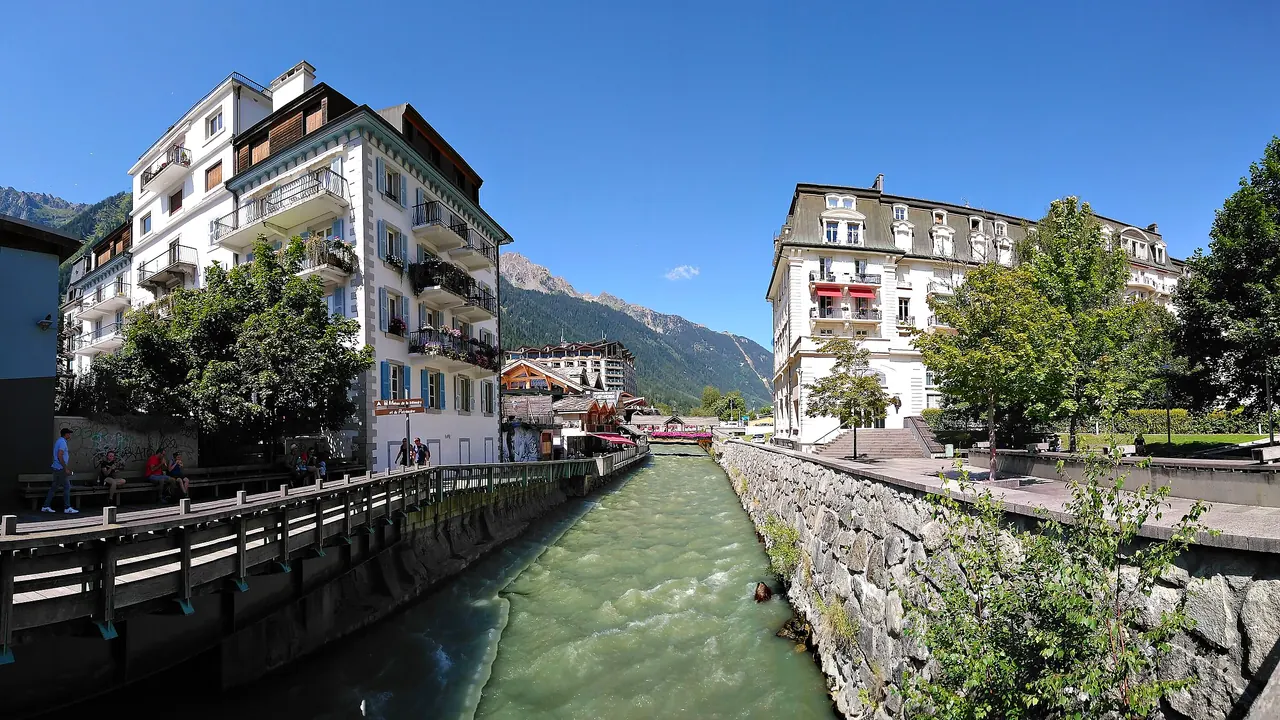
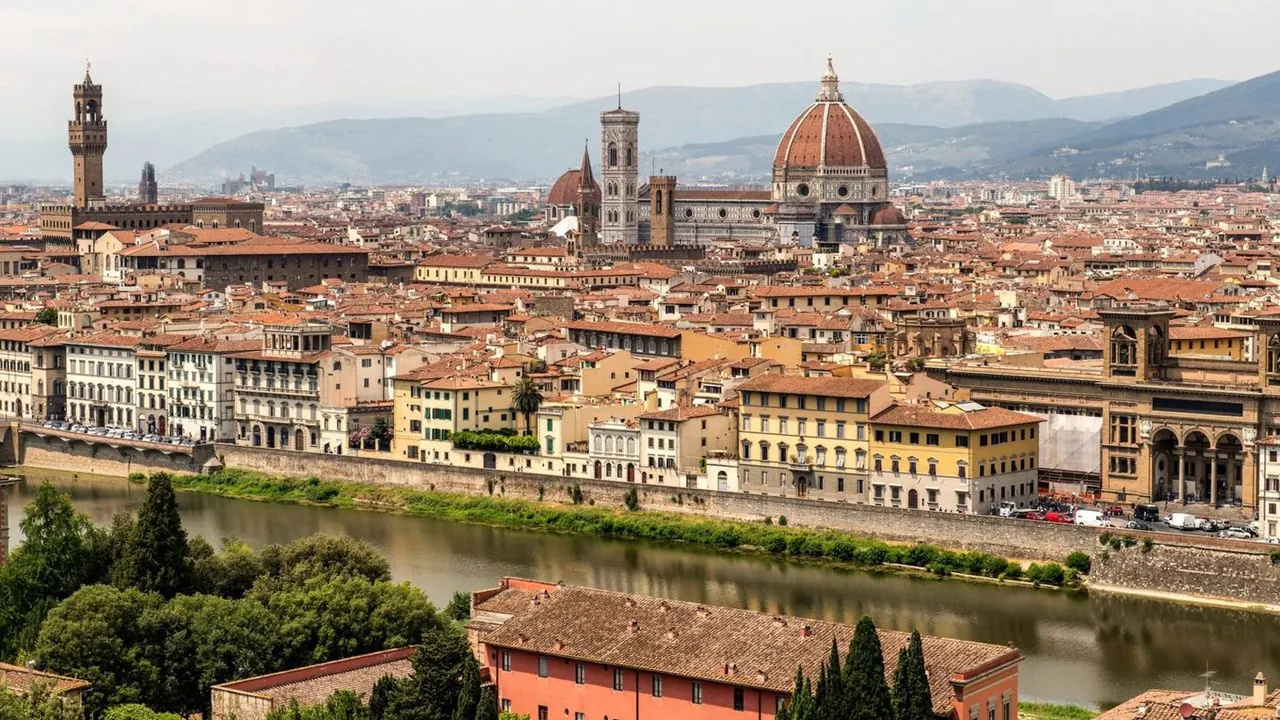
Photos: Chamonix by Tiia Monto, CC BY-SA 3.0, cropped; Florence by Wolfgang Weiser, Pexels License.
Chamonix or Florence?
Our verdict in twelve categories, each scored against the same fixed benchmark cities, and the climate month by month, so you can choose for your trip.
Choose Chamonix for
- nature and the outdoors
- families
- wellness
Chamonix is the pick when the mountains are the point of the trip. It suits skiers, climbers, hikers and families who like being outdoors. Cable cars leave from the town centre for glacier country, and trails start straight from the valley floor. Evenings mean après-ski and fondue rather than galleries, and the town's museums take an afternoon at most.
Choose Florence for
- culture and sights
- live music and the arts
- shopping
Choose Florence for art, architecture and eating well. The Renaissance centre will fill several days on foot, the trattorie and markets are a reason to come in themselves, and Siena, Pisa, Lucca and the Chianti hills are all within easy reach for days out. It is also the cheaper of the two places to stay, and it has a proper opera and classical season. What it cannot give you is high mountains: its countryside is olive terraces and vineyard lanes.
Scoreboard
Twelve categories on one fixed scale from 0 to 100. The shaded stretch is the gap between the two.
Your match
Pick a travel style or drag the sliders, and both match scores follow your weighting.
Wins on nature and the outdoors and families with your weighting.
Wins on culture and sights and live music and the arts with your weighting.
What matters to you?
Category by category
What the scores mean for a trip.
Beaches & swimming
Neither place is a swimming destination, but the water you can reach is different. From Chamonix it is mountain lakes: the grassy shore of Lac de Passy with Mont Blanc ahead, or clear Lake Annecy a little over an hour away. Both are for July and August only.
From Florence it is the sea. The sandy, lounger-lined beaches of the Versilia take about an hour and a half by train, so the coast fills a whole day or works better as a few nights on the way somewhere else. In both cities an everyday dip means a pool.
Food & drink
Florence is the far better place to eat. Thick bistecca, ribollita, lampredotto from the street carts and the produce at Sant'Ambrogio and the Mercato Centrale give it real depth. The Chianti vineyards just south of the city supply the wine. The trick is to leave the tourist menus around the Duomo and eat in the trattorie of the Oltrarno.
Chamonix's strength is narrower: hearty Savoyard cheese dishes, ideally eaten on a refuge terrace facing the glaciers, plus good cheese shops and bakeries for a picnic. Away from that, menus tend to repeat each other, and many kitchens close between the seasons.
Culture & sights
There is no contest here. Florence holds the Renaissance in one compact centre: Brunelleschi's dome, the Uffizi, Michelangelo's David, the Bargello's sculpture and the frescoes at San Marco and the Brancacci Chapel. That is enough for a week, though in summer you will need to book ahead and queue.
Chamonix's heritage is the story of alpinism, from the first ascent of Mont Blanc to the first Winter Olympics. The Musée Alpin and the climbers' cemetery tell it well, but half a day covers everything. The real sight is the massif outside the window.
Nightlife
Both towns go out on a modest scale, but the evenings feel quite different. Chamonix is après-ski: loud bars at the foot of the slopes, then a lane of pubs in the old town full of guides, seasonal workers and young English-speaking visitors, with a couple of small clubs open late on busy nights. It is a winter thing, quieter in summer and largely shut in between.
Florence is aperitivo followed by a wine bar. Drinkers spill across Piazza Santo Spirito on warm nights, and Sant'Ambrogio draws locals. Its liveliest season is summer, when bars open along the Arno.
Nature & outdoors
Chamonix is in a different league. The Mont Blanc massif rises almost 4km above the valley, and lifts take you to the Aiguille du Midi and the Mer de Glace without a single step of climbing. Skiing, the Vallée Blanche, guided mountaineering, climbing and paragliding all start from town, though high-mountain weather can turn fast.
Florence offers gentle, cultivated countryside instead: olive terraces at Fiesole, cypress lanes in Chianti for cycling, and the Casentino forests further out. It is lovely in spring and autumn, but it is a walk in the hills, not a mountain trip.
Day trips
Florence has one of the best sets of day trips anywhere. Siena, Pisa, Lucca, San Gimignano, Volterra and the Chianti villages are all close, and Bologna is a short high-speed train ride away. You could spend a week on day trips without repeating one.
Chamonix's trips come from its border position: Courmayeur and Roman Aosta through the tunnel, Annecy and Geneva by car, and Martigny by the Mont Blanc Express. After those, most places in reach are other ski resorts, and mountain roads make journeys slow.
Good for families
Chamonix is better for families who like being active. Children can try nursery slopes and sledging in winter, and in summer there are easy lake walks, the luge, treetop courses, marmots at the Merlet park and the rack railway to the glacier. Watch out for cost, the altitude of the big cable cars and rainy days.
Florence's sights are mostly made for adults. Climbing the dome, the secret passages of Palazzo Vecchio and the Boboli Gardens help, as does a day at the Pinocchio park at Collodi. Even so, summer heat and crowds make it harder work with small children.
Getting around
Florence is a little easier. The Duomo, Uffizi, Accademia and Pitti Palace are all a short walk apart, and Santa Maria Novella station sits in the centre for rail day trips. Trams run to the airport. Narrow pavements and hard stone paving are the price you pay.
Chamonix's own centre is just as walkable, and buses and the valley train are free with the guest card. The catch is the spread-out ski areas, which mean crowded ski buses in winter and few services in the evening.
Shopping & style
Florence is a real shopping destination for craft. It has leather workshops, marbled paper, goldsmiths on the Ponte Vecchio, gilders and restorers in the Oltrarno, and the luxury houses of Via de' Tornabuoni. Be ready to tell good leather from mass-produced stock.
Chamonix has one speciality that Florence cannot touch: technical climbing and ski gear from long-established specialist shops. Beyond that it is cheese, génépi, crystals and souvenirs.
Affordability
Both are expensive, but Chamonix costs more. Lift passes, the big cable cars, guides and paragliding add up on top of resort-priced rooms. Self-catering, picnics and trails that start from the valley floor are the main ways to save.
In Florence, centre hotels and museum tickets are the big costs. Street lampredotto, market lunches and cheap house wine keep daily spending down, and you walk almost everywhere. A room across the river or a winter visit saves the most.
Live music & performing arts
Florence has a real classical life, fitting for the city where opera began. The Maggio Musicale theatre runs opera, concerts and ballet through the season, its spring festival is one of Europe's oldest, and the Pergola stages theatre in Italian.
Chamonix has no season to speak of. You get a summer jazz festival with some sets played high in the mountains, and mountain film nights. For anything more, Geneva is the nearest option.
Wellness & relaxation
Chamonix has the better spa offer. Its large day spa has hot outdoor pools facing the glaciers, ideal after a day's skiing, and the thermal springs of Saint-Gervais are about 25 minutes away. Still, the town itself is busy, and its days start early.
Florence has little within its walls beyond hotel spas, so calm comes from the Boboli and Bardini gardens. For real thermal bathing you need to go out to Montecatini Terme by train, or further to the sulphur pools of Bagno Vignoni and Saturnia.
When should you go?
Pick your month. The climate figures are measured averages, not a forecast.
Chamonix in July
Florence in July
Daytime high, °C
Rainfall in the month, mm
Where the figures come from
Chamonix's temperatures are measured 35 km from the centre, at Bourg-St-Maurice.
Chamonix has no rain gauge within 25 km of the centre, so its rainfall comes from a gridded climate dataset read at the city rather than from a gauge further away.
Florence has no rain gauge within 25 km of the centre, so its rainfall comes from a gridded climate dataset read at the city rather than from a gauge further away.
Florence's sunshine is measured 71 km from the centre, at Pisa / S. Giusto.
Temperature and rainfall are climate normals, averaged over the years shown. Chamonix: 1999-2020 (rainfall 1991-2020) normals, Bourg-St-Maurice (34.9 km from centre). Florence: 1995-2020 (sunshine 1991-2020, rainfall 1991-2020) normals, Firenze / Peretola (5.6 km from centre).
The two cities peak at almost opposite times. Chamonix is at its best from June to September, when valley highs reach about 27°C, the high trails and lifts are open, and Lac de Passy is warm enough to swim in July and August. Rain falls all year, never much below 105mm a month, and is heaviest in late autumn and early winter. Winter days in the valley are cold, around 5°C, and that is ski season.
Florence is best for walking in April and May, then again in late September and October. July and August are the sunniest months but reach 33°C, which makes afternoons in the streets hard going. That is exactly when Chamonix is at its most pleasant. Rain builds through autumn and peaks in November at 124mm. Winters are mild but grey, and the city stays comfortable for museums even when Chamonix is buried in its ski season.
Which traveller are you?
For an outdoors trip, Chamonix wins clearly. Cable cars rise to the glaciers from the centre, the Lac Blanc and Tour du Mont Blanc trails start in town, and winter brings steep skiing. Florence has pleasant hill walks and cycling in Chianti, but nothing on this scale.
On a culture and arts trip, Florence is the obvious choice. The Uffizi, the Accademia, the Bargello and Brunelleschi's dome are all a short walk apart, and the opera house fills the evenings. Chamonix's mountaineering museums are worth a wet afternoon and not much more.
On a family trip with children, Chamonix suits active families better. It has nursery slopes, the Merlet animal park, the little red train to the Mer de Glace and a small, safe town. In Florence, summer crowds, narrow pavements and heat wear young children out quickly.
Before you go
| Measure | Chamonix | Florence |
|---|---|---|
| Official language | French | Italian |
| Currency | Euro (EUR) | Euro (EUR) |
| Sockets | CE230 V, 50 Hz | CFL230 V, 50 Hz |
| Driving side | Right | Right |
| Time zone | UTC+1, UTC+2 in summer | UTC+1, UTC+2 in summer |
| Emergency number | 112 | 112 |
| Elevation | 995 m | 50 m |
| Main airport | Geneva International Airport (GVA)68 km from centre150 non-stop destinations | Florence Airport, Peretola (FLR)6 km from centre46 non-stop destinations |
| Public holidays this year | 11 days | 13 days |
By the numbers
| Measure | Chamonix | Florence |
|---|---|---|
| City population | 8,705 | 360,930 |
| People per km² | 75 | 3,528 |
| Museums within 10 km | 3 | 141 |
| UNESCO World Heritage sites within 50 km | 0 | 6 |
Where else could you go?
Every comparison below shares a destination with this one, so you can follow Chamonix or Florence somewhere new.
- Sienavs Florence
- Annecyvs Chamonix
- Luccavs Florence
- Genevavs Chamonix
- Pisavs Florence
- Lausannevs Chamonix