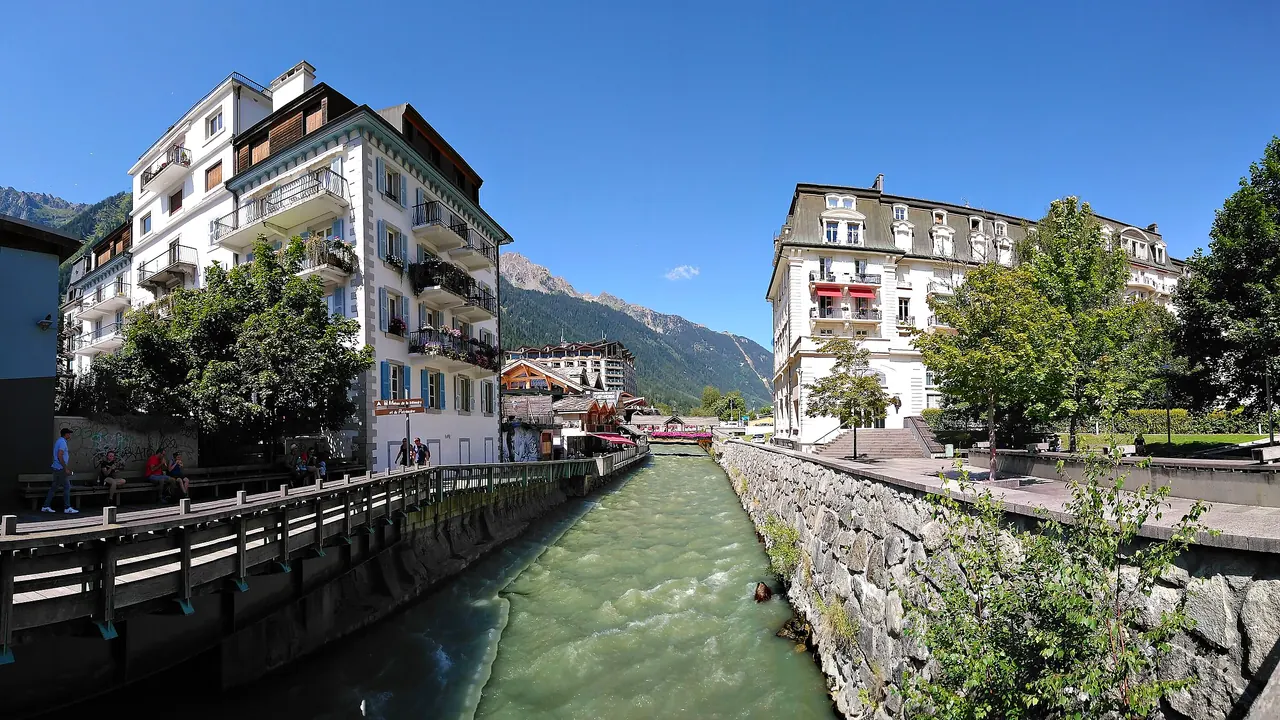
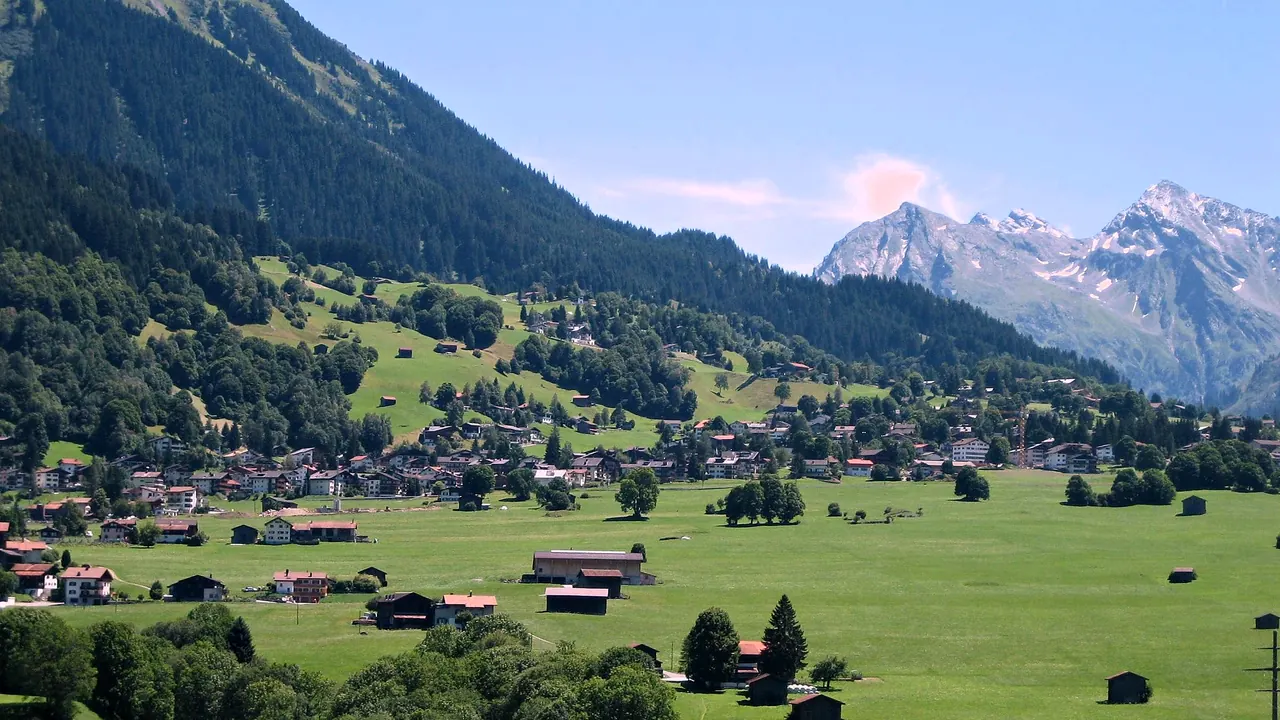
Photos: Chamonix by Tiia Monto, CC BY-SA 3.0, cropped; Klosters by Adrian Michael, CC BY-SA 3.0, cropped.
Chamonix or Klosters?
Our verdict in twelve categories, each scored against the same fixed benchmark cities, and the climate month by month, so you can choose for your trip.
Choose Chamonix for
- nightlife
- shopping
- food and drink
Chamonix suits travellers who want the mountains at their most dramatic and some life around them. The cable cars lift you straight onto glaciers below Mont Blanc, the old town has a lively après-ski and bar scene, and Geneva, Annecy and Italy are all near enough for a day out. It is the better pick for climbers, ambitious skiers and groups who want an evening out after a long day on the hill.
Choose Klosters for
- getting around
- families
Klosters is for people who want the Alps without the noise. It is a discreet Graubünden village of timber chalets, with long runs in the Parsenn, gentle slopes on the Madrisa side and early nights by the fire. It suits couples and families who want walking, skiing and a sauna in peace, and who don't mind that there is little to do in the evenings or that prices are steep even by Alpine standards.
Scoreboard
Twelve categories on one fixed scale from 0 to 100. The shaded stretch is the gap between the two.
Your match
Pick a travel style or drag the sliders, and both match scores follow your weighting.
Wins on nightlife and shopping with your weighting.
Wins on getting around and families with your weighting.
What matters to you?
Category by category
What the scores mean for a trip.
Beaches & swimming
Neither place is for swimmers, but Chamonix has the better summer options. Lac de Passy, a short drive down the Arve valley, has a sandy strip with Mont Blanc behind it, and the warm, clear water of Lake Annecy is a little over an hour away.
Klosters has a village pool and a bathing area on the lake at Davos, where the water stays cold. Most visitors who want to swim use hotel pools instead.
Food & drink
Chamonix has the wider range. Alongside fondue, raclette and tartiflette in refuges looking onto the glaciers, an international crowd keeps bistros and a few ambitious kitchens going, and the cheese shops and bakeries make picnics easy.
Klosters has its own regional dishes, such as capuns, pizokel and air-dried Bündnerfleisch, with Pinot Noir from the Bündner Herrschaft. Most meals are taken in hotel dining rooms and wood-panelled stuben, though, and there are fewer places to choose from.
Culture & sights
Chamonix has a story to tell. Alpinism began here, and the town hosted the first Winter Olympics. The Musée Alpin, the statues of the first Mont Blanc climbers and the climbers' cemetery are enough for a good half day. Klosters has less to offer: the Giacometti windows in St. Jakob and a small farmhouse museum, which take an hour or so.
Nightlife
Chamonix is much livelier after dark. In winter, après-ski leads on to a row of pubs in the old town where guides, seasonal workers and visitors stay out late, and a couple of small clubs open on busy nights.
Klosters keeps to fireside drinks in hotel bars and a late spot or two in the peak weeks. If you want more than that, the train to Davos is the answer.
Nature & outdoors
Both are first-rate mountain bases, but Chamonix has the more spectacular high-mountain terrain. The Aiguille du Midi takes you to 3,842m among glaciers and granite spires, and serious mountaineering, the Vallée Blanche and the Tour du Mont Blanc all start in the valley.
Klosters is greener and gentler. The Parsenn is known for long runs down to the village, the Silvretta has hut-to-hut hiking, and the Swiss National Park is within reach. It is less extreme country, and easier for skiers and walkers who aren't climbers.
Day trips
Chamonix's day trips cross borders, and most of them go by road. Through the Mont Blanc Tunnel you reach Courmayeur and the Roman walls, theatre and arch of Aosta. Annecy's canals and Geneva's lakefront are each a little over an hour away. The Mont Blanc Express also climbs over into Switzerland to Martigny, but mountain roads make many journeys longer.\n\nKlosters does it by train. The Rhaetian Railway takes you to Chur's old town, Heidi country around Maienfeld and Vaduz in Liechtenstein, and through the Vereina tunnel to the painted sgraffito villages of the Lower Engadine. The UNESCO-listed Albula line towards St. Moritz makes a longer, scenic day.
Good for families
Both work for families who enjoy the outdoors, and both have little for a rainy day. Chamonix has more set attractions, with the Merlet animal park, a summer luge and the little red train to the Mer de Glace, although its highest cable cars are not suitable for small children. Klosters makes things simpler, with a children's play and adventure area on the Madrisa and a quiet, traffic-calmed village.
Getting around
You can manage without a car in either. Chamonix has a compact, flat centre and free valley buses and trains with the guest card, but in winter the ski buses are crowded because the ski areas are spread along the valley. Klosters runs on the Rhaetian Railway, with the Gotschna cable car right beside the station at Platz and direct trains to Davos.
Shopping & style
Chamonix is worth a shopping trip if you need mountain gear. Its long-established climbing and ski shops carry specialist kit, and many climbers save their big purchases for a visit here. Klosters has rental shops, a few upmarket boutiques and delicatessens along the main street, and for anything more you have to go to Zurich.
Affordability
Both are expensive, but Chamonix gives you more ways to keep costs down. Free valley transport, supermarkets, hikes that start from town and cheaper weeks in spring and autumn all help.
Klosters is among the dearest places in the Alps. Hotels, meals, lift passes and lessons are all priced for a wealthy regular clientele, and self-catering only makes a small difference.
Live music & performing arts
Neither has a theatre or a concert season, so this is down to summer festivals. Chamonix has a jazz festival with some sets played high in the mountains. Klosters has a classical concert series in the village and recitals in the church. Outside summer, Chamonix has mountain film evenings and Klosters has a hotel pianist.
Wellness & relaxation
In Chamonix you relax after the effort. After a day of skiing or climbing, the large spa's hot outdoor pools look straight up at the glaciers, and the warm springs of Saint-Gervais lie a short drive down the valley in a wooded gorge. For quiet as well, choose the shoulder seasons or a hamlet higher up the valley.\n\nIn Klosters the village itself is the restful part, with long views and little to hurry for. Most of the spa time happens in hotel pools and saunas. For a proper bathing day, go through the Vereina tunnel to the thermal baths at Scuol, or up the valley to the large pool and sauna complex in Davos.
When should you go?
Pick your month. The climate figures are measured averages, not a forecast.
Chamonix in July
Klosters in July
Daytime high, °C
Rainfall in the month, mm
Where the figures come from
Chamonix's temperatures are measured 35 km from the centre, at Bourg-St-Maurice.
Chamonix has no rain gauge within 25 km of the centre, so its rainfall comes from a gridded climate dataset read at the destination rather than from a gauge further away.
Klosters's temperatures are measured 51 km from the centre, at S. Valentino Alla Muta.
Klosters's station stands 280 m above the city centre, so the centre is likely a little warmer than the figures say.
Klosters has no rain gauge within 25 km of the centre, so its rainfall comes from a gridded climate dataset read at the destination rather than from a gauge further away.
Temperature and rainfall are climate normals, averaged over the years shown. Chamonix: 1999-2020 (rainfall 1991-2020) normals, Bourg-St-Maurice (34.9 km from centre). Klosters: 1991-2020 normals, S. Valentino Alla Muta (51.4 km from centre).
Chamonix sits lower and gets noticeably warmer in summer. July reaches about 27°C, warm enough for a swim at Lac de Passy and for shirtsleeve evenings in town, while Klosters stays fresh at around 20°C, which is good for walking and too cool for lake swimming. In both places June to September is the hiking season. December to March brings the snow, with daytime highs near freezing in Klosters and a few degrees above in Chamonix.
Rain falls differently in the two valleys. Chamonix is wet all year, wettest in late autumn and early winter at around 169mm in December, which means plenty of snow at altitude. Klosters is drier in winter, at about 60mm a month, but its summers are wetter, with August near 141mm, often as afternoon showers. Spring and late autumn are the quiet months in both, when the weather is mixed and the snow is unreliable.
Which traveller are you?
On a food and nightlife trip, Chamonix is the clear choice. It has more bistros and Savoyard restaurants, après-ski bars at the foot of the slopes and a lane of pubs that stays busy late. In Klosters most evenings end quietly in a hotel bar.
For a relaxing, wellness-focused vacation, Klosters fits better. Both have good hotel spas and thermal baths within reach, but Klosters is calm and unhurried, while Chamonix fills up with guides and climbers from early morning and is crowded in high season.
On a tight budget, Chamonix is the more manageable of two expensive resorts. It has free valley transport, apartments to self-cater in, trails that start from town without a lift, and cheaper shoulder seasons. In Klosters almost nothing comes cheap.
Before you go
| Measure | Chamonix | Klosters |
|---|---|---|
| Official language | French | French, German, Italian, Romansh |
| Currency | Euro (EUR) | Swiss Franc (CHF) |
| Sockets | CE230 V, 50 Hz | CJ230 V, 50 Hz |
| Driving side | Right | Right |
| Time zone | UTC+1, UTC+2 in summer | UTC+1, UTC+2 in summer |
| Emergency number | 112 | 112 |
| Elevation | 995 m | 1,179 m |
| Main airport | Geneva International Airport (GVA)68 km from centre150 non-stop destinations | Zürich Airport (ZRH)120 km from centre226 non-stop destinations |
| Public holidays this year | 11 days | 9 days |
By the numbers
| Measure | Chamonix | Klosters |
|---|---|---|
| Population | 8,705 | 4,499 |
| People per km² | 75 | 20 |
| Museums within 10 km | 3 | 3 |
| UNESCO World Heritage sites within 50 km | 0 | 1 |
Where else could you go?
Every comparison below shares a destination with this one, so you can follow Chamonix or Klosters somewhere new.
- Davosvs Klosters
- Saint-Gervais-les-Bainsvs Chamonix
- Flainevs Chamonix
- Arosavs Klosters
- Megèvevs Chamonix
- Samoënsvs Chamonix