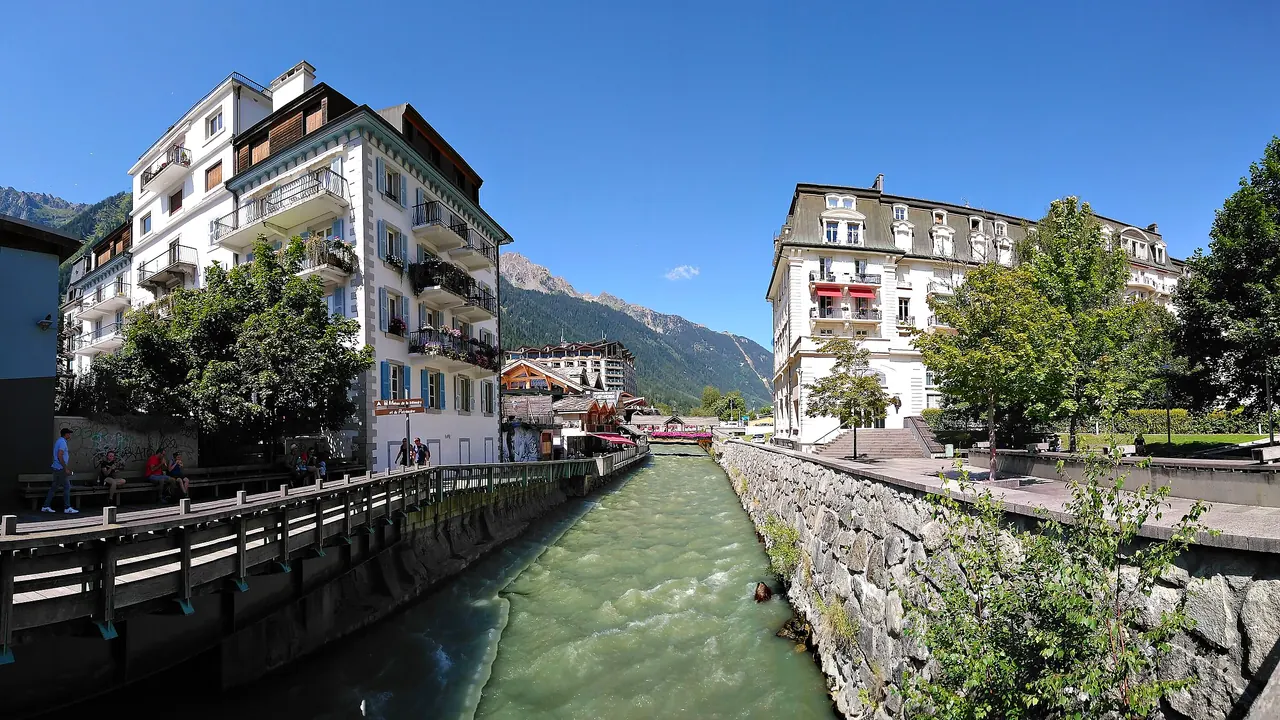
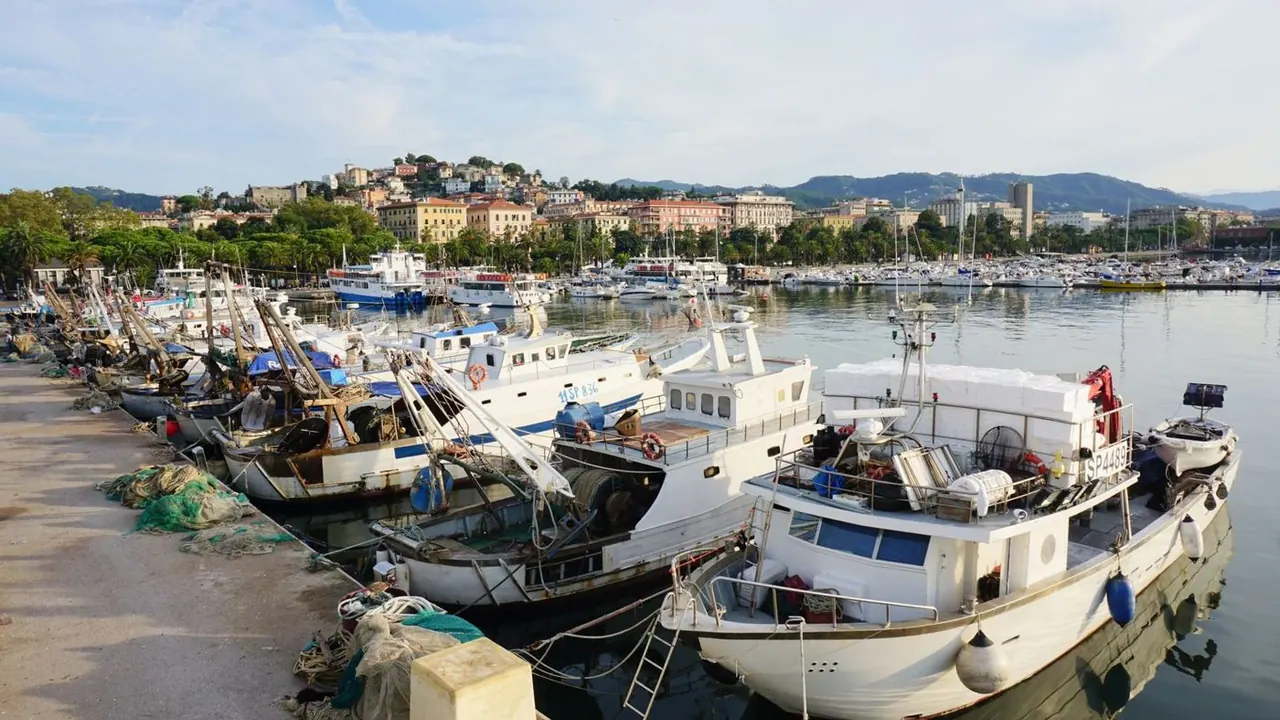
Photos: Chamonix by Tiia Monto, CC BY-SA 3.0, cropped; La Spezia by Irina Balashova, Pexels License.
Chamonix or La Spezia?
Our verdict in twelve categories, each scored against the same fixed benchmark cities, and the climate month by month, so you can choose for your trip.
Choose Chamonix for
- wellness
- nature and the outdoors
- families
Chamonix is the pick for anyone whose trip is built around high mountains. Cable cars lift you from the town centre onto glaciers, the ski terrain and guided climbing are some of the most serious in Europe, and the evenings after skiing are livelier than you would expect in a valley town. It suits active couples, groups of friends and outdoor families, as long as they accept high costs and very little in the way of museums or a beach.
Choose La Spezia for
- beaches
- prices
- day trips
La Spezia makes more sense as a base for the coast. It costs less, the sea is warm in summer, and the Cinque Terre villages, Portovenere and Lerici are all within easy reach without a car, with Pisa and Lucca further along the line. Choose it for coastal walks mixed with swimming, Ligurian food and short trips out, and for evenings that wind down early.
Scoreboard
Twelve categories on one fixed scale from 0 to 100. The shaded stretch is the gap between the two.
Your match
Pick a travel style or drag the sliders, and both match scores follow your weighting.
Wins on wellness and nature and the outdoors with your weighting.
Wins on beaches and prices with your weighting.
What matters to you?
Category by category
What the scores mean for a trip.
Beaches & swimming
La Spezia has the sea and Chamonix does not. Around the gulf you get sheltered sand at San Terenzo and Lerici, clear rocky water off Portovenere and Palmaria, and the long sandy beach at Monterosso up the line. Swimming is pleasant from June into early October, though the beaches are small, often pebbly, and much of the shore belongs to paid bathing establishments.
In Chamonix, swimming is an afternoon off. The choice is Lac de Passy below the Mont Blanc massif, Lake Annecy a little over an hour away, or the town pool with its summer outdoor basin.
Food & drink
Chamonix has the wider range of restaurants. Alongside fondue, raclette and tartiflette made with Reblochon and Beaufort from the alpages, often eaten on refuge terraces facing the glaciers, there are bistros, pizza and burger places, and a few ambitious kitchens in the grand old hotels. It is still resort eating, though: menus look alike, dining rooms are packed in high season, and many places close between winter and summer.
La Spezia eats better from day to day, and its food is more clearly its own. Farinata comes out of wood ovens, mussels are farmed on ropes off Portovenere, pesto goes on trofie and testaroli, and the covered market on Piazza Cavour sells the morning's fish, with Colli di Luni whites to drink alongside. Prices and quality are steadier than in the Cinque Terre villages, even though fine dining and international food are scarce.
Culture & sights
Neither is a heritage city, but La Spezia has more to fill a day indoors. The Museo Amedeo Lia holds early Italian paintings, the Castello San Giorgio houses the strange Lunigiana stele statues, and the naval museum and the Liberty-style streets of the nineteenth-century centre add to them.
Chamonix's culture is the history of mountaineering, from the first ascent of Mont Blanc to the 1924 Winter Olympics. The Musée Alpin and the climbers' cemetery tell that story well, and half a day covers it.
Nightlife
Chamonix goes out harder. In winter, après-ski starts at the foot of the slopes in late afternoon, then moves to the pubs on a narrow old-town lane, where guides and seasonal workers stay late. A couple of small clubs carry on into the early hours. The crowd is young and largely English-speaking, and summer nights are calmer.
La Spezia's evening is an aperitivo along Via del Prione or the seafront, or by the water at Lerici in summer. After that, most people go to bed early, ready for the trails in the morning.
Nature & outdoors
Both are outdoor destinations, but Chamonix plays at a different scale. The Aiguille du Midi lifts you to 3,842m among hanging glaciers, the Mer de Glace and Lac Blanc are reachable on rails and lifts, and the Tour du Mont Blanc starts in the valley. Winter adds steep skiing and the Vallée Blanche, and summer adds guided alpinism and paragliding.
La Spezia's landscape is coastal. Terraced cliffs fall into the sea along the Cinque Terre paths, there is a loop walk on Palmaria and kayaking and diving in the gulf. The marble peaks of the Apuan Alps rise about an hour inland.
Day trips
La Spezia is the better base for days out by some distance. The Cinque Terre villages are minutes away by train, Portovenere is a short boat ride, and walled Sarzana and Roman Luni are close. Pisa and Lucca are about an hour away, with Portofino and Genoa along the Riviera.
Chamonix's trips cross borders: Courmayeur and Roman Aosta through the tunnel, Annecy and Geneva by road, and Martigny on the Mont Blanc Express. Beyond those, most places in reach are other ski resorts, and the mountain roads make every journey slow.
Good for families
Chamonix gives outdoor families more to do. There are ski schools and sledging in winter, and in summer a luge, treetop courses, the Merlet animal park with ibex and marmots, and the little red train to the Mer de Glace. The caveats are the high cable cars, which are not suitable for small children, and the lack of options on rainy days.
La Spezia is easy with a pushchair and has calm, shallow water at San Terenzo and boat trips round the islands. With no zoo or aquarium, and with steep villages and crowded trains, it suits older children better.
Getting around
Both are easy without a car, but for different kinds of journey. Chamonix's buses and valley train run along a single valley and are free with the guest card, and the Aiguille du Midi and Montenvers stations are in town. The weak spot is the crowded ski buses in winter.
La Spezia is a rail and ferry hub. Trains run along the coast and inland, buses go round the gulf and boats serve the villages, but the coastal trains get packed in summer.
Shopping & style
Shopping is limited in both, and what is worth buying is quite different. Chamonix's pedestrian streets are full of long-established climbing and ski shops whose technical gear draws serious mountaineers, along with Savoyard cheese, génépi and rock crystals.
In La Spezia you get an ordinary Italian high street on Via del Prione and Corso Cavour, and the best things to take home are edible: pesto, olive oil, Sciacchetrà and anchovies. For fashion, Chamonix visitors go to Geneva or Annecy.
Affordability
La Spezia is much easier on the wallet. It is a mid-priced provincial port where trains and buses cost little and rooms are cheaper than in the Cinque Terre villages. The extras that add up are park trail passes, boat trips and sunbeds, and summer rooms still cost what they do elsewhere in Western Europe.
Chamonix is expensive at every level, from rooms in the school vacations to lift passes, guides and resort meals. Free valley transport, self-catering, picnics and the trails that start from the valley floor all help, as do the quieter shoulder months.
Live music & performing arts
Neither place has much of a stage, but La Spezia at least has a season. The Teatro Civico puts on prose theatre, touring productions and concerts, the old Teatro degli Impavidi is in Sarzana nearby, and summer brings open-air concerts in castle courtyards.
Chamonix has a summer jazz festival, with some sets played high in the mountains, and mountain film evenings, and very little beyond that. For opera, one goes to Geneva and the other to Genoa or Pisa.
Wellness & relaxation
Chamonix is the better place to recover. It has a large spa with hot outdoor pools and saunas looking up at the glaciers, many chalets have their own saunas, and the thermal springs at Saint-Gervais are in a wooded gorge down the valley. The town itself is busy and starts early, though.
La Spezia has no bathing tradition beyond hotel spas and the small baths at Equi Terme inland. What it offers instead is a slower pace: long lunches in Tellaro and quiet days on Palmaria out of season.
When should you go?
Pick your month. The climate figures are measured averages, not a forecast.
Chamonix in July
La Spezia in July
Daytime high, °C
Rainfall in the month, mm
Where the figures come from
Chamonix's temperatures are measured 35 km from the centre, at Bourg-St-Maurice.
Chamonix has no rain gauge within 25 km of the centre, so its rainfall comes from a gridded climate dataset read at the city rather than from a gauge further away.
La Spezia's temperatures are measured 65 km from the centre, at Pisa / S. Giusto.
La Spezia has no rain gauge within 25 km of the centre, so its rainfall comes from a gridded climate dataset read at the city rather than from a gauge further away.
Temperature and rainfall are climate normals, averaged over the years shown. Chamonix: 1999-2020 (rainfall 1991-2020) normals, Bourg-St-Maurice (34.9 km from centre). La Spezia: 1991-2020 normals, Pisa / S. Giusto (64.8 km from centre).
Chamonix is a mountain climate with two separate seasons. Winter is cold, with January highs around 5°C, and that is when people come to ski. Summer is mild, with July highs near 27°C, and that is the time for hiking, climbing and the lake at Passy. Rain and snow are spread fairly evenly across the year, with no dry season, and late autumn and early winter are the wettest stretch. Late spring and autumn are the in-between months, cool and often grey.
La Spezia follows the Mediterranean pattern. July and August reach about 30°C, so walking the coastal paths gets hard work by midday, but the sea warms to around 25°C and July is very dry at about 20mm. Late spring and September are the best months for walking, with long sunny days and comfortable swimming. October and November bring heavy rain, and winter is mild, damp and quiet. In summer the two places complement each other: Chamonix is the cooler escape and La Spezia the warmer one.
Which traveller are you?
On an outdoors trip, Chamonix wins easily. Glaciers, granite peaks and the Vallée Blanche are a cable car ride from town, with mountain guides, ski touring and paragliding on hand. La Spezia's coastal paths are lovely, but on a much smaller scale.
For a beach and sun trip, La Spezia is the only real option. Coves around Lerici and Palmaria and the sand at Monterosso have warm sea from June to early October, while Chamonix offers a mountain lake and a municipal pool.
On a trip on a tight budget, La Spezia stretches your money much further. Rooms cost less than in the Cinque Terre villages, farinata and trattorias are fair value, and trains are cheap. In Chamonix, lift passes, guides and resort restaurants quickly drain the budget.
Before you go
| Measure | Chamonix | La Spezia |
|---|---|---|
| Official language | French | Italian |
| Currency | Euro (EUR) | Euro (EUR) |
| Sockets | CE230 V, 50 Hz | CFL230 V, 50 Hz |
| Driving side | Right | Right |
| Time zone | UTC+1, UTC+2 in summer | UTC+1, UTC+2 in summer |
| Emergency number | 112 | 112 |
| Elevation | 995 m | 3 m |
| Main airport | Geneva International Airport (GVA)68 km from centre150 non-stop destinations | Pisa International Airport (PSA)65 km from centre82 non-stop destinations |
| Public holidays this year | 11 days | 13 days |
By the numbers
| Measure | Chamonix | La Spezia |
|---|---|---|
| City population | 8,705 | 92,119 |
| People per km² | 75 | 1,792 |
| Museums within 10 km | 3 | 12 |
| UNESCO World Heritage sites within 50 km | 0 | 2 |
| Swim season, months above 21 °C | - | 4 months |
Where else could you go?
Every comparison below shares a destination with this one, so you can follow Chamonix or La Spezia somewhere new.
- Portofinovs La Spezia
- Annecyvs Chamonix
- Luccavs La Spezia
- Pisavs La Spezia
- Genevavs Chamonix
- Lausannevs Chamonix