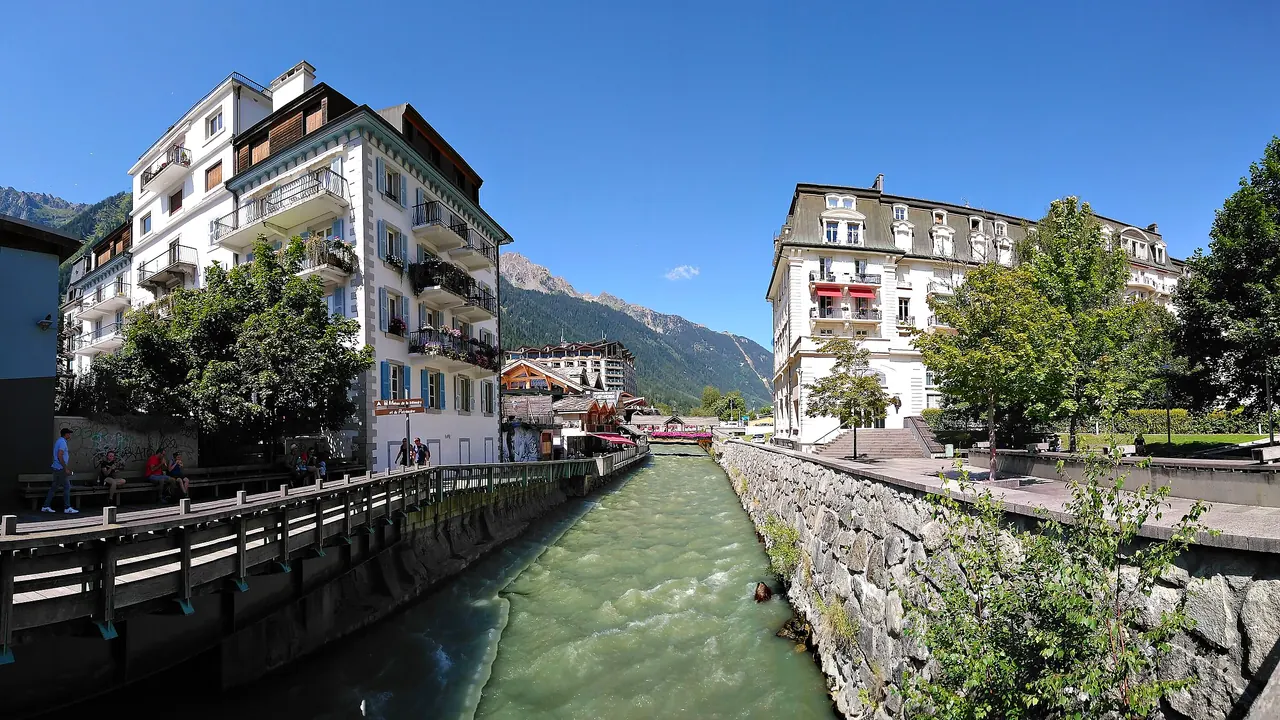
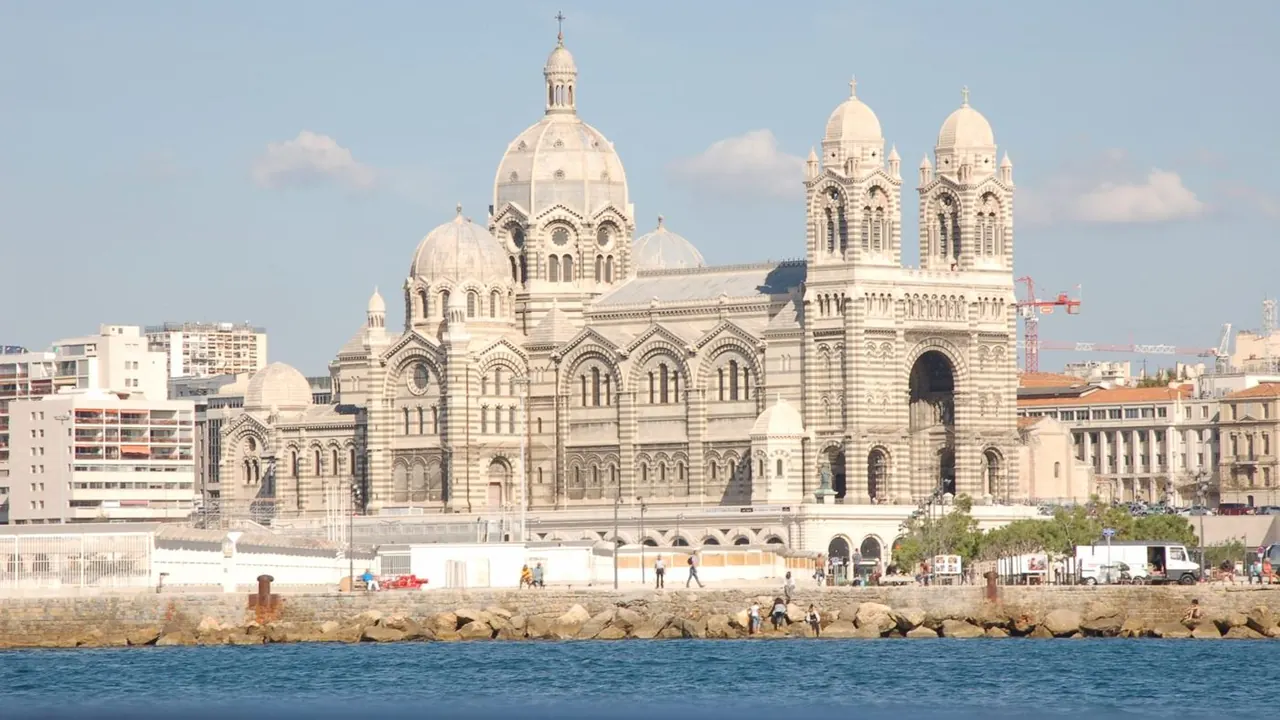
Photos: Chamonix by Tiia Monto, CC BY-SA 3.0, cropped; Marseille by Charlotte Noblet, CC BY-SA 3.0, cropped.
Chamonix or Marseille?
Our verdict in twelve categories, each scored against the same fixed benchmark cities, and the climate month by month, so you can choose for your trip.
Choose Chamonix for
- nature and the outdoors
- wellness
- getting around
Chamonix is for travellers who measure a trip in altitude. Cable cars lift you from a small, walkable town straight onto glaciers, the trails and ski runs start at the edge of the valley, and a hot outdoor pool facing the ice is waiting at the end of the day. It also suits outdoorsy families, but it costs more. There is little to do indoors, and evenings are mostly pubs, cheese and an early night.
Choose Marseille for
- beaches
- culture and sights
- live music and the arts
Marseille is the pick if you want a real city with the sea attached. You get swimming in the Calanques, France's oldest city to explore, a port kitchen with roots all round the Mediterranean, an opera and a national theatre, and Aix, Arles and Avignon within easy reach by train. It is rougher round the edges and less restful, but it costs less and gives you far more to do once the walking boots come off.
Scoreboard
Twelve categories on one fixed scale from 0 to 100. The shaded stretch is the gap between the two.
Your match
Pick a travel style or drag the sliders, and both match scores follow your weighting.
Wins on nature and the outdoors and wellness with your weighting.
Wins on beaches and culture and sights with your weighting.
What matters to you?
Category by category
What the scores mean for a trip.
Beaches & swimming
Chamonix is a high Alpine valley, and a swim there is an occasional treat. The options are Lac de Passy, with its sandy strip and Mont Blanc views, the outdoor basin of the town pool in summer, or a drive of a little over an hour to Lake Annecy.
Marseille is properly on the water. The Prado beaches have shingle, sand and lawns behind them, and locals swim off the rocks at Catalans and the Vallon des Auffes. The Calanques and the Frioul coves are among the clearest water on the French Mediterranean. The mistral and the odd closure after rain are the only catches.
Food & drink
Chamonix feeds you well after a day outdoors. Expect fondue, tartiflette and Reblochon on a refuge terrace, and charcuterie from town for a picnic. But the menus repeat, and many places close between the seasons.
Marseille has much more range. There is bouillabaisse in the little Corniche harbours, panisses and wood-fired pizza on the street, the spice shops and North African bakeries of Noailles, and fish sold straight off the boats on the Vieux-Port. Rosé from Cassis and Bandol and a slow pastis finish it off.
Culture & sights
Chamonix's heritage is the birth of alpinism and the 1924 Winter Olympics, told in the Musée Alpin and the guides' quarter. It is interesting for a morning, and then the mountains take over again.
Marseille gives you days of sightseeing, though it is spread through a working city rather than kept in a tidy old centre. You can climb to Notre-Dame de la Garde, walk the forts of the Vieux-Port and the MuCEM, and explore Le Panier and the Vieille Charité. Further out are the crypts of Saint-Victor, the Château d'If and the Cité Radieuse.
Nightlife
Chamonix's nights are après-ski first. Then a short lane of pubs fills with guides, seasonal workers and young English-speaking visitors, and a couple of small clubs stay open late. It is loud in winter, quiet in summer and largely shut in between.
Marseille has a bigger and more local scene. Graffitied bars and pavement tables spread around Cours Julien and La Plaine, and evening pastis is on the Vieux-Port terraces. On some nights there are electronic parties in old warehouses or by the sea. Some central streets feel edgy late, so a taxi home is wise.
Nature & outdoors
Chamonix is one of the great mountain places on earth. Lifts carry you up to 3,842m on the Aiguille du Midi and on to the Mer de Glace, and trails to Lac Blanc and the Tour du Mont Blanc leave from town. The menu covers serious skiing, mountaineering, climbing and paragliding.
Marseille's outdoors is coast rather than summits, and still exceptional. A national park of white limestone starts at the southern suburbs, with inlets like Sugiton and En-Vau, famous sport climbing, and kayaking and diving round the Riou islands. Sainte-Victoire is an easy drive. Summer heat and fire closures can shut the massifs.
Day trips
Chamonix's trips are about crossing borders. Courmayeur and Roman Aosta are through the tunnel in Italy, the Mont Blanc Express runs to Martigny in Switzerland, and Annecy and Geneva are a little over an hour away. Once you have seen those, the rest is mostly other resorts.
Marseille sits in the middle of Provence. Aix is half an hour away, Cassis is closer still, and Arles and the Palais des Papes in Avignon are an easy train ride. Nîmes and the Pont du Gard, the Luberon villages and the Bandol vineyards fill longer days, though some of them need a car.
Good for families
Chamonix suits active families better. Children get nursery slopes and sledging in winter, and in summer there are the luge, treetop courses, the red train to the Mer de Glace, and ibex and marmots at the Merlet park, all based in a small, safe town. The limits are the cost, the altitude of the big cable cars and a lack of rainy-day options.
Marseille works best if you stay near the southern beaches, with the Prado lawns, Parc Borély and boat trips to the Frioul. There is no zoo, aquarium or theme park, though, and steep, busy, sometimes dirty streets make buggies hard work.
Getting around
Chamonix is simpler to get around. The centre is flat and compact, the main lift stations are in town, and with the guest card the valley buses and train cost nothing. The weak point is the packed ski buses in winter, and evening services that thin out.
Marseille has a real network of two metro lines, trams, buses and little harbour ferries, and the core from the Vieux-Port to Cours Julien is walkable if hilly. The trouble starts beyond it. Buses to the beaches and Calanques trailheads get stuck in traffic, and driving in the centre is stressful.
Shopping & style
Chamonix is a specialist stop. Its long-established climbing and ski shops are where serious mountaineers buy kit, alongside cheese, génépi and rock crystals. Beyond that it is souvenirs, and for anything else people go to Geneva or Annecy.
Marseille has more to browse, if not much luxury. Look for Marseille soap and santon figures from Le Panier workshops, fabrics and teas in Noailles, and independent boutiques on Cours Julien, with department stores on Rue Paradis and a large mall at La Joliette.
Affordability
Chamonix is costly at nearly every turn: peak-season rooms, lift passes, the big cable cars and the guides. You can soften it with free valley transport, self-catering, picnics, trails that need no lift, and quieter shoulder weeks.
Marseille is the cheaper trip by some way. Hotels are reasonable outside July and August, and street food in Noailles keeps lunches cheap. Transport costs little, museums are inexpensive, and the Calanques walks are free.
Live music & performing arts
In Chamonix, culture after dark comes down to a summer jazz festival with some sets high in the mountains, occasional church concerts and mountain film evenings. For opera you would go to Geneva.
Marseille has a full season. There is opera at the art deco Opéra, drama at the Théâtre de la Criée in the old fish market, and dance and concerts at the Friche la Belle de Mai. Add the city's hip-hop and world-music scene and the Fiesta des Suds in autumn.
Wellness & relaxation
Chamonix is better at rest after effort. A large day spa with hot outdoor pools looks up at the glaciers, many chalets have saunas, and the thermal springs of Saint-Gervais are a short drive away. The town itself is busy in high season, so the hamlets further up the valley are quieter.
Marseille has no bathing culture beyond a few local hammams, and its centre is loud and dense. Here, unwinding means a long harbour lunch on the Corniche. People who want real quiet stay in Cassis or inland.
When should you go?
Pick your month. The climate figures are measured averages, not a forecast.
Chamonix in July
Marseille in July
Daytime high, °C
Rainfall in the month, mm
Where the figures come from
Chamonix's temperatures are measured 35 km from the centre, at Bourg-St-Maurice.
Chamonix has no rain gauge within 25 km of the centre, so its rainfall comes from a gridded climate dataset read at the city rather than from a gauge further away.
Temperature and rainfall are climate normals, averaged over the years shown. Chamonix: 1999-2020 (rainfall 1991-2020) normals, Bourg-St-Maurice (34.9 km from centre). Marseille: 1991-2020 normals, Marseille / Marignane (20.6 km from centre).
Chamonix has two main seasons. In winter the valley stays cold, with daytime highs of only a few degrees from December to February. June to August is the warm stretch for hiking and climbing, peaking at about 27°C in July, which is comfortable for long days on the trails. It is never a dry place. Every month gets more than 100mm of rain, and the summer months are only a little drier than the rest. December is the wettest, and May and November are close behind, so the shoulder months between the seasons are often grey and damp.
Marseille is much warmer and sunnier all year. The sea is warm enough to swim from June to September and is at its warmest in August, at about 22°C. July is the sunniest and driest month, with only 11mm of rain, but highs of around 31°C make midday sightseeing and Calanques walks heavy going. Late spring and early autumn are better for walking the city and the hills. The rain comes mainly from September to November, and winter stays mild enough to explore the streets in comfort.
Which traveller are you?
For a beach and sun trip, Marseille is the clear choice. It has warm summer sea, city beaches at the Prado and turquoise coves in the Calanques. In Chamonix, swimming means a mountain lake or the town pool.
For a culture and arts trip, go to Marseille. Its 2,600 years of history run from Notre-Dame de la Garde and the MuCEM to Le Panier and Le Corbusier's housing block, and it has an opera house and serious theatre. Chamonix's mountaineering story takes half a day.
On a ski trip, Chamonix is the obvious answer. It has steep ski areas along the valley, ski touring and the famous Vallée Blanche glacier descent, plus nursery slopes for beginners. Marseille has winter sun but no snow to speak of.
Before you go
| Measure | Chamonix | Marseille |
|---|---|---|
| Official language | French | French |
| Currency | Euro (EUR) | Euro (EUR) |
| Sockets | CE230 V, 50 Hz | CE230 V, 50 Hz |
| Driving side | Right | Right |
| Time zone | UTC+1, UTC+2 in summer | UTC+1, UTC+2 in summer |
| Emergency number | 112 | 112 |
| Elevation | 995 m | 0 m |
| Main airport | Geneva International Airport (GVA)68 km from centre150 non-stop destinations | Marseille Provence Airport (MRS)21 km from centre126 non-stop destinations |
| Public holidays this year | 11 days | 11 days |
By the numbers
| Measure | Chamonix | Marseille |
|---|---|---|
| City population | 8,705 | 886,040 |
| People per km² | 75 | 3,683 |
| Museums within 10 km | 3 | 27 |
| UNESCO World Heritage sites within 50 km | 0 | 1 |
| Swim season, months above 21 °C | - | 2 months |
Where else could you go?
Every comparison below shares a destination with this one, so you can follow Chamonix or Marseille somewhere new.
- Annecyvs Chamonix
- Genevavs Chamonix
- Lausannevs Chamonix
- Avignonvs Marseille
- Saint-Tropezvs Marseille
- Turinvs Chamonix