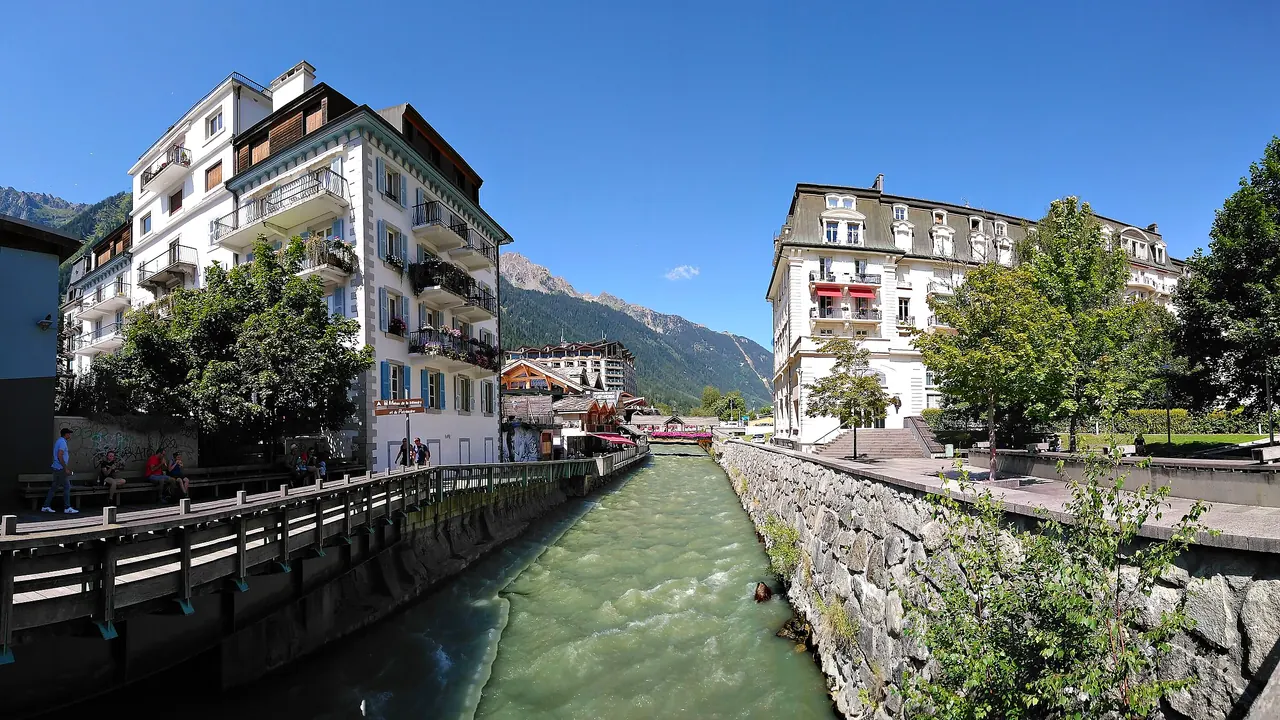
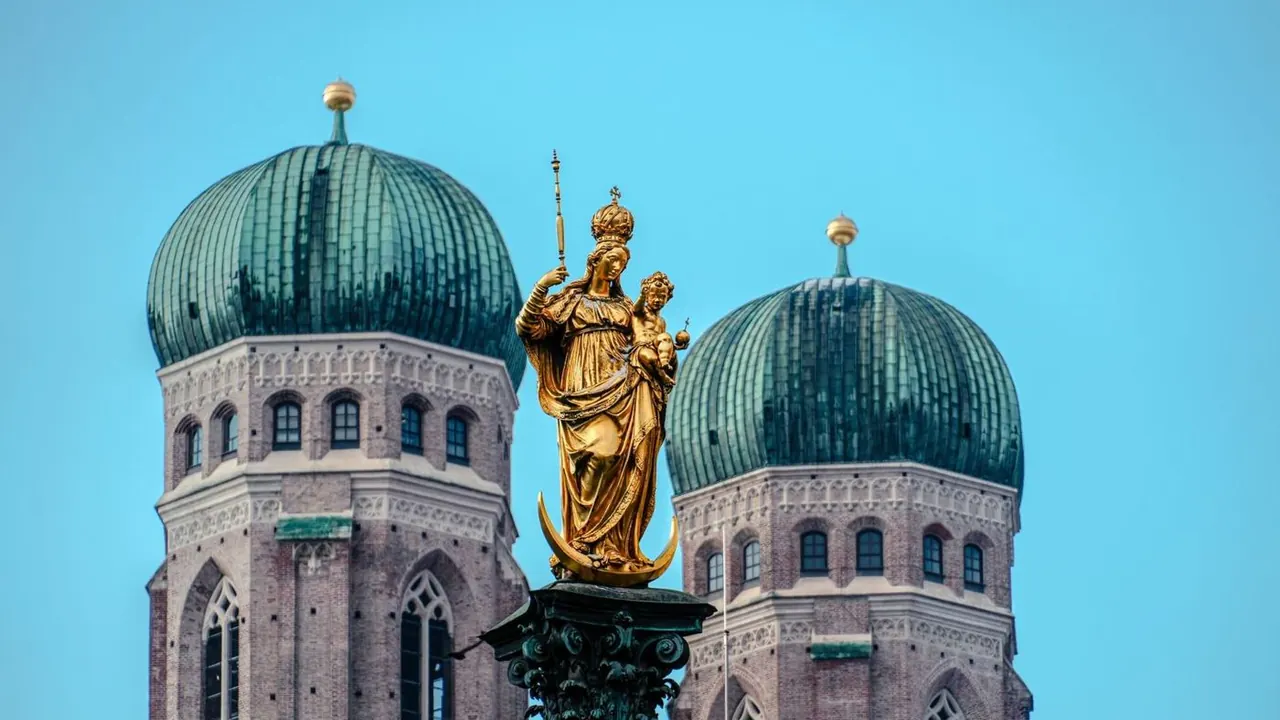
Photos: Chamonix by Tiia Monto, CC BY-SA 3.0, cropped; Munich by 0xd1ma, Pexels License.
Chamonix or Munich?
Our verdict in twelve categories, each scored against the same fixed benchmark cities, and the climate month by month, so you can choose for your trip.
Choose Chamonix for
- nature and the outdoors
Chamonix is for travellers who want the mountains themselves to be the trip. Cable cars lift you from a small walkable town straight into glacier country under Mont Blanc, and days go on skiing, climbing, hiking or paragliding rather than sightseeing. Evenings are fondue, a sauna and a few lively bars. Museums, concerts and shopping barely come into it, and the town costs a good deal while you are there.
Choose Munich for
- live music and the arts
- culture and sights
- shopping
Munich makes the better choice for a rounded trip that mixes art, music, beer gardens and excursions. Here you get great royal collections, a world-class opera house, an easy transport network and a long list of castles, old towns and lakes within reach by train. The Alps are on the horizon for a day or two of hiking, but you come back to a city each night. It suits couples, families and first-time visitors who want variety more than altitude.
Scoreboard
Twelve categories on one fixed scale from 0 to 100. The shaded stretch is the gap between the two.
Your match
Pick a travel style or drag the sliders, and both match scores follow your weighting.
Wins on nature and the outdoors with your weighting.
Wins on live music and the arts and culture and sights with your weighting.
What matters to you?
Category by category
What the scores mean for a trip.
Beaches & swimming
Neither place is for a beach trip, but Munich gives summer swimmers more. Chamonix has the small mountain lake at Lac de Passy, the municipal pool and Lake Annecy more than an hour's drive away, so a swim is an occasional afternoon off.
Munich has a real local swimming culture: gravel banks along the Isar at the Flaucher, and the Starnberger See and Ammersee reachable by S-Bahn, with jetties and lawns. The water is fresh in both places, but in Munich a lake day is easier to fit in.
Food & drink
Chamonix eats like a Savoyard resort: fondue, raclette and tartiflette made with Reblochon and Beaufort, mountain restaurants with glacier views, and cheese shops for a trail picnic. Beyond that, menus repeat, and many places close between seasons.
Munich has more range and more character around the table. Brewery beer halls and chestnut-shaded beer gardens, the Viktualienmarkt, a serious coffee-and-cake habit and a tier of starred restaurants give you far more choice through a week. The cooking is heavy in both places, pork and dumplings here against cheese there.
Culture & sights
This is one of the widest gaps between the two. Chamonix's heritage is the story of alpinism, told in the Musée Alpin, the Espace Tairraz, the guides' quarter and the climbers' cemetery. It is interesting and done within a morning.
Munich has enough for days. The Kunstareal alone holds old masters, modern art, ancient sculpture and the Blue Rider painters. Then there are the Residenz, Nymphenburg Palace and the Deutsches Museum, plus the Dachau memorial just outside the city.
Nightlife
Chamonix's nights are small and loud. Après-ski runs from late afternoon, then the crowd moves on to a narrow lane of pubs and two or three little clubs, mostly young and English-speaking. In summer and the shoulder seasons it goes quiet.
Munich offers more ways to spend an evening, though it is rarely wild. Beer halls lead into cocktail and gay bars around Gärtnerplatz and student pubs in Schwabing, and a few techno clubs keep going until morning at weekends. For just over two weeks from late September, the Oktoberfest tents take over.
Nature & outdoors
Both put you near serious mountains, but Chamonix puts you inside them. Lifts climb from the town centre to 3,842m on the Aiguille du Midi. Glaciers hang above the valley, and the Vallée Blanche, the Tour du Mont Blanc and the oldest guiding company in the world are all on your doorstep.
Munich's outdoors is gentler and more spread out: the English Garden, the Eisbach surfers and Isar cycle paths in town, with the Zugspitze, Tegernsee and the Five Lakes about an hour or more away. It is excellent for a mix of walking, cycling and sailing, but it is not high-mountain country.
Day trips
Chamonix's excursions come from sitting near three borders: Courmayeur and Roman Aosta through the tunnel, Annecy and Geneva by road, and Martigny on the Mont Blanc Express. Once you have done those, most places in reach are other resorts.
Munich is the far stronger base. Fast trains reach Augsburg, Nuremberg, Regensburg, Salzburg and Innsbruck, and the royal castles of Neuschwanstein and Herrenchiemsee are classic outings. You could spend a fortnight on day trips and not run out.
Good for families
Munich is the easier choice with children. Hellabrunn zoo, the Deutsches Museum's hands-on areas, the transport museum and a Sea Life aquarium give you options when it rains. Beer gardens with playgrounds and a calm, green city fill the rest of the time.
Chamonix rewards families who like the outdoors: nursery slopes, sledging, the summer luge, the Merlet animal park and the little red train to the Mer de Glace. The high cable cars aren't for toddlers, though, and wet days leave little to do.
Getting around
Munich is the easier place to get around, though you won't need a car in either. Chamonix's centre is small and flat, with the Aiguille du Midi and Montenvers stations right in town, and the valley buses and Mont Blanc Express are free with a guest card. The catch is winter, when the ski buses are packed and evening services thin out.
Munich's U-Bahn, S-Bahn, trams and buses run as one network that reaches palaces, museums, the lakes and the airport. Regional trains handle most day trips, which from Chamonix often go more easily by car. The flat riverside routes suit cycling, and the city's one weak spot, a central S-Bahn line prone to delays, is a smaller nuisance than a crowded ski bus.
Shopping & style
Chamonix is a specialist's town. Its long-established climbing and ski shops are worth saving big gear purchases for, alongside cheeses, génépi and rock crystals, but there is little fashion.
Munich covers far more. You get luxury houses on Maximilianstrasse, department stores on the pedestrian axis, independent boutiques in Glockenbach and Schwabing, Tracht tailors for dirndls and lederhosen, and Christmas market stalls in December.
Affordability
Neither is cheap, but Chamonix weighs harder on the budget. Peak-week lodging, lift passes, the big cable cars and guided activities add up, though free valley transport, self-catering and trails from the valley floor help.
Munich is dear for hotels, especially during the Oktoberfest and trade fairs. Day to day, though, it gives more back. Beer-hall food is fair value, picnics are welcome in beer gardens, the parks and lakes are free, and some museums charge only a token fee on Sundays.
Live music & performing arts
Chamonix has almost no stage life, just a summer jazz festival with some sets high in the mountains, church concerts and mountain film evenings.
Munich is one of Europe's great music cities. The Bavarian State Opera plays in the National Theatre, three orchestras of real standing perform in halls such as the Herkulessaal, and the rococo Cuvilliés Theatre, operetta at the Gärtnerplatztheater and a respected jazz scene add to it. Drama is mostly in German.
Wellness & relaxation
The two are fairly close, with Munich slightly ahead. Chamonix's unwinding comes after physical effort: hot outdoor pools facing the glaciers at the day spa, chalet saunas and the thermal springs at Saint-Gervais. The town itself starts early and fills up in high season.
Munich has a deeper bathing culture: the Art Nouveau Müller'sches Volksbad, textile-free German saunas and the huge thermal complex at Erding. It also has an easy-going pace, with idle afternoons in beer gardens and quiet Sundays.
When should you go?
Pick your month. The climate figures are measured averages, not a forecast.
Chamonix in July
Munich in July
Daytime high, °C
Rainfall in the month, mm
Where the figures come from
Chamonix's temperatures are measured 35 km from the centre, at Bourg-St-Maurice.
Chamonix has no rain gauge within 25 km of the centre, so its rainfall comes from a gridded climate dataset read at the city rather than from a gauge further away.
Temperature and rainfall are climate normals, averaged over the years shown. Chamonix: 1999-2020 (rainfall 1991-2020) normals, Bourg-St-Maurice (34.9 km from centre). Munich: 1991-2020 normals, München (1.9 km from centre).
Both places run on an Alpine rhythm of cold winters and warm summers, but the rain falls differently. Chamonix is wet in every month, with the heaviest totals in late autumn and early winter, around 169mm in December, and that same weather is what feeds the ski season. July and August are the warmest months, reaching about 27°C on the valley floor, which is right for high trails, the lake at Passy and long evenings outdoors. June and September are fresher and often the most pleasant for walking.
Munich has drier winters but its rain arrives in summer, in thundery downpours of about 120mm a month from May to August. Those are also the sunniest months, with around 242 hours in July and highs near 25°C, ideal for beer gardens and lake swims. Spring and early autumn suit walking the streets best. From November to February the city stays cold and grey, with little sunshine.
Which traveller are you?
For an outdoors trip, choose Chamonix. You wake up under the glaciers and can be on a trail, a rock face or a ski run within minutes, so the whole week goes to the mountains. From Munich, every mountain day starts with a train ride.
On a culture and arts trip, Munich wins without contest. You could spend a week pairing a morning in a gallery or palace with an evening at the opera or a concert and never repeat yourself. In Chamonix, the mountains are the only real show.
For a short city break, Munich fits more into two or three days. It has a compact old town, an easy train from the airport, beer gardens and a choice of stages at night. Chamonix pays off over a week of mountain days, and on a cloudy weekend the peaks can stay hidden.
Before you go
| Measure | Chamonix | Munich |
|---|---|---|
| Official language | French | German |
| Currency | Euro (EUR) | Euro (EUR) |
| Sockets | CE230 V, 50 Hz | CF230 V, 50 Hz |
| Driving side | Right | Right |
| Time zone | UTC+1, UTC+2 in summer | UTC+1, UTC+2 in summer |
| Emergency number | 112 | 112 |
| Elevation | 995 m | 519 m |
| Main airport | Geneva International Airport (GVA)68 km from centre150 non-stop destinations | Munich Airport (MUC)29 km from centre210 non-stop destinations |
| Public holidays this year | 11 days | 12 days |
By the numbers
| Measure | Chamonix | Munich |
|---|---|---|
| City population | 8,705 | 1,505,036 |
| People per km² | 75 | 4,844 |
| Museums within 10 km | 3 | 75 |
| UNESCO World Heritage sites within 50 km | 0 | 1 |
Where else could you go?
Every comparison below shares a destination with this one, so you can follow Chamonix or Munich somewhere new.
- Annecyvs Chamonix
- Genevavs Chamonix
- Lausannevs Chamonix
- Innsbruckvs Munich
- Turinvs Chamonix
- Interlakenvs Chamonix