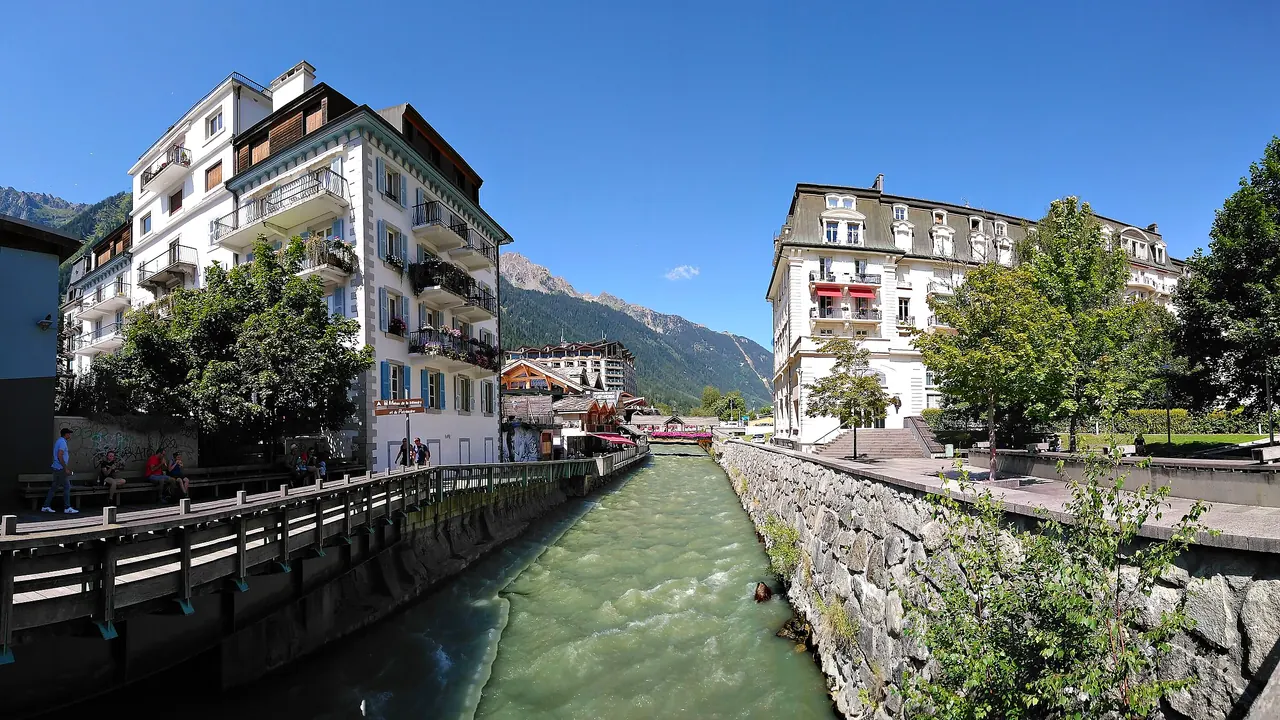
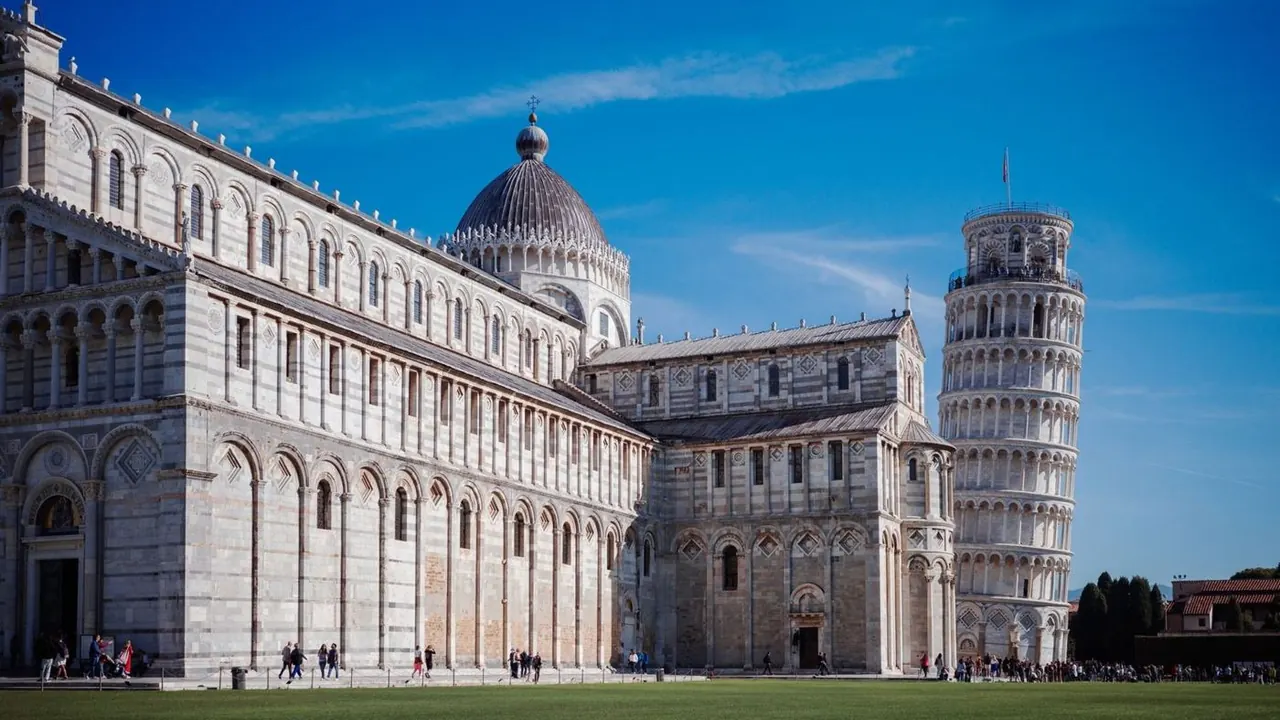
Photos: Chamonix by Tiia Monto, CC BY-SA 3.0, cropped; Pisa by Bruno Kraler, Pexels License.
Chamonix or Pisa?
Our verdict in twelve categories, each scored against the same fixed benchmark cities, and the climate month by month, so you can choose for your trip.
Choose Chamonix for
- nature and the outdoors
- families
- wellness
Chamonix is the choice for a vacation built around mountains. Cable cars lift you from the middle of town onto glaciers, trails and ski runs start at the edge of the streets, and the day ends in a hot outdoor pool or a loud après-ski bar. It costs a good deal more, and there is little to see indoors, but people come here for what lies outside.
Choose Pisa for
- culture and sights
- beaches
- prices
Travellers who want art, architecture and an easy base for touring Tuscany will be happier in Pisa. The cathedral square and the quieter city beyond it fill a couple of days, Florence and Lucca are short train rides away, and in summer there is sand within easy reach. It is cheaper to stay and eat in, though the countryside around it is gentle rather than dramatic.
Scoreboard
Twelve categories on one fixed scale from 0 to 100. The shaded stretch is the gap between the two.
Your match
Pick a travel style or drag the sliders, and both match scores follow your weighting.
Wins on nature and the outdoors and families with your weighting.
Wins on culture and sights and beaches with your weighting.
What matters to you?
Category by category
What the scores mean for a trip.
Beaches & swimming
In Chamonix, swimming means a mountain lake or the town pool. Lac de Passy, lower down the valley, is warm enough in July and August, and Lake Annecy makes a summer day out.
Pisa has the open sea about 12km from the centre. There are long sandy beaches backed by pine woods at Tirrenia and Calambrone, and the shallow water reaches about 24°C in high summer. Neither is a beach destination, but from Pisa an afternoon on the sand is an easy add-on, while from Chamonix a swim is a small expedition.
Food & drink
Chamonix feeds you well after a day on the hills. Fondue, raclette and tartiflette made with Alpine cheeses are served on terraces facing the glaciers. But the menus repeat from one place to the next, and many restaurants close between seasons.
Pisa's cooking is plain Tuscan food with more variety: cecina hot from wood ovens, ribollita, game and salt cod. The best of it is in the trattorias and wine bars around Piazza delle Vettovaglie, where students keep the cooking honest. Neither town is a place for serious dining, but Pisa is the easier one to eat well in every night for a week.
Culture & sights
Chamonix's heritage is the story of alpinism. The Musée Alpin, the statues of the first Mont Blanc climbers and the climbers' cemetery tell it, and half a day covers the lot.
Pisa has one of Italy's great monumental ensembles in the cathedral, baptistery, Leaning Tower and Camposanto standing together on their lawn. Beyond it, Piazza dei Cavalieri, Santa Maria della Spina on the river and the Museo Nazionale di San Matteo reward a second day. For anyone who travels to look at buildings and art, Pisa offers far more.
Nightlife
The two are about level, but the nights are very different. Chamonix's is a ski-resort scene: après-ski from late afternoon, then a lane of pubs and two or three small clubs, loud and mostly English-speaking. Pisa's evenings belong to students drinking outside small bars in the squares by the old market, with aperitivo along Borgo Stretto and beach bars in summer. If you want to dance, go to Chamonix in winter. If you want a late glass of wine in a piazza, go to Pisa during term.
Nature & outdoors
Chamonix sits under the highest mountain in Western Europe, with glaciers and granite needles almost 4km above the valley floor. Lifts take you straight into high-mountain terrain, and in summer there is serious climbing, hiking and paragliding, with steep skiing in winter.
Pisa's outdoors is lowland and coastal. The San Rossore park has pine forest, wetland and dunes to explore by bike or on horseback, and the Monte Pisano has olive-terrace walks. The Apuan Alps and the Cinque Terre paths are within reach, but for scale and drama nothing in Tuscany comes close to Chamonix.
Day trips
Chamonix's outings come from its position near three borders. Courmayeur and Roman Aosta are through the tunnel, while Annecy and Geneva are each a little over an hour away. After those, mountain roads slow you down and most other destinations are more resorts.
Pisa is one of the best touring bases in Italy. Florence is an hour away by train, Lucca under half an hour, and the Cinque Terre a little over an hour. Volterra, San Gimignano and Siena are within driving range, so you could fill a week of day trips without repeating yourself.
Good for families
Chamonix suits outdoor families a little better. It has nursery slopes and sledging in winter, and in summer the Merlet animal park, a summer luge, treetop courses and the little red train to the Mer de Glace. The catch is altitude, since the highest cable cars are no place for toddlers, and on wet days there is little to fall back on.
Pisa is easy to manage with children but offers less that is made for them. They get the tower photo, the lawn to run on, and shallow sandy beaches at Tirrenia. Younger children cannot climb the tower, and midsummer heat needs planning around.
Getting around
Both centres are small and flat enough to walk. Chamonix has free valley buses and the Mont Blanc Express with the guest card, but winter means crowded ski buses, and most visitors arrive by shuttle from Geneva.
Pisa has the edge. Its airport is linked to the station by a short shuttle train, and that station is a rail hub for western Tuscany, so day trips need no car.
Shopping & style
Pisa has more ordinary shopping, with chains along Corso Italia, smarter shoes and clothes under the arcades of Borgo Stretto, and a monthly antiques market by the river. Chamonix wins for one thing only: technical climbing and ski gear from long-established specialist shops, which serious mountain people save their big purchases for. For fashion, both send you elsewhere, to Florence and Lucca or to Geneva and Annecy.
Affordability
Chamonix is much the dearer of the two. Rooms and chalets are expensive all year and most of all at Christmas, in February and in July and August. Meals are priced like a famous resort. The biggest costs come from going up the mountain: lift passes, the big cable cars, a guide for a glacier day and a paragliding flight. Late spring and autumn take the edge off, although some lifts and businesses shut then, and a walk that starts from the valley floor costs nothing.
In Pisa the daily costs are lower all round. A central room is mid-range, a trattoria dinner is ordinary money, and you walk everywhere. Most of what you spend goes on a few things: the ticket to climb the Leaning Tower, a drink at the cafés facing the cathedral lawn, and a lounger and umbrella at Tirrenia in July and August. A week here costs far less than a week under Mont Blanc.
Live music & performing arts
Chamonix has no theatre or concert season. Its live culture is a summer jazz festival with some sets played high in the mountains, plus mountain film evenings. Pisa has the Teatro Verdi, a 19th-century horseshoe opera house with opera, ballet and symphonic concerts from autumn to spring, plus chamber music from the university. It is modest, but it is a real season, which Chamonix lacks.
Wellness & relaxation
Chamonix does recovery better. A large spa with hot outdoor pools faces the glaciers, many chalets have their own saunas, and the warm springs of Saint-Gervais are down the valley. The town itself is busy and starts early.
Pisa's calm comes from its small scale and long lunches. The old thermal baths of San Giuliano Terme and Casciana Terme are nearby, but there is less to soak in after a day out.
When should you go?
Pick your month. The climate figures are measured averages, not a forecast.
Chamonix in July
Pisa in July
Daytime high, °C
Rainfall in the month, mm
Where the figures come from
Chamonix's temperatures are measured 35 km from the centre, at Bourg-St-Maurice.
Chamonix has no rain gauge within 25 km of the centre, so its rainfall comes from a gridded climate dataset read at the city rather than from a gauge further away.
Temperature and rainfall are climate normals, averaged over the years shown. Chamonix: 1999-2020 (rainfall 1991-2020) normals, Bourg-St-Maurice (34.9 km from centre). Pisa: 1991-2020 normals, Pisa / S. Giusto (3.9 km from centre).
Chamonix is a mountain valley with two seasons. The cold months suit skiing, with daytime highs only a few degrees above freezing in December and January. From June to September the valley is mild to warm, peaking around 27°C in July, which is the time for high trails, climbing and a swim in a mountain lake. Rain is spread through the whole year, and the wettest month is December at around 169mm.
Pisa runs the other way. July and August reach about 30°C on the plain, with plenty of sunshine and a sea at around 25°C. That is the best time for the beach, but it is sticky for sightseeing. Spring and late September are the comfortable months for walking the streets. Autumn is the wet season, with October and November both well over 120mm, and winters stay mild, far milder than in Chamonix.
Which traveller are you?
For an outdoors trip, Chamonix is in another league. The Aiguille du Midi, the Mer de Glace and the Tour du Mont Blanc all start from town, with guided climbing, ski touring and paragliding on hand. Pisa's forest park and olive-terrace paths are pleasant, but much gentler.
On a culture and arts trip, Pisa is the clear choice. You get the Piazza dei Miracoli, medieval painting at San Matteo and a night of opera at the Teatro Verdi, and Florence is an hour away by train. Chamonix's mountaineering museums take half a day.
On a tight budget, your money goes much further in Pisa. Student trattorias, mid-range rooms and a centre you can cross on foot keep daily costs modest. Chamonix can be done with picnics, free valley buses and self-catering, but lifts, guides and peak-season rooms add up quickly.
Before you go
| Measure | Chamonix | Pisa |
|---|---|---|
| Official language | French | Italian |
| Currency | Euro (EUR) | Euro (EUR) |
| Sockets | CE230 V, 50 Hz | CFL230 V, 50 Hz |
| Driving side | Right | Right |
| Time zone | UTC+1, UTC+2 in summer | UTC+1, UTC+2 in summer |
| Emergency number | 112 | 112 |
| Elevation | 995 m | 4 m |
| Main airport | Geneva International Airport (GVA)68 km from centre150 non-stop destinations | Pisa International Airport (PSA)4 km from centre82 non-stop destinations |
| Public holidays this year | 11 days | 13 days |
By the numbers
| Measure | Chamonix | Pisa |
|---|---|---|
| City population | 8,705 | 88,737 |
| People per km² | 75 | 479 |
| Museums within 10 km | 3 | 27 |
| UNESCO World Heritage sites within 50 km | 0 | 4 |
| Swim season, months above 21 °C | - | 4 months |
Where else could you go?
Every comparison below shares a destination with this one, so you can follow Chamonix or Pisa somewhere new.