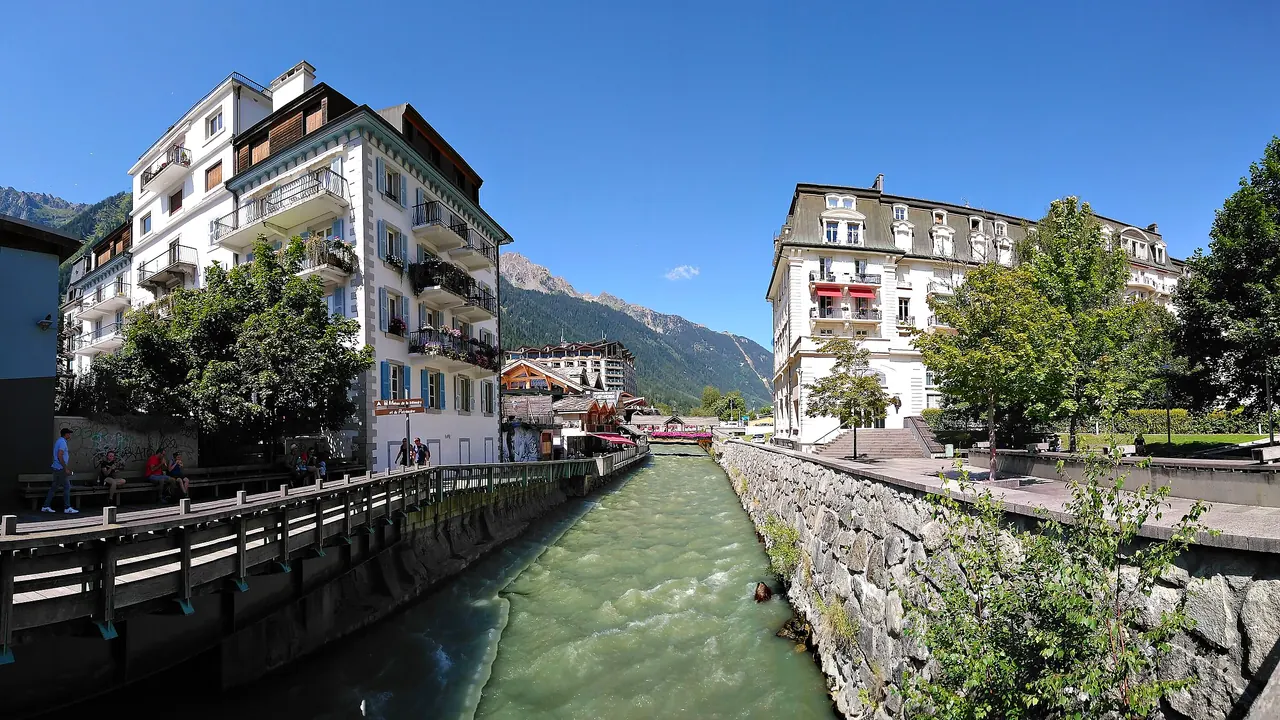
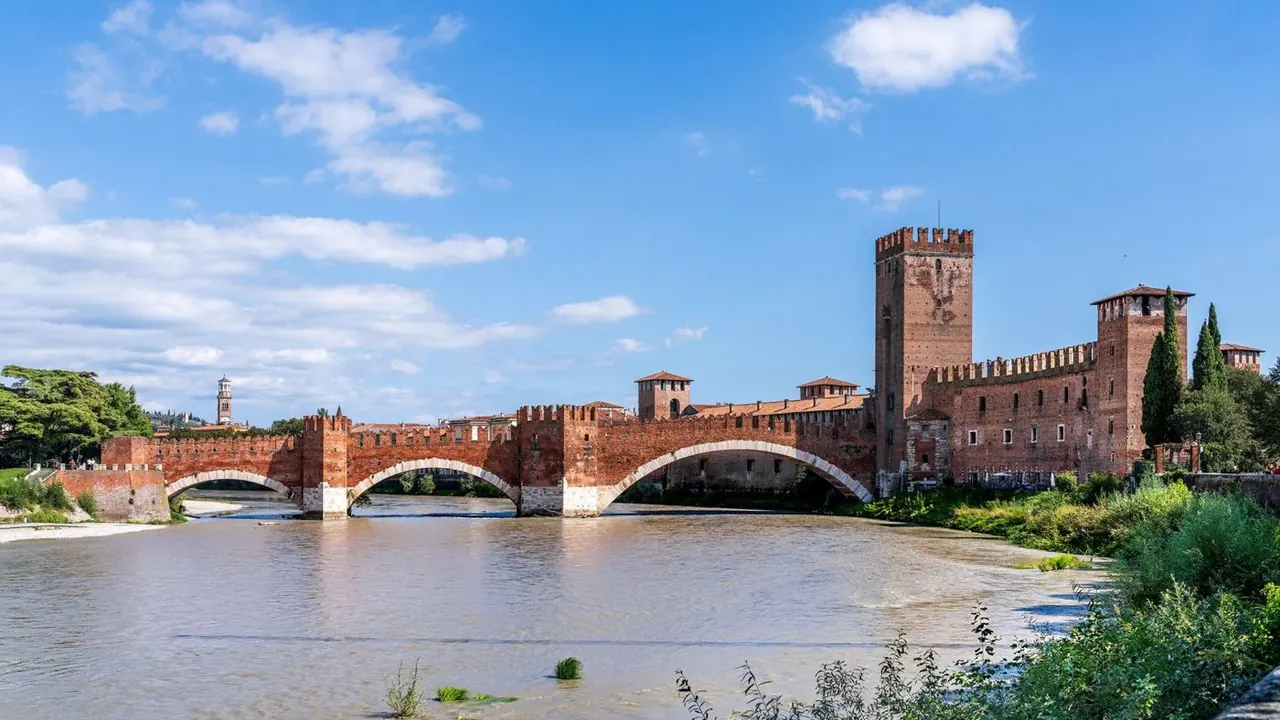
Photos: Chamonix by Tiia Monto, CC BY-SA 3.0, cropped; Verona by NorbertNagel, CC BY-SA 4.0, cropped.
Chamonix or Verona?
Our verdict in twelve categories, each scored against the same fixed benchmark cities, and the climate month by month, so you can choose for your trip.
Choose Chamonix for
- nature and the outdoors
- wellness
- getting around
Chamonix is for travellers who come for the mountains themselves. Cable cars lift you from the town centre into glacier country, the Tour du Mont Blanc and Lac Blanc trails start from the valley, and winter brings steep skiing and the Vallée Blanche. Choose it if your days will be spent hiking, climbing, skiing or paragliding and your evenings in a sauna or a fondue restaurant. Accept that it costs a lot and has little to offer once you come down off the hills.
Choose Verona for
- culture and sights
- live music and the arts
- day trips
Verona suits a slower trip built around history, wine and evenings out. Inside the loop of the Adige you can walk between Roman, medieval and Renaissance sights, opera fills the Arena on summer nights, and Valpolicella and Soave are a short drive away. It also makes a far better base: Venice, Padua, Vicenza, Mantua and Lake Garda are all easy days out by train or car. It is the gentler and cheaper choice, though its countryside is foothills rather than high peaks.
Scoreboard
Twelve categories on one fixed scale from 0 to 100. The shaded stretch is the gap between the two.
Your match
Pick a travel style or drag the sliders, and both match scores follow your weighting.
Wins on nature and the outdoors and wellness with your weighting.
Wins on culture and sights and live music and the arts with your weighting.
What matters to you?
Category by category
What the scores mean for a trip.
Beaches & swimming
Neither has a coast, but Verona has proper summer swimming within easy reach. The southern shore of Lake Garda is about half an hour away by car or train, with lidos, lawns and Sirmione's flat limestone shelves, and the water is warm and calm from June to September.
Around Chamonix, swimming means Lac de Passy lower down the valley, the town's outdoor pool, or a longer drive to Lake Annecy. These are pleasant afternoons off, and only in high summer.
Food & drink
Chamonix serves hearty Savoyard cheese dishes such as fondue, raclette and tartiflette, and they taste best on a refuge terrace facing a glacier. Beyond that, the menus are typical of a resort, and many places close outside the two main seasons.
Verona offers more depth. Amarone risotto, bigoli with duck and bollito with pearà are served in old osterie around Piazza delle Erbe and in Veronetta. Its real strength is wine, because Valpolicella, Soave and Bardolino are made nearby and drunk at counters every evening.
Culture & sights
The gap is large. Chamonix's heritage is the story of alpinism: the Musée Alpin, the pioneers' statues, the guides' quarter and the climbers' cemetery. It is interesting, but you can see it all in a morning.
Verona's UNESCO-listed centre will fill two or three full days. It has a Roman amphitheatre still in use, the Roman theatre below Castel San Pietro, the Romanesque Basilica of San Zeno, Gothic Sant'Anastasia, and Castelvecchio's art collection in Carlo Scarpa's famous setting.
Nightlife
Both towns go out on a similar scale, but in different ways. Chamonix is loud and beer-led: winter après-ski moves into a lane of pubs in the old town, and a couple of small clubs stay open late, mostly for a young, English-speaking crowd. Things go quiet in summer and in the shoulder seasons.
Verona's evenings revolve around wine. The aperitivo crowd spills across Piazza delle Erbe, younger bars in Veronetta stay open later, and on summer opera nights the centre fills again near midnight. Neither city has much of a dance scene.
Nature & outdoors
Chamonix is one of the great mountain landscapes in the world. The Mont Blanc massif rises almost 4km above the town, and cable cars take you straight into glacier terrain. Skiing, mountaineering, climbing and trail running are all close at hand, though the weather up high can change fast.
Verona's outdoors is gentler: vineyard walks in Valpolicella, the Adige cycle route, beech woods on the Lessinia plateau, and Monte Baldo and the windsurfing waters of Garda an hour away. It is lovely countryside, but not high Alpine scenery.
Day trips
Verona is the far better base for days out. Venice, Padua's Giotto frescoes, Palladio's Vicenza and Mantua are all an easy train ride away, and the Garda lake towns and Soave's walls are close by.
Chamonix's best trips cross borders: through the tunnel to Courmayeur and Roman Aosta, or out to Annecy, Geneva and Swiss Martigny. After those, mountain roads are slow and most places within reach are other resorts.
Good for families
Verona has a slight edge for families, thanks to Italy's biggest theme park, the water parks around Garda and a drive-through safari zoo, all about half an hour away. Most of these need a car, though, and summer afternoons in town can be very hot.
Chamonix suits active families. Children can try nursery slopes and sledging in winter, or ride the summer luge and treetop courses, take the red train to the Mer de Glace and watch marmots at the animal park in Les Houches. The highest lifts are not suitable for toddlers, and there is little to do on wet days.
Getting around
Both have small, flat centres you can explore on foot. In Chamonix, the free valley buses and the Mont Blanc Express also take you to the ski areas and trailheads, though winter ski buses are crowded.
In Verona, the walk is the point: everything inside the river loop is a short stroll apart. Good rail links to Venice, Milan and the lake handle longer journeys, but you need a car for the wine villages and the Lessinia.
Shopping & style
Verona is better for general shopping. The marble-paved Via Mazzini has Italian fashion labels, side streets have jewellers and shoe shops, and Amarone, Garda olive oil and pandoro make good gifts to take home.
Chamonix is excellent for one thing: technical climbing and ski gear from long-established specialist shops. Apart from that, it offers cheese, génépi, crystals and souvenirs.
Affordability
Neither is cheap, but Chamonix costs noticeably more. Lift passes, the big cable cars, guides and peak-season chalets add up quickly. Free valley transport, self-catering and picnics help, as does travelling in the shoulder seasons.
In Verona, the walkable centre and good-value local wine keep daily costs down. The main expense is a central hotel, especially on opera nights, but you can save by staying near the station or across the river.
Live music & performing arts
Verona is far ahead here. Summer opera in the Roman Arena is reason enough to visit for many people, and the Teatro Filarmonico season and the summer festival at the Roman theatre cover the rest of the year.
Chamonix has a summer jazz festival, with some sets played high in the mountains, and occasional church concerts and film evenings. For opera or an orchestra, you would have to go to Geneva.
Wellness & relaxation
The two are broadly level, but they offer different kinds of rest. In Chamonix you earn it. After a day on the slopes or the trails, the big day spa has hot outdoor pools and steam rooms facing straight up at the glaciers, many chalets have their own saunas, and the old thermal baths of Saint-Gervais sit in a wooded gorge down the valley. The town around them is busy and energetic, so it rests tired legs better than it calms the mind.\n\nVerona is calm without the effort.
Its rest comes from the pace of the day: a long lunch, a walk along the Adige at dusk, an hour on the terraces of the Giardino Giusti. For warm water you leave the city for Sirmione's spa above Lake Garda, the spring-fed lake near Lazise or the springs at Caldiero, used since Roman times. Apart from the summer crowds around the Arena, the city stays quiet.
When should you go?
Pick your month. The climate figures are measured averages, not a forecast.
Chamonix in July
Verona in July
Daytime high, °C
Rainfall in the month, mm
Where the figures come from
Chamonix's temperatures are measured 35 km from the centre, at Bourg-St-Maurice.
Chamonix has no rain gauge within 25 km of the centre, so its rainfall comes from a gridded climate dataset read at the city rather than from a gauge further away.
Temperature and rainfall are climate normals, averaged over the years shown. Chamonix: 1999-2020 (rainfall 1991-2020) normals, Bourg-St-Maurice (34.9 km from centre). Verona: 1991-2020 normals, Verona / Villafranca (11.6 km from centre).
Chamonix is a place of two seasons. In winter the valley stays cold, with daytime highs around 5°C in January, and that is ski weather rather than weather for strolling. June to September is warm enough for hiking and the lifts, peaking near 27°C in July. It is wet all year, though, with well over 100mm in every month, so expect regular mountain showers even in summer. Late spring and late autumn fall between the two seasons, with neither snow nor reliable trail weather.
Verona is warmer and much drier. Spring and early autumn are the best months for walking the old town. July and August reach about 30°C with the most sunshine, which is good for lake swimming and the open-air opera but tiring for sightseeing in the afternoon. Rain is moderate and heaviest in autumn. Winter is cool and grey but mild compared with the Alpine valley, so Verona works as a city trip in more months of the year.
Which traveller are you?
For an outdoors trip, Chamonix is the obvious choice. Lifts from the town centre reach the Aiguille du Midi and the Mer de Glace, and long trails, climbing, via ferrata and paragliding begin from the valley. Verona's Valpolicella hills and Monte Baldo are pleasant but much milder.
On a culture and arts trip, Verona wins easily. It has the Roman Arena and theatre, San Zeno, the Scaliger tombs and Castelvecchio's museum, plus summer opera under the stars. Chamonix's mountaineering museums and Belle Époque hotels take only half a day to see.
On a tight budget, Verona is easier on the wallet. The centre is walkable, wine-counter snacks and student osterie in Veronetta are good value, and rooms near the station cost less. In Chamonix, lift passes, guides and peak-season rooms quickly push up the cost.
Before you go
| Measure | Chamonix | Verona |
|---|---|---|
| Official language | French | Italian |
| Currency | Euro (EUR) | Euro (EUR) |
| Sockets | CE230 V, 50 Hz | CFL230 V, 50 Hz |
| Driving side | Right | Right |
| Time zone | UTC+1, UTC+2 in summer | UTC+1, UTC+2 in summer |
| Emergency number | 112 | 112 |
| Elevation | 995 m | 59 m |
| Main airport | Geneva International Airport (GVA)68 km from centre150 non-stop destinations | Verona Villafranca Valerio Catullo Airport (VRN)10 km from centre96 non-stop destinations |
| Public holidays this year | 11 days | 13 days |
By the numbers
| Measure | Chamonix | Verona |
|---|---|---|
| City population | 8,705 | 255,588 |
| People per km² | 75 | 1,285 |
| Museums within 10 km | 3 | 18 |
| UNESCO World Heritage sites within 50 km | 0 | 5 |
Where else could you go?
Every comparison below shares a destination with this one, so you can follow Chamonix or Verona somewhere new.
- Annecyvs Chamonix
- Genevavs Chamonix
- Lausannevs Chamonix
- Venicevs Verona
- Bolognavs Verona
- Turinvs Chamonix